A Rustic Retreat: Transforming a Cotswolds Cowshed into a Modern Country Home

Nestled in the picturesque Cotswolds, a Grade II listed barn has been thoughtfully transformed into a serene, contemporary retreat. Designed by Design Storey, this renovation marries historic charm with modern comfort, offering a peaceful escape for a Liverpool-based couple seeking respite from city life. By embracing the barn’s original character and integrating sustainable materials, the project breathes new life into the structure while preserving its agricultural heritage.
The Architectural Challenge: Blending Old and New
The barn originally comprised two disconnected sections:
- A single-storey cowshed
- A two-storey bull-pen with a hayloft above
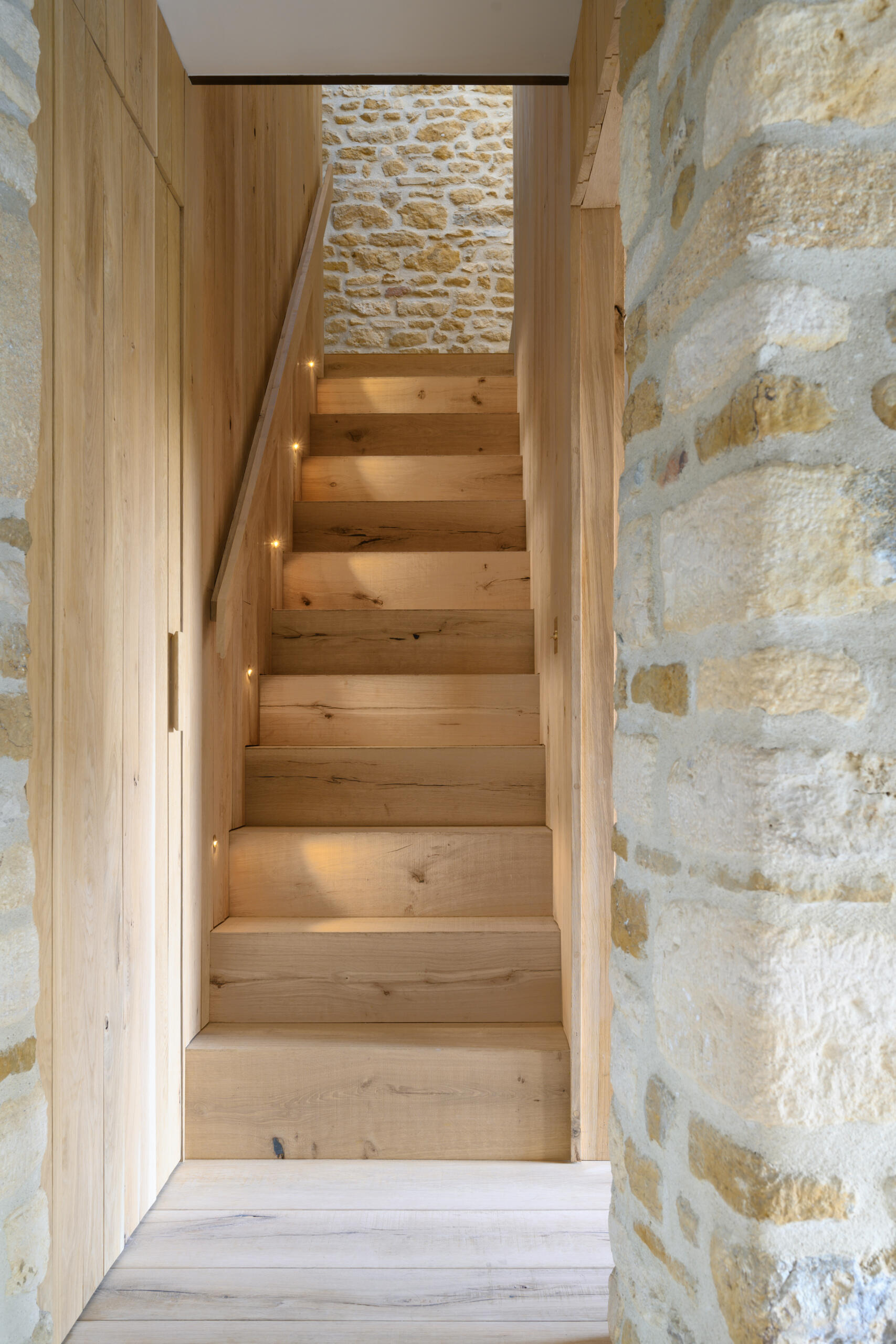
These sections sat at different levels, presenting a unique design challenge. Instead of forcing a conventional layout, Design Storey introduced an innovative solution: a central timber pod that bridges the two volumes. This insertion not only connects the spaces but also serves as a functional divider, housing a staircase and circulation pathways.
Restoring Structural Integrity
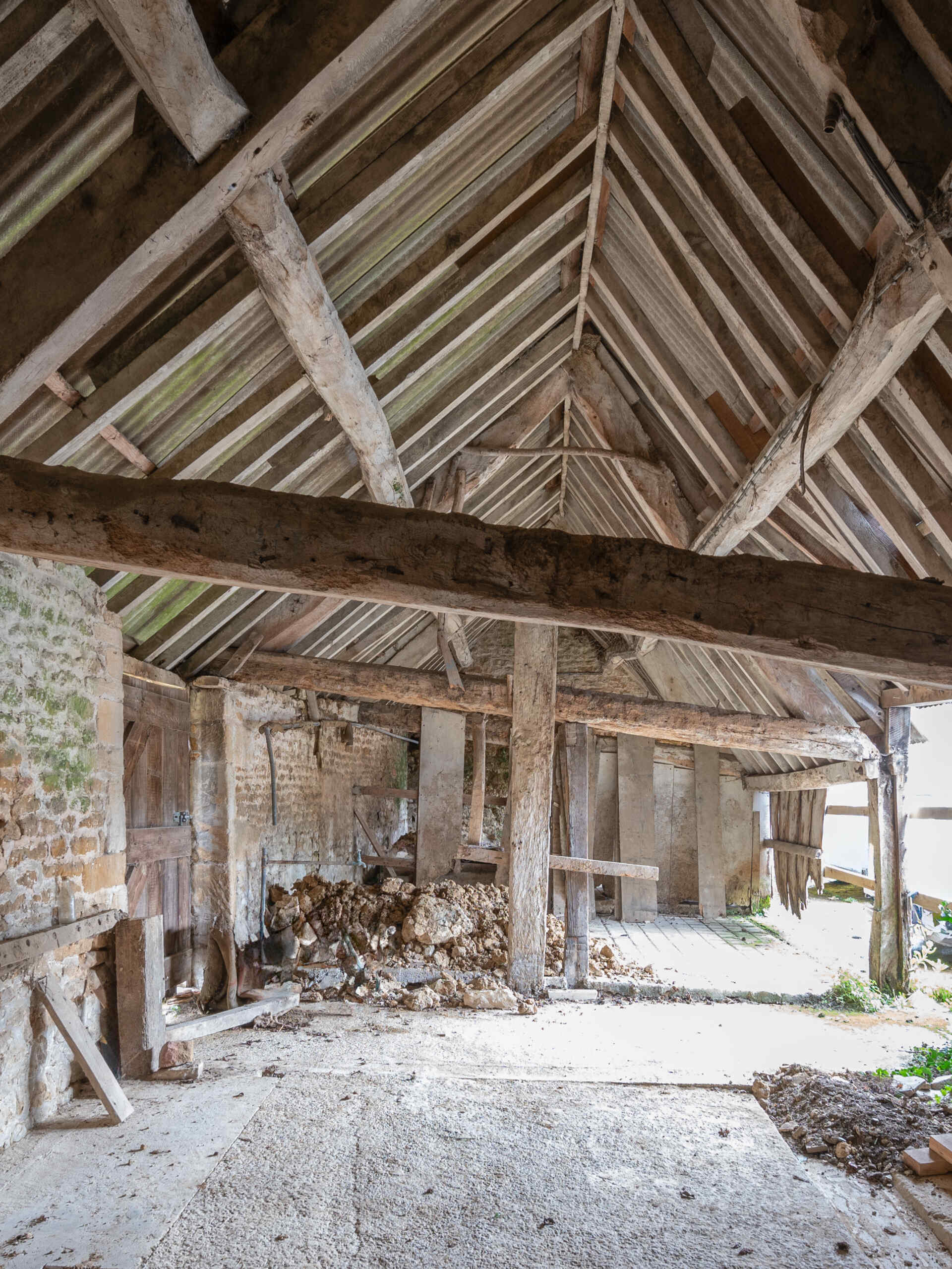
Years of wear had caused the front elevation of the cowshed to sag due to missing pad stones (the foundational blocks supporting timber posts). To rectify this, the team:
✔ Collaborated with structural engineers and a conservation officer
✔ Carefully lifted and reset the roof trusses
✔ Repaired the original elm timber posts
✔ Replaced missing stones to restore stability
The approach was minimally invasive, ensuring the barn’s historical silhouette remained intact.
A Sustainable Retrofit Approach
Rather than a full demolition and rebuild, the project embraced retrofitting—prioritizing repair, retention, and reinterpretation. Sustainable materials were key:
- Sheep’s wool insulation for energy efficiency
- Wood fiberboard for breathable walls
- Lime plaster to complement the original stonework
Windows: Balancing Light and Legacy
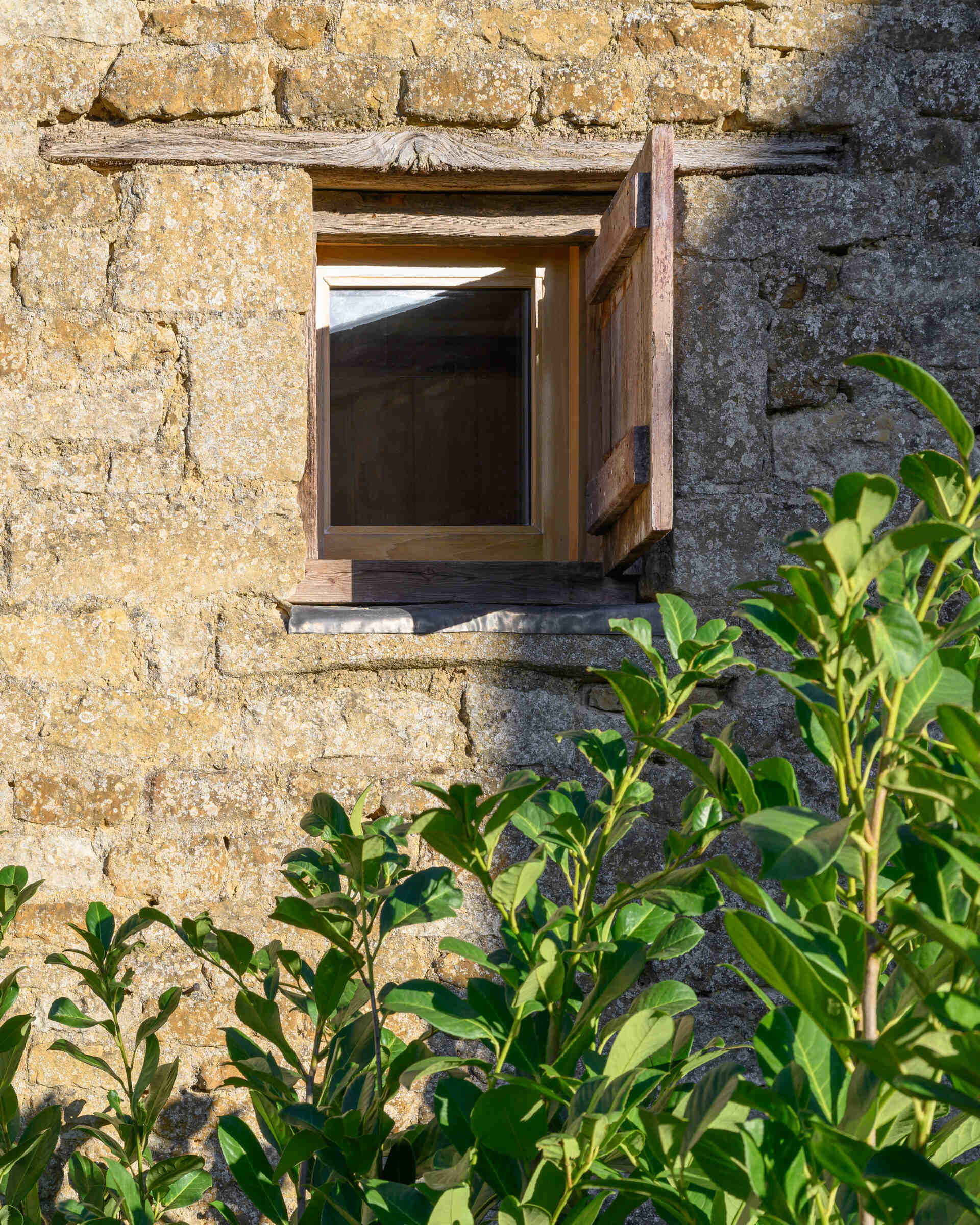
The team preserved the original window openings, maintaining the barn’s rhythm and proportions. However, they also introduced full-height glazing and sliding doors to:
- Flood the interior with natural light
- Create a seamless connection to the surrounding landscape
- Enhance the sense of openness without losing rustic charm
Interior Design: A Harmony of Texture and Simplicity
Living Spaces: Warm and Unfussy
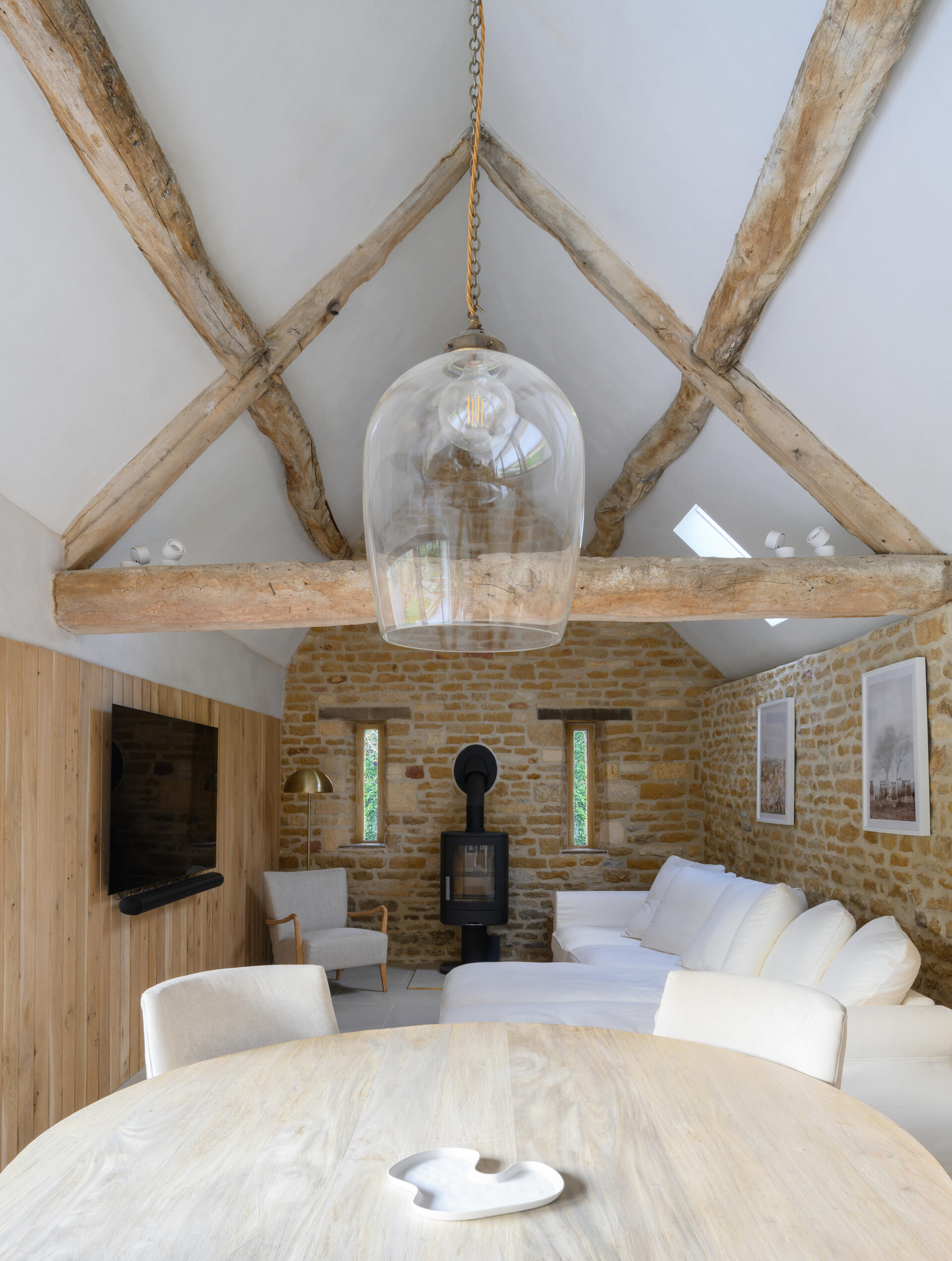
The main living area is deliberately understated, focusing on texture over ornamentation. Key features include:
- Exposed timber beams (left intentionally weathered for authenticity)
- Raw lime plaster walls for a soft, organic feel
- A simple stone fireplace as a subtle focal point
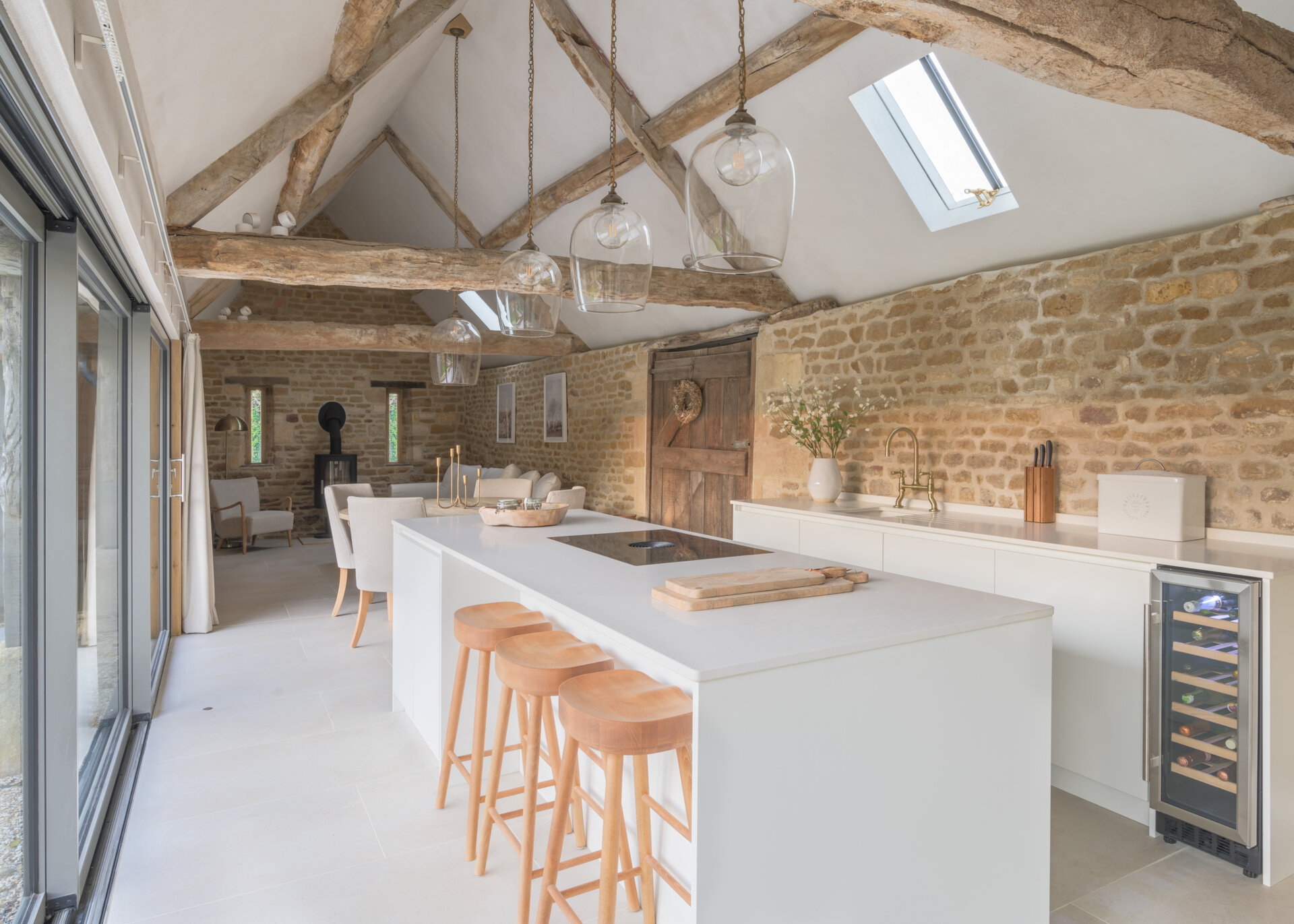
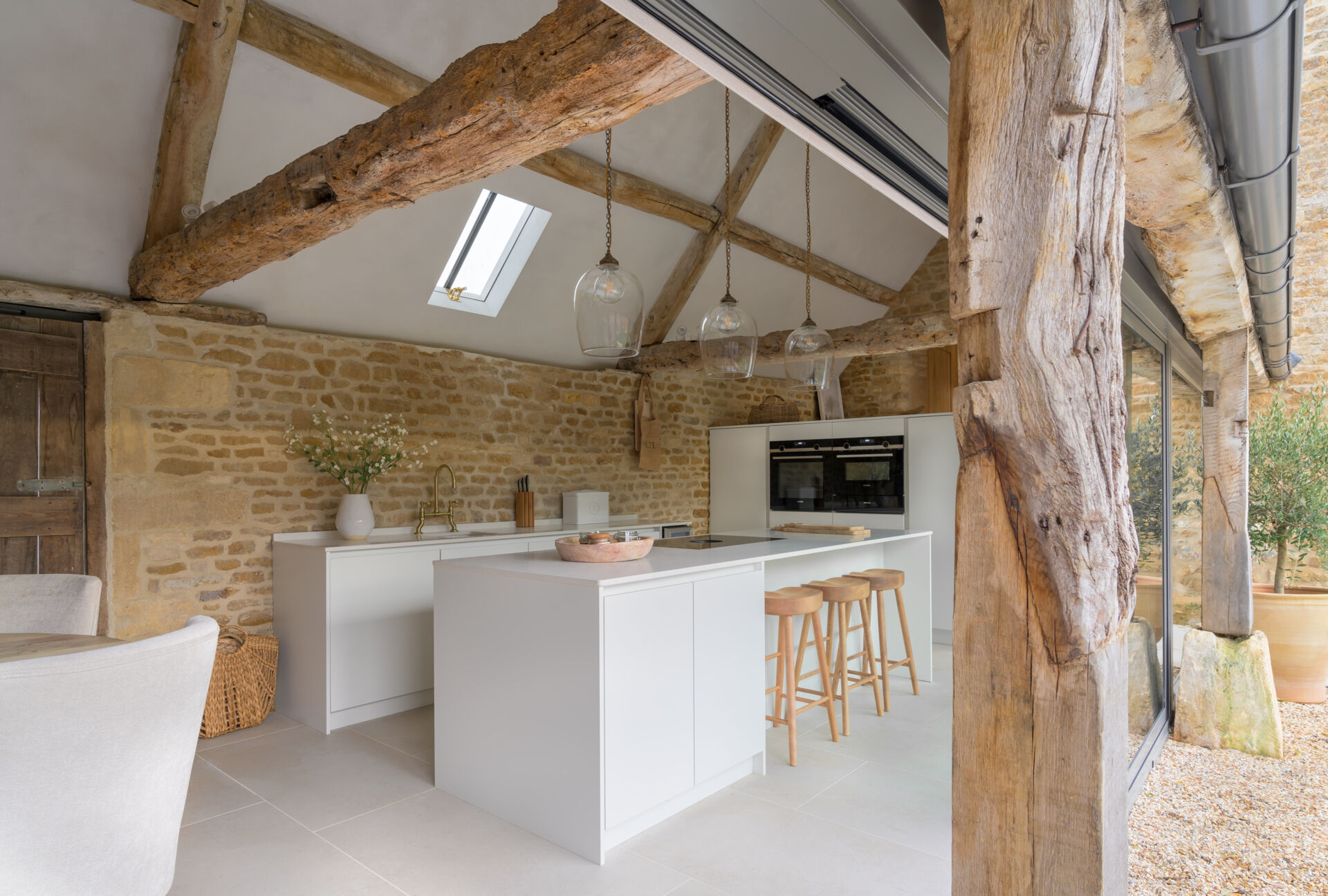
Kitchen & Dining: Functional Yet Refined
The kitchen blends practicality with minimalist aesthetics:
- Timber cabinetry reinforces warmth
- Durable surfaces withstand daily use
- An open layout encourages social cooking
The dining area acts as a natural transition between the kitchen and living room, fostering a fluid, connected space.
Practical Touches: The Boot Room
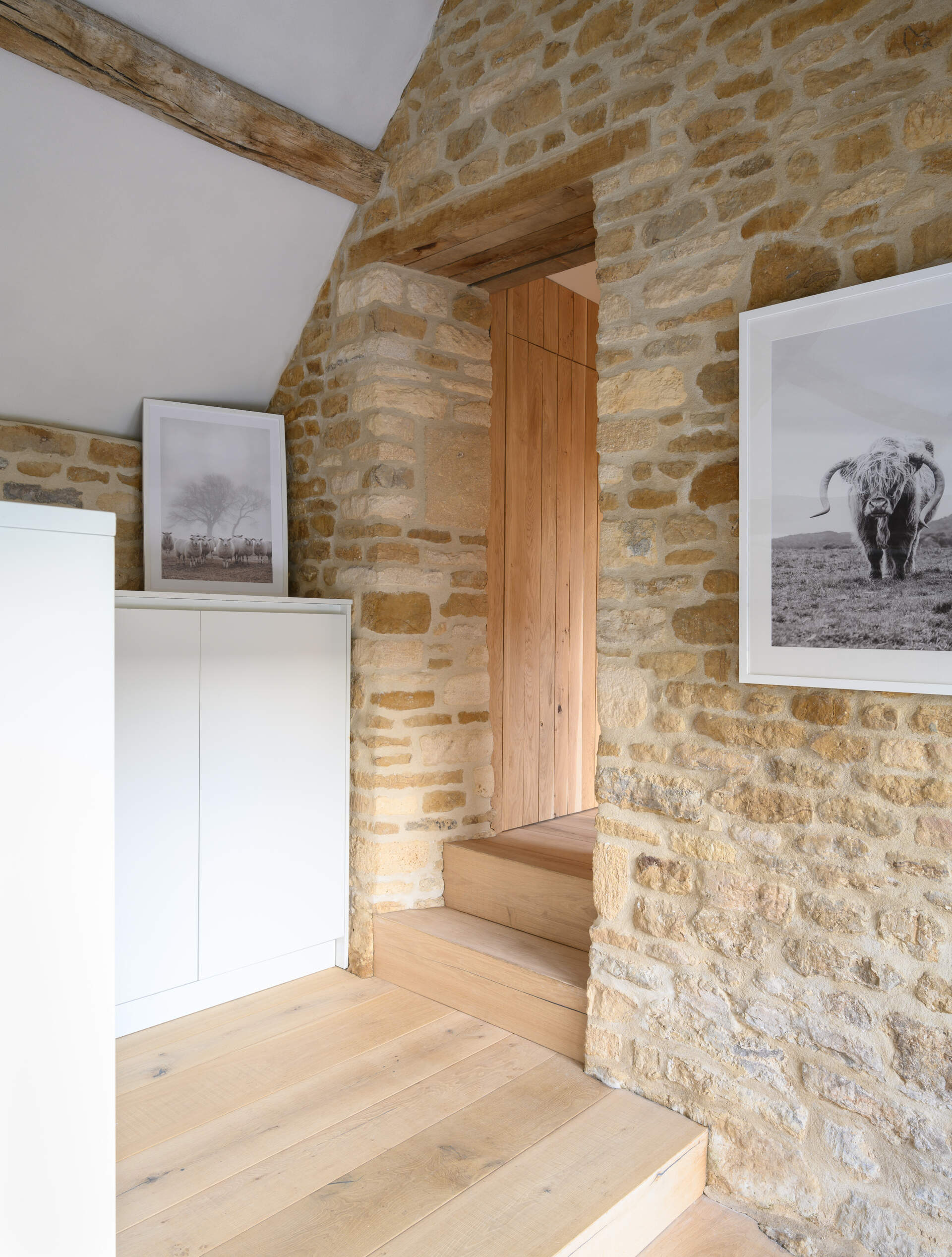
A country home must handle mess, so the boot room was designed to be:
- Discreetly integrated
- Hardwearing yet stylish
- A functional drop zone for muddy boots and outdoor gear
Upstairs: Clever Use of Compact Spaces
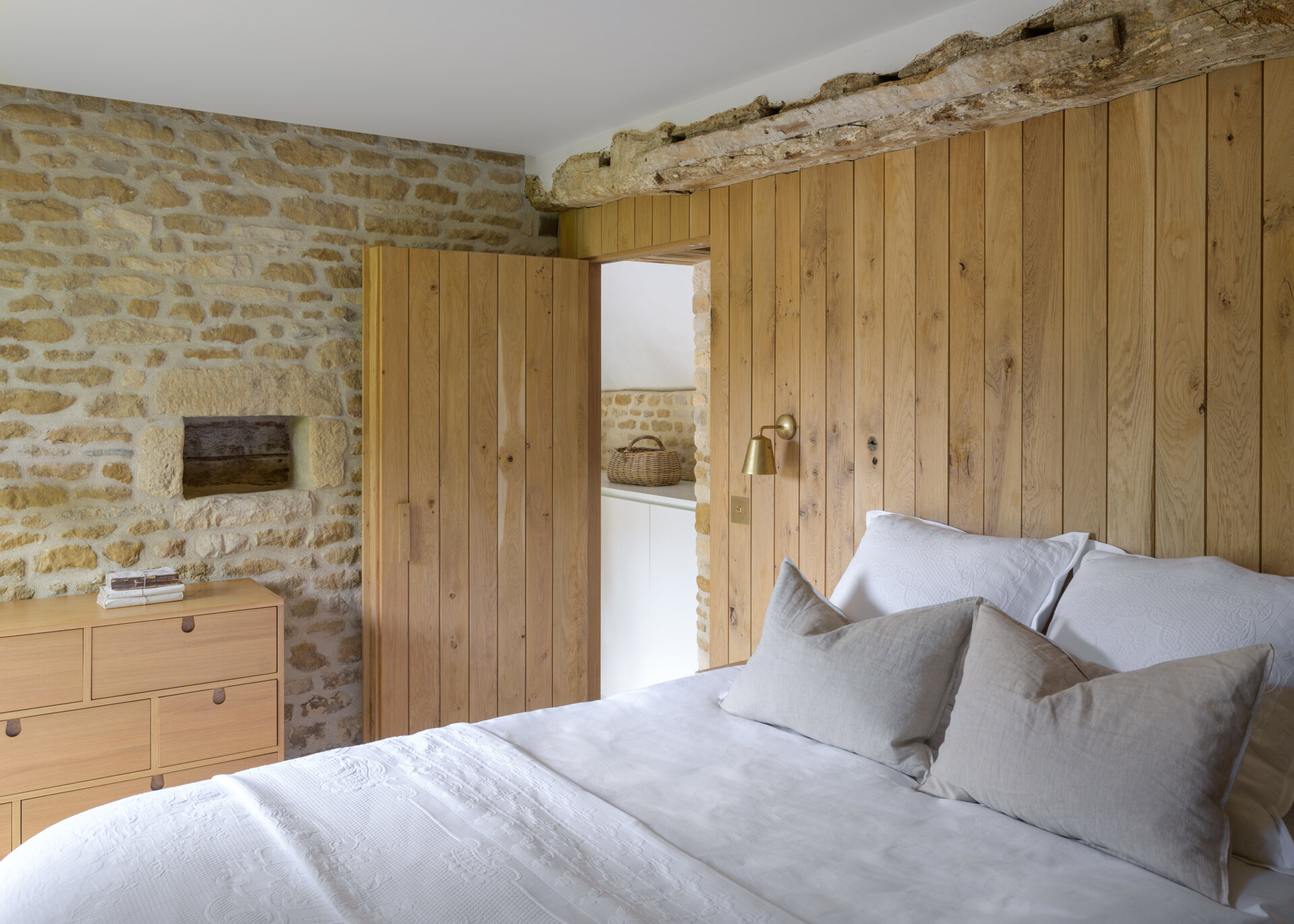
Guest Bedroom & Bathroom
- Neutral palette for a calming retreat
- Herringbone stone tiles in the bathroom for subtle texture
- Freestanding basin & brass accents for a modern touch
Primary Suite: A Cozy Hayloft Escape
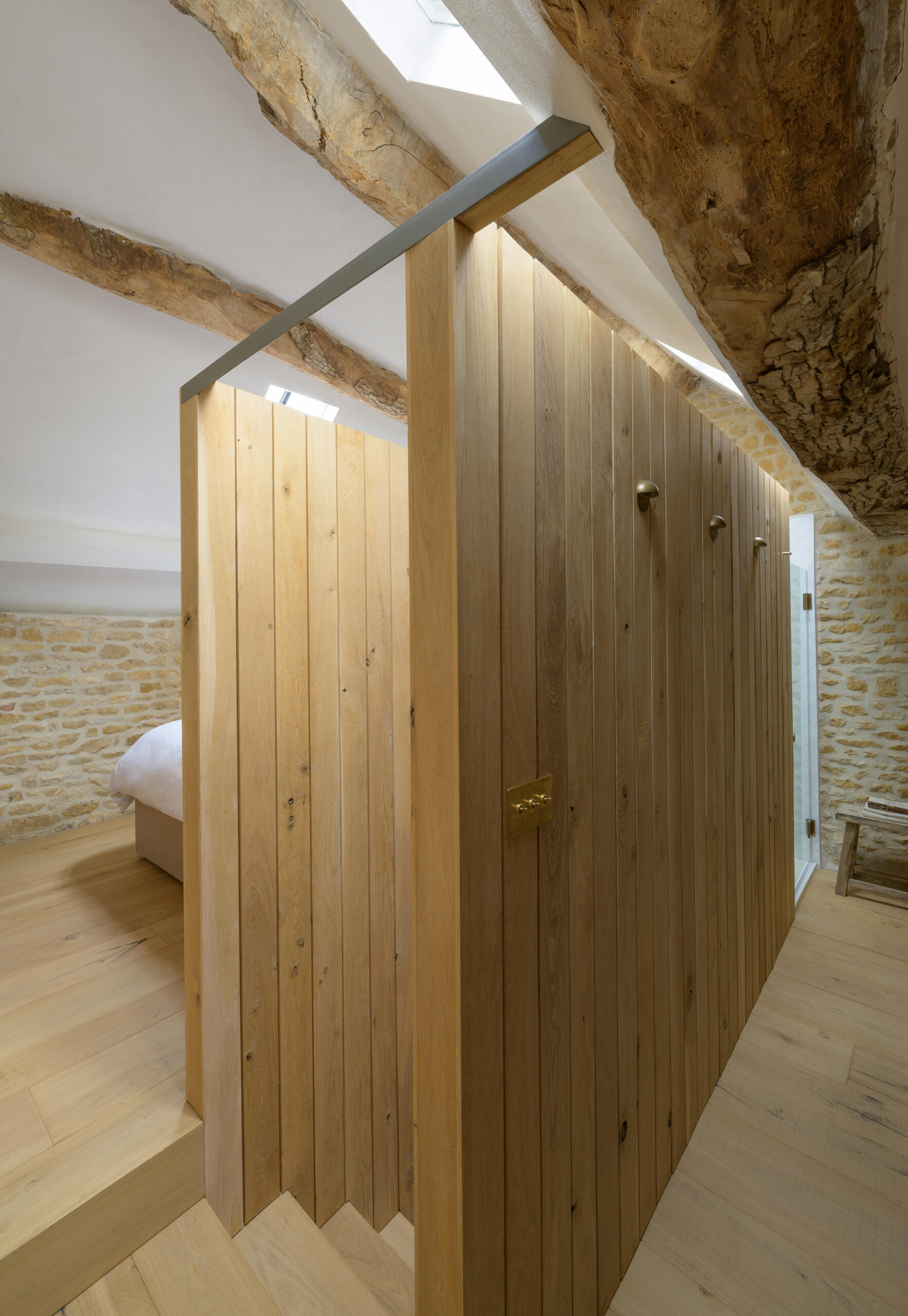
The former hayloft now houses the primary bedroom, where space is maximized with:
- A freestanding bathtub beside the bed (a luxurious yet space-saving choice)
- A shower suspended over the stair void (showcasing inventive design)
- Eaves storage to optimize every inch
Conclusion: A Thoughtful Fusion of Past and Present
This Cotswolds barn conversion is a masterclass in sensitive restoration and modern design. By honoring the building’s history while introducing sustainable materials and smart spatial solutions, Design Storey has created a home that feels both timeless and contemporary.
For those considering a barn conversion or rural retrofit, this project proves that constraints can inspire creativity—and that the best designs emerge when we work with a building’s quirks, not against them.
Catch up on the latest projects, trends, and bold ideas in the world of “architectural” content on ArchUp.