Breathing New Life into a Flemish Fermette in Belgium: Transforming a Rural Home into a Model of Sustainability and Longevity

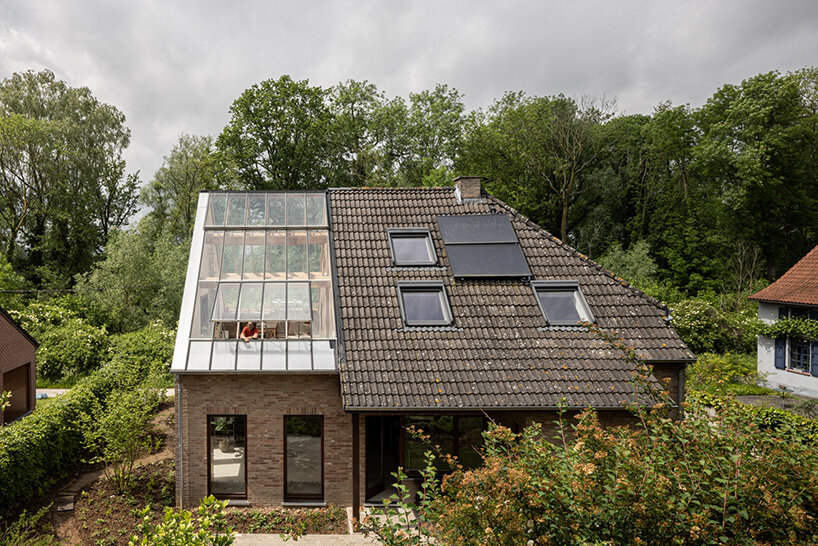
In the heart of Belgium’s Pajottenland region, architecture studio HO! Architectuur has reimagined a 1990s Fermette (a traditional small farmhouse), turning it into a sustainable home that reflects the vision of its owners Mark and Ann, a couple working in the social sector who sought to reconnect their aging family home with the surrounding landscape while ensuring it would support lifelong living.
From Traditional Home to Modern Sustainability Prototype
What began as a personal renovation request soon evolved into a broader question about the future of the Flemish Fermette, a ubiquitous rural housing typology in Belgium often dismissed as outdated and architecturally insignificant. HO! Architectuur embraced the challenge of redefining this model while preserving its essence.
The result? A compact, energy-conscious home that harmonizes with nature, centered around:
- A thermal earth wall (remed-earth wall) for natural temperature regulation.
- A central earthen stove replacing the old oil boiler, providing sustainable heating.
- Repurposed abandoned spaces (like the garage) to enhance functionality.
A Collaborative Process Between Family and Architects
Originally built as a Fermette, the house was purchased by Mark and Ann in the 1990s to raise their daughters. Three decades later, they wanted to modernize it without losing its sentimental value.
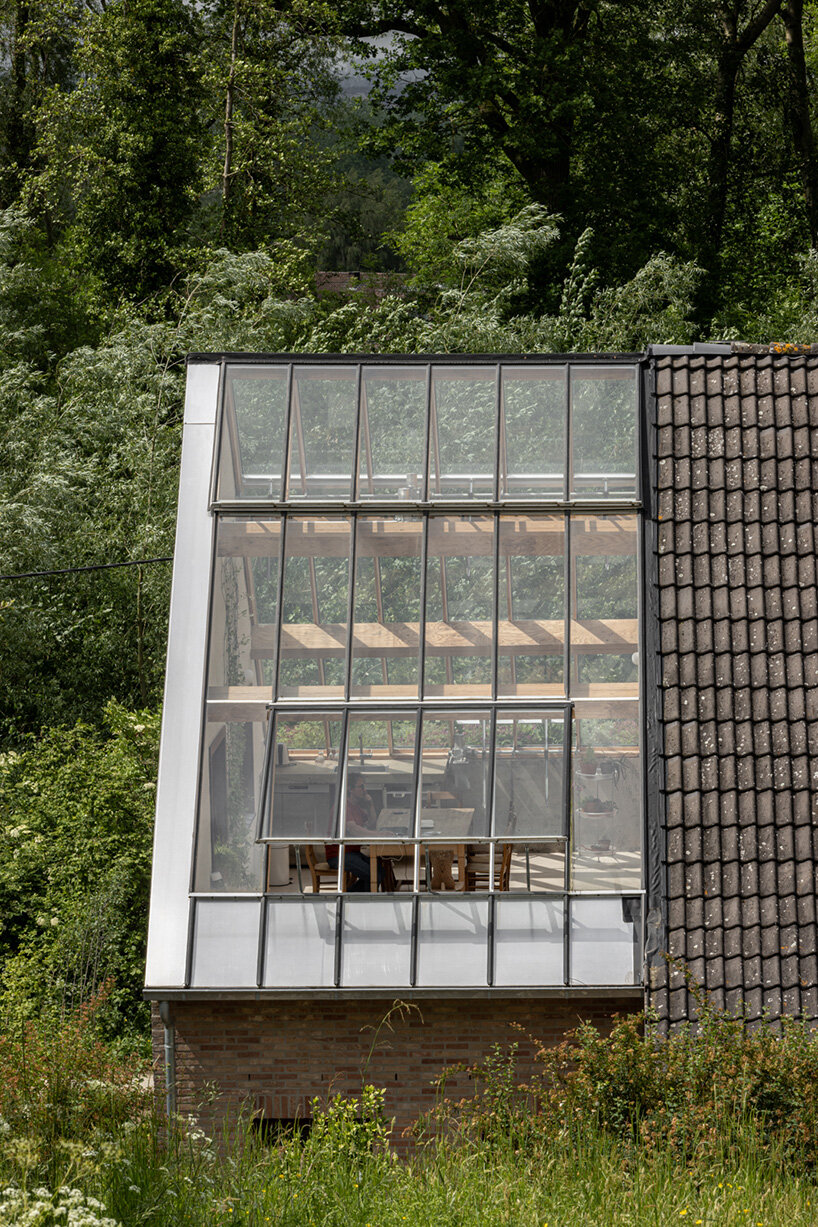
HO! Architectuur led a full renovation, starting with a critical analysis of the original layout, which was disconnected from the surrounding terrain. Their solution included:
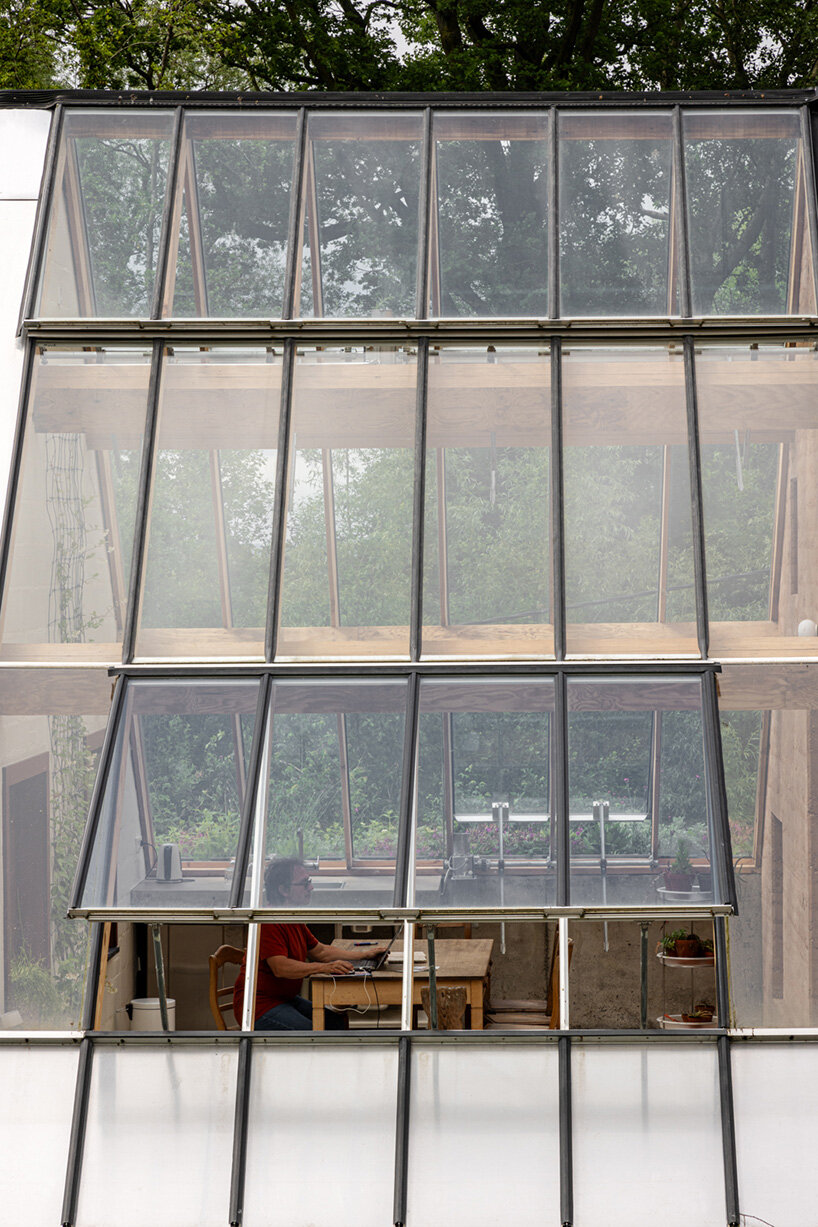
- Removing old bedrooms to create a sunlit winter garden shielded by the thermal earth wall.
- Transforming the former entrance into an open living area overlooking the garden.
- Converting the oversized hallway into an intimate seating area around the central stove.
- Adding a ground-floor bedroom and bathroom for age-friendly accessibility.
Why This Project Matters
Omloop Farmhouse is more than a home renovation it’s a blueprint for revitalizing rural housing in Belgium and beyond. Instead of demolition or replacement, it proves that these structures can become:
- Sustainable (reducing carbon footprint via natural materials like clay).
- Adaptable (supporting aging-in-place needs).
- Reconnected with nature (through biophilic design).
“This transformation isn’t just a solution for Mark and Ann—it’s an architectural response to a social question: How can we repurpose old buildings without losing their history or efficiency?” HO! Architectuur
✦ ArchUp Editorial Insight
This project highlights the potential of breathing new life into rural architecture through sustainable, intelligent design, as HO! Architectuur transforms a traditional home into a contemporary space without erasing its identity. However, the discussion could delve deeper into the economic feasibility of such transformations, particularly for lower-income families while natural materials like earth walls are eco-friendly, they aren’t always the most accessible. Still, the design stands as an inspiring example of how architecture can balance modernity, emotional memory, and environmental responsibility, paving the way for more innovative housing retrofits.
Brought to you by the ArchUp Editorial Team
Inspiration starts here. Dive deeper into Architecture, Interior Design, Research, Cities, Design, and cutting-edge Projectson ArchUp.