Design of a technology complex and a technological district in Slovakia


Design of a technology complex and a technological district in Slovakia,
The architectural team consisting of BIG, Inflow, Pantograph, BuroHappold, Arup,
has won a global competition to design a 55,000 square meter technology park.
The team provided a blueprint to design a collaborative,
friendly creative hub where bold cybersecurity solutions emerge.
The campus is to be located in Patronka, Bratislava,
and will replace the former military hospital between the Carpathian Mountains and downtown Bratislava.
The project is named after ESET Campus, the new technology campus,
which sprawls on a natural forest site just 10 minutes from the city center.

Project Features
The campus consists of 12 individual buildings of varying sizes and uses organized around a central courtyard.
The perimeter of the buildings will be designated for public spaces,
and the four buildings within the site will be home to ESET’s 1,500 employees.
With the possibility of increasing the number of employees to 2,400 employees.
BIG has created a new network of streets for the new neighborhood that repeats nature’s spatial hierarchy,
taking into account the low and wide perimeter of the common public spaces
The common spaces are also easily accessible to all, allowing public life to flourish within these streets.
ESET’s main business facilities are located on top of an architectural “mountain” reminiscent of the nearby Carpathians.

Design of a technology complex and a technological district in Slovakia
This volume provides corporate teams with innovative facilities while maintaining privacy.
Architectural designers have dissolved the ESET campus into an urban village of interconnected buildings, framing public pathways and urban plazas.
The assortment of individual pavilions is united by undulating solar surfaces,
To form a single silhouette rises from the forest park like a man-made addition to the Small Carpathian Mountain Range.
The ESET Campus is set to spark the formation of the new Innovation District in Bratislava.
The campus itself opens onto the park on the northwest side, providing protection from both the busy main street and railways,
and connecting the Carpathian wilderness to the city.
The park is filled with public areas for recreation,
interaction and relaxation while enhancing the local biodiversity and creating suitable enclaves for outdoor work,
since the building is integrated into the existing landscape.
Design goals
The design aims to operate a carbon-neutral campus,
as well as reduce embodied carbon by building it in the most sustainable way possible.
The campus has a main courtyard, located in the middle of the four ESET HQ buildings.
This courtyard is intended to serve as a focal point for the local community.
Public spaces, such as retail, educational, sports and cultural purposes
are spread around this courtyard, revitalizing the ground floor and revitalizing the street network.
BIG also divides the total mass into different sizes so that the volumes have multiple interfaces.
The open corners of the four ESET HQ buildings, along with the views of each building from the surrounding streets,
create inviting moments that further connect the outside with the inside.

Design of a technology complex and a technological district in Slovakia
ESET Campus is set to set a new standard for sustainability
The primary design intent is to create an all-electric building,
with a spacious solar deck and ground source heat pumps that create a significant amount of renewable energy.
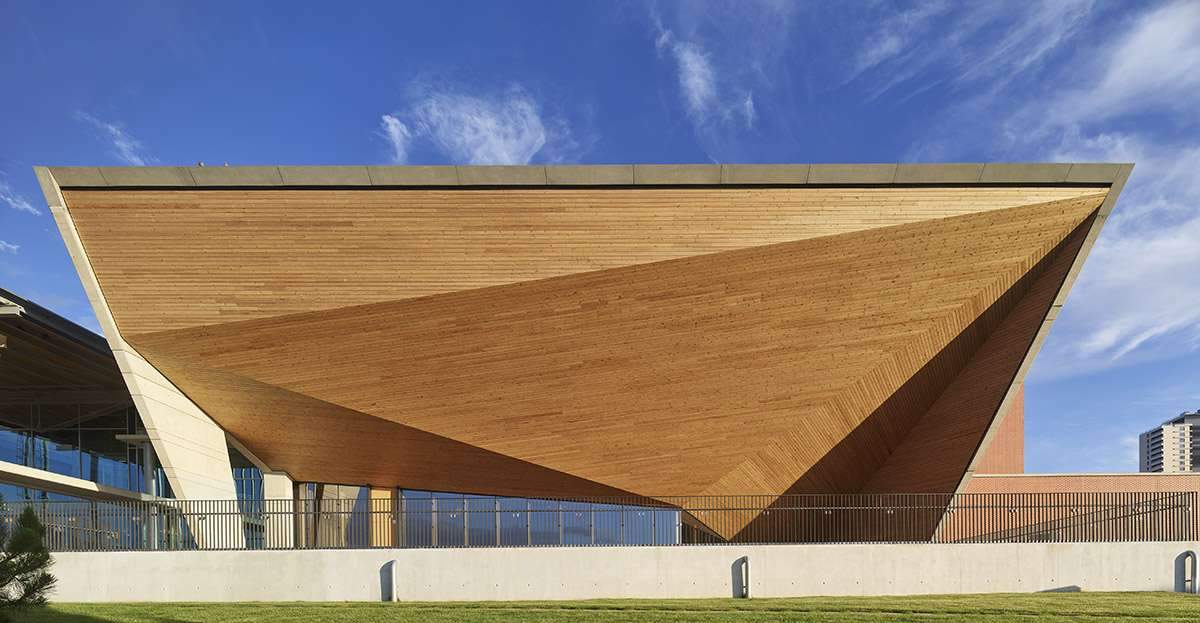
The use of timber throughout the project ensures the lowest possible carbon footprint.
Upon entering ESET HQ’s main lobby, which is the largest building on the campus,
ESET staff are greeted by a staircase that connects the ground floor to the upper floors.
While each of the four buildings in ESET HQ has a central atrium,
which is lit by skylights in the floorboard areas, staircases in the main ESET HQ lobby are surrounded by the social and lively spaces,
enhancing the connection to the active ground level to the upper office levels.
Design of a technology complex and a technological district in Slovakia
The campus will also be fully powered by electricity, to contribute to the campus’ carbon-negative goal,
and to rely on renewable sources – including photovoltaic roofs.
The buildings’ façade will be covered with timber and glass to help create a high-performance façade system.
The team will add balconies to provide additional outdoor space and shade
while providing natural ventilation to increase the energy efficiency of the campus.
The campus is expected to start in 2024, and it is scheduled to open in 2027.