When Lace Becomes Architecture Some artists build a visual language so consistent and so precise that it becomes immediately legible across any surface, any city, any scale. NeSpoon, the Warsaw-based street artist, is one of them. For fifteen years, she has been translating the intricate geometry of traditional Polish lace, specifically the handmade Koniaków patterns originating from the Silesian Beskids, into monumental murals, ceramic installations, and ephemeral street works that now exist across more than 100 cities in 40 countries. Her work has appeared at the Louvre-Lens Museum, the Polish Pavilion at Expo 2020 in Dubai, and the European Parliament. She is currently developing a project connected to the reopening of the Pergamon Museum in Berlin. These are not incidental institutional appearances. They reflect a sustained critical recognition of what NeSpoon is actually doing: rescuing an anonymous, feminine, centuries-old craft tradition from the margins of cultural memory and returning it, enlarged, abstracted, and placed on the most visible surfaces of contemporary urban life. The Mural at DOMOTEKA The new commission is a large-scale mural being created in the main hall of DOMOTEKA Design Centre, Warsaw's first retail destination entirely dedicated to design, located less than twenty minutes from the city centre. Work began in March 2026, with the piece scheduled for completion by the end of the month. Visitors to the venue can observe the process live, from initial sketches through to final detail. The choice of location is worth examining. DOMOTEKA is not a gallery or a museum. It is a commercial design centre housing over 600 brands. The decision to invite NeSpoon to create a permanent mural in its primary circulation space is a statement about the relationship between retail, design, and public art, and about what kind of experience a design-focused commercial venue can credibly offer beyond the transactional. Agata Brzezińska, Senior Director and Head of CEE at Pradera, the fund that owns DOMOTEKA, framed the invitation as a natural continuation of the venue's identity: a place oriented toward quality, design, and interior architecture that aims to be more than a commercial space. Art here is not decoration. It is meant to generate a different kind of engagement with the space. The Source Material: Koniaków Lace Understanding the mural requires understanding the source. Koniaków lace is a craft tradition associated with the village of Koniaków in southern Poland, produced almost exclusively by women using needles and thread, with patterns passed between generations without written documentation. The designs are characterised by radial symmetry, dense interlocking curves, and a structural logic that is at once highly decorative and geometrically rigorous. NeSpoon's relationship to this material is neither nostalgic nor ethnographic. What she extracts from it is the structural principle, the underlying geometry of intersection, repetition, and void, and she scales it to the dimensions of a building facade or, in this case, a commercial hall. The anonymity of the original makers is part of what she is addressing. These patterns were created by women whose names were never recorded. Placing them on the surfaces of cities is one way of insisting on their presence in cultural memory. Scale, Surface, and the Logic of the Work At a monumental scale, lace undergoes a transformation that is not merely quantitative. What reads at close range as textile, intimate, tactile, domestic, becomes at building scale something closer to structural drawing. The voids that define the pattern in fabric become negative space in a mural composition. The threads become lines. The result has been described accurately as resembling delicate openwork structures floating across facades, which is the visual quality that has made NeSpoon's murals globally circulated images: they are simultaneously recognisable as pattern and as architecture. The interior environment of DOMOTEKA presents different conditions than the exterior facade. Controlled light, a defined ceiling height, a nd a surrounding context of furniture showrooms and design objects. Interior murals of this scale carry a different relationship to the viewer: the distance is fixed, the approach is frontal, and the context is commercial rather than civic. These are not deficiencies. They are simply different spatial terms that the work must negotiate. ✦ ArchUp Editorial Insight The DOMOTEKA commission raises a question increasingly relevant in contemporary design culture: what does it mean for a commercial retail venue to commission serious public art? NeSpoon's source material, anonymous, feminine, pre-industrial craft, carries enough cultural specificity that it cannot be reduced to decorative wallpaper without remainder. The Koniaków tradition is not a generic pattern. It is geographically specific, socially embedded knowledge production that happens to generate extraordinary visual material. Whether the interior commercial context sustains that specificity, or flattens the work into atmosphere, will depend partly on how the venue contextualises the commission and partly on the intrinsic qualities of the work itself, which across very different urban environments have consistently proven durable. Conclusion The DOMOTEKA mural is a genuine test of what public art can do inside the spaces of everyday commercial life. It is worth following not as a marketing exercise but as a case study in how craft memory, street art practice, and the designed interior can meet, and what each gives up or gains in that encounter.

حين تصبح الدانتيل عمارة: NeSpoon في DOMOTEKA

Home » تصميم » حين تصبح الدانتيل عمارة: NeSpoon في DOMOTEKA

حين تصبح الدانتيل عمارة

ثمة فنانون يبنون لغتهم البصرية بدأب وثبات حتى تصبح تلك اللغة مقروءةً فوراً على أي سطح وفي أي مدينة وبأي حجم. NeSpoon، الفنانة التشكيلية الوارسوية، واحدة منهم. منذ خمسة عشر عاماً وهي تُترجم الهندسة الدقيقة لدانتيل بولندي تقليدي، تحديداً أنماط Koniaków اليدوية المنسوبة إلى منطقة سيليزيان بيسكيدس، إلى جداريات ضخمة ومنشآت خزفية وأعمال شوارع عابرة باتت موجودة في أكثر من 100 مدينة في 40 دولة.

ظهرت أعمالها في متحف Louvre-Lens والجناح البولندي في إكسبو 2020 دبي والبرلمان الأوروبي. وهي تطور حالياً مشروعاً مرتبطاً بإعادة افتتاح متحف بيرغامون في برلين. هذه ليست حضوراً مؤسسياً عرضياً، بل تعكس اعترافاً نقدياً متواصلاً بما تفعله NeSpoon فعلاً: إنقاذ تقليد حرفي مجهول الهوية أنثوي ضارب في القدم من هوامش الذاكرة الثقافية وإعادته مكبّراً ومُجرَّداً على أكثر أسطح الحياة الحضرية المعاصرة ظهوراً.
الجدارية في DOMOTEKA

المشروع الجديد جدارية ضخمة تُنجَز في القاعة الرئيسية لمركز DOMOTEKA للتصميم في وارسو، وهو أول وجهة تجزئة في بولندا مخصصة كلياً للتصميم، تقع على بُعد أقل من عشرين دقيقة من مركز المدينة. بدأ العمل في مارس 2026 مع استكمال المقرر بنهاية الشهر. يستطيع زوار المركز مشاهدة العملية مباشرةً من الرسوم الأولية حتى التفاصيل النهائية.

اختيار الموقع يستحق التأمل. DOMOTEKA ليست غاليري ولا متحفاً. إنها مركز تجاري للتصميم يضم أكثر من 600 علامة تجارية. قرار دعوة NeSpoon لإنشاء جدارية دائمة في مساحة الحركة الرئيسية للمركز هو تصريح بطبيعة العلاقة بين التجزئة والتصميم والفن العام، وبنوع التجربة التي يمكن لمركز تجاري موجّه نحو التصميم أن يقدمها بمصداقية تتخطى العملية التجارية البحتة.

أطّرت أغاتا برزيزينسكا، المديرة الأولى ورئيسة منطقة وسط وشرق أوروبا في Pradera، الصندوق المالك لـ DOMOTEKA، الدعوة بوصفها استمراراً طبيعياً لهوية المركز: مكان موجّه نحو الجودة والتصميم وعمارة الداخل يسعى إلى أن يكون أكثر من مجرد فضاء تجاري. الفن هنا ليس ديكوراً، بل أداة لنوع مختلف من التفاعل مع المكان.

المادة الخام: دانتيل Koniaków

فهم الجدارية يستلزم فهم المصدر. دانتيل Koniaków تقليد حرفي مرتبط بقرية Koniaków جنوب بولندا، تنتجه النساء تقريباً حصراً بالإبرة والخيط، وتتناقل أنماطه الأجيال شفهياً دون توثيق مكتوب. تتسم تصاميمه بالتناسق الشعاعي والمنحنيات المتشابكة الكثيفة والمنطق البنيوي الذي يجمع بين الزخرفة الغنية والصرامة الهندسية معاً.

علاقة NeSpoon بهذه المادة ليست حنينية ولا أنثروبولوجية. ما تستخلصه منها هو المبدأ البنيوي، هندسة التقاطع والتكرار والفراغ، ثم تُكبّره إلى مقياس واجهة مبنى أو في هذه الحالة قاعة مركز تجاري. ومجهولية صانعات الأصل جزء مما تعالجه. هذه الأنماط أبدعتها نساء لم تُسجَّل أسماؤهن قط. وضعها على أسطح المدن طريقة للإصرار على حضورهن في الذاكرة الثقافية.

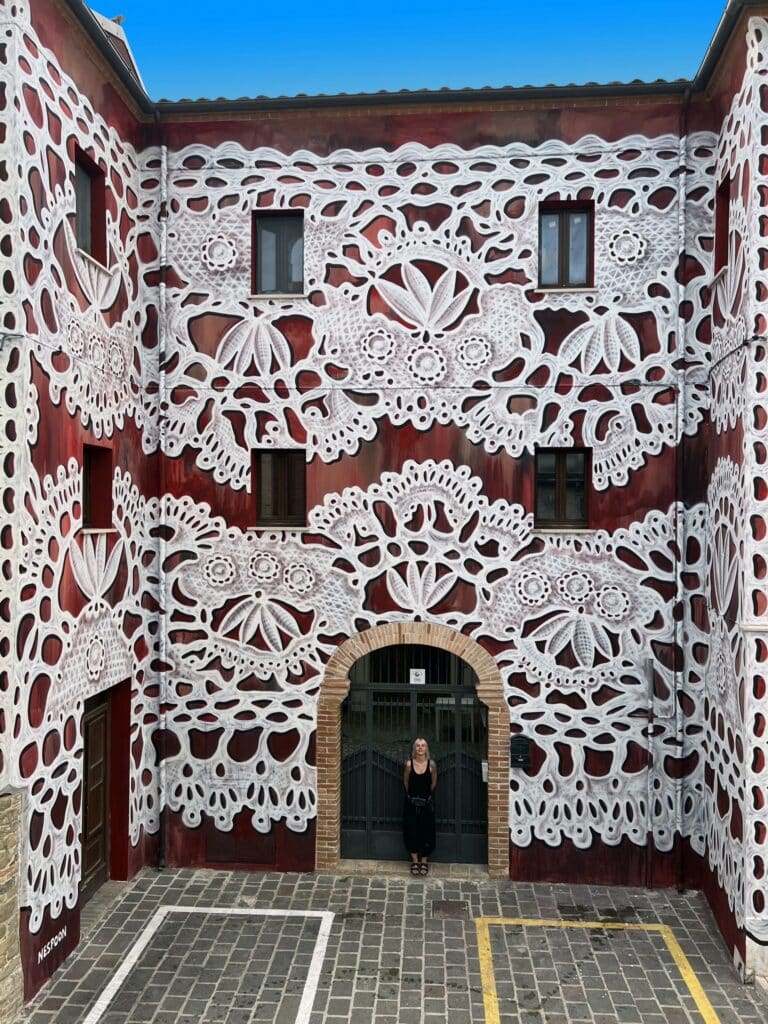
الحجم والسطح ومنطق العمل

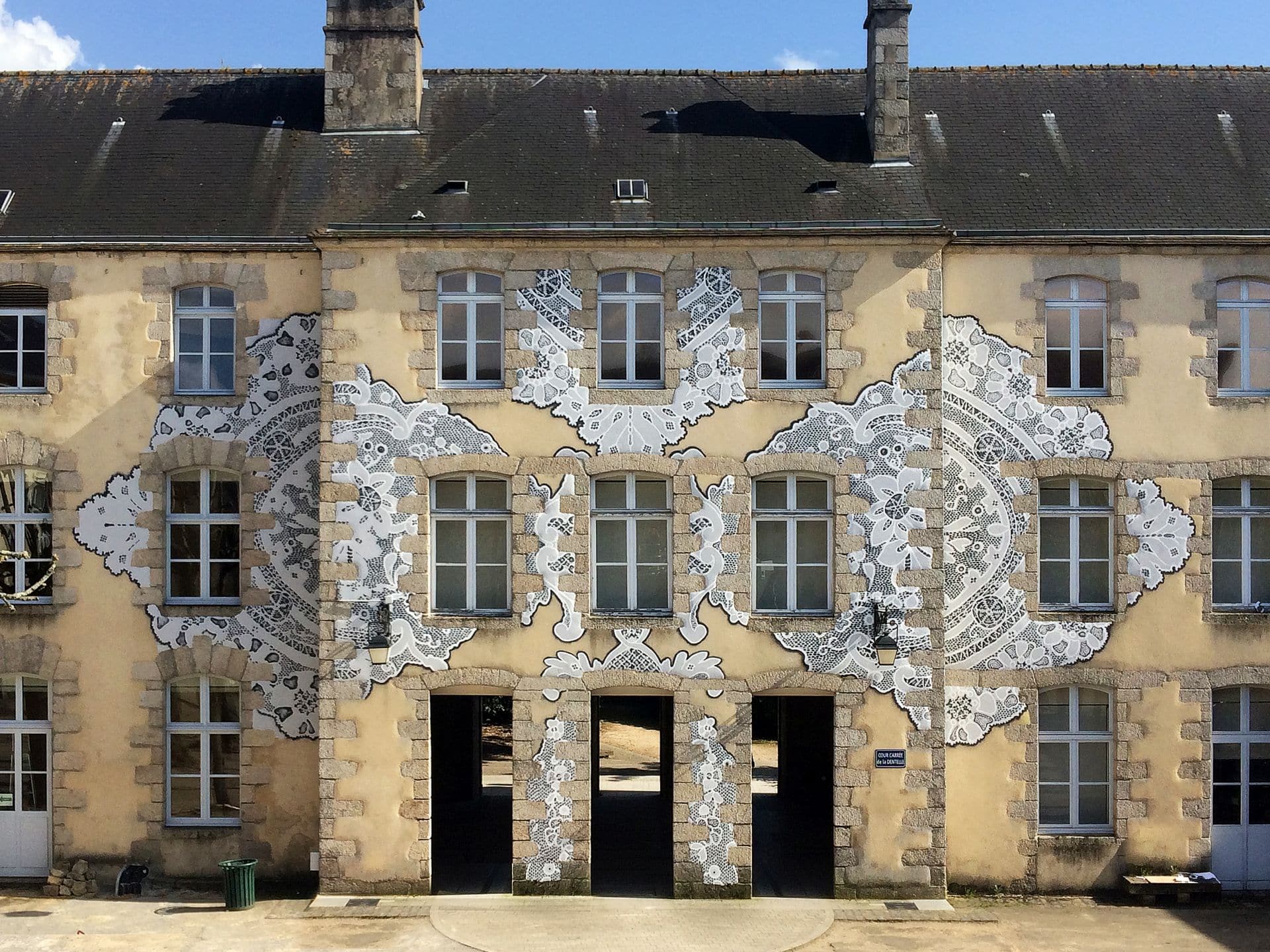
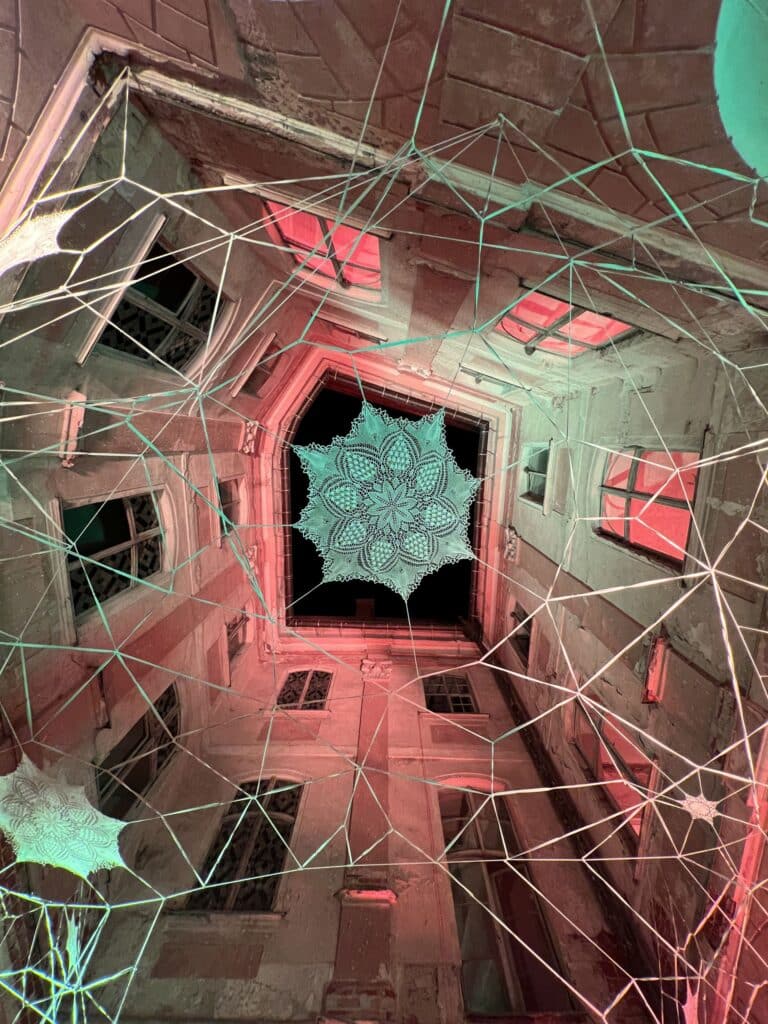
على النطاق الضخم، يمر الدانتيل بتحول ليس كمياً فحسب. ما يُقرأ عن قرب بوصفه نسيجاً حميماً ملموساً منزلياً يصبح على مستوى المبنى أقرب إلى رسم إنشائي. الفراغات التي تُعرِّف النمط في القماش تصبح فضاءً سلبياً في تكوين الجدارية. الخيوط تصبح خطوطاً. والنتيجة وُصفت بدقة بأنها تشبه هياكل شبكية رقيقة تعوم فوق الواجهات، وهذه هي الجودة البصرية التي جعلت جداريات NeSpoon صوراً متداولة عالمياً: تبدو في آنٍ واحد نمطاً وعمارة.

البيئة الداخلية لـ DOMOTEKA تفرض شروطاً مختلفة عن الواجهة الخارجية. إضاءة مضبوطة وارتفاع سقف محدد وسياق محيط من صالات عرض الأثاث ومنتجات التصميم. الجداريات الداخلية بهذا الحجم تحمل علاقة مختلفة مع المشاهد: المسافة ثابتة والمواجهة أمامية والسياق تجاري لا مدني. هذه ليست قيوداً بل شروط فراغية مختلفة على العمل أن يتفاوض معها.

Liverpool waterfront skyline featuring the Royal Liver Building and historic port architecture along the River Mersey.
أفق مدينة ليفربول التاريخي على ضفاف نهر ميرسي، ويضم مبنى رويال ليفر الشهير. © إيلكر جيريت / شاترستوك – جميع الحقوق محفوظة.

✦ مراجعة ArchUp التحريرية

تطرح مشاركة DOMOTEKA سؤالاً متزايد الأهمية في ثقافة التصميم المعاصرة: ماذا يعني أن يُكلِّف فضاء تجزئة تجاري فناناً بفن عام جاد؟ المادة الخام التي تعمل بها NeSpoon، حرفة مجهولة الهوية أنثوية ما قبل صناعية، تحمل خصوصية ثقافية كافية تمنعها من الانزلاق إلى مجرد ورق جدران زخرفي دون أن يبقى أثر. تقليد Koniaków ليس نمطاً عاماً، بل هو إنتاج معرفي محدد جغرافياً ومُضمَّن اجتماعياً ويصدر بصرياً استثنائياً. هل يحافظ السياق الداخلي التجاري على هذه الخصوصية أم يُفقدها ليحيلها إلى مجرد أجواء؟ الإجابة ستعتمد جزئياً على كيفية سياق المركز للمشروع، وجزئياً على الجودة الذاتية للعمل التي أثبتت ديمومتها عبر بيئات حضرية متباينة جداً.

خلاصة

جدارية DOMOTEKA اختبار حقيقي لما يمكن أن يُقدِّمه الفن العام داخل فضاءات الحياة التجارية اليومية. تستحق المتابعة ليس بوصفها تمريناً تسويقياً بل بوصفها حالة دراسية في كيفية التقاء ذاكرة الحرفة وممارسة فن الشارع والداخل المصمم، وما يتنازل عنه كل طرف أو يكسبه في ذلك اللقاء.
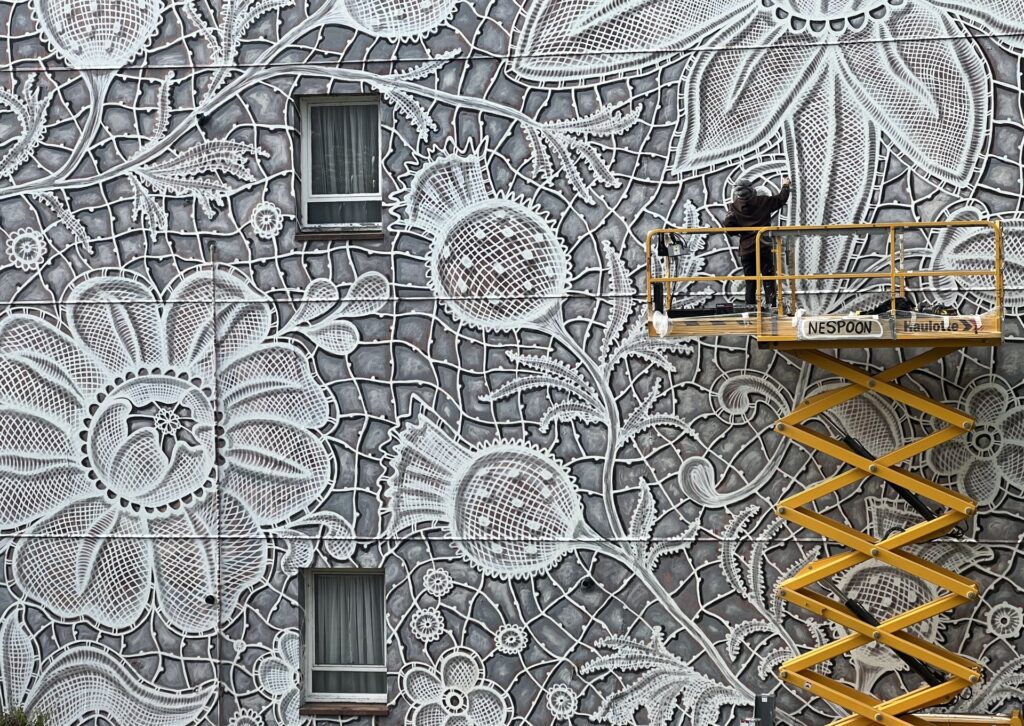
NeSpoon lace inspired mural in Aberdeen, Scotland transforming traditional lace patterns into large scale architectural street art.
جدارية مستوحاة من الدانتيل للفنان نيسبون في أبردين، اسكتلندا، تُجسّد هندسة دانتيل كونياكوف التقليدية في عمل فني حضري ضخم. © نيسبون – جميع الحقوق محفوظة.
https://archup.net/%d8%aa%d8%b5%d8%a8%d8%ad-%d8%b4%d9%82%d8%a9-%d9%81%d9%8a-%d8%b1%d9%88%d9%85%d8%a7-%d8%b9%d8%b1%d8%b6%d9%8b%d8%a7-%d9%84%d9%84%d8%aa%d8%b5%d9%85%d9%8a%d9%85-%d8%a7%d9%84%d9%85%d8%b9%d8%a7%d8%b5%d8%b1/
https://archup.net/%d8%aa%d8%b9%d8%b1%d8%b6-%d9%85%d8%a4%d8%b3%d8%b3%d8%a9-%d8%a8%d9%8a%d8%aa%d8%b1-%d9%85%d8%a7%d8%b1%d9%8a%d9%86%d9%88-%d9%84%d9%84%d9%81%d9%86%d9%88%d9%86-%d9%85%d8%ac%d9%85%d9%88%d8%b9%d8%a9-%d8%aa/

مقدم لكم من فريق تحرير ArchUp

من هنا يبدأ الإلهام. تعمق في الهندسة المعمارية، والتصميم الداخلي، والبحث، والمدن، والتصميم، والمشاريع الرائدة على ArchUp.

Further Reading From ArchUp

اترك تعليقاً

لن يتم نشر عنوان بريدك الإلكتروني. الحقول الإلزامية مشار إليها بـ *