Affordable Housing Under Scrutiny: Does the Section 106 Model Mask a Deeper Quality Crisis?

Consortium JV North has reignited debate around the quality of affordable housing in the UK, calling for registered providers’ feedback to be included in the survey that generates star ratings for housebuilders. The move comes amid a sharp contraction in the Section 106 market, highlighting growing tensions between planning policy ambitions and architectural outcomes on the ground.
Falling Numbers, Rising Concerns
According to the consortium, the number of Section 106 homes forward-purchased by its housing association members has fallen by 69% over the past three years, dropping from 688 units in 2023/24 to just 213 in 2025/26. JV North attributes this decline primarily to concerns that homes delivered to registered providers are of lower quality than those sold to private buyers.
Ratings, Incentives, and Built Quality
The group argues that a key driver of this disparity is the exclusion of housing associations from the National New Homes Survey, which the Home Builders Federation (HBF) uses to award its one-to-five-star ratings. As a result, developers are incentivised to prioritise service and quality for private purchasers, while affordable housing units receive less attention.
Who Is the Client in Large-Scale Housing?
This raises a fundamental question for the built environment professions: who is considered the client in major residential schemes? While private buyers purchase single homes, housing associations often acquire dozens or even hundreds of units within one development, yet report being treated differently in terms of specification and handover quality.
An Architectural Reading of the Issue
From an architectural perspective, the issue extends beyond finishes to encompass design methodologies, construction detailing, and quality control mechanisms in affordable housing delivery. The absence of structured institutional feedback risks normalising minimum-compliance solutions that undermine long-term social and architectural value.
A Forward Look for Architects
For architects, the evolving debate around Section 106 points to the need for stronger advocacy around consistent quality standards, regardless of tenure. It may also prompt greater involvement in post-design stages and the development of evaluation frameworks that reflect the experience of institutional clients. As policymakers reassess the sustainability of the current model, architects could play a pivotal role in redefining how affordable housing is designed, delivered, and assessed.
✦ ArchUp Editorial Insight
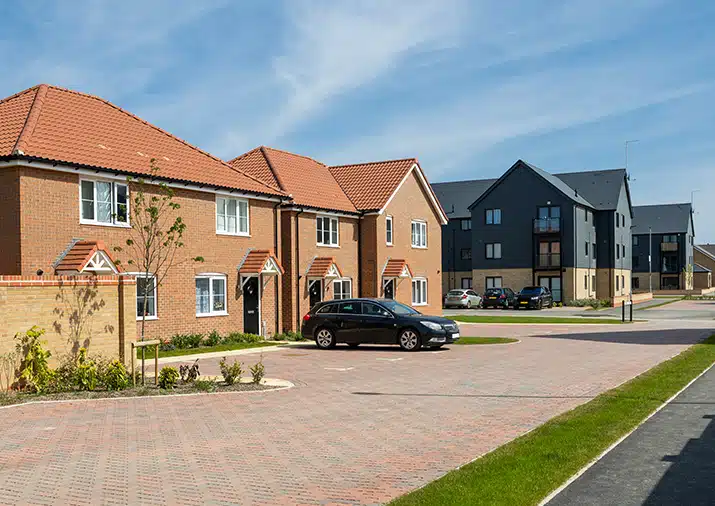
The article situates the current debate around Section 106 housing within the broader framework of Contemporary residential development in the UK, where mixed-tenure schemes rely on standardized construction systems, value engineering, and repetitive material expression to meet planning obligations. These projects often deploy neutral façades, rational floorplates, and efficiency-led spatial dynamics aimed at balancing cost and density within the urban fabric. However, the critique emerges in how architectural intent fragments across tenure lines, raising questions of contextual relevance and functional resilience when affordable units are quietly downgraded in specification and delivery. This disparity suggests not a failure of design language itself, but of governance, feedback mechanisms, and post-completion accountability, where institutional clients are excluded from evaluative systems shaping developer behavior. Ultimately, the issue underscores an architectural ambition that must evolve from visual coherence toward equitable performance, longevity, and social credibility within contemporary housing models.