
Exploring the Link Between Architecture and Culinary Sciences in San Sebastián

A New Research Center Redefines the Future of Culinary Arts
In the Spanish city of San Sebastián, the world witnessed the opening of a new research center affiliated with the Basque Culinary Center, the leading academic institution in culinary sciences and food innovation.
Architectural Design that Combines Science and Creativity
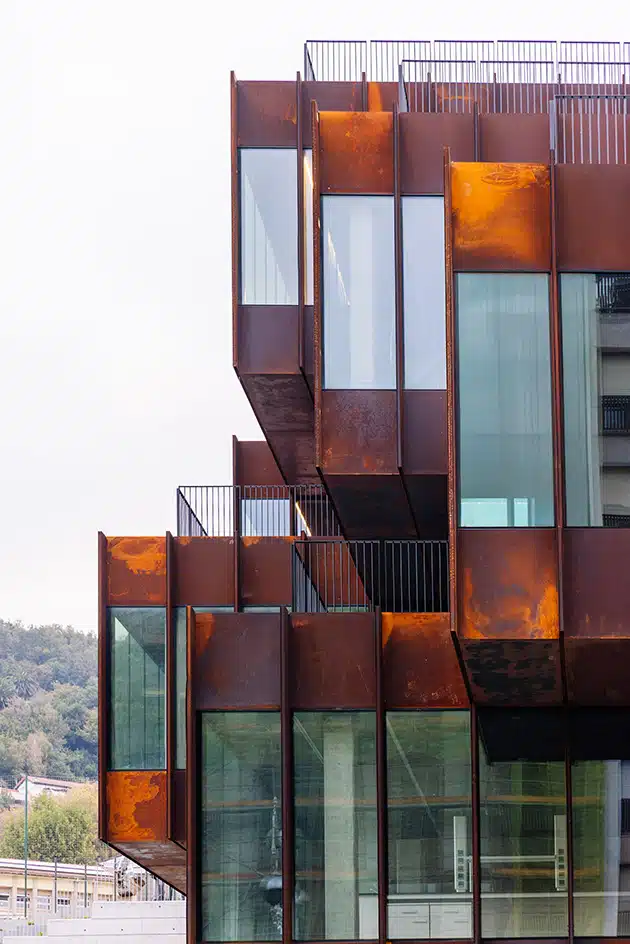
The center is housed in a modern facility spanning 9,000 square meters, designed by the renowned architectural firm Bjarke Ingels Group (BIG). The design is not only visually striking but also expresses the concept of openness and interaction between different fields of knowledge related to the world of food.
The Concept of an “Open Ecosystem”
The building is named Gastronomy Open Ecosystem, a concept that embodies the spirit of collaboration among researchers, chefs, and the community. In addition to laboratories dedicated to cutting-edge food science research, the center also includes open spaces for the public, allowing the exchange of ideas and experiences in a unique interactive environment.
A New Vision for Food Science
The center aims to bridge academic knowledge with everyday culinary practices, by developing new methods to understand the relationship between humans and food, and promoting innovation in this field that unites culture, science, and art.
Basque Culinary Center: From Tradition to Innovation
The Basque Culinary Center is one of Europe’s leading academic institutions specializing in the education and development of haute cuisine. Since its founding in 2011 on the outskirts of San Sebastián, it has contributed to graduating a generation of chefs who combine technical skill with creative vision in the culinary world.
A New Expansion in the Heart of the Gros District
Over a decade after its launch, the center inaugurated a new research and architectural project costing approximately €26 million. The project is located in the vibrant Gros district, reflecting the city’s lively spirit and cultural diversity.
Architectural Language Inspired by Nature
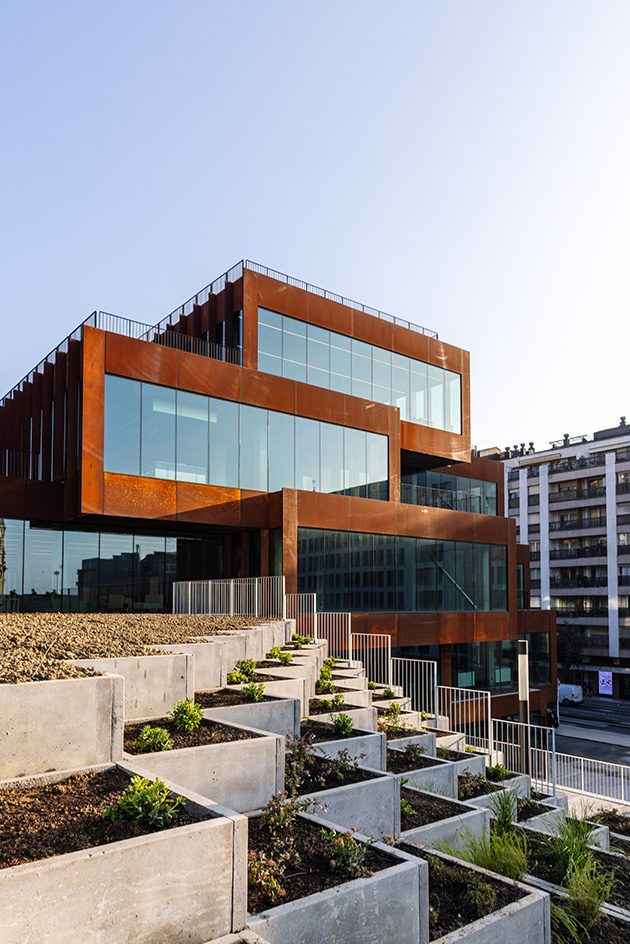
The building’s design features a stepped structure inspired by the crashing waves along the Basque coast, symbolizing the connection between humans, the sea, and nature. At the same time, it echoes Mount Ulía, which forms the natural backdrop of the site, visually and emotionally linking the project to its surroundings.
A Meeting Point Between City, Culture, and Nature
Architect Bjarke Ingels, who first visited San Sebastián during his studies in Barcelona, sees the site as more than just a physical space.
“It is a place where the city meets the mountain, thus serving as a convergence point for disciplines and cultures.”
His words capture the essence of the project: a space that unites science, art, and the environment in a single architectural and human experience.
Interior Design Combining Flexibility and Transparency
A Multi-Use Floor Structure
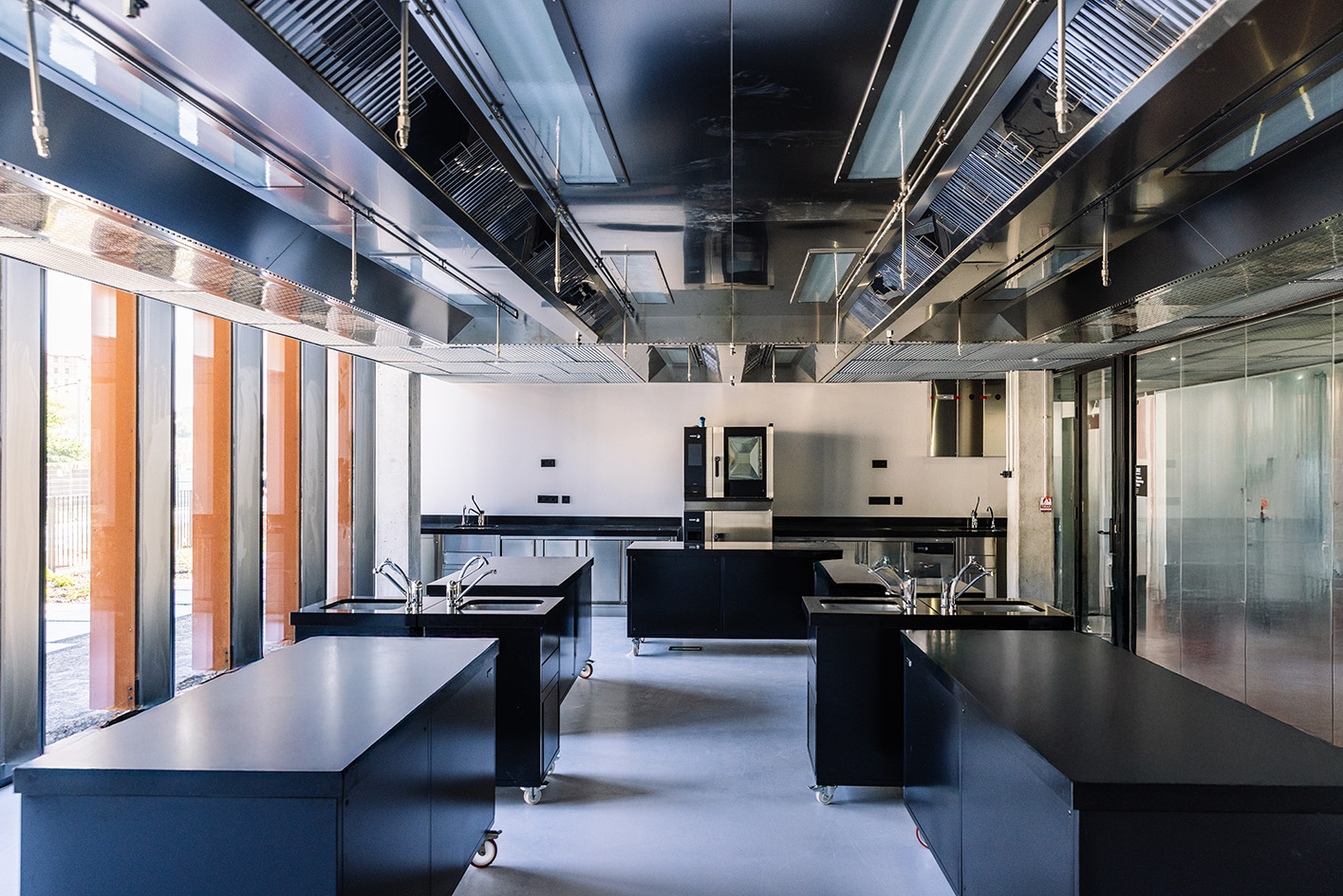
The building consists of five floors, with interior spaces designed for high flexibility to accommodate a variety of needs, whether for work, learning, or recreational activities. This diversity in usage reflects an architectural vision centered on the interaction between people and space.
Colors as a Guiding Element
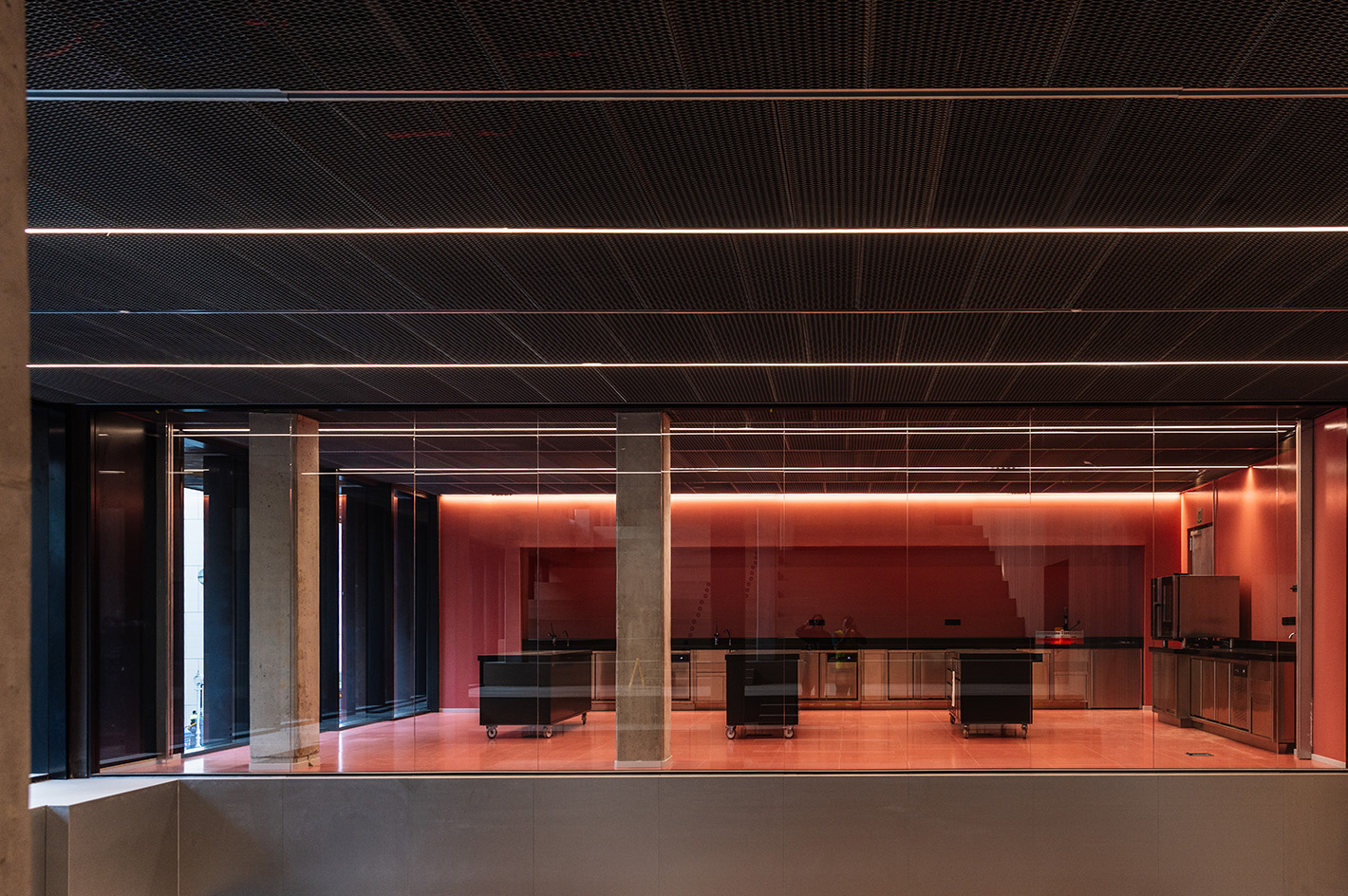
Each floor is distinguished by different shades of pink, inspired by the stages of meat doneness: rare, medium, and well-done. These shades not only add an aesthetic dimension but also serve as a visual guide for users, enhancing their understanding of the layout and functions of each space.
Transparency as a Bridge Between Inside and Outside
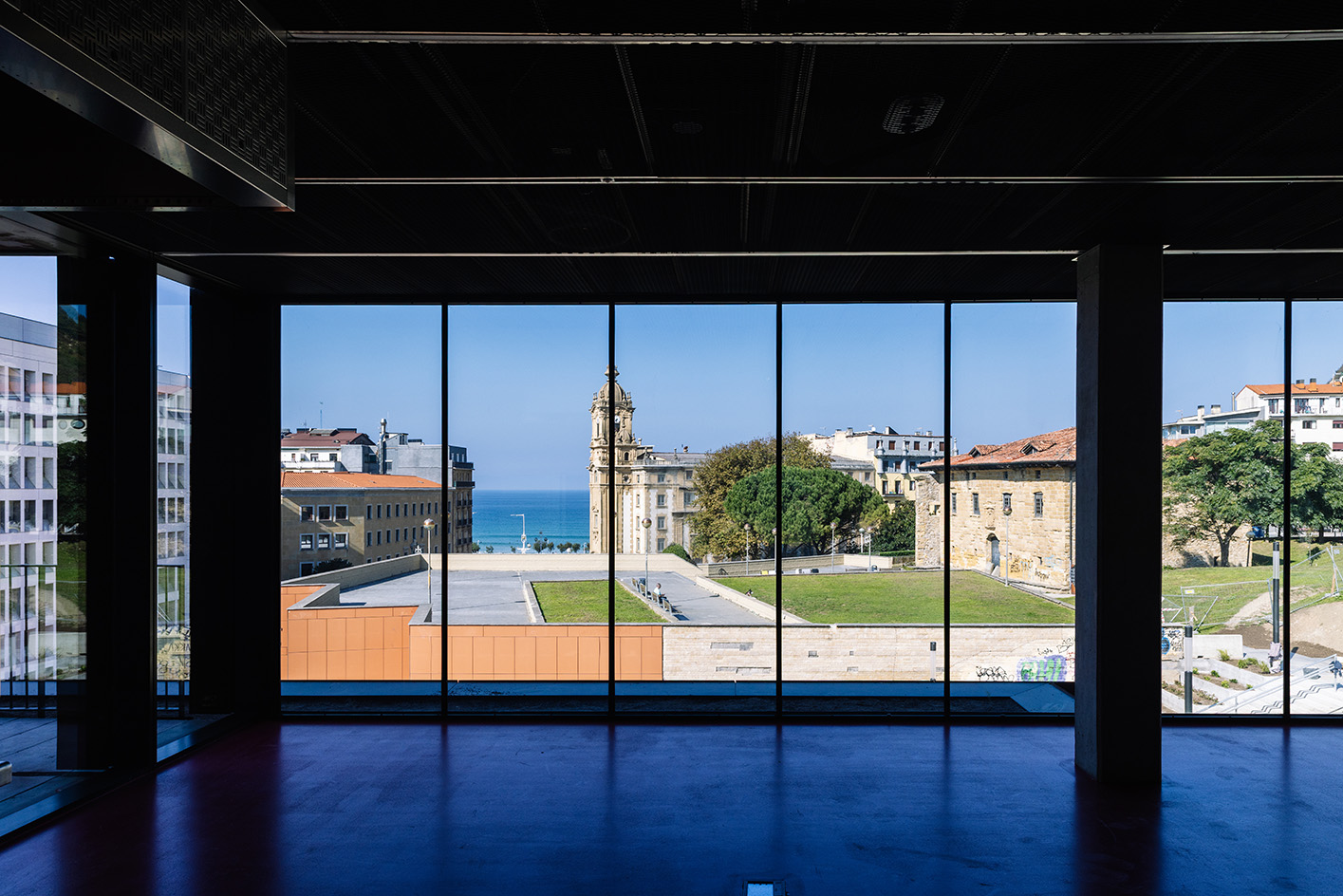
The interior glass walls form what Ingels describes as “display windows,” housing laboratories, classrooms, and workshops. At the same time, the external glass facade allows passersby to observe activities inside the building, creating a visual and communicative interaction between the center and the surrounding city.
The Building’s Interaction with Its Surroundings
Open Spaces and Green Pathways
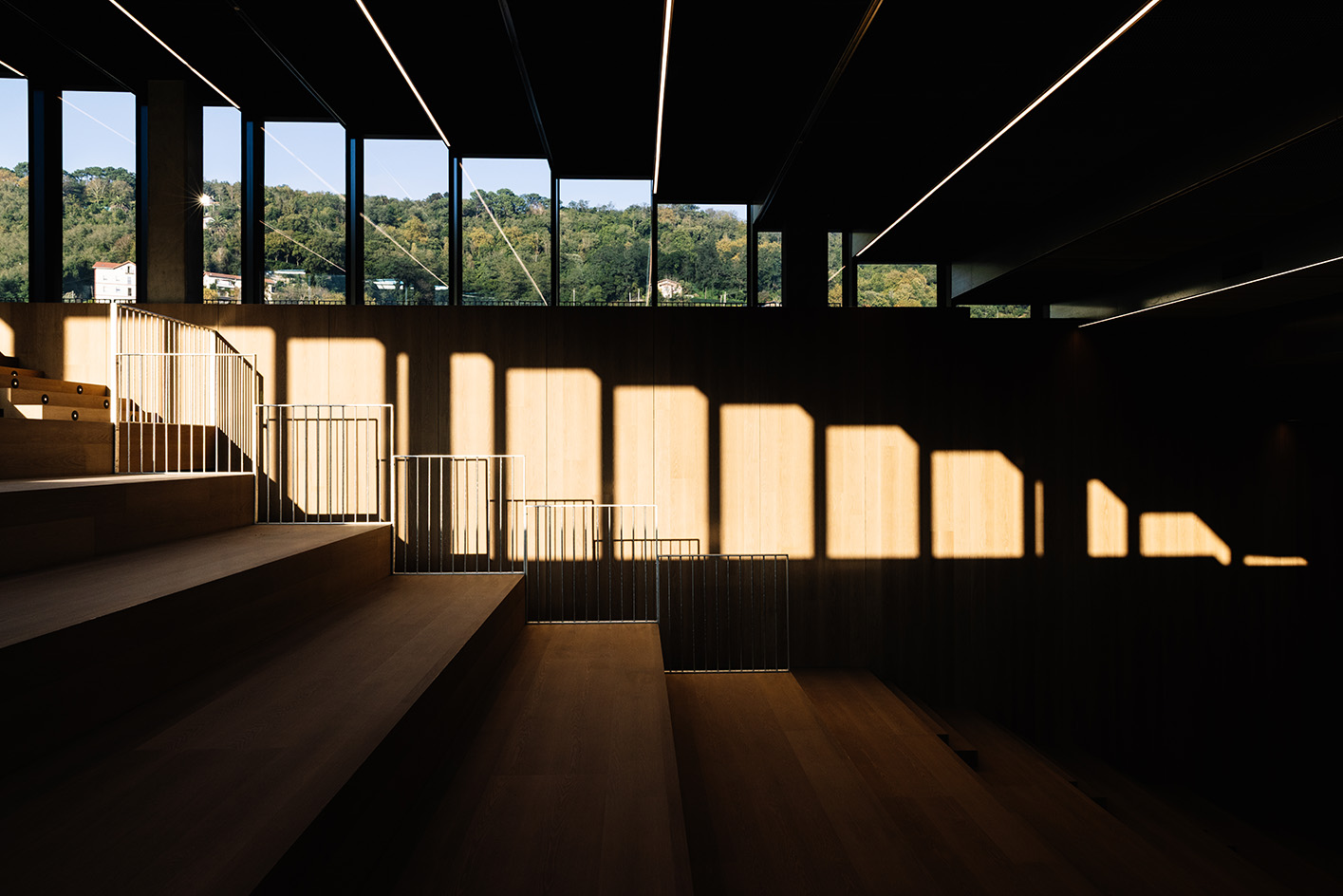
Public pathways and green spaces are distributed around and above the building, creating a visual continuity and fluid connection with the surrounding environment. This layout enhances visitors’ sense of openness and allows them to experience the space in a more natural and comfortable way.
Outdoor Amphitheater and Rooftop Gardens
At the rear of the building, an outdoor amphitheater provides a venue for educational or interactive events. The rooftop gardens offer stunning views of the famous Zurriola Beach, popular among surfers, strengthening the connection between the building and the surrounding marine environment.
A Strategic Location on the Pilgrimage Route
The institute is also situated along the Camino de Santiago, the historic pilgrimage route that spans northern Spain. This location provides pilgrims with a distinctive architectural landmark to contemplate during their journey, adding a cultural and historical dimension to the experience of visiting the center.
Architecture as a Suggestion of Movement
A Design that Integrates Dynamism with Rationality
The building features a design shaped like a moving water wave, despite the absence of any curved lines in its structural framework. Architect Bjarke Ingels explains:
“Everything here is made from modular, prefabricated elements. There is a symphonic quality in how these rational elements come together to create the illusion of a wave.”
This balance between illusory form and solid structure reflects the ability to combine visual beauty with strict engineering logic.
The Role of the Sunshade in Enhancing Movement and Function
The brise-soleil adds an additional layer of movement and dynamism to the building’s facade, while simultaneously serving a practical purpose: it shades interior spaces and reduces direct sunlight, as explained by João Albuquerque, architect at BIG.
This intelligent use of architectural elements merges dynamic aesthetics with practical functionality, reflecting the modern design philosophy behind the project.
Using Materials as an Expressive Element
Weathering Steel and a Sculptural Suggestion
The building, distinguished by its rust-red color, is clad in weathering steel. This choice goes beyond aesthetics or practicality; it also clearly references the monumental sculptural works of the late Basque artist Eduardo Chillida, whose open-air museum is located in the nearby town of Hernani.
Blending Industrial Weight with Dynamism
Architect Bjarke Ingels notes that he was drawn to the richness, weight, and strong industrial character of the metal. The design of the dynamic units was also inspired by what he describes as “gently curved rectilinear geometry” in Chillida’s works, reflecting the intersection of art, engineering, and contemporary architecture.
Simplicity as a Core Element
Architect Bjarke Ingels emphasizes that simplicity is a fundamental element, not only in architecture but also in the culinary arts. He explains:
“It’s like preparing a dish with the simplest ingredients, but it’s the magic of the kitchen that makes the result truly remarkable.”
This perspective highlights the parallel between the creative process in architecture and culinary arts, where simple yet refined ideas can produce a rich and impactful experience, whether in building design or in crafting a dish.
✦ ArchUp Editorial Insight
This project can be seen as a contemporary model of integrating architecture with academic research in culinary sciences, offering flexible spaces that allow interaction between users and the environment, while utilizing transparency and glass facades to create a visual and communicative dimension. The use of materials such as weathering steel reflects the design’s ability to connect with the local environment and contemporary art, while maintaining the concept of dynamic movement within the building.
On the other hand, the project raises some questions regarding long-term sustainability and operational efficiency, particularly in relation to the maintenance of large open spaces and glass facades, and their impact on energy consumption. Additionally, the large scale of the building and its innovative design may pose challenges for future adaptability or expanding its uses to other functions without affecting the architectural identity of the place.
Considering these aspects, the project serves as a rich resource for architectural study, especially concerning the design of multi-use buildings that balance form and function, and provides practitioners and students with insight into integrating scientific research, culture, and the built environment into a single, comprehensive experience.
Prepared by the ArchUp Editorial Team
Don’t miss the chance to explore more from Architecture in fields like Design and Buildings on the ArchUp website.


The San Sebastián Center for Architecture and Culinary Sciences transcends the conventional boundaries of both disciplines, framing gastronomy as an act of spatial design. Nestled within the Basque Country’s culinary capital, the project redefines the kitchen as a laboratory of form, light, and sensory experience. The architecture mirrors the precision of a chef’s craft each corridor, window, and counter is orchestrated to evoke rhythm, temperature, and anticipation. Beyond its educational mission, the center symbolizes a new typology: a civic institution that treats food as a cultural architecture in itself. By merging the tactile with the intellectual, it positions San Sebastián not merely as a city of great cuisine, but as a site where design and taste converge to shape collective memory.