

Art Deco: The Evolution of Interior Design and Furniture and Its Industrial and Social Impact

A Century Ago: The International Exhibition of Decorative Arts
About a century ago, Paris hosted the International Exhibition of Decorative Arts and Modern Industries, held over an area of 23 hectares between Place de la Concorde and the Les Invalides complex. The exhibition attracted around 15 million visitors at the time, reflecting the immense interest in arts and design. Anne Monier-Vanriep, curator at the Museum of Decorative Arts, describes the event as “the pinnacle of the Art Deco movement and its official recognition.”
Celebrating the Centennial
To continue the legacy of this artistic movement, the Museum of Decorative Arts in Paris is organizing a retrospective exhibition, showcasing a diverse collection of remarkable pieces, including furniture, tableware, clothing, and jewelry, as well as rare artworks, highlighting the history and impact of the Art Deco movement.
1925: The Birth of Art Deco
The year 1925 is considered the official starting point of Art Deco, a style that combined modernity with refined taste in design, influencing various fields such as interior decor, furniture, and fashion, and becoming a milestone in the history of modern art.
The Roots of the Exhibition Idea
In fact, the idea of organizing the 1925 exhibition was conceived as early as 1911, as an effort to restore France to its leading position in design and decorative arts. This ambition emerged in the context of growing international competition, as the Bauhaus movement in Germany and De Stijl in the Netherlands were rapidly evolving, prompting France to feel the need to leave its distinctive artistic mark.
René Guérin’s Vision
René Guérin, president of the Association of Decorative Artists, wrote in 1915:
“For centuries, France has imposed its taste on the world. Yet today, we no longer realize that we still carry the glory and talents of our ancestors.”
These words reflect a strong commitment to reclaiming France’s historical status in design and embodying its rich artistic heritage in a modern way that aligns with the demands of the twentieth century.

France After World War I
In the aftermath of World War I, most European countries were devastated, while France emerged in a relatively better condition. With its vast empire and colonies, France was able to secure essential raw materials for its designs, giving it a clear advantage on the international stage.
Raw Materials and Their Role in Design
The exhibition featured luxurious and diverse materials, most notably ivory, extensively used by artist Eugénie Oudin, including a vase that was displayed at the original exhibition and is now part of the retrospective exhibition. Wood was also among the important resources, employed in the creation of innovative furniture pieces.
Examples of Remarkable Pieces
Among the standout works was a cabinet designed by Maurice Dufrêne, presented for the first time at the exhibition. It demonstrates the mastery of French design in using luxurious materials such as black ebony and oak, reflecting the blend of artistic quality and functionality characteristic of Art Deco.
Art Deco and the Idea of Social Art
While the Bauhaus movement focused on inventing new, practical ways of living, Art Deco aimed to create a genuinely social art that kept pace with industrial development and reflected people’s everyday needs, rather than merely being purely decorative.
Union of Modern Artists
This vision was embodied in the goals of the Union des Artistes Modernes, chaired by architect and designer Robert Mallet-Stevens. The union was established after Mallet-Stevens split from the Association of Decorative Artists in protest against the association’s refusal to allocate exhibition space for young designers, including Mallet-Stevens himself and Pierre Chareau.
Supporting Young Talent
This split highlights the importance of encouraging new talent and providing opportunities to showcase their innovations, which later contributed to the development and wider dissemination of Art Deco, while maintaining its social and cultural role alongside its aesthetic appeal.

The Spread of Art Deco in France
The influences of Art Deco extended throughout France, as new housing built following the enactment of the Cornudet Law in 1919 incorporated bas-reliefs and decorative brickwork as aesthetic elements that enhanced the overall appearance of buildings. This contributed to the harmonious and tangible integration of artistic beauty within modern urban planning.
International Spread and Local Adaptation
Beyond France, industrial production in the United States helped popularize this style within households, making it more widespread and accessible to broader segments of society. Meanwhile, designers in Brazil, Japan, and Sweden adopted Art Deco elements, adapting them to align with each country’s national and cultural identity, enabling its global dissemination while retaining distinctive local characteristics.
The Impact of Transportation Developments on Art
The Art Deco period witnessed significant advancements in transportation, building on previous military innovations. People could now travel by ship, contributing to the emergence of modern tourism as we know it today. At the same time, commercial airlines began operations, albeit with shorter flights and smaller planes, while automobile production flourished, influencing both lifestyle and the artistic taste of society.
Transportation as a Decorative Element
These developments were reflected in the ornaments and symbols found on Art Deco pieces, capturing the spirit of movement and modernity in their designs. Among the most prominent symbols of this era was the renewal of the Orient Express, linking Paris to Istanbul, which became an emblem of luxury and innovation.
Designing and Renovating the Carriages
After the train’s suspension during World War I, the Compagnie Internationale des Wagons-Lits enlisted several leading Art Deco designers to renovate its carriages, including René Lalique, Suzanne Lalique-Haviland, and René Prou. This collaboration integrated industrial art with the journey itself, transforming travel into a complete aesthetic experience.

The Orient Express Carriages: Moving Works of Art
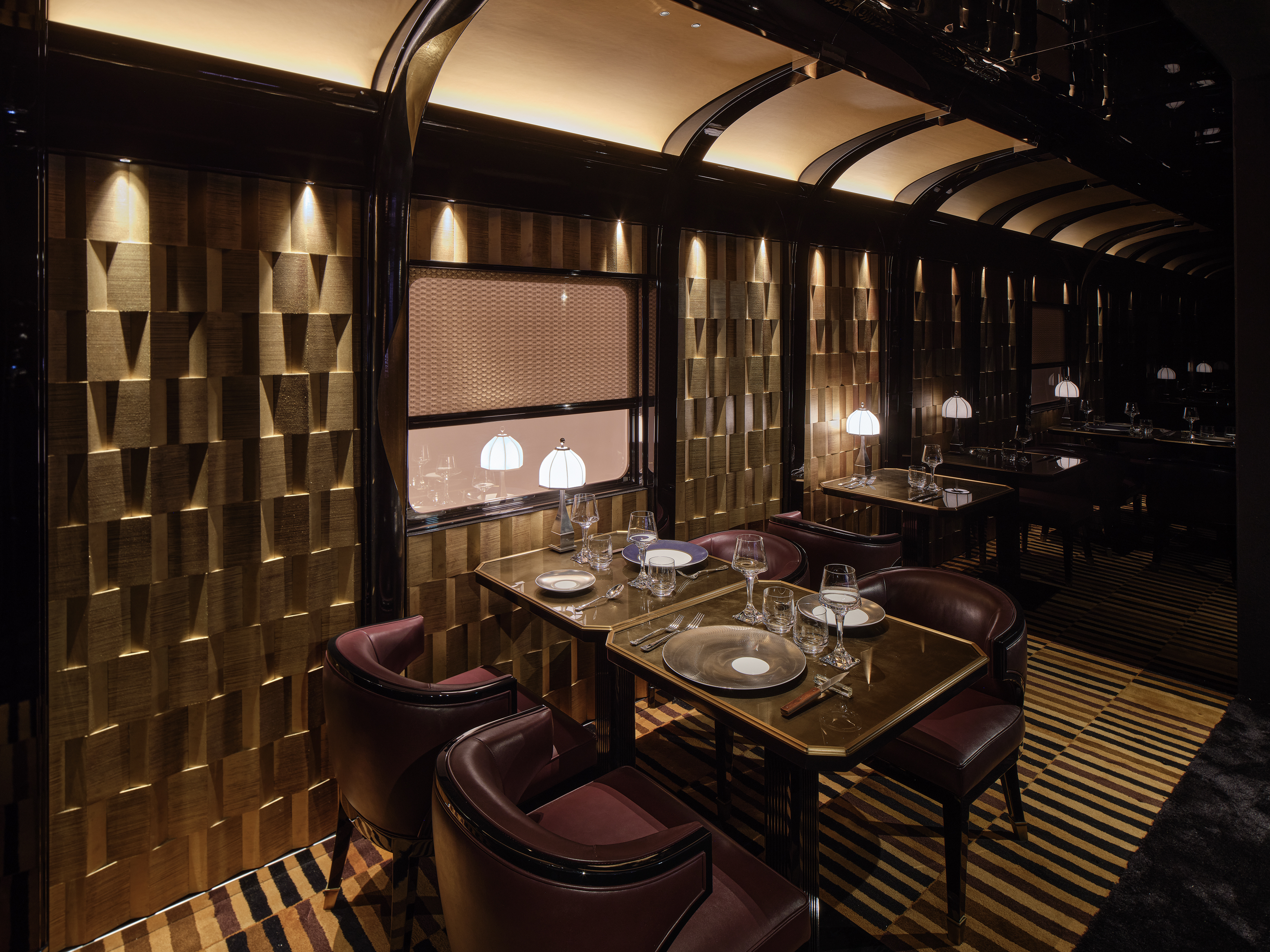
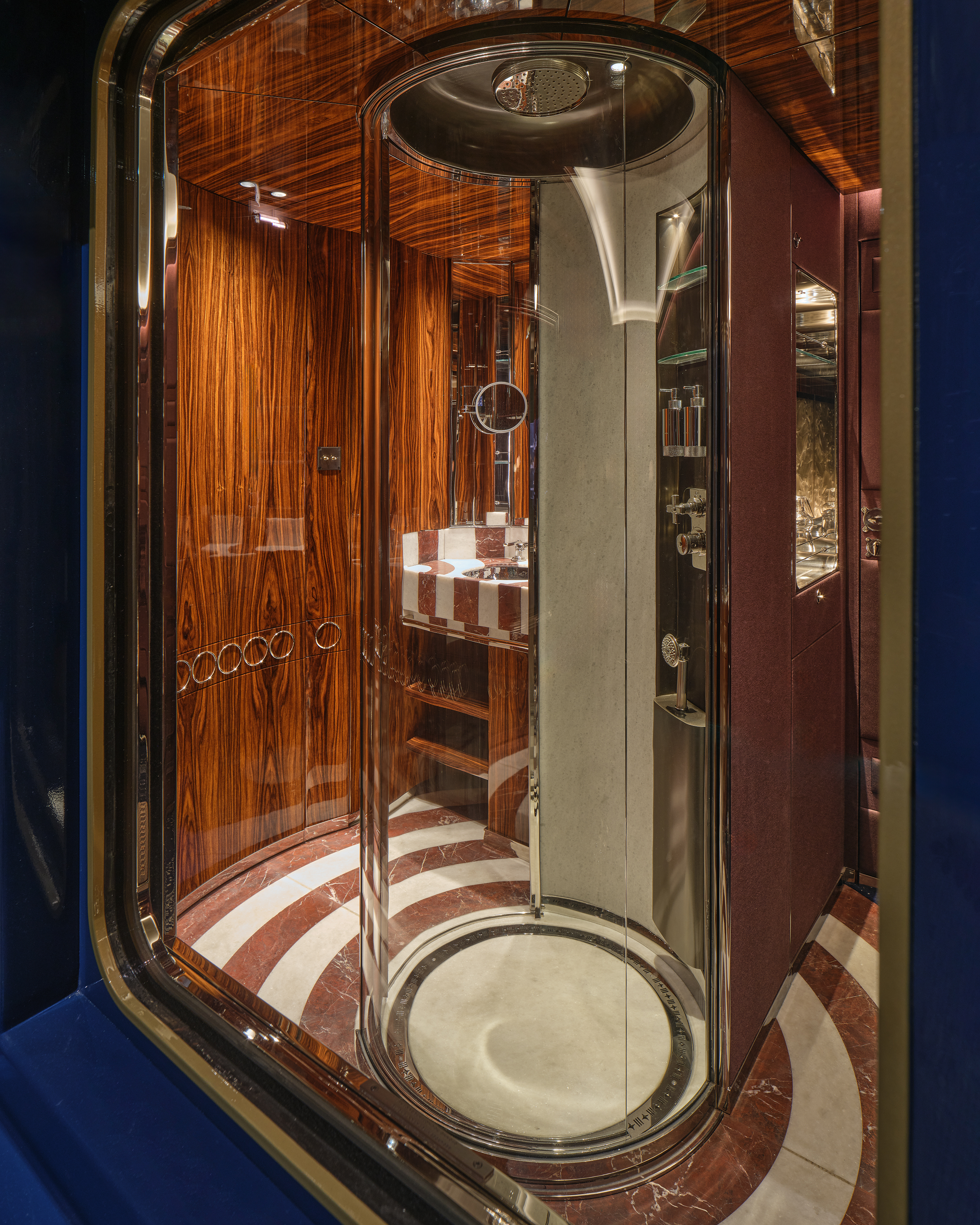
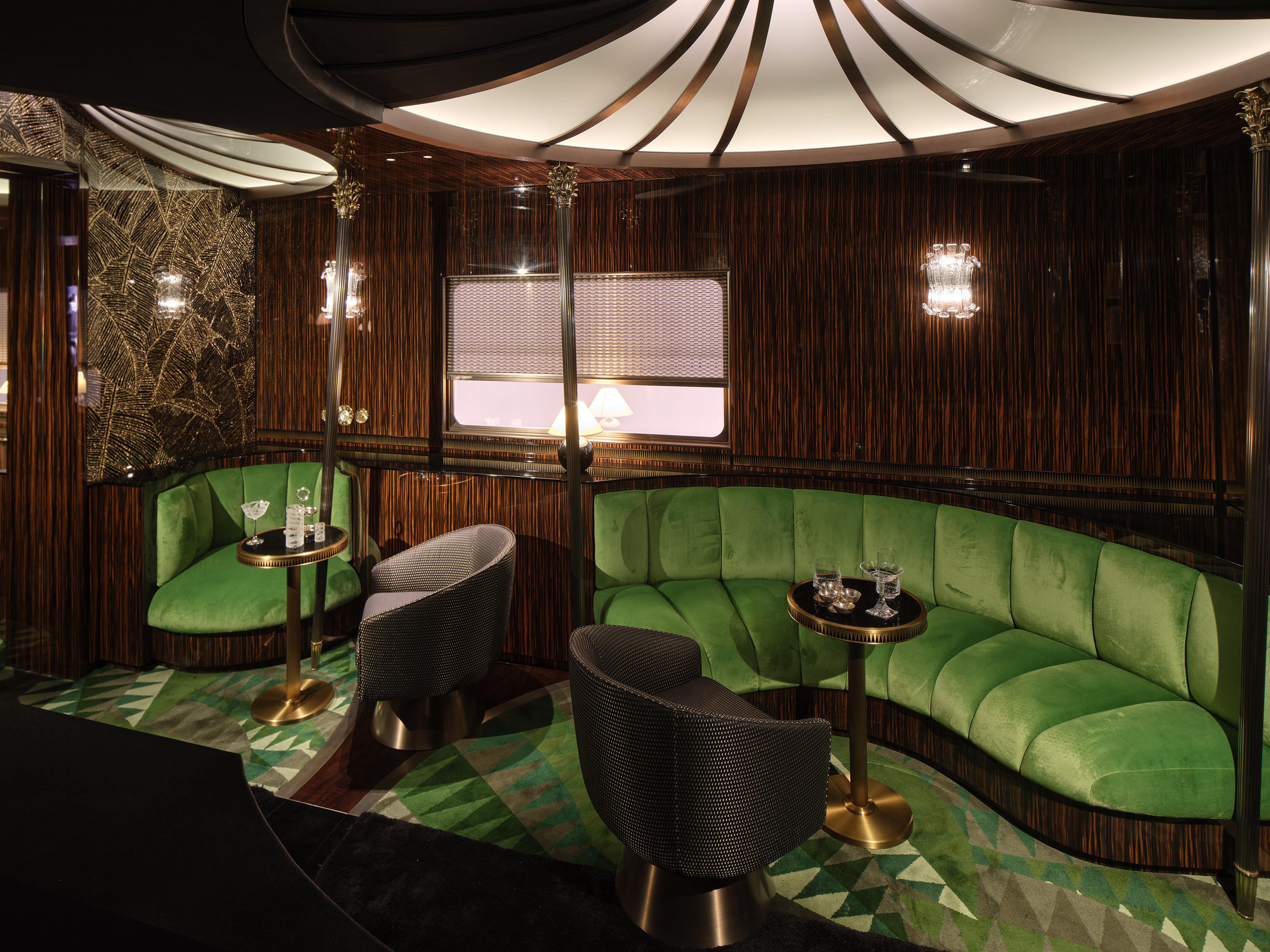
One of the exhibition’s highlights is the reproduction of the historic Orient Express carriages, showcasing the richness of decorations and intricate details in their design. These carriages reflect artistic excellence and meticulous attention to materials and aesthetics, serving as a living example of the spirit of Art Deco.
Luxurious Ornamentation and Expert Craftsmanship
The carriages are adorned with luxurious wooden inlays made from rare types such as mahogany, purpleheart, rosewood, and ebony. They also feature etched glass panels and precise geometric decorations, combining opulence with engineering precision, embodying the social and aesthetic essence of the Art Deco movement at its finest.
Honoring Leading Designers
The exhibition includes sections dedicated to designers Eileen Gray and Jean-Michel Frank, as well as an imagined office-library designed by Pierre Chareau for the French ambassador, created specifically for the Decorative Arts Association’s pavilion at the original exhibition. These sections showcase the designers’ creativity and the importance of innovation in interior design in the Art Deco style.
Rediscovering Jacques Doucet’s Legacy
The display also features furniture pieces that once belonged to fashion designer Jacques Doucet. The sale of his estate at auction in 1972 attracted prominent figures such as Hélène Rochas, Andy Warhol, Karl Lagerfeld, Yves Saint Laurent, and Pierre Bergé. This event helped bring Art Deco back into the spotlight, highlighting its historical and cultural significance.
The Continuing Influence of Art Deco Today
With the movement being celebrated at the first summer event organized by the Museum of Decorative Arts, as well as the upcoming Matter & Shape exhibition in February 2026, Art Deco appears to have returned strongly to the forefront, continuing to inspire both designers and the public alike.
✦ ArchUp Editorial Insight
The 1925 International Exhibition of Decorative Arts can be seen as an opportunity to understand how art can be integrated with industry and society, illustrating how interior design and furniture can reflect specific industrial and cultural developments. One of the exhibition’s strengths is that it provides a clear vision of the evolution of decorative styles and the materials used, offering designers and researchers a valuable historical reference for studying classical techniques and traditional methods.
However, the practical application of Art Deco in contemporary projects remains relatively limited. Adapting it to modern environments can be challenging due to the high costs of precise materials and intricate decorations, as well as the need for specialized craftsmanship. Additionally, the strong focus on luxury and ornamental details can make it difficult to balance aesthetic appeal with practical requirements or sustainability in modern projects.
From an architectural perspective, designers can draw important lessons from the exhibition, such as integrating decorative elements with everyday functions or taking inspiration from precise proportions and geometric compositions. However, these elements need to be adapted to contemporary constraints such as limited space, budgets, and sustainability standards, making the Art Deco experience more applicable within a modern context.
Prepared by the ArchUp Editorial Team
Don’t miss the chance to explore more from Architecture in fields like Design and Projects on the ArchUp website.


