

Bangjja Yugi Museum: A Journey Through Craft and Architecture

Bangjja Yugi Museum: Between Material and Memory
In a former coal-mining village in central Korea, the Bangjja Yugi Museum stands out as a cultural space that bridges material and memory. The museum celebrates the life and work of the distinguished artisan Lee Bong-ju, honored as a bearer of the National Intangible Cultural Heritage.
The Legacy of Lee Bong-ju and the Craft of Bangjja Yugi
Bong-ju devoted his life to the art of Bangjja Yugi, an esteemed Korean tradition of handcrafting bronze tableware. These pieces are distinguished by their warm luster and durability, making them a symbol of meticulous craftsmanship passed down through generations.
Architecture as a Vessel of Memory
The new cultural space was designed by HAASTudio in Seoul, led by architect Heechan Park. The goal was not merely to showcase Bong-ju’s valuable archive; the design embodies, through its structure and spirit, the essence of this traditional craft, allowing visitors to experience more than just observation, engaging instead with the living memory of Korean artisanal heritage.
Discover the Bangjja Yugi Museum in South Korea
The “Building within a Building” Concept
Architect Heechan Park drew inspiration for the museum’s design from the parallels between the craft of bronze tableware and the space that houses it. From this emerged an innovative concept: a “building within a building,” where the space itself becomes a reflection of the artisanal forming process.
The Old Warehouse as a Spatial Memory
The original structure was merely a steel-and-concrete warehouse, previously used to store the artisan’s archive. To impart a traditional character, the warehouse was clad in wood, resembling a traditional Korean house (Hanok).
Transitioning to Clay as the Design’s Core
Instead of altering the warehouse again, the architect took a different path. A new clay structure was inserted within the existing framework, creating a second architectural layer that reflects authenticity and simplicity, much like the repeated hammering process shapes the bronze tableware.

Clay Walls as a Sensory Experience
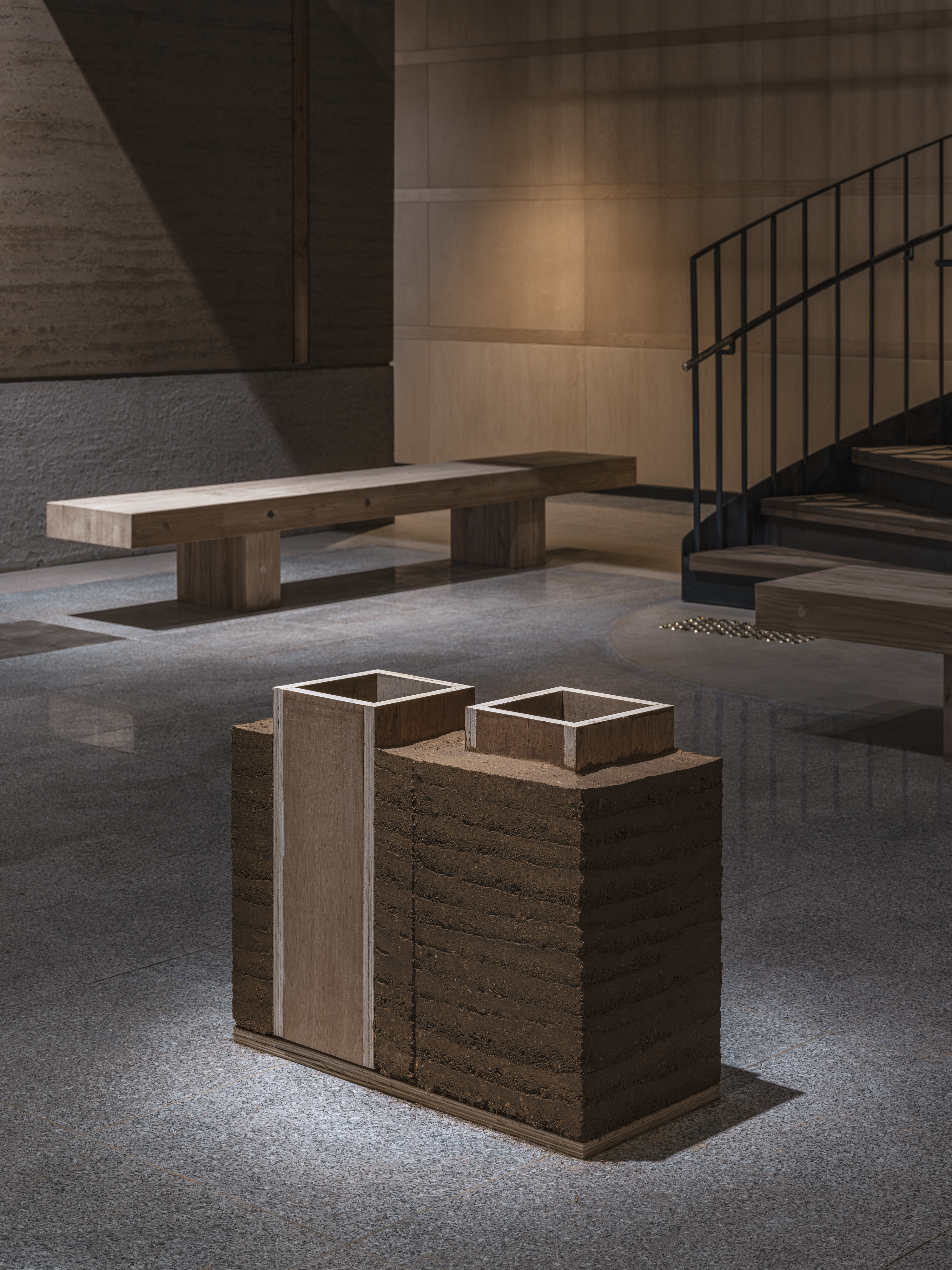
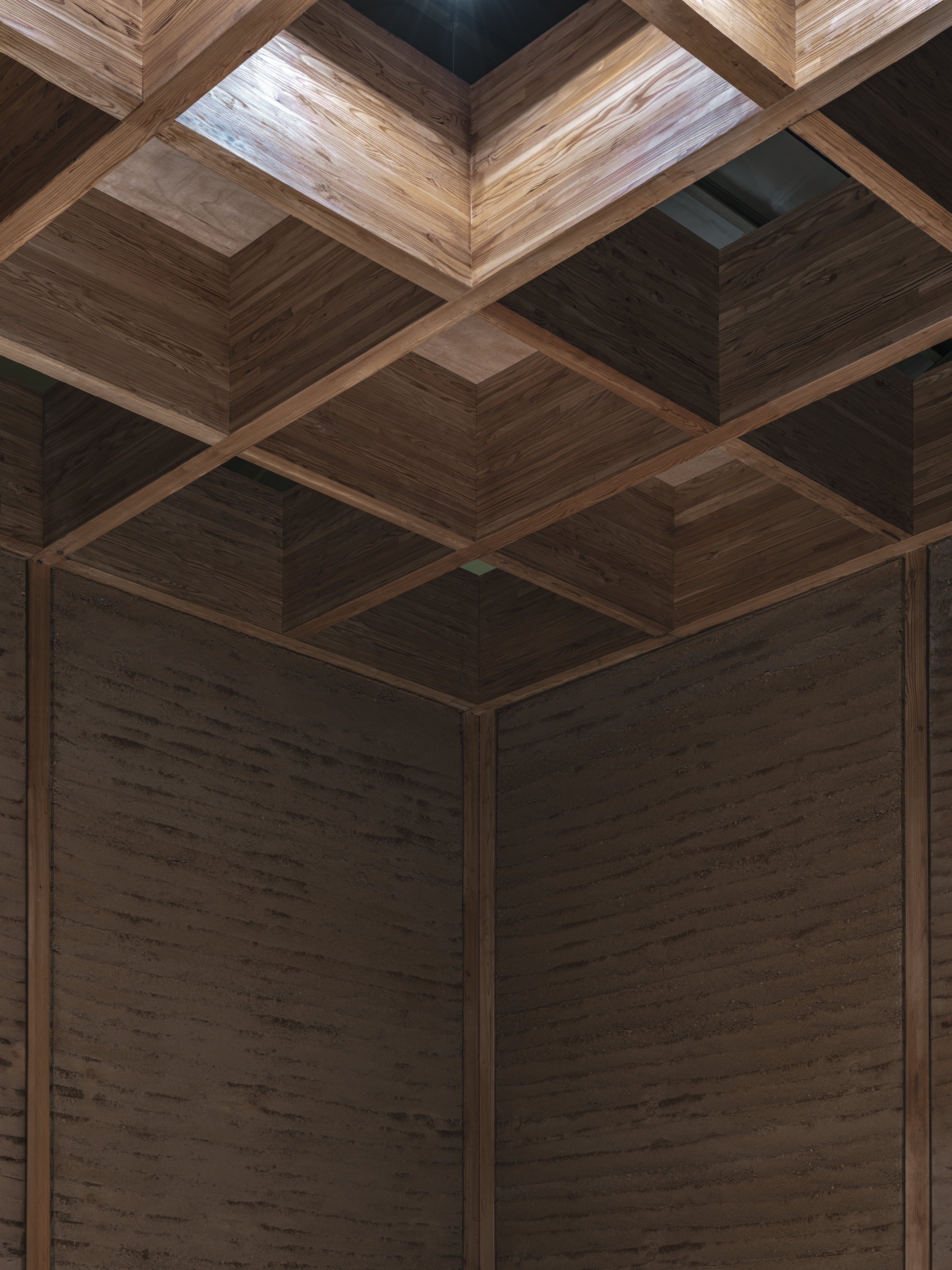
The museum’s new architectural element consists of two sections of rammed clay walls, designed to provide visitors with a multi-layered experience. Visitors can walk inside this structure or along its edges, navigating the space between the clay and the original framework.
A Dialogue Between Materials and Memory
This architectural interplay is not limited to form alone; it highlights the raw state of the materials, emphasizing their inherent value. Just as bronze is hand-hammered to reveal its luminous quality, the clay here evokes the patience and repetition inherent in the traditional craft.
Immersing the Senses in the Experience
Through this blend of material simplicity and artisanal expression, the Bangjja Yugi Museum immerses visitors in a world where the senses interact with texture, transforming the visit from a visual observation into a full tactile experience.
The Staircase as a Bridge Between Levels
The new spiral staircase guides visitors in a fluid movement to the second floor, where the exhibits are displayed. This design adds not only a functional dimension but also introduces a vertical experience that deepens the progression of the museum journey.
The Weight of the Earth and the Solidity of Memory
Meanwhile, the solid granite flooring anchors all elements and connects them to the ground. This material choice gives the space stability and gravitas, as if reminding visitors that memory and knowledge are not built in a vacuum but require a solid foundation.
The Dialectic of Opposites
The museum’s design concept is based on a duality of contrasts:
- The old versus the new,
- Authenticity versus imitation,
- Memory alongside present experience.
In doing so, the museum creates a continuous dialogue between past and present, between material and experience, making visitors aware of the transformations that shape architectural and cultural meaning.
The Architectural Experience Summarized
Architect Heechan Park concludes his vision by emphasizing that the Bangjja Yugi Museum embodies the essence of Lee Bong-ju’s craft. The museum does more than display bronze tableware; it reflects the spirit of the artisanal process itself: transforming raw material through persistence and repetition into something luminous and radiant.
A Dialogue Between Clay and Bronze
The museum’s rough clay walls are not merely a neutral backdrop; they serve as a pure and steadfast frame that highlights the brilliance of the bronze tableware. This contrast between raw and polished, solidity and shine, makes the architectural space itself a partner in showcasing the craft.
Architecture and Craft as a Single Entity
Ultimately, the boundary between architecture and handmade craft dissolves, offering a holistic experience where construction and craftsmanship harmonize, as if woven from a single thread connecting past and present.

✦ ArchUp Editorial Insight
The Bangjja Yugi Museum represents a unique architectural experience that bridges traditional craftsmanship and contemporary materials. This is clearly demonstrated through the integration of clay and bronze in the interior spaces, as well as through the design of the staircase and flooring, which enhance the visitor experience.
However, some visitors may perceive the raw character of the materials and clay walls as imposing a certain visual harshness that may not align with all aesthetic expectations. The complex architectural concept may also be challenging to fully grasp without comprehensive guidance or an explanatory guide. Additionally, some may feel that the limited space between the old structure and the clay layer does not provide complete fluidity in movement, slightly diminishing the sense of exploration and interaction.
In this way, the museum offers a rich impression of detail and artisanal spirit, while also leaving room for reflection on the boundaries of design and its impact on the average visitor.
Prepared by the ArchUp Editorial Team
Don’t miss the chance to explore more from Architectural News in fields like Architecture and Projects on the ArchUp website.


