

Blackstone Acquires Prime Logistics Hub in Tokyo

Blackstone, the U.S.-based investment and asset management firm, announced today the signing of a definitive agreement to acquire the Tokyo CNX logistics center, a prime facility in the heart of Tokyo.

Deal Value and Property Details
The transaction is valued at over 100 billion Japanese yen ($642 million). The facility is a five-story warehouse with a total area of 1.6 million square feet in Tokyo Bay, located 15 minutes by car from the city center.
The building serves as a critical distribution hub for companies in the region, according to the German Press Agency (dpa).
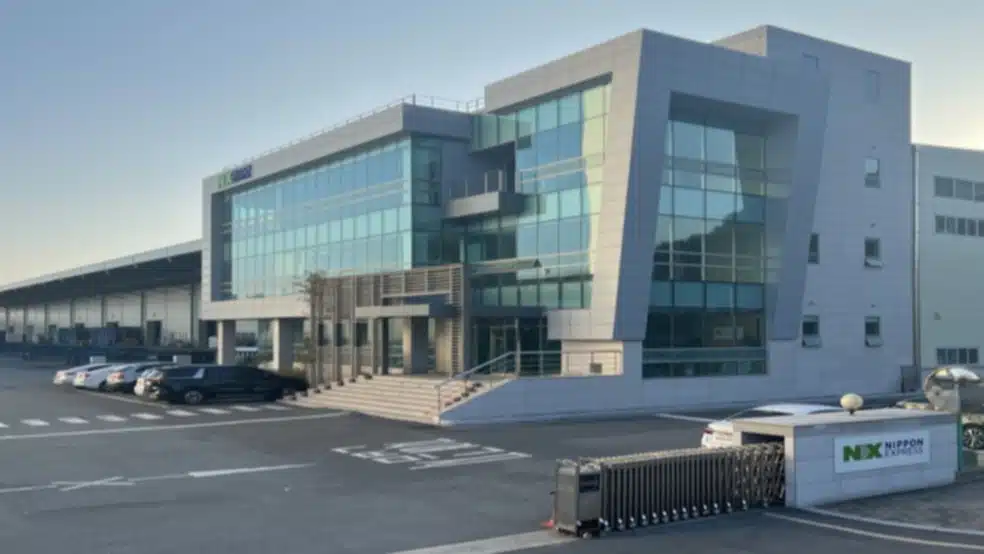
Blackstone’s Commitment to the Japanese Economy
Daisuke Kita, Head of Japan Real Estate at Blackstone, stated: “We are committed to working with Japanese companies and continuing to contribute effectively to the growth of the Japanese economy.”
✦ ArchUp Editorial Insight
Blackstone’s acquisition of the Tokyo CNX logistics center exemplifies a Contemporary industrial real estate model where Material Expression is subordinate to functionality, efficiency, and strategic location within the urban fabric of Tokyo Bay. The five-story, 1.6 million-square-foot facility functions as a critical distribution hub, reflecting Spatial Dynamics optimized for high-volume logistics rather than architectural form or aesthetic distinction. However, questions of contextual relevance arise regarding integration with surrounding mixed-use developments and the broader urban ecosystem, especially in a densely populated metropolitan area. Yet, the transaction underscores functional resilience and long-term economic positioning, illustrating an architectural ambition that prioritizes infrastructural performance and urban utility as drivers of sustainable industrial investment in Japan’s evolving metropolitan landscape.





ArchUp: Technical Analysis of Blackstone’s Acquisition of a Tokyo Logistics Center
This article provides a technical analysis of the acquisition of a logistics center in Tokyo as a case study in strategic real estate investment in modern logistics infrastructure. To enhance archival value, we present the following key technical and design data:
The deal was valued at over 100 billion Japanese yen (approximately $642 million). The Tokyo CNX logistics center is located in Tokyo Bay, a five-story building with a total floor area of 1.6 million square feet (approximately 148,600 square meters). The site’s strategic location, just 15 minutes by car from central Tokyo, makes it a vital distribution hub for companies operating in the region.
The facility is characterized as a “Grade A” logistics center, reflecting high standards in design, structural materials, operational efficiency, and integration with infrastructure. The acquisition targets the growing demand for advanced storage and distribution spaces in one of the world’s most densely populated urban areas, where the need for urban logistics centers to support fast supply chains is increasing.
In terms of market and investment impact, the deal reflects international investors’ confidence in the robustness of the Japanese economy and the stability of its logistics real estate sector. Blackstone is committed to contributing to Japan’s economic growth through cooperation with local companies and the development of critical infrastructure. Major acquisitions such as this may drive improvements in quality and efficiency standards within Japan’s urban logistics sector, with the potential to attract further similar investments.
Related Link: Please refer to this article for an analysis of other major real estate investments in different urban contexts:
Record-Breaking $520 Million Waterfront Deal in Miami’s Brickell District
https://archup.net/brickell-acquisition-and-branded-residences/