Casa Solai: Architecture Growing from the Heart of the Forest

Architecture in Dialogue with Place
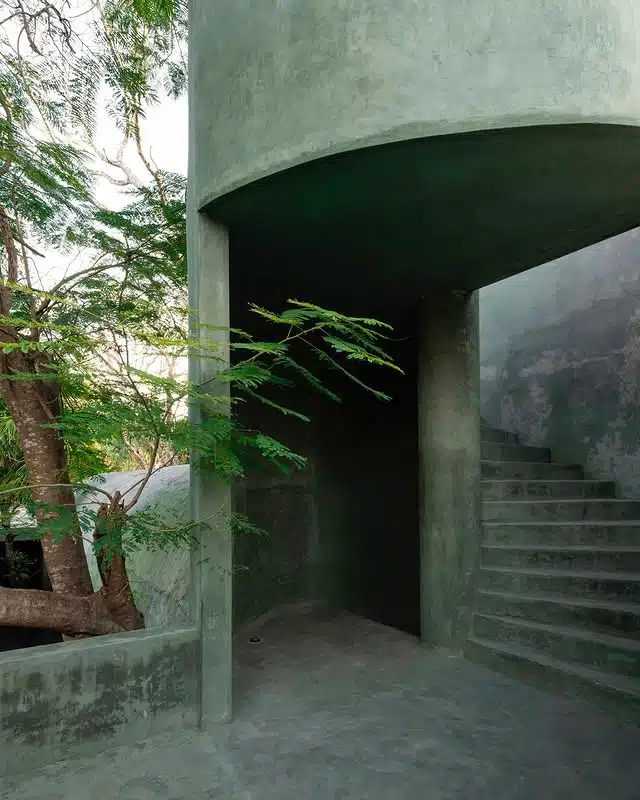
The relationship between architecture and place has long been considered fundamental to creating distinctive designs, and Casa Solai stands as a striking example of this approach. The house appears as though it is part of the surrounding natural landscape, embraced by the forest and growing out of its terrain.
The Duality of Earth and Sky
The design is defined by two contrasting architectural volumes:
- The first is anchored, rooted in volcanic rock, reflecting solidity and a strong bond with the earth.
- The second hovers above the treetops, capturing ocean breezes and opening panoramic views toward the horizon.
This contrast does not merely showcase formal variation, but rather embodies the idea of tension and harmony between grounding and release, between earth and sky.
An Architectural Experience Like a Dance
Walking through the house feels like moving in a graceful dance with nature.
- Wooden wings rise gently above the forest.
- Carefully framed openings gradually reveal glimpses of the coastline.
- The fragmented composition creates a sequence of discoveries, turning the architectural journey into a visual exploration of its own.
Light as a Mediator
Bamboo screens (Brise Soleil) filter the dense tropical light, transforming it into a shifting visual fabric throughout the day. This technique does not diminish the connection with nature, but instead deepens the sense of immersion within the forest.
The Elevated Wing as a Refuge
The upper wing becomes a retreat from the humidity, while still maintaining an open dialogue with the natural surroundings. It offers a sense of freedom without detachment from the landscape.


The In-Between Space as a Beating Heart
At the core of the design lies the open interstitial space that connects the two architectural volumes. This zone is not only a link but also transforms daily life into an experience of living between inside and outside. Traditional boundaries of walls nearly dissolve, allowing the tropical climate to become part of everyday life within the home.
Climate as Part of the Design
The house relies on natural ventilation that flows freely throughout its spaces, making the need for mechanical cooling almost unnecessary. Here, the design does not resist the environment but merges with it, appearing as a natural extension of the forest. This approach reflects a deep understanding of climatic architecture, where adaptation is wiser than confrontation.
Materials Rooted in Place
Local teak wood and natural stone recompose a warm palette that echoes volcanic soil and eroded coastlines. These materials are not used for aesthetics alone but also grant the building sustainability and harmony with its natural context.
Furniture Blending with Architecture
Furniture is not treated as an accessory but is designed as a seamless extension of the architecture itself. Over time, the materials acquire a natural patina shaped by the humid climate, further deepening the bond between the building and its environment.
Craftsmanship as a Bridge to Tradition
Finally, handcraft plays a strong role in the home’s details. It celebrates local traditions while meeting the needs of contemporary living, affirming that authenticity and modernity are not in conflict but in continuous dialogue.


Sustainability as a Design Philosophy
Sustainability is present in every detail of the project, yet it never feels imposed or artificial.
- Passive cooling harnesses natural forces to achieve thermal comfort.
- Solar orientation maximizes daylight while minimizing unwanted heat gain.
- Rainwater collection is subtly integrated into the architectural language itself.
These strategies demonstrate that environmental responsibility does not constrain design beauty; rather, it adds value, allowing the house to operate almost independently while ensuring complete comfort for its inhabitants.
Integration of Architecture and Interior
From the outset, architecture and interior design were not treated as separate realms but developed together to create a seamless and harmonious experience. As a result, spatial relationships shift continuously throughout the day, influenced by the changing light of the Costa Rican sky.
Light as a Transformative Factor
Morning brings a sense of refuge and tranquility, while evening opens the space to entirely different atmospheres. These transitions are not merely visual effects, they help redefine spaces according to time.
Framed Views and Privacy
Through carefully considered openings, the design reveals selectively curated natural scenes while maintaining privacy within the dense forest. In doing so, Casa Solai proves that contemporary architecture is not in competition with nature but capable of amplifying its beauty and deepening its presence in human life.


✦ ArchUp Editorial Insight
Casa Solai leaves a strong impression with its ability to blend seamlessly with nature without losing its architectural presence. The spatial experience and focus on sustainability give the project a distinctive character, making living in it feel more like a sensory journey connected to the climate and the forest.
On the other hand, this integration can be seen as a challenge in terms of ongoing maintenance requirements or the adaptation of some users to the openness toward the natural surroundings. Between visual splendor and reliance on a climate-responsive design philosophy, the project remains an impressive architectural experience while simultaneously raising questions about the balance between practical comfort and deep environmental commitment.
Prepared by the ArchUp Editorial Team
Don’t miss the chance to explore more from Architecture, Archive, and Buildings on the ArchUp website.