

Casa Tao: Exploring Light and Shadow in a Contemplative Architectural Design on Mexico’s Coast

A New Home on the Pacific Coast
In the town of Puerto Vallarta on Mexico’s western coast, a house has been built that draws attention with its architectural character, distinct from the surrounding urban fabric.
The Surrounding Neighborhood
The house is located on a corner of a suburb dominated by a simple character: two-story homes similar in form and function. Amidst this repetitive scene, the new building stands out as an exceptional element asserting its presence.
Casa Tao: A Sculptural Concrete Mass
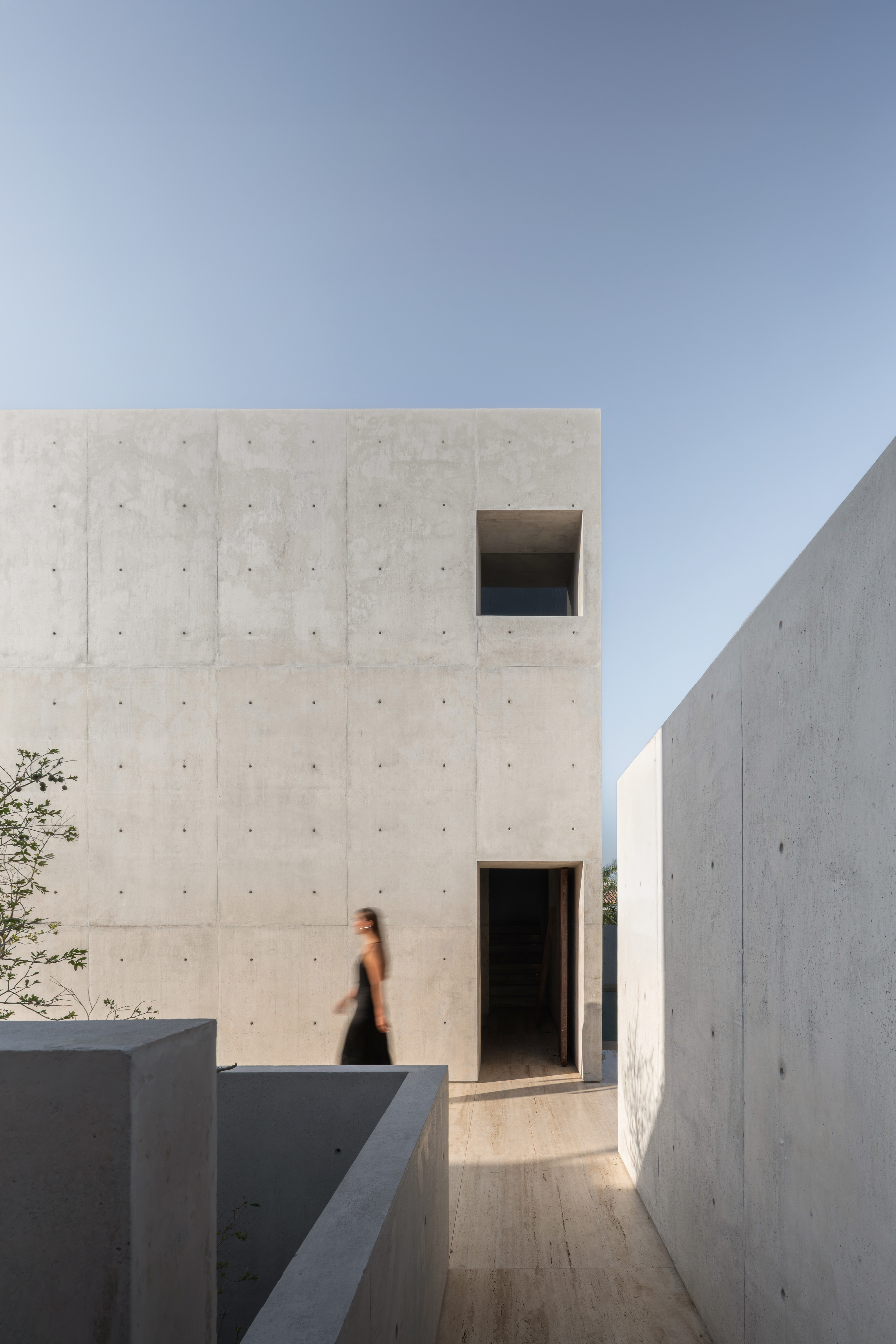
The house, named Casa Tao, takes the form of a solid concrete mass, closer to an architectural sculpture. Its simple lines and raw surfaces reflect a desire to create a contemplative environment rather than merely a living space.
Architectural Influences
The design captures the spirit of some works by Japanese architect Tadao Ando, particularly his abstract residences in Tokyo during the mid-career phase. This resemblance extends beyond form to a philosophy of handling light, concrete, and voids.
HW Studio’s Touch
Behind this project is HW Studio, based in Morelia. The architects chose to present a vision that goes beyond everyday functionality, touching the aesthetic and contemplative dimensions of residential life.
The Design Team Behind the Project
The project was overseen by architect Rogelio Vallejo Borrás, alongside Óscar Didier Ascencio Castro and Nick Zarate Cervantes Ordaz from HW Studio. This collaboration resulted in a coherent vision that maintained the calm and precision of the architectural presence, despite its contrast with the surrounding context.
A Four-Level Terraced Mass
The house extends across four levels, giving it a terraced character in height. The most prominent feature of its composition is the curved concrete wall that surrounds the site, guiding movement inward.
Transition Between Levels
Through this curved wall, visitors are naturally led to the second level (known as the first floor under European classification). This gradual movement adds a theatrical dimension to the architectural experience, where passage is not merely about moving between floors but becomes part of the visual journey within the space.

A View from Above
Aerial images of the house reveal precise and thoughtful engineering, highlighting the relationship between the concrete masses and open spaces, reflecting a conscious planning of balance between privacy and openness.
Carefully Screened Entrance
In front of the house, a circular planter acts as a visual element that shields the entrance from the street. This simple solution provides a degree of seclusion without the need for complete enclosure, reinforcing the idea of a gradual transition from public to private space.
The Curved Concrete Wall
A slender concrete wall gracefully wraps around the residence, defining its exterior contours. The curvature of the wall is not merely a formal choice but a functional and aesthetic element that guides movement and establishes clear boundaries for the space.
Light as Part of the Design
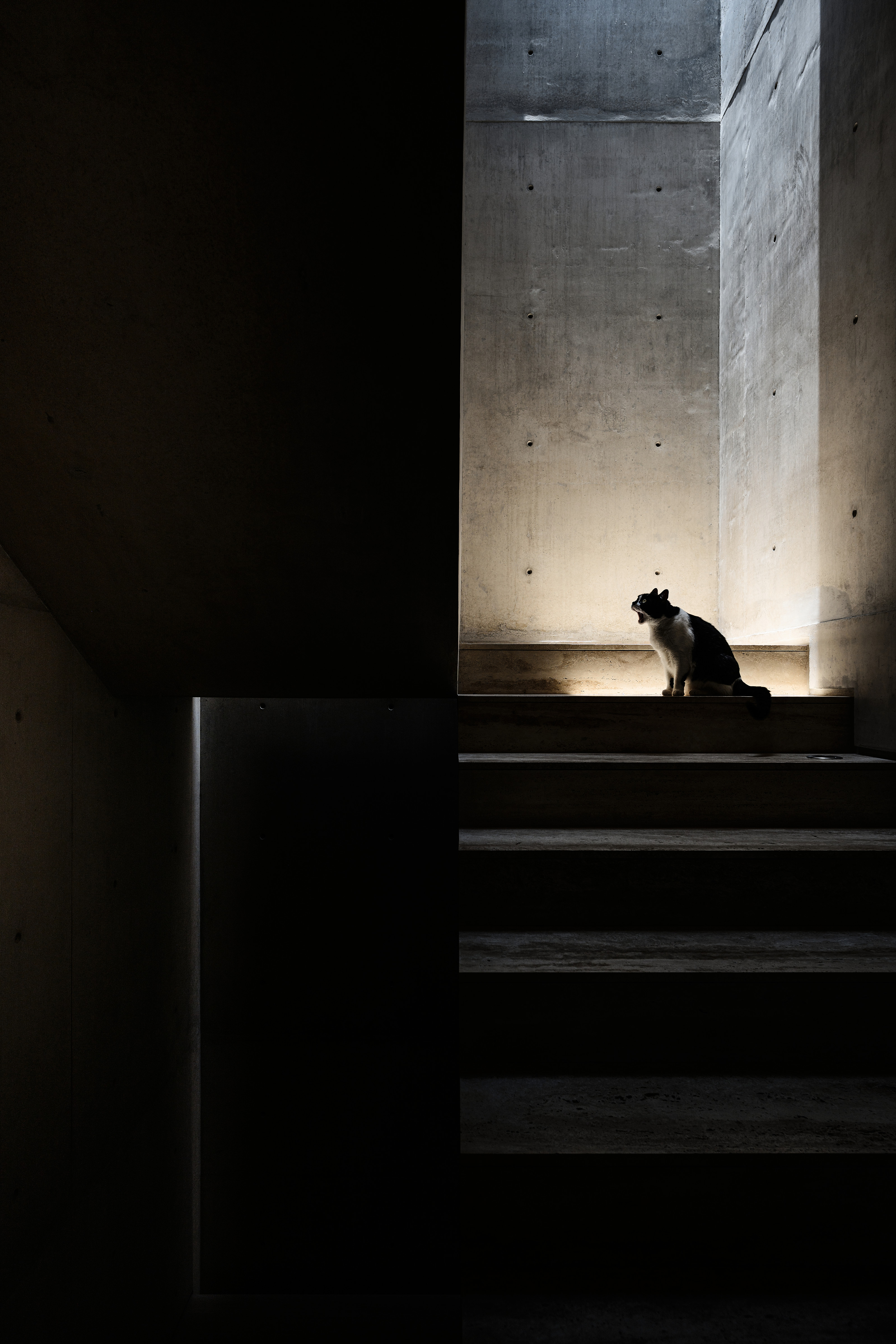
Directly behind this wall, a vertical light opening extends along the building’s height. This aperture not only illuminates the corridors but also nourishes the three rooms equipped with en-suite bathrooms on the first level (ground floor), providing natural ventilation and a touch of vitality.


The Upper Floor: The Heart of Daily Life
The main living area is positioned on the upper floor of the house, manifested as a large concrete box rising above the lower curved wall. This design gives the upper floor a sense of elevation and separation from the exterior spaces while enhancing privacy.
Spatial Layout
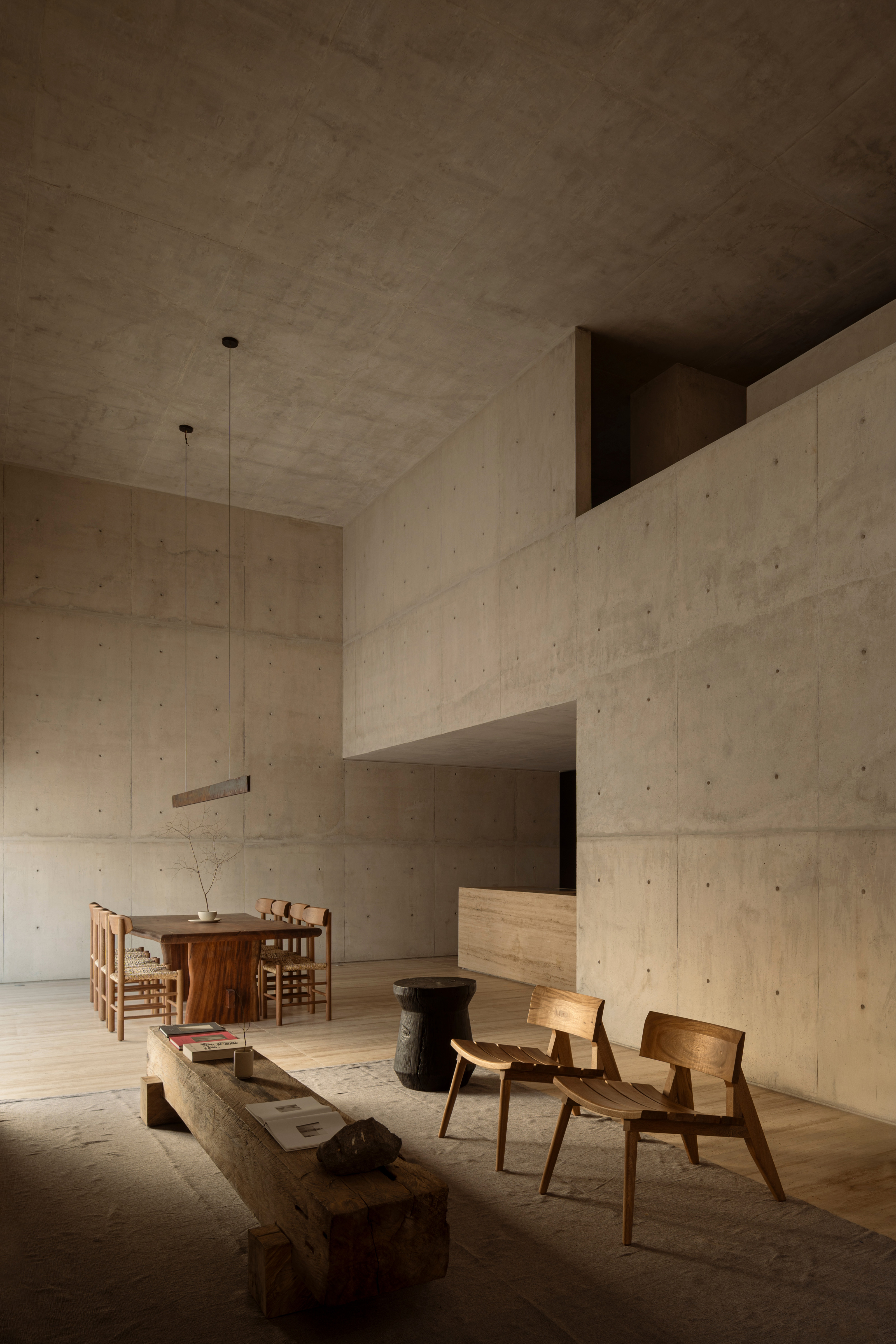
This area includes the kitchen, dining room, and double-height living space, creating an open and dynamic environment with abundant natural light.
Light and Organization
The upper windows are precisely arranged to direct light into the heart of the space, creating a balanced atmosphere between brightness and visual comfort. These windows not only provide illumination but also enhance the sense of spaciousness and depth within the area.
Upper Gallery and Library
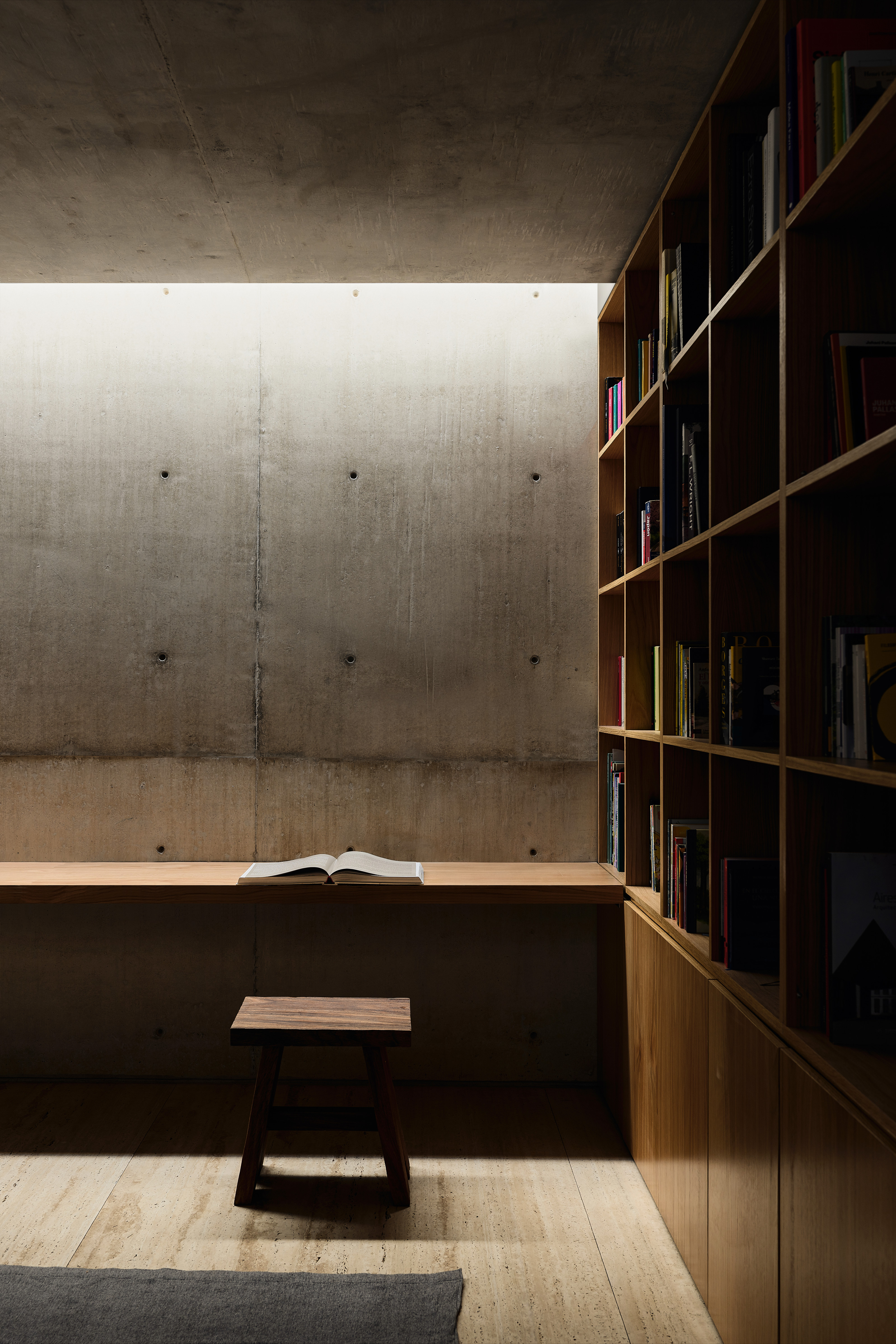
The concrete spaces also feature an upper gallery housing an office and a fully integrated library area, combining functional and aesthetic qualities while enriching the living experience on this floor.
The Client and the Inspiration Behind the Design
The house was custom-designed for photographer and aesthete Gustavo Quiroz and his wife, Cynthia Rosauro Sandoval. The primary goal was to create a space that reflects the personality of its occupants and evokes Quiroz’s childhood memories.
Light, Space, and Material
The architects focused on the significance of light, space, and material in shaping the house, treating materials not merely as building elements but as tools for expressing emotion and memory.
Childhood Roots and Environmental Influence
The architects describe Quiroz as follows:
“He grew up in a modest home built more by effort than by materials. As a child, he lived in Puerto Vallarta, a town on Mexico’s Pacific coast, where the sun and humidity set the rhythm of the days, and where shadows were not accidental but a precious resource and a true refuge.”
This description illustrates how environmental and climatic memories from childhood formed a philosophical basis for the house’s design, making light and shadow an essential part of the living experience rather than merely a secondary aesthetic element.
Playing with Light and Shadow
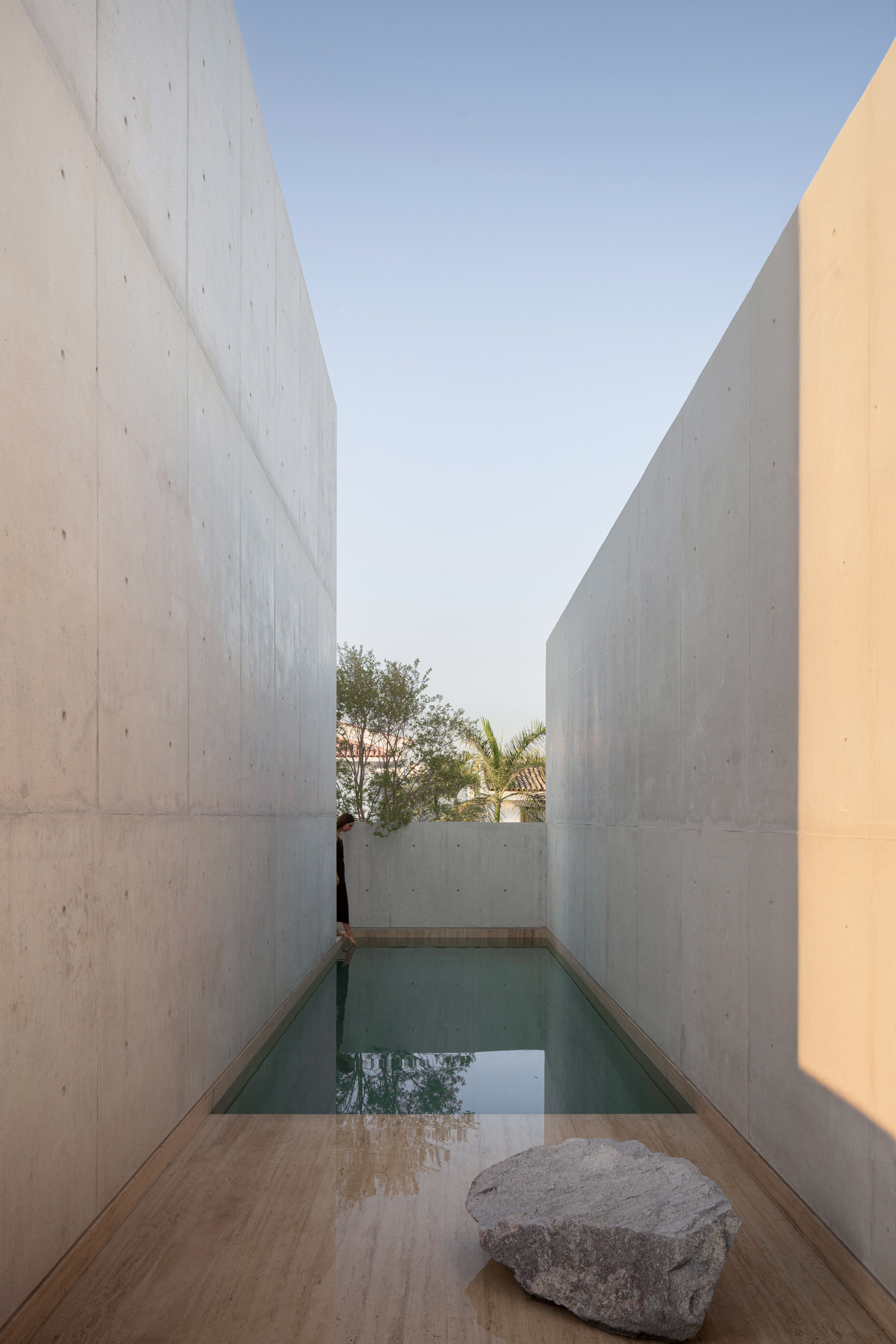
To evoke childhood sensations and highlight the essential relationship between sun and shadow, light and darkness, HW Studio designed bedrooms that mimic caves. Natural light is limited to the glass wall overlooking the interior light shaft, creating a contemplative atmosphere with high privacy.
Light on Other Floors
Even the lower floor was not neglected in this philosophy, as it was provided with its own light opening, ensuring natural light reaches the lower-height spaces.
Lighting System and Control
In the living area, a carefully controlled lighting system emphasizes dark corners and hidden spaces, adding a dynamic dimension to the interior design. This balance between light and shadow reflects the architects’ attention to fine details, turning every corner of the house into a fully immersive sensory experience.


Shadow as an Emotional Element
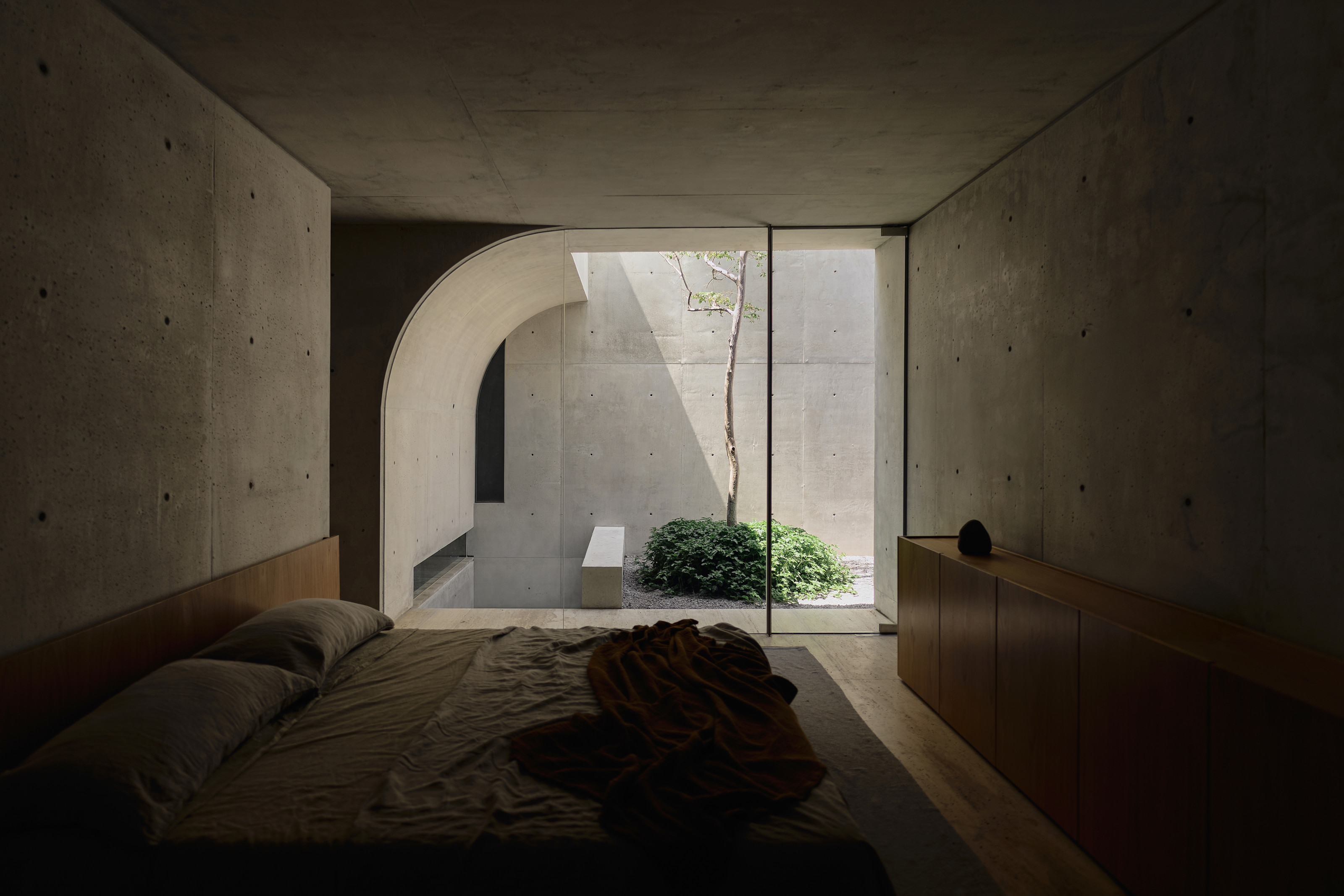
The architects succeeded in treating shadow not merely as a visual element but as an emotional condition and sensory experience. Shadow represents a promise of calm and respite, acting as a silent barrier that shields the occupant from the bustle of the outside world, enhancing a sense of tranquility and reassurance within the house.
The Swimming Pool as a Hidden Oasis
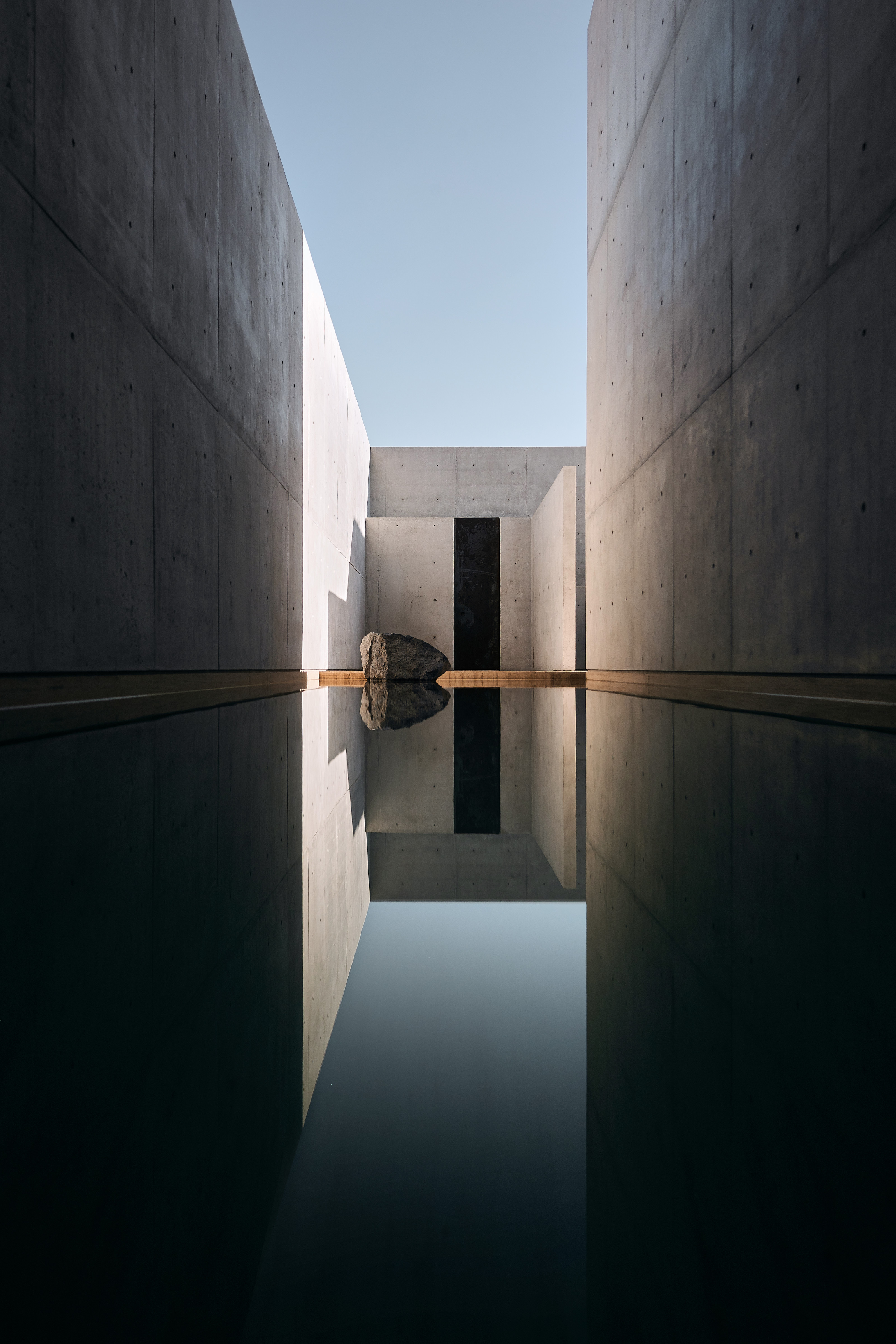
Even the slender swimming pool reflects this concept, situated between two tall concrete walls. This design transforms it into a hidden oasis, isolated from the sun’s glare and surrounding noise, adding a contemplative dimension and a personal experience for the residents.
The Journey for Inspiration
Before beginning the Casa Tao project, Gustavo Quiroz and his small family embarked on a trip to Japan. This experience allowed them to explore the aesthetics of space, the purity of composition, and the quietude inherent in every architectural gesture, which became a direct source of inspiration for the design.
Integrating the Japanese Sensibility into the Design
The architects drew on this journey to shape the project’s requirements, ensuring the design made the occupants feel as if they were living inside a Japanese museum. This concept emphasizes contemplation, spatial control, and the evocation of serenity in daily life, rather than limiting the home to traditional functional purposes.

Vertical Organization of Spaces
By designing the base of the house to accommodate service areas, bedrooms, and the garage, the architects were able to dedicate the upper floors entirely to social life, independent from the street. This separation of functions enhances privacy and allows the social spaces freedom to express themselves and interact.
The Relationship Between the Wall and the Landscape
The curvature of the wall helps shape a connected internal sequence of spaces, supported by a carefully planned arrangement of plants, creating a sense of flow between indoors and outdoors. On the upper terrace, the Zen garden adds a contemplative dimension, offering a tranquil space to connect with nature.
Courtyards as Platforms for Contemplation
The architects state:
“The elevated courtyards act as terraces for contemplation, small platforms from which we better breathe the scent of flowers and listen to the whisper of the wind through the treetops.”
This description reflects the integration of architectural design with nature and highlights how elevated spaces can become places for psychological relaxation and sensory interaction with the surroundings.
Contrast Between Spaces
The interior world of the bedrooms is entirely contrasted with the open living areas. The rooms are designed to provide a sense of privacy and enclosure, while the living spaces offer a feeling of expansiveness, yet within carefully controlled conditions for openness to the outdoors.
Open Privacy
Although the house is enclosed relative to the surrounding neighborhood, it extends a quiet invitation to visitors and residents, rather than relying on loud, publicly oriented facades. This design creates a balance between seclusion and integration with the surrounding environment.
Life at a Slower Pace
According to the architects:
“Everything is arranged so that life unfolds at a slower, fuller pace, more open to what is unseen.”
This suggests that the design focuses not only on spatial vision but also on the daily living experience, allowing the occupants to become more aware of small spaces, shadows, and light, thus experiencing a deeper, more contemplative life within the home.
Concrete as an Architectural Choice
The choice of concrete was not arbitrary; it emerged as a natural decision aligned with the design philosophy. The goal was not only to connect with serene Japanese houses but also to manage the intense sunlight intelligently, filtering it through a soft, absorbent surface that does not scatter light but reshapes it to create a balanced indoor atmosphere.
Contemplative Forms and Spaces
In this approach, the constrained forms of the walls and cell-like rooms become more contemplative, allowing the occupant to experience visual and mental calm within the spaces, far from the common visual distractions of conventional designs.
Corners and Shadows
As HW Studio explains:
“Every corner invites one to remain, not to pass through, and every shadow is a promise of comfort and reassurance.”
This principle reflects the interplay between light, shadow, and material, transforming every corner of the house into a fully immersive sensory experience, making living more contemplative and connected to both the interior and exterior environment simultaneously.
✦ ArchUp Editorial Insight
Casa Tao can be described as an eye-catching architectural project that offers a rich residential experience in terms of light, shadow, and contemplative spaces. The design demonstrates skillful handling of concrete and spatial distribution, giving the house a distinct identity and making living within it a unique sensory experience.
However, some may find that the density of the concrete and the relative enclosure of the facades toward the external environment reduce the sense of overall openness, while certain interior spaces might be challenging to adapt to the practical demands of daily life.
Overall, the project stands out as a clear attempt to blend beauty, privacy, and contemplation, while presenting some challenges related to the functional aspects of the home.
Prepared by the ArchUp Editorial Team
Don’t miss the chance to explore more from Architecture, Archive, and Buildings on the ArchUp website.


