Chapultepec Park Pavilions Project: Redefining the Relationship Between Architecture and Landscape

Rebalancing Between Natural and Built Structures
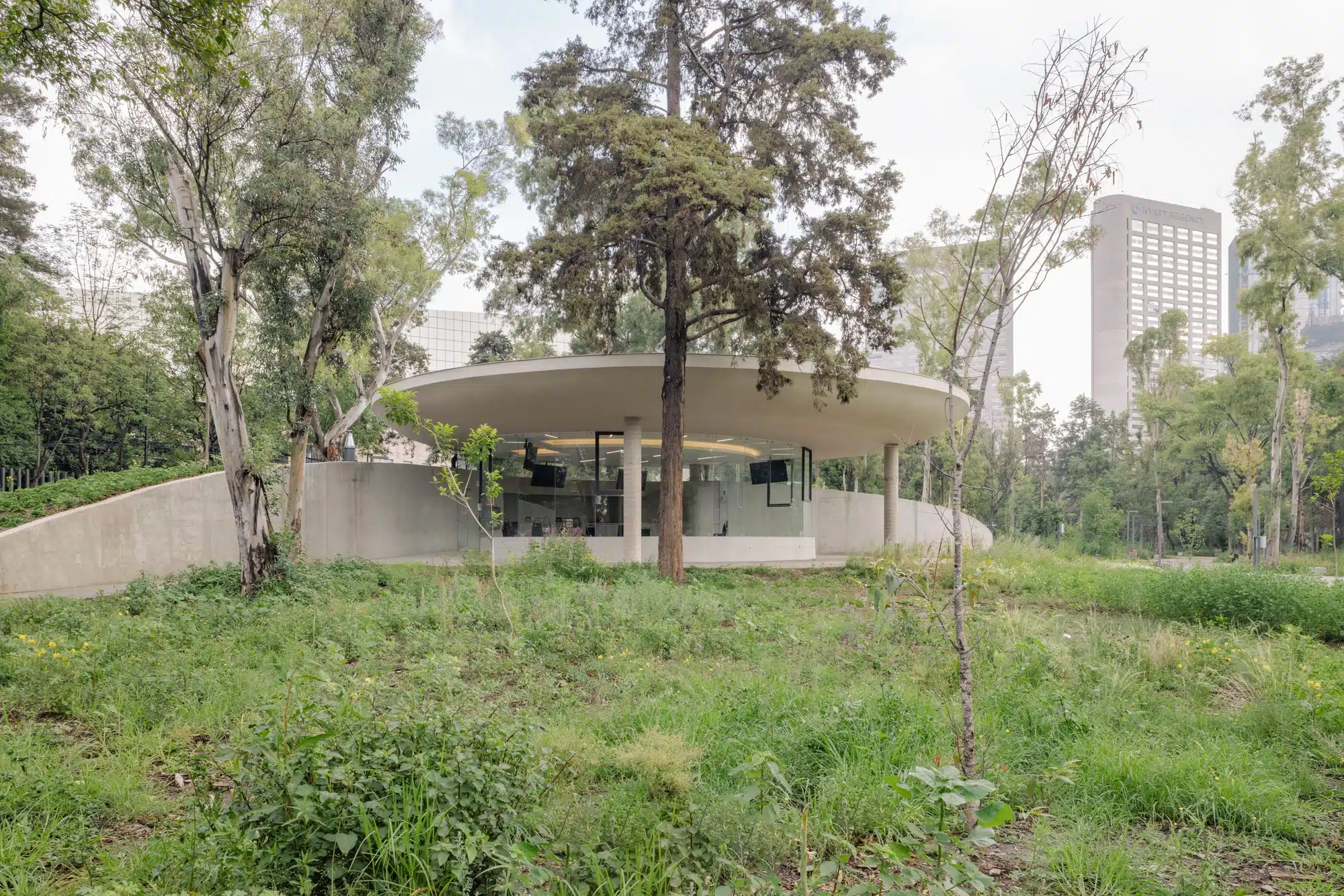
In 2022, a design was presented for a project developing new pavilions and organizing gardens within one of the largest public parks in Latin America, Chapultepec Park. The design focused on integration with the existing environment, preserving mature trees and minimizing resource waste.
Sustainable Use of Local Resources
One of the project’s key elements is generating the built mass through the reuse of resources found on-site. This approach reflects a deep understanding of the importance of sustainability in architectural planning, reducing environmental impact while maintaining the site’s aesthetic and natural value.


Site Concept and Planning Strategy
The design focused on maximizing the potential of the natural site, planning the use of areas free of trees in a way that transforms the land into diverse landscapes featuring gentle hills and small lakes.
Creating Multi-Use Public Spaces
These topographical changes generate a series of public spaces with an intimate scale, enhancing the visitor experience and encouraging a variety of outdoor activities. Through this arrangement, the spaces can accommodate different needs, from small gatherings to walking and relaxation, while maintaining a balance between nature and the designed structures.


Sustainability and Environmental Protection
The topography plays an important role in providing acoustic and visual protection in areas where needed, enhancing visitor comfort without requiring major interventions in the environment.
Creating Balanced Ecosystems
The design helps minimize the impact on existing ecosystems while allowing for the introduction of micro-environments distributed across five distinct areas within the site. This approach reflects a commitment to sustainability and biodiversity, as each project element supports a specific function within the overall ecosystem, creating a balance between human activity and natural life.

Architecture and Integration with the Landscape
The architecture relies on two main strategies: first, integrating the land and landscape to align with the function of each program, and second, adding a simple design touch that distinguishes each unique use within the project.
Blurring the Boundaries Between Inside and Outside
Each pavilion contributes to reducing the barriers between architecture and landscape, as well as between interior and exterior spaces, encouraging visitors to engage directly with the environment. Through this approach, architecture becomes an active element of the user experience, not limited to visual form but inviting people to explore the space and participate in various activities naturally.

Enhancing Privacy and User Experience
Support programs are integrated within the gentle hills to enhance privacy and improve acoustics, allowing for the creation of open, collaborative, and flexible spaces that use nature as a backdrop.
Balancing Function and Nature
Within these hills, the functions of the pavilions remain fully ensured, while visitors can enjoy the surrounding natural environment. This approach demonstrates how architectural design can achieve integration between practical use and natural aesthetics, maintaining a comfortable and diverse experience for visitors.

Roofs and Landscapes as Social Spaces
The performance-based roofs rely on the landscape, creating open spaces that encourage social interaction as well as cultural and natural experiences in the heart of the city.
Enhancing Urban Life and Diverse Programs
Beyond the immediate pavilion areas, these designs contribute to activating urban life, opening opportunities for unexpected programs and activities. They also foster civic and cultural dialogue by providing spaces that encourage community participation and visitor interaction with both the built and natural environments.

Diversifying Vegetation According to the Environment
The first area focuses on reforestation using a variety of trees such as pine, fir, and oak, as part of a program aimed at forest restoration and biodiversity conservation.
Adapting to Soil and Light
The second area on the sunlit hills utilizes desert and rocky plants that require less water, reflecting sustainable design strategies aligned with the local climate.
Specialized Gardens and Interconnected Paths
Pollinator gardens can be created in the open sunny areas, connected by paths that guide visitors to other parts of the site, while understory gardens thrive in shaded areas, benefiting from existing trees. This distribution enhances ecological diversity and provides a rich sensory experience for visitors across different zones of the park. For more related projects and studies, you can visit the archive.

Water Gardens and Resource Management
The intermittent water gardens connected to the water bodies form the fifth cluster, contributing to the park’s lakes and interior shores system.
Enhancing Biodiversity and Sustainability
The site’s varied topography facilitates efficient water resource management, with the possibility of storing additional water in ponds. Subtle changes in land elevation also create diverse natural habitat scenarios, enhancing biodiversity sustainably and supporting the overall ecological sustainability of the project.
✦ ArchUp Editorial Insight
The design of the Chapultepec Park pavilions reflects notable sustainable approaches, such as integrating topography and reusing local resources, providing a framework to explore new ways of harmonizing architecture with nature. However, the project also presents certain challenges that may limit its replicability or applicability in different contexts. For example, the heavy reliance on natural topography and terrain to create spaces and privacy may be effective in this specific site but requires spatial and environmental resources not available in most other urban locations. Similarly, the diversity of vegetation and water management, while important, demands intensive maintenance and continuous monitoring to ensure long-term sustainability, an aspect that may not always be feasible in public projects with limited budgets.
From a planning perspective, the project can serve as a reference for understanding the relationship between functional space use and environmental and aesthetic considerations. At the same time, it raises questions about balancing design ambition with operational feasibility. This opens the door for learning from the project, particularly regarding how to achieve integration between the natural environment and architectural structures without compromising flexibility or scalability in other sites. For additional case studies, visit the Archive.