Chinese Imperial Palaces The Symbolism of the Forbidden City

At the heart of Beijing stands the Forbidden City, not just as an architectural marvel, but as a profound symbol of imperial power, order, and philosophy. The Forbidden City symbolism is deeply woven into the history of its construction, as it was built between 1406 and 1420. It served as the political and ceremonial centre for emperors of the Ming and Qing dynasties, and remains today one of the world’s most treasured cultural landmarks.
Architecture as a Language of Power
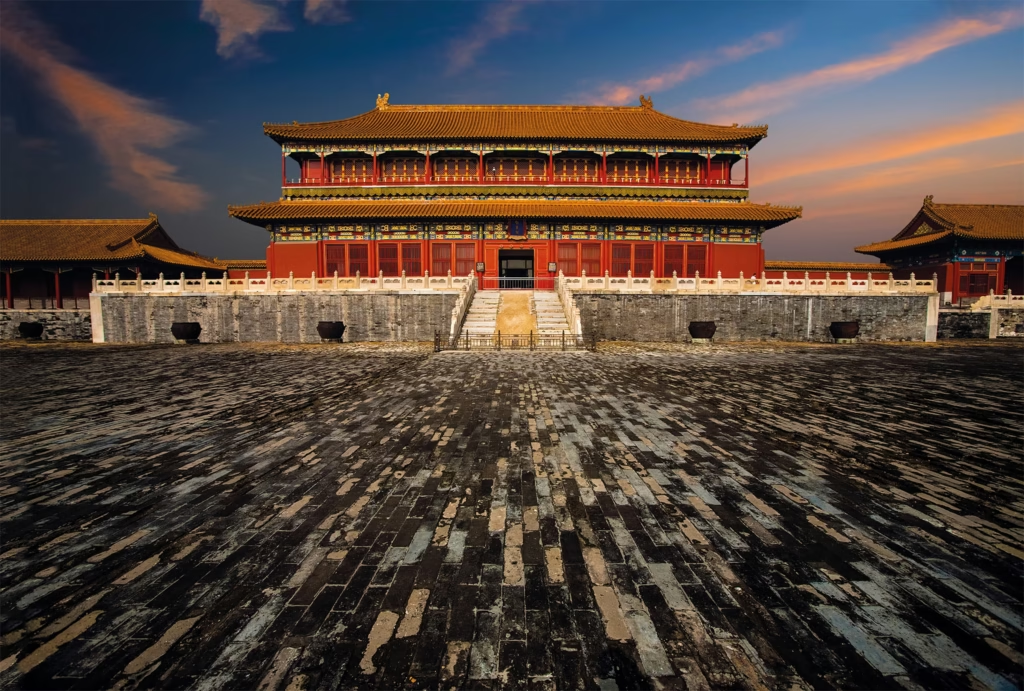
Every corner of the Forbidden City was crafted with intention. Its layout, colours, and materials weren’t chosen randomly—they were designed to reflect the emperor’s cosmic role and the structure of the state, all encapsulating the symbolism that characterised the Forbidden City.
| Element | Symbolic Meaning |
|---|---|
| South-facing orientation | Light, leadership, openness |
| Red color | Joy, vitality, protection |
| Yellow color | The emperor’s colour, symbol of dominance and legitimacy |
| Thousands of rooms | Precision, hierarchy, and control |
Gates: Crossing into Sacred Authority
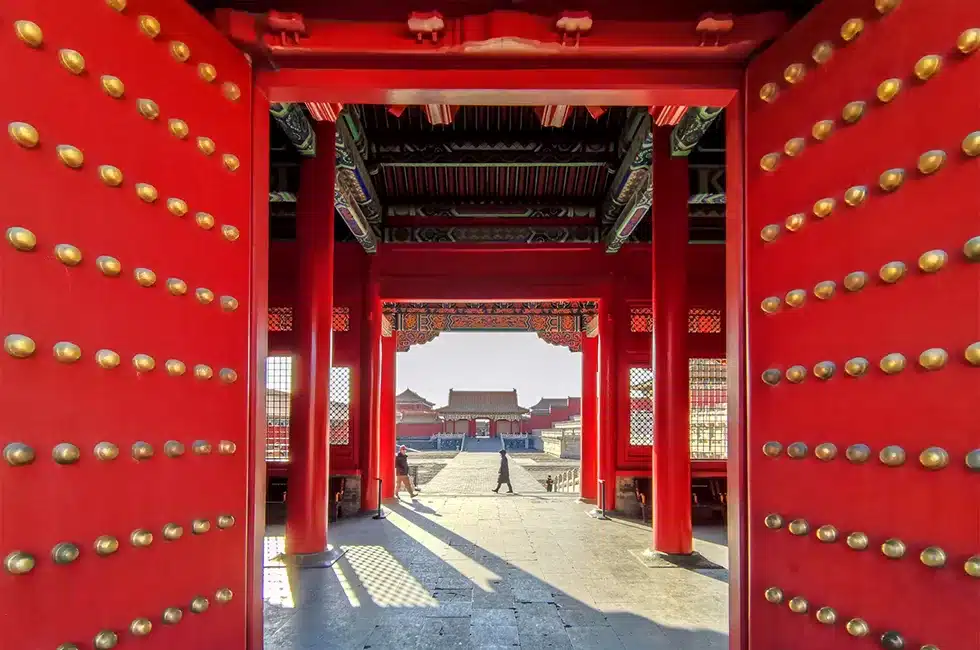
Massive gates mark the transition into the imperial world, most notably the Gate of Heavenly Purity and the Gate of Divine Might. Entering these gates wasn’t a casual act—it was a ritual. Only those granted permission by the emperor could pass through, emphasizing the sacred and untouchable nature of imperial rule, which ties deeply into Forbidden City symbolism.

The Central Axis: A Visual Expression of Order
Imperial planners aligned key halls and chambers along this path to reinforce the structure of power and ceremony, a defining feature of the Forbidden City’s overarching symbolism.
| Hall | Purpose | Position |
|---|---|---|
| Hall of Supreme Harmony | Major imperial ceremonies | Southern start of the axis |
| Hall of Central Harmony | Administrative decisions | Middle of the axis |
| Hall of Preserving Harmony | Legal discussions | Closer to the northern end |
Imperial Garden: Nature Under Command
At the northern end of the complex lies the Imperial Garden, where winding paths, carefully placed stones, and ancient pines create a landscape that feels both natural and controlled. It’s not just a retreat—it’s a visual metaphor for the emperor’s harmony with, and dominion over, nature itself, which is an important aspect of the Forbidden City’s symbolism.
Architectural Influence Beyond China
The Forbidden City’s impact went far beyond China’s borders. Its aesthetic and symbolic blueprint inspired royal complexes in places like Korea and Vietnam, especially in the use of colour, axial symmetry, and gate symbolism. Indeed, Forbidden City symbolism influenced much of East Asia’s architectural heritage. It wasn’t just China’s politics that left a mark on East Asia—its architecture did too.
Conclusion
The Forbidden City is more than a historic site—it’s a masterful expression of how architecture can embody political thought and social order. The architects designed every gate, colour, and corridor to reflect the emperor’s divine role and China’s vision of power and harmony, captured brilliantly in the symbolism of the Forbidden City.
✦ ArchUp Editorial Insight
This article explores the Forbidden City as a physical embodiment of Chinese imperial order and philosophy. The visuals highlight symmetrical layouts, axial planning, and a rich chromatic palette of reds and imperial yellows. Architectural elements—gates, halls, and gardens—form a structured visual hierarchy rooted in Confucian ideals. Yet, while the article captures spatial symbolism, it offers limited critique of evolving preservation methods or how such heritage spaces interact with modern urban environments. Greater engagement with cultural sustainability would deepen its relevance. Still, its analytical clarity makes it a strong reference on imperial symbolism in historic architecture.
Explore the Latest Architecture Exhibitions & Conferences
ArchUp offers daily updates on top global architectural exhibitions, design conferences, and professional art and design forums.
Follow key architecture competitions, check official results, and stay informed through the latest architectural news worldwide.
ArchUp is your encyclopaedic hub for discovering events and design-driven opportunities across the globe.