
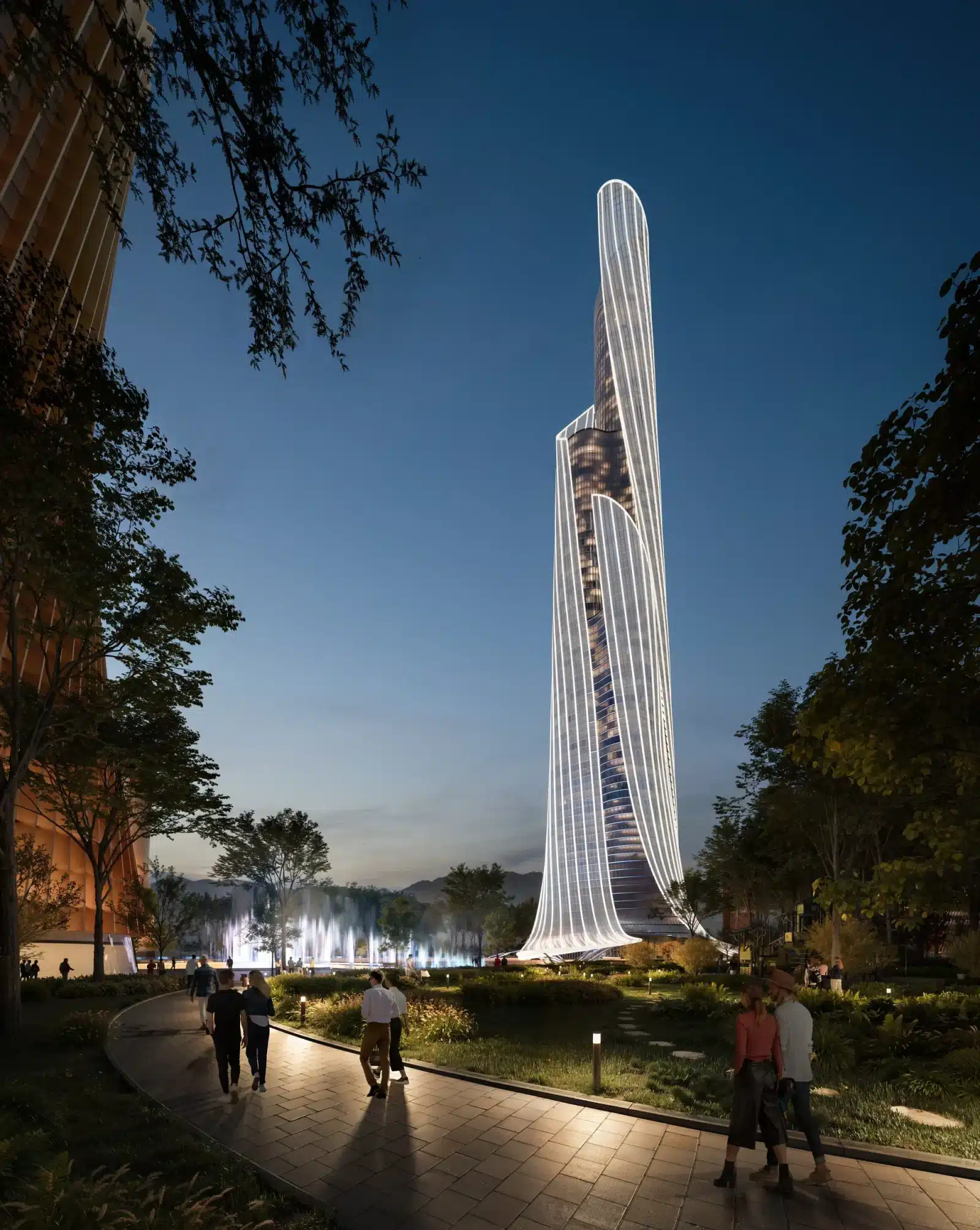
A New 400 Meter Tower Reshapes the Skyline of Dushanbe in Central Asia

: A Vertical Ascent Within the Gissar Valley
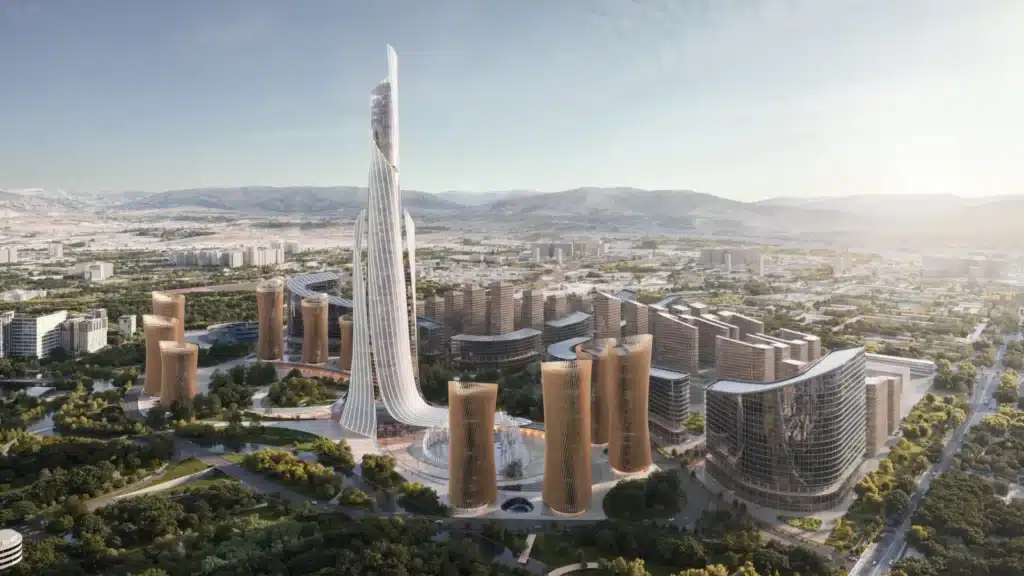
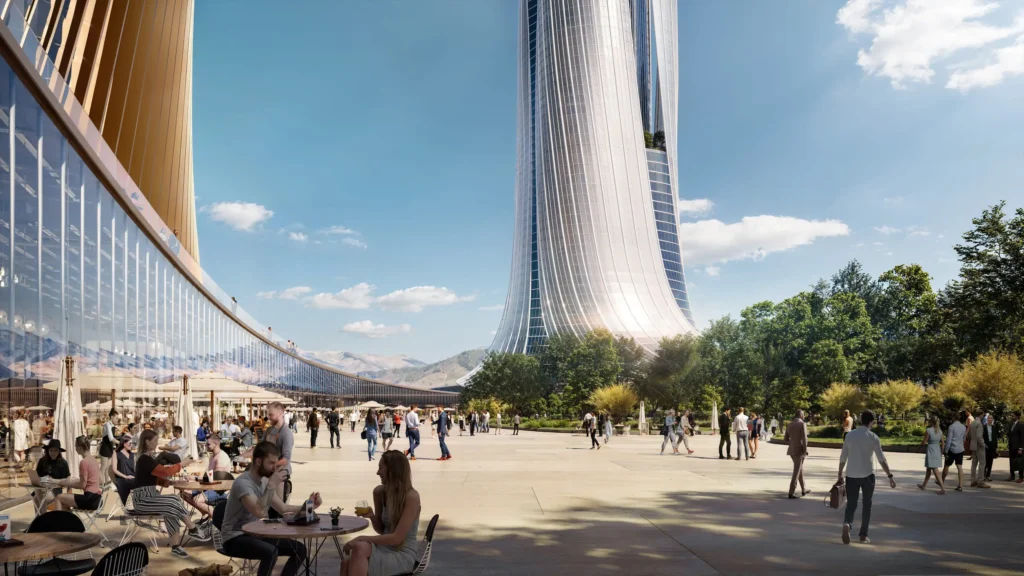
Dushanbe Tower rises from a wide public park in the heart of the Gissar Valley, where the green landscape meets the vertical lines of the structure. The tower introduces a new spatial journey for the city. Visitors move from the calm ground level into shifting elevations where light and airflow change as they ascend. The twisted façade forms a visual dialogue with the surrounding mountains; each contour reflects the valley’s terrain and transforms the structure into a reading of the natural landscape.
The visitor’s experience begins with pedestrian-only pathways that eliminate vehicle noise and open clear views of both the park and the tower. As visitors walk through sloped green terraces, they naturally progress toward the main entrance, framed by shading elements that extend outward from the building’s base.
: Visitor Movement Inside a Multi-Functional Vertical Structure
Inside Dushanbe Tower, the journey transitions from horizontal movement to a clear vertical progression. The interior circulation relies on smooth shifts between different functions: living, working, leisure, and viewing the landscape from elevated levels. Transparent balconies face the park, providing changing views shaped by light and height.
Spaces are distributed to keep daily movement simple and intuitive. Visitors move through short vertical links that create visual connections between interior spaces and the outdoors. The focus keyphrase Dushanbe Tower remains central to the experience, tying together all functional layers without separation.
: Mountain Inspired Architectural Layers
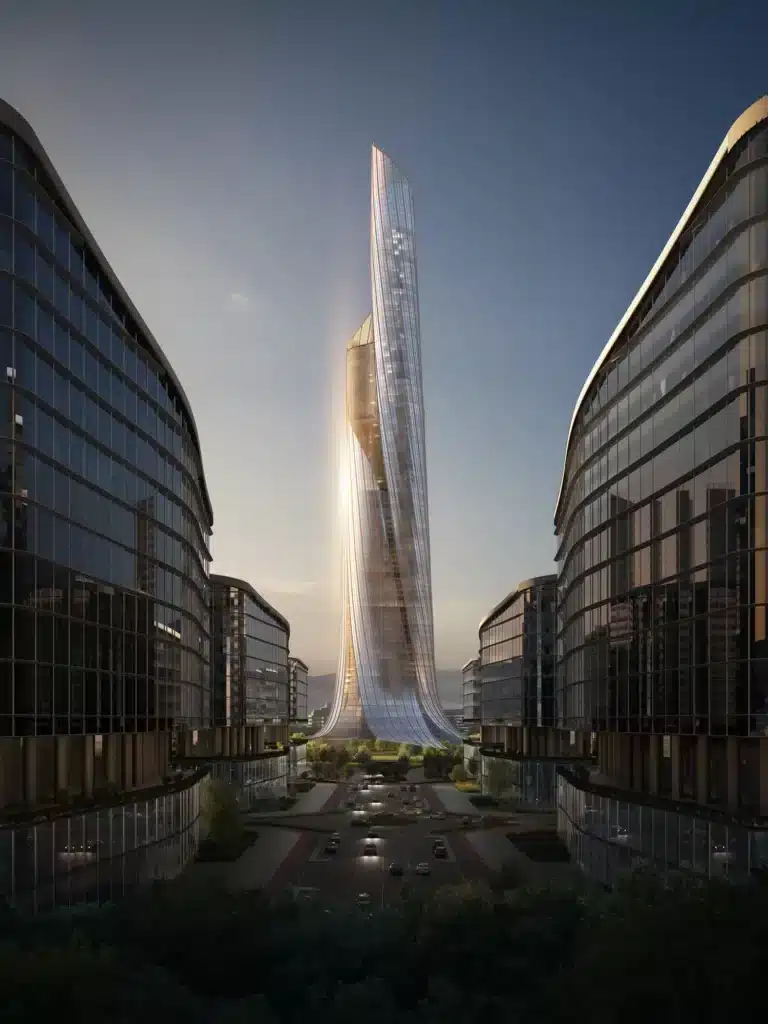
The façade uses angled, layered elements that echo the region’s mountain formations. These flake-like components shift along the tower’s curvature and form shading canopies at the base, reducing heat and shaping shaded gathering zones around the ground level.
This exterior system blends depth, light, and shadow, reinforcing the relationship between the environment and the architectural envelope. This interaction defines one of the core principles guiding Dushanbe Tower: continuity between natural context and built form.
Materials and Techniques:
Construction relies on materials and systems suited to the environmental and seismic conditions of the site. The essential components and their technical performance include:
- High capacity seismic structural system designed for strong seismic zones.
- High transparency glass façade with 70% light transmission, improving natural lighting.
- External shading elements covering approximately 40% of the façade, reducing heat gain.
- Metal canopies extending across 25% of the building perimeter, creating shaded pedestrian zones.
- Surrounding green areas covering over 60% of the ground-level circulation zone, enhancing evaporative cooling.
- Double-glazed glass with 35% higher thermal insulation compared to standard glazing.
: Environmental Integration and Climate Response
The city faces intense summer heat, making the surrounding park essential to the design. The landscape cools the area through shading, planted zones, and airflow corridors between the nearby buildings. These features reduce the urban heat island effect and improve outdoor comfort.
Dushanbe Tower addresses climate conditions through massing strategies that allow airflow channels to form naturally around the structure. Layered glazing and shading devices regulate sunlight and limit heat loads inside the building.
: A Reframed Urban Vision
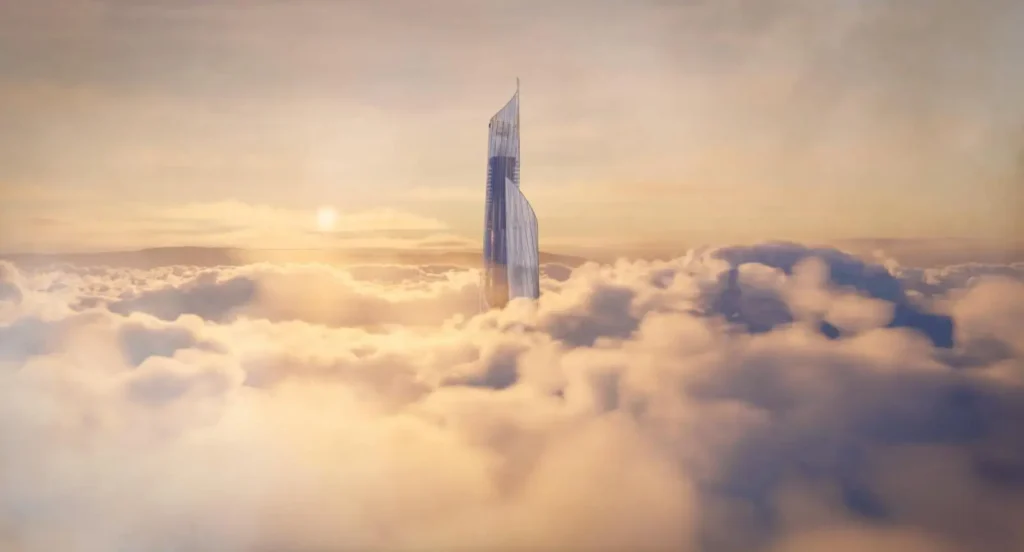
The project reorganizes the surrounding movement patterns through an open-space strategy that merges vertical construction with broad horizontal greenery. The keyphrase Dushanbe Tower becomes a defining element of this new approach, representing a balanced city model where tall structures coexist with pedestrian-oriented landscapes.
The development outlines a clear urban direction for the coming decades: a vertical spine surrounded by a socially active park, shaded walkways free of vehicles, and a direct connection between the built environment and the natural terrain.
Conclusion
Dushanbe Tower stands as a new urban experience built on the interaction between natural landscape and architectural form. It connects the visitor’s ground-level journey through the park with the elevated interior spaces without interruption. The tower’s façade, movement patterns, and environmental strategies form a coherent design that responds to both human use and regional conditions. The project marks a new stage in the city’s vertical development, grounded in its changing environmental context.
✦ ArchUp Editorial Insight
Dushanbe Tower introduces an architectural language defined by twisting forms that echo the surrounding mountains, while its layered façade produces shifting shadows and reflections throughout the day. The project creates a visual journey that moves smoothly from the park into the vertical structure, allowing visitors to experience a continuous spatial flow. Although the integration of greenery and vertical massing is effective, the heavy reliance on glass raises questions about long-term energy performance in a hot climate. Still, the design contributes positively to the urban fabric by linking vertical growth with public landscape and enriching the city’s visual identity.


💬 In my personal view, the architectural potential here goes far beyond simply adding another 400-meter tower to the skyline. Height alone doesn’t redefine a city. What truly elevates Dushanbe’s urban identity is the pursuit of a coherent architectural language — a new design character that reflects its culture, geography, and future ambitions. Strong, thoughtful architectural solutions will always achieve more than vertical expansion on its own.
This is the nature of architecture, dear sir — it always accommodates both perspectives.
I fully appreciate your point that height alone does not create a new urban identity, and that the true value of any city project comes from a clear architectural language that aligns with the culture of the place and its natural context.