

Ti-Armour: When Everyday Carry Becomes a Cultural Artifact

Reimagining Everyday Carry: Does a Fan Belong in Your Pocket?
EDC (Everyday Carry) enthusiasts typically fill their pockets with practical tools like knives, multitools, or tactical pens. But a folding fan as part of this world? That’s rare—and perhaps unexpected.
A Visual Reference Rooted in History
In a design that transcends the conventional idea of portable gear, this small titanium fan draws inspiration from the “Mountain” shields of China’s Tang dynasty, dating back over a thousand years. These shields were found engraved on the walls of ancient tombs, making the design feel like a bridge connecting military history with modern craftsmanship.
Ancient Elegance Meets Contemporary Technology
Over four millennia ago, fans were used by Chinese nobility as symbols of refinement and status. Today, that symbolism is revived—this time through precision CNC engineering—resulting in a design durable enough for daily use, whether clipped to a keychain or used in crowded summer festivals.
Materials & Details: Where Art Meets Engineering
What makes this design stand out isn’t just the concept, but the execution. The use of GR5 titanium alloy gives the fan an exceptional balance of lightness and structural strength.
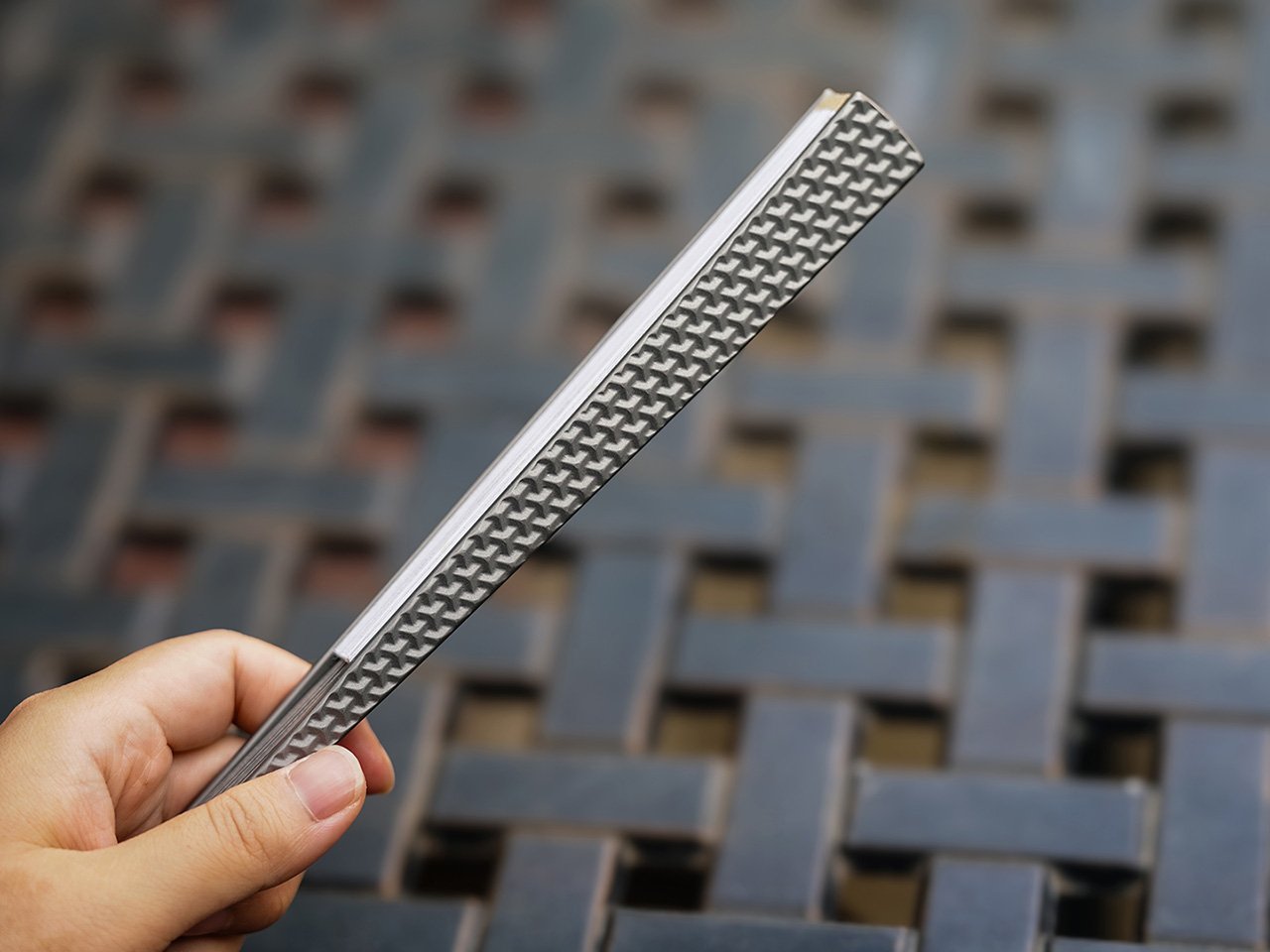
Moreover, the intricately machined surface engravings create a 3D pattern that shimmers with light like a moving sheet of water—an artistic touch that encapsulates the spirit of Chinese metal innovation in a modern form.
The Architecture of Ancient Armor: From Battlefield to Palm
The foundational design of what’s known as the “Mountain Armor Pattern” stems from an interlocking structure inspired by fish scales, where individual pieces are connected through intricate mortise-and-tenon joints.
This pattern required no stitching or welding; instead, it relied on the mechanical precision of ancient craftsmen—a reflection of their deep architectural understanding centuries ago.
The Challenge of Modern Replication
Despite today’s technological advances, faithfully replicating these ancient armors remains a distant goal.
Contemporary artisans have developed four distinct methodologies to mimic this complex structure, yet all have failed to capture the micro-level details that define the original craftsmanship.
CNC Technology as a Modern Interpretation of Heritage
In an effort to reinterpret this legacy, multi-axis CNC machines are employed to carve each titanium piece with engravings that precisely echo the historical pattern.
But the effort goes beyond aesthetics—it reflects a philosophy of making: the fan is assembled using structurally architectural joints, without a single stitch or screw, much like the techniques used by ancient armor-makers.
A Fusion of Heritage and Contemporary Craftsmanship
The result is what designers refer to as an “unreplicable aesthetic”—surface engravings that shift visually with changing light, glistening like the surface of a lake at sunset.
Here, functionality merges with cultural depth. Every fold or flick of the fan embodies a visual and tactile revival of military heritage, reimagined as a modern everyday tool.

Technical Functions Beyond Expectations
From a technical standpoint, this fan addresses cooling challenges that rarely cross the mind of the average user.
It doesn’t merely fulfill the traditional role of a fan—it redefines ventilation efficiency in the realm of portable tools.
Directed Airflow Through Structural Rigidity
The ribs of the fan are crafted from solid titanium, granting them the stiffness needed to generate a more concentrated airflow compared to traditional paper or fabric fans.
This rigidity boosts cooling performance with every movement, making it a highly functional tool in hot environments.
Low Thermal Mass: Instant Cooling Without Unwanted Heat
Titanium has a low thermal mass, meaning it quickly adapts to ambient temperatures.
This prevents the common issue of “hot air emitted from metal,” often seen in aluminum fans, especially when exposed to direct sunlight.
Ideal Weight for the EDC World
In the culture of Everyday Carry, weight is a critical factor.
Despite its strength, titanium is relatively low in density—making this fan lighter than many tactical pens, while offering greater utility in warm weather conditions.
Streamlined, Pocket-Friendly Design
The fan features an intelligent folding mechanism that collapses it down to a form factor comparable to the “shadow of a pen,” making it easy to slip into a pocket or bag without taking up much space.
Yet it opens swiftly and smoothly, transforming instantly into a ready-to-use cooling tool that blends streamlined design with practical function.

Multiple Sizes to Match Different Bodies and Preferences
The Ti-Armour fan is available in three main sizes:
• 9.2 inches
• 11.8 inches
• 13 inches (available only upon reaching 300% of the crowdfunding goal)
This range of sizes isn’t merely aesthetic—it thoughtfully considers personal factors such as gender, height, body build, and hand size.
The Right Size: A Balance of Presence and Control
Larger individuals—typically men—tend to prefer the 11.8- or 13-inch versions for their strong visual presence and broader airflow control.
Meanwhile, many women opt for the 9.2-inch model, which fits smaller hands and allows for extended use without fatigue.
Ergonomic Design That Prioritizes Balance
The smaller version is engineered with ergonomic proportions in mind.
Users with smaller hands will find the handling intuitive and comfortable, even during prolonged use.
Its tapered structure reduces weight without compromising flexibility, ensuring smooth responsiveness while maintaining necessary structural rigidity.
Precision Engineering in Every Detail
All fan components—regardless of size—are fully machined from titanium using high-precision CNC milling.
This ensures consistent quality across all models, preserving both the complex geometry and the finely detailed surface engravings.


Silk in Fan Design: Where Aesthetics Meet Function
The silk cover of the fan isn’t merely a decorative touch—it brings with it a tangible layer of practical value.
Far from being just a symbol of elegance, the silk used here is carefully selected and crafted to meet the demands of daily use in both durability and functionality.
Personal Expression Through Detail
This cover serves as a personal canvas for artistic and cultural expression.
Users can customize it to reflect their taste—whether through color choices, hand-painted motifs, or the incorporation of Arabic or Chinese calligraphy.
In some cases, collaborative options with independent artists are available, turning the fan into a wearable art piece that bridges authenticity and innovation.
A Therapeutic Dimension: From Airflow to Aromatherapy
One standout feature is the ability to lightly spray perfumes or essential oils with insect-repellent properties onto the silk fabric.
This transforms the fan into more than just a ventilation tool—it becomes a multisensory experience akin to aromatherapy, adding a calming emotional layer to each use.
Craftsmanship and Easy Assembly
The silk fabric is tailored with precision dimensions to fit the fan’s frame, and dyed on demand—offering a wide variety of options without sacrificing quality or accuracy.
As for assembly, the process is designed to be simple and intuitive:
• Small frames slide easily between fabric layers without any adhesive.
• Larger frames require more precise rib alignment, with a light adhesive application to secure the final shape.

The Transformation of EDC Culture: From Utility to Narrative
In recent years, the culture of Everyday Carry (EDC) has undergone a notable evolution—one that goes beyond purely tactical appeal.
Rather than focusing solely on strength and toughness, certain tools now express deeper concepts, blending function with identity, and technology with cultural heritage.
Tools That Tell a Story
This shift is no coincidence. It’s reflected in the direction taken by brands like Craighill, The James Brand, and Dr.Gear, which now offer tools that carry artistic and cultural weight.
In doing so, they move away from the stereotypical perception of titanium—as a cold, “aggressive” material—and toward objects designed to spark thought and curiosity, not just endure rugged use.
A Rare Meeting of the Old and the New
Within this context, tools like the Ti-Armour fan emerge as compelling examples of this convergence.
They embody the wisdom of ancient objects that held symbolic and historical significance, paired with the precision of contemporary manufacturing, capable of producing meticulously crafted pieces with exceptional quality.
From Titanium to Damascus Steel: A Moment of Shift
Though the circumstances differ, this trend mirrors what once occurred with Damascus steel.
Back then, strength ceased to be the sole focus. Concepts like heritage and industrial beauty became central to the conversation.
Today, titanium seems to be undergoing its own transformation—where tools evolve from mere functional items into narrative pieces that reflect taste, personality, and philosophy.
✦ ArchUp Editorial Insight
There’s no doubt that integrating cultural and artistic elements into EDC tools marks a paradigm shift in how we understand everyday functionality.
Instead of emotionless objects focused purely on performance, we now encounter designs with narrative depth and historical references—fostering a more emotional, human connection between user and tool.
However, this approach is not without challenges or potential criticism.
Some may argue that, while beautiful, such design philosophies add a decorative layer that could detract from the simplicity or core utility of the tool.
Introducing aesthetic or historical considerations might also raise production costs or complicate daily usability when compared to strictly utilitarian tools.
Yet this balance between “meaning” and “function” shouldn’t be viewed as a flaw in itself.
Rather, it reflects a broader transformation in our relationship with objects—shifting from mere tools of use to symbols that communicate taste, temperament, and even personal philosophy.
Explore the Latest Architecture Exhibitions & Conferences
ArchUp offers daily updates on top global exhibitions, conferences, and professional art and design forums.
Follow key competitions, check results, and stay informed through the latest news worldwide.
ArchUp is your encyclopedic hub for discovering events and design-driven opportunities across the globe.


