Evolution of the F2 Bravo Knife Design: A Collaborative Analysis Between Tekto and EOTECH on Innovation and Tactical Challenges

How Does Collaboration Between Different Industries Manifest in Tactical Knife Design?
When knife-making experts come together with a company specializing in military optics equipment with over thirty years of experience, the result is a product that combines high precision and durability. These qualities meet the standards of U.S. Special Operations Forces. This coordination between diverse technical expertise reflects a remarkable evolution in the design of combat tools that demand efficiency and outstanding performance in the field.
Redesigning the F2 Bravo Knife: Between Strength and Innovation
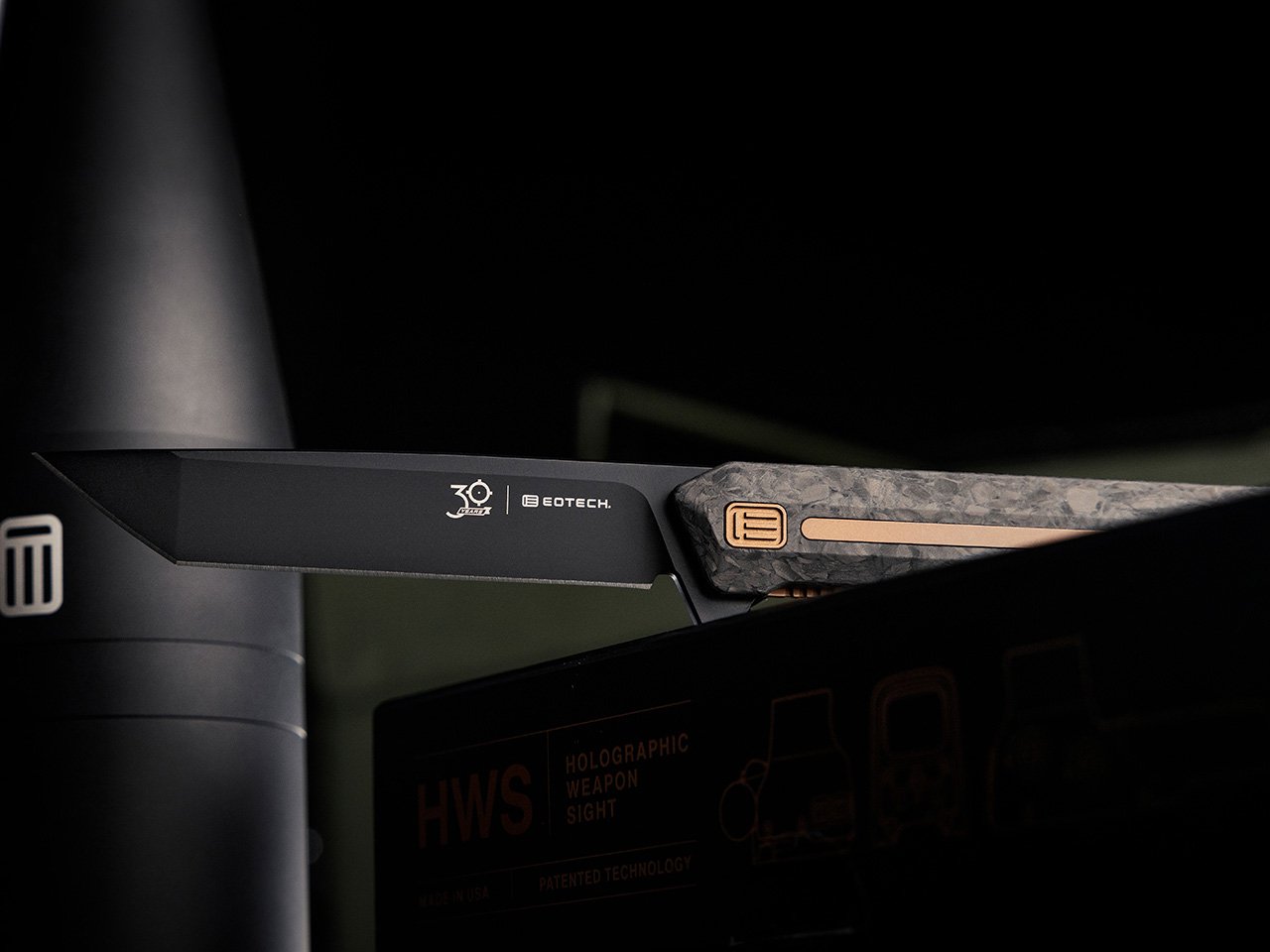
The new design of the F2 Bravo knife is based on significant enhancements. These enhancements make it stronger and more serious compared to the original version. Among the most notable changes is the adoption of an American Tanto blade, known for its hardness and cutting effectiveness. Additionally, the handle is equipped with titanium accents, adding both durability and lightness simultaneously. These modifications make the knife a fully tactical tool that meets the daily usage requirements of various military and civilian users.
Integration of Lightness and Effectiveness
It is noticeable that the new design balances lightness and toughness, allowing the user to carry the knife without feeling an added burden. At the same time, possessing a strong and reliable tool during critical moments is crucial. This balance is very precise, since the light weight should not compromise the durability and performance strength. This is especially important in special operations environments that require high endurance and accuracy.
The Importance of Cross-Disciplinary Collaboration in Developing Military Equipment
This limited edition of the F2 Bravo knife reflects the spirit of collaboration between different industries: knife manufacturing and military optics equipment manufacturing. Such collaboration enables the integration of technical and engineering expertise to develop more specialized and superior tools. In turn, this contributes to providing equipment that meets the precise needs of special operations teams.
Ongoing Collaboration Between Tekto and EOTECH in Developing Tactical Knives
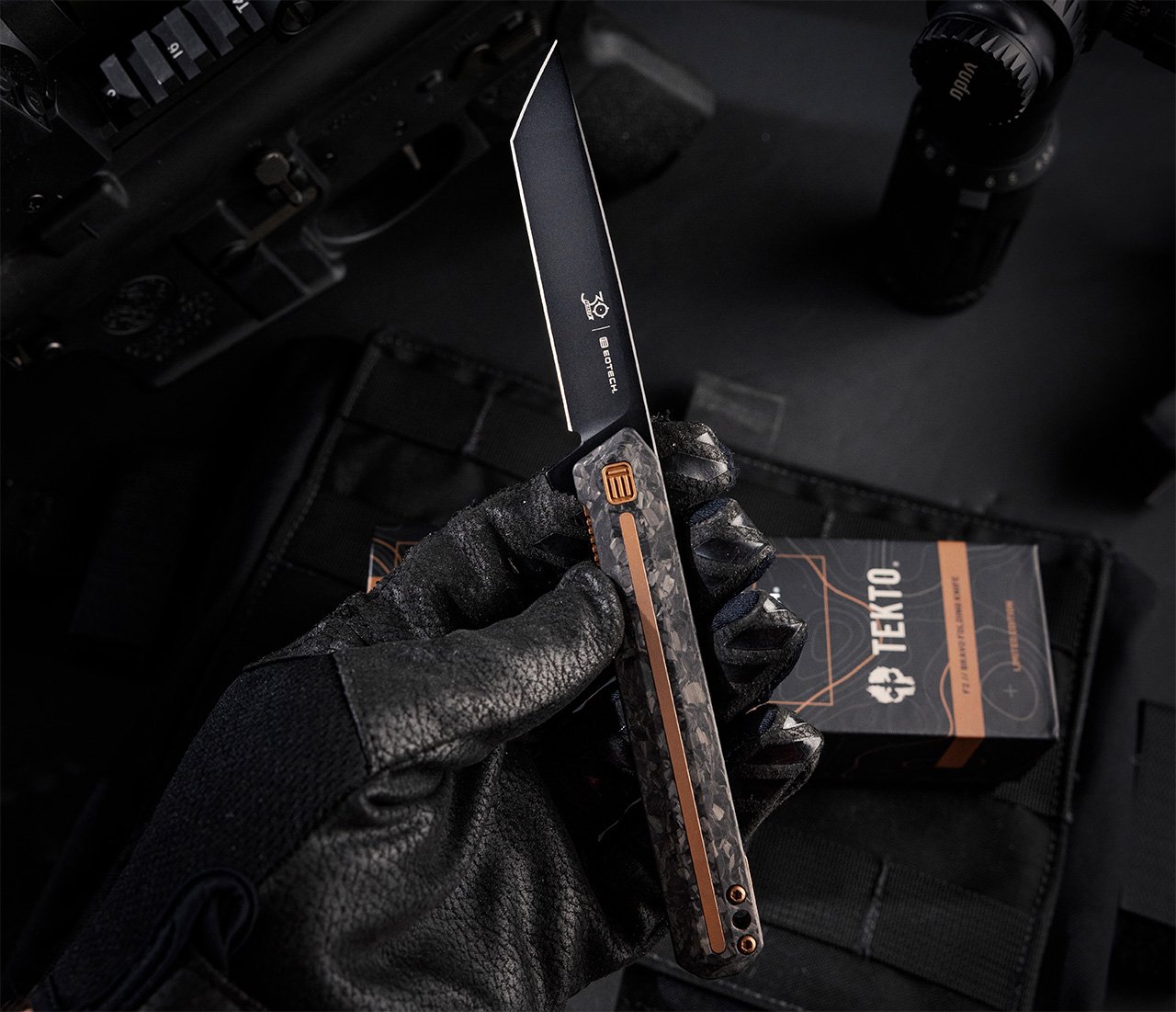
This is not the first time that Tekto and EOTECH have collaborated. Earlier this year, we witnessed the launch of a limited edition of the F1 Alpha knife. This knife stands as the fruit of this partnership. Over time, the focus shifted toward developing a new version of the famous F2 Bravo knife. This new edition does not merely involve a redesign but includes noticeable modifications in the blade’s geometry. This reflects the two companies’ commitment to continuous innovation and improving the performance of their tools.
Development of the F2 Bravo Knife Blade: From Daily Use to Demanding Tactical Missions
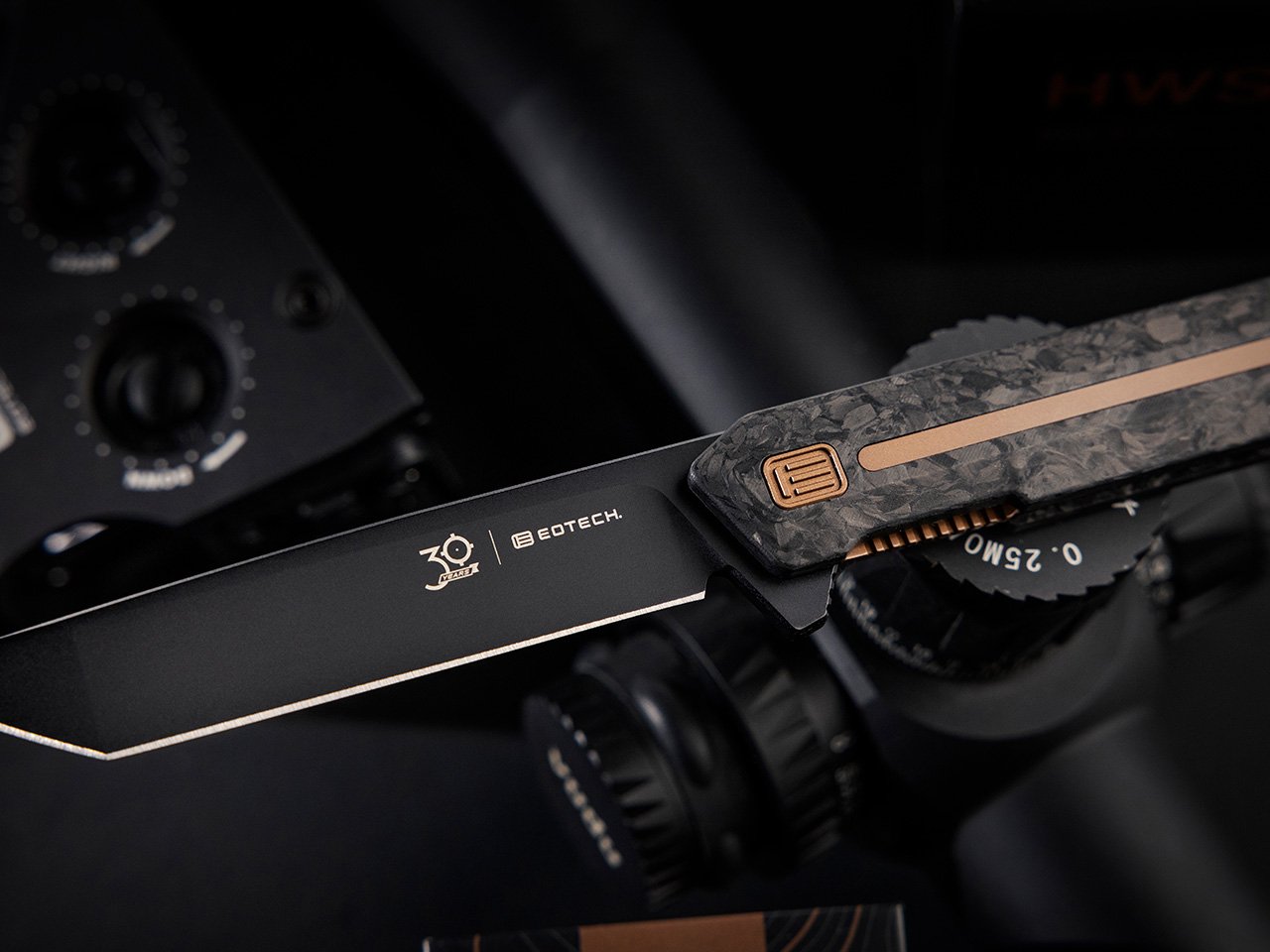
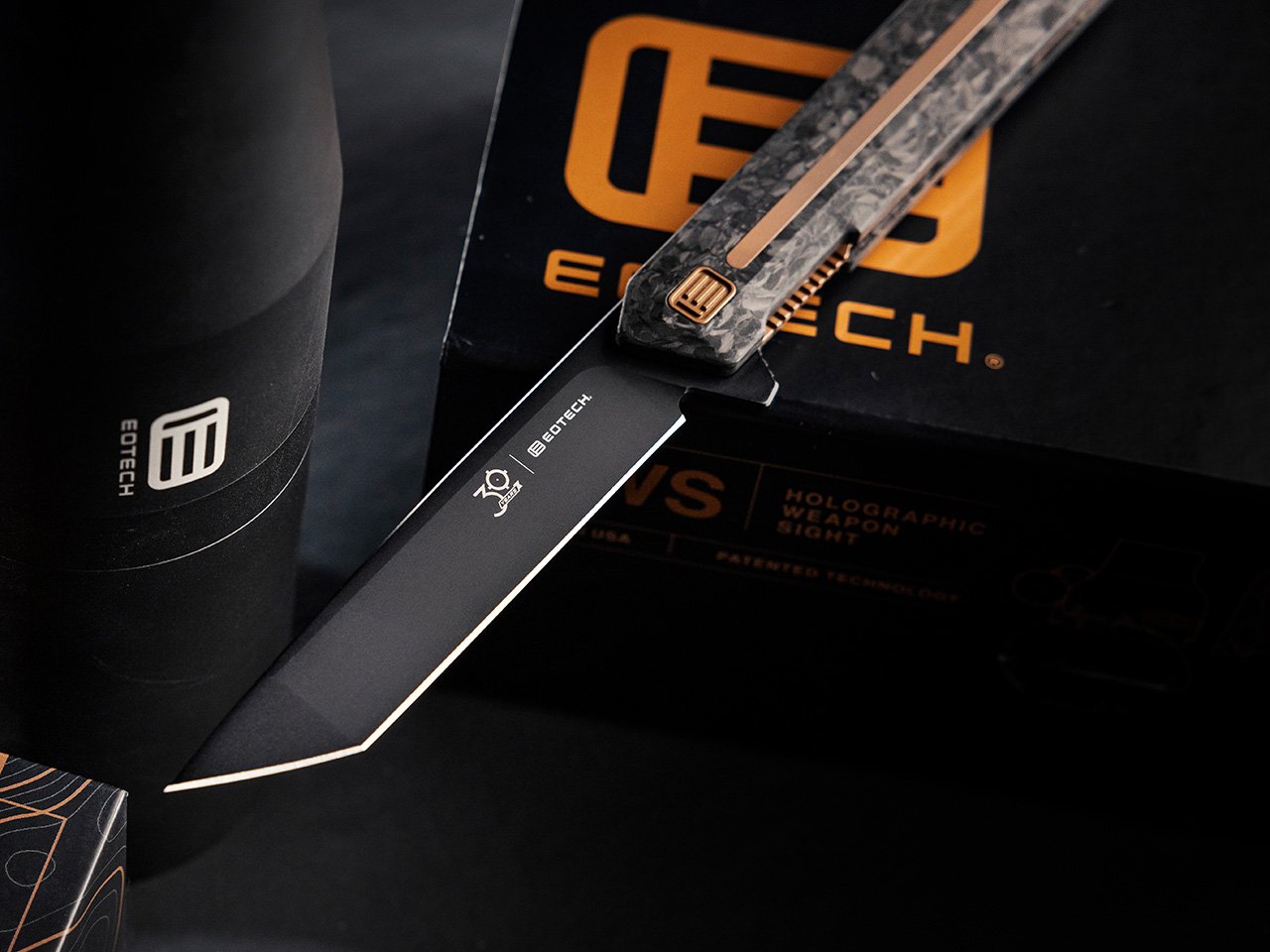
In the original version of the F2 Bravo knife, the blade was a drop point type. This type is considered ideal for daily use due to its balanced shape and ease of control in various tasks. However, the EOTECH edition offers a qualitative upgrade by adopting an American Tanto-style blade. This style is characterized by a sharp, dual-edged design, making it particularly suitable for piercing, stabbing, and cutting with high efficiency.
This blade is made from D2 steel, a type known for its hardness and ability to withstand harsh combat conditions. Additionally, the blade is coated with a layer of titanium, a material used as a quality standard by Tekto. This coating boasts a hardness rating between 58 and 60 on the HRC scale, ensuring that the blade retains its sharpness for a long time. This is true even under heavy and continuous use.
Tangible Improvements in the F2 Bravo Knife Handle to Enhance Durability and Functionality
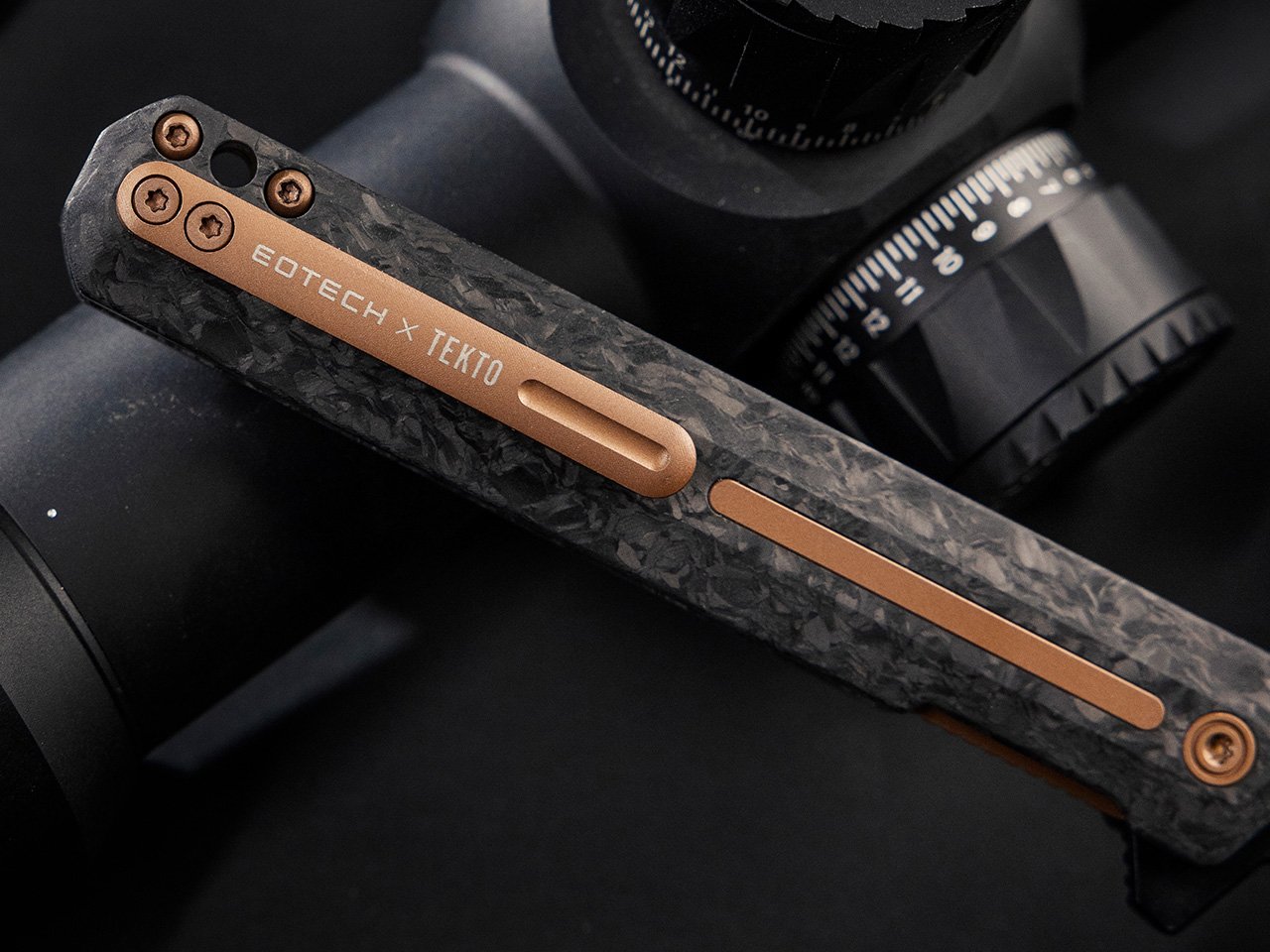
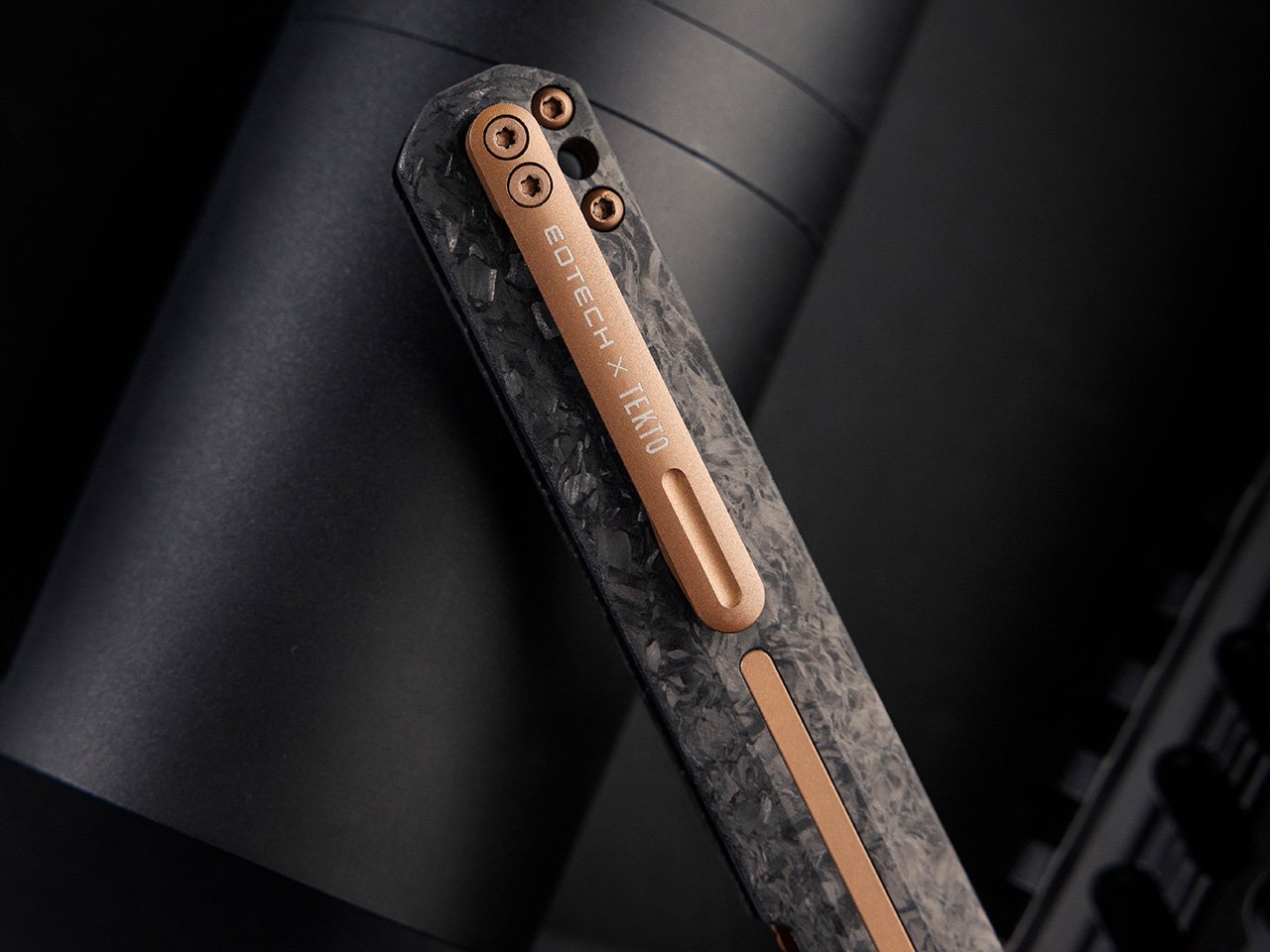
The enhancements were not limited to the blade alone. They also included the knife handle, which experienced a qualitative leap in the materials used. In the new version, the standard G10 material was replaced with a forged carbon handle, enhancing its durability and strength while maintaining lightness.
Added to this are titanium accents that adorn the handle, giving it an elegant and refined appearance. The EOTECH logo is prominently displayed on the front of the handle in an attractive bronze color, adding a unique and sophisticated character.
Mechanically, a titanium liner lock in the same bronze color was adopted, providing stability and reliability in use. The ceramic ball system in the pivot contributes to making the blade’s opening and closing exceptionally smooth. This enhances ease of use and delivers a feeling of strength and precision in every movement.
Balancing Design and Size in the Limited Edition F2 Bravo
Despite significant developments in materials and design, the knife’s size and weight remained largely unchanged. This reflects the designers’ commitment to maintaining comfort and ease of carry. The overall length increased by only 1 mm, from 195 mm to 196 mm, while the weight rose slightly from 68 grams to 71 grams.
This precise balance between size and weight is very important. It ensures the knife retains its comfortable characteristics that make it a preferred choice for daily use. At the same time, it maintains the durability and performance strength required for tactical missions.
✦ ArchUp Editorial Insight
The collaboration between Tekto and EOTECH stands as a prominent example of how different specialties can unite. They deliver a sophisticated technical and artistic product that meets the demands of users in challenging tactical environments. Positively, the development of the American Tanto blade made from D2 steel and titanium, along with the forged carbon handle and robust locking mechanism, demonstrates a strong commitment to enhancing durability and performance. Maintaining a comfortable weight and size also makes the knife practical for daily use without sacrificing strength, which is especially important for military personnel and tactical users.
However, some aspects warrant critical consideration. Despite the technical improvements, price remains a pivotal factor that may limit the wider adoption of this type of knife among civilian markets. The relatively complex design and advanced components may require regular maintenance and special care. This could be burdensome for the average user compared to simpler tools. Additionally, the shift from the classic drop point blade to the American Tanto style may not suit all users, particularly those who prefer versatile blades with traditional shapes.
Therefore, it can be said that the upgraded F2 Bravo represents a tangible technological advancement. It addresses specific needs, but these improvements come with challenges related to cost, maintenance, and design suitability for diverse uses. This calls for careful evaluation by users before fully relying on this tool in their daily or professional tasks.
Explore the Latest Architecture Exhibitions & Conferences
ArchUp offers daily updates on top global exhibitions, conferences, and professional art and design forums.
Follow key competitions, check results, and stay informed through the latest news worldwide.
ArchUp is your encyclopedic hub for discovering events and design-driven opportunities across the globe.