

Forest Pavilion: A Harmonious Retreat Designed to Follow the Land, Not Alter It

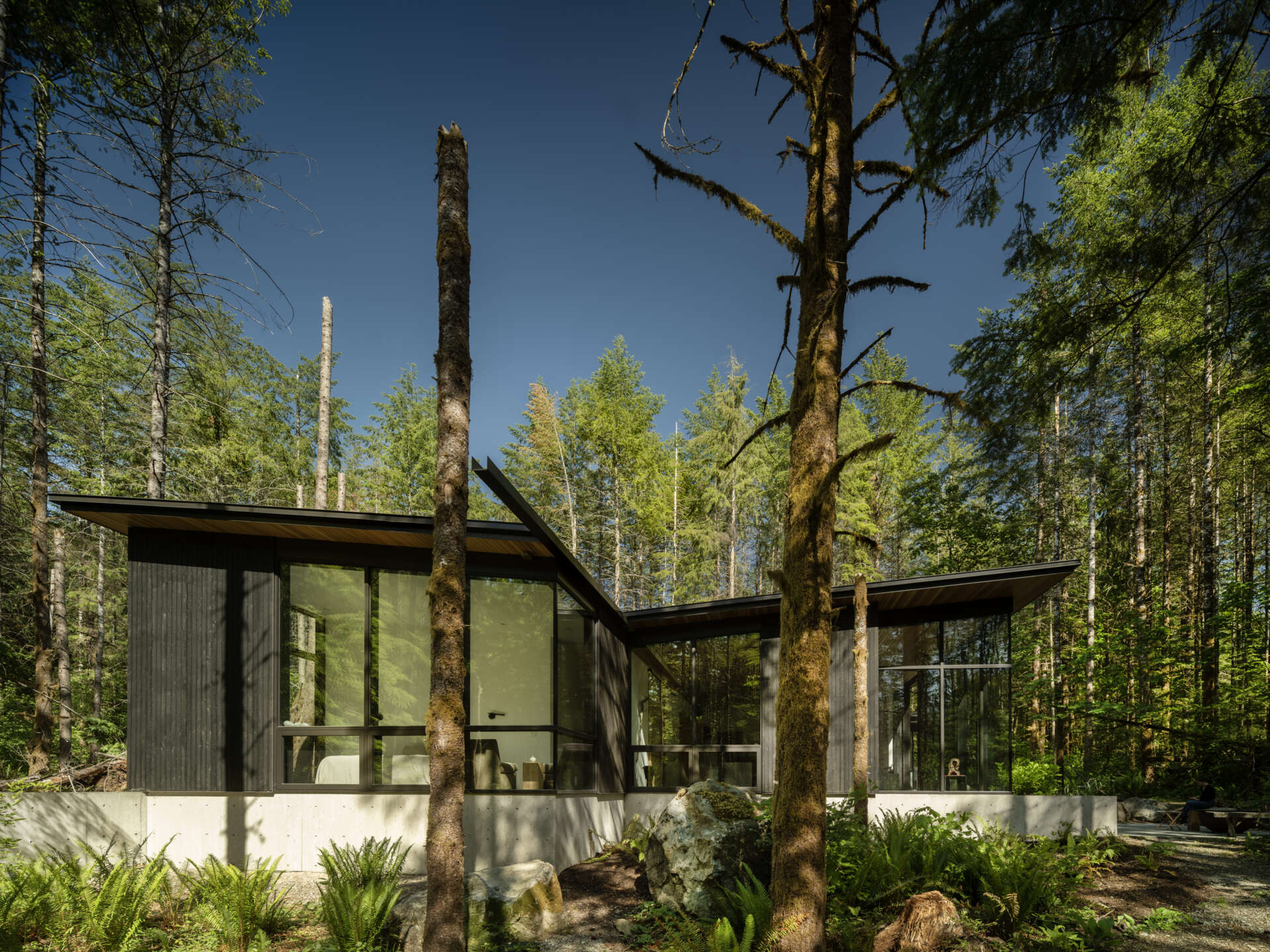
Nestled in the misty woodlands of North Bend, Washington, the Forest Pavilion is a masterclass in biophilic design, where architecture surrenders to the landscape rather than dominating it. Designed by Architecture + Research for a pair of landscape professionals, this home blurs the boundaries between shelter and site, celebrating the untamed beauty of the Pacific Northwest with minimal environmental impact.
A Design Philosophy Rooted in Respect
The Pavilion’s core ethos “follow the land, don’t change it” shapes every detail. Instead of clearing trees, the structure adapts to the terrain, weaving around existing contours, hollows, and ancient tree trunks. The butterfly roof isn’t just aesthetic; it channels rainwater into sculptural cascades, transforming the region’s frequent downpours into a dynamic design feature. With a footprint disturbing just five feet of earth, the home feels like an organic extension of the forest floor, where locally sourced FSC-certified wood and radiant-heated floors underscore its commitment to sustainability.
Seamless Transitions: Indoors to Outdoors
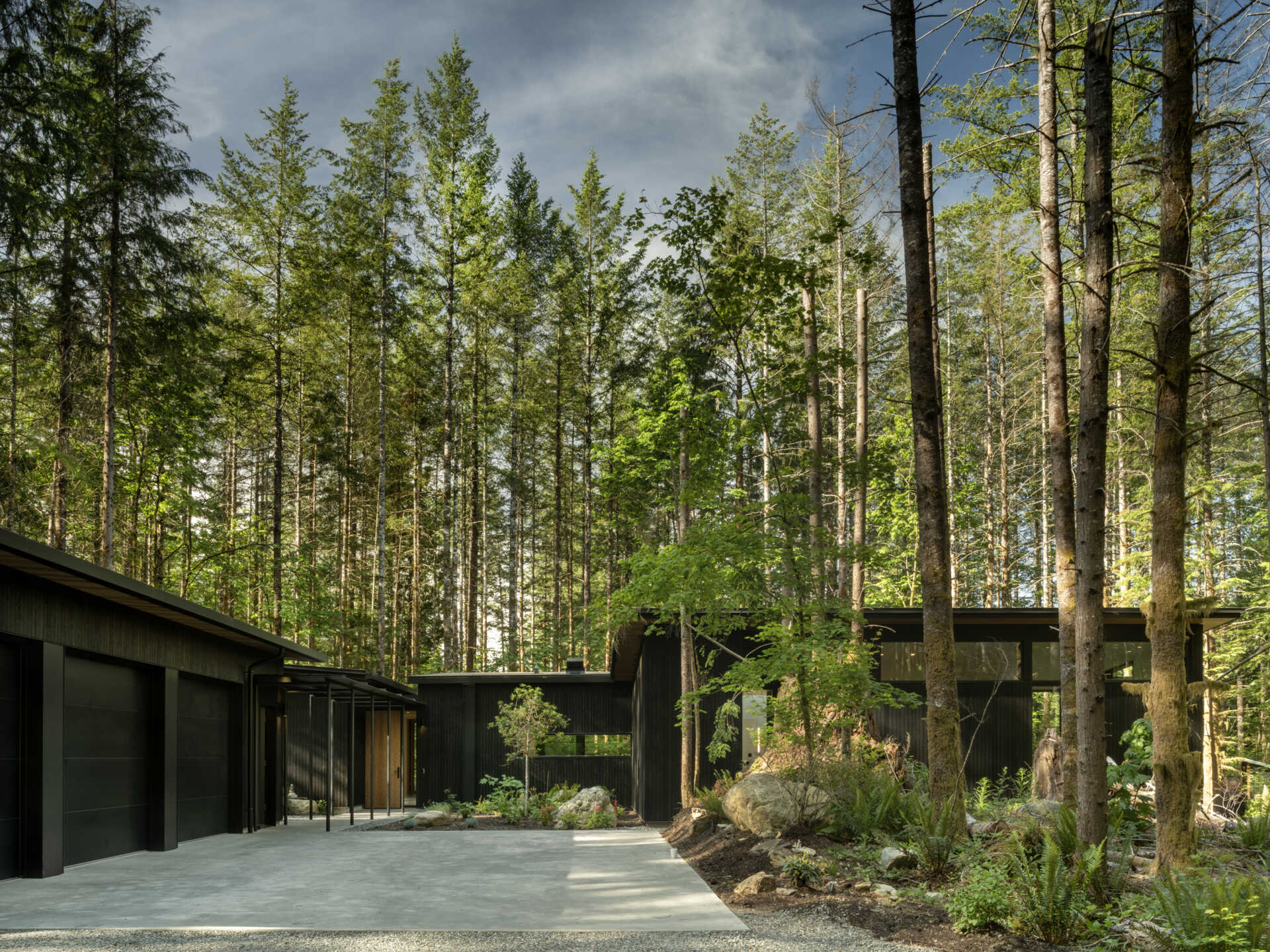
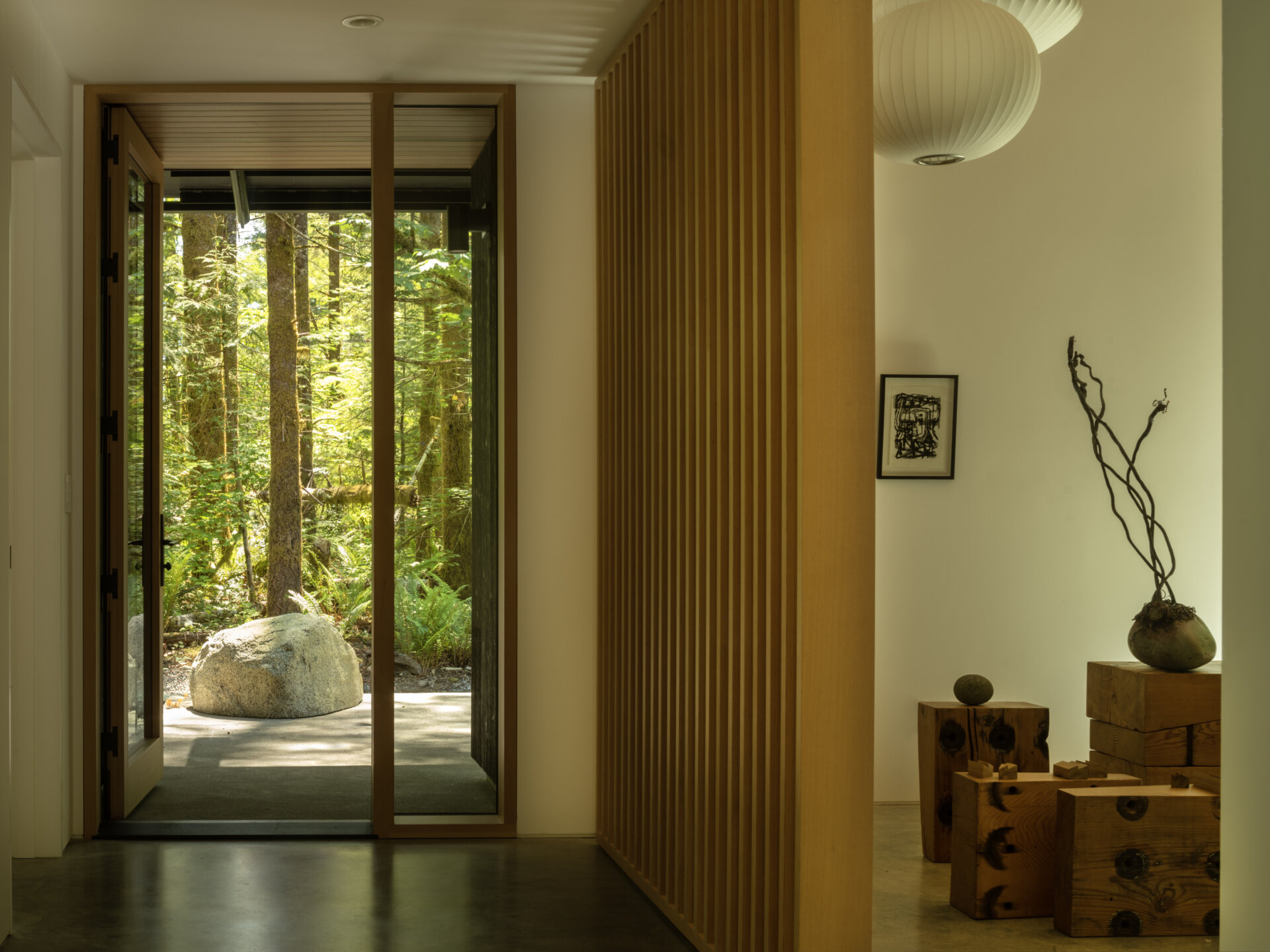
The entry sequence is a sensory journey. A gravel path winds through ferns and boulders, leading to a steel walkway where the sound of rain is amplified, not muted. A custom downspout directs water onto a moss-covered boulder, fostering growth a poetic merger of human intervention and wild ecology. Inside, materials like raw stone, glass, and textured wood create a tactile dialogue between built and natural spaces. A slatted cedar screen offers privacy while framing dappled light, ensuring the forest remains the focal point.
Living Spaces That Prioritize the Wild
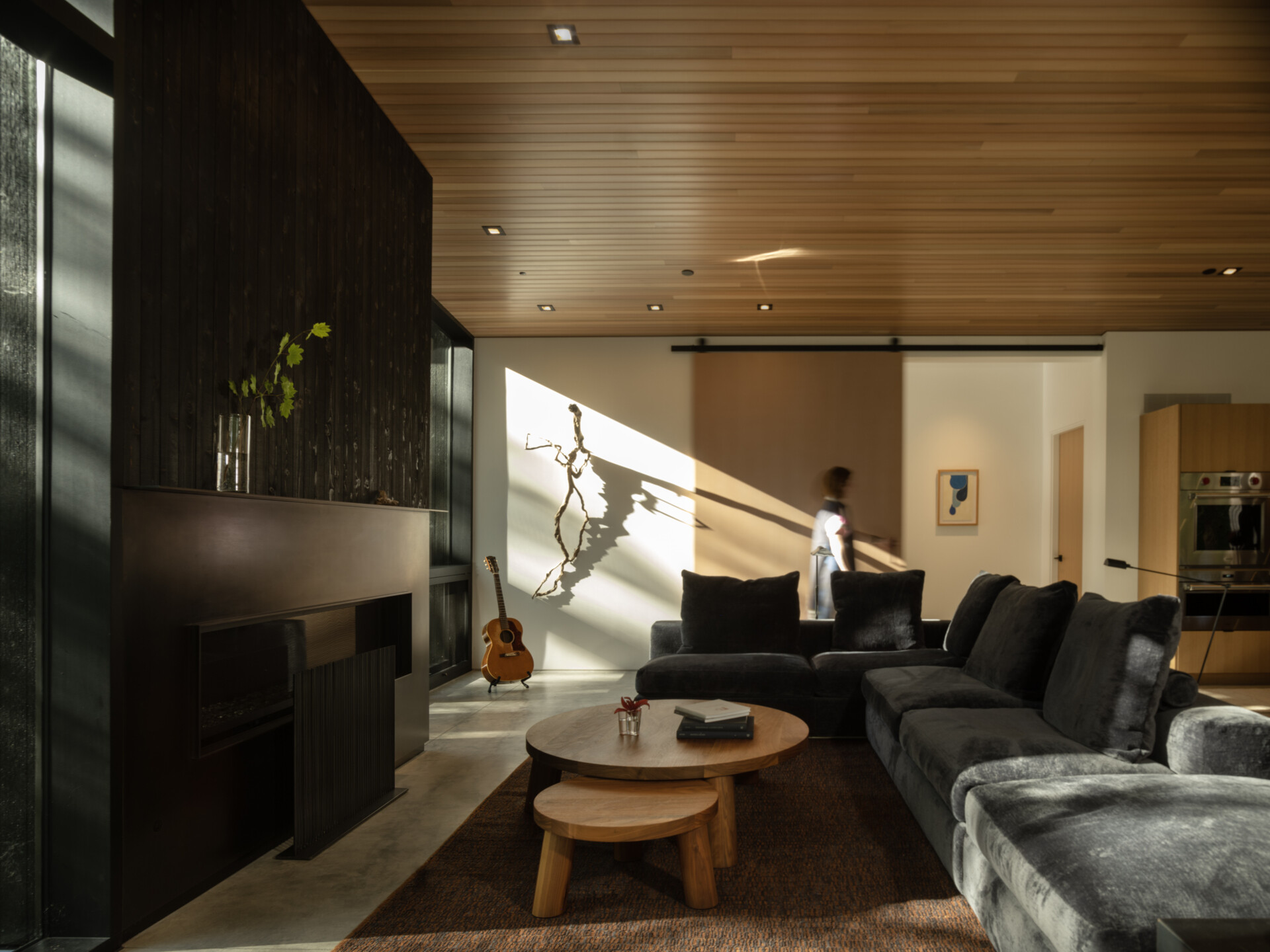
- Living Room: Floor-to-ceiling windows turn the surrounding trees into a living mural. Furniture is arranged to face the landscape, not screens, with a monolithic hearth anchoring the space. Daylight traces the sun’s path, casting warmth on polished concrete floors.
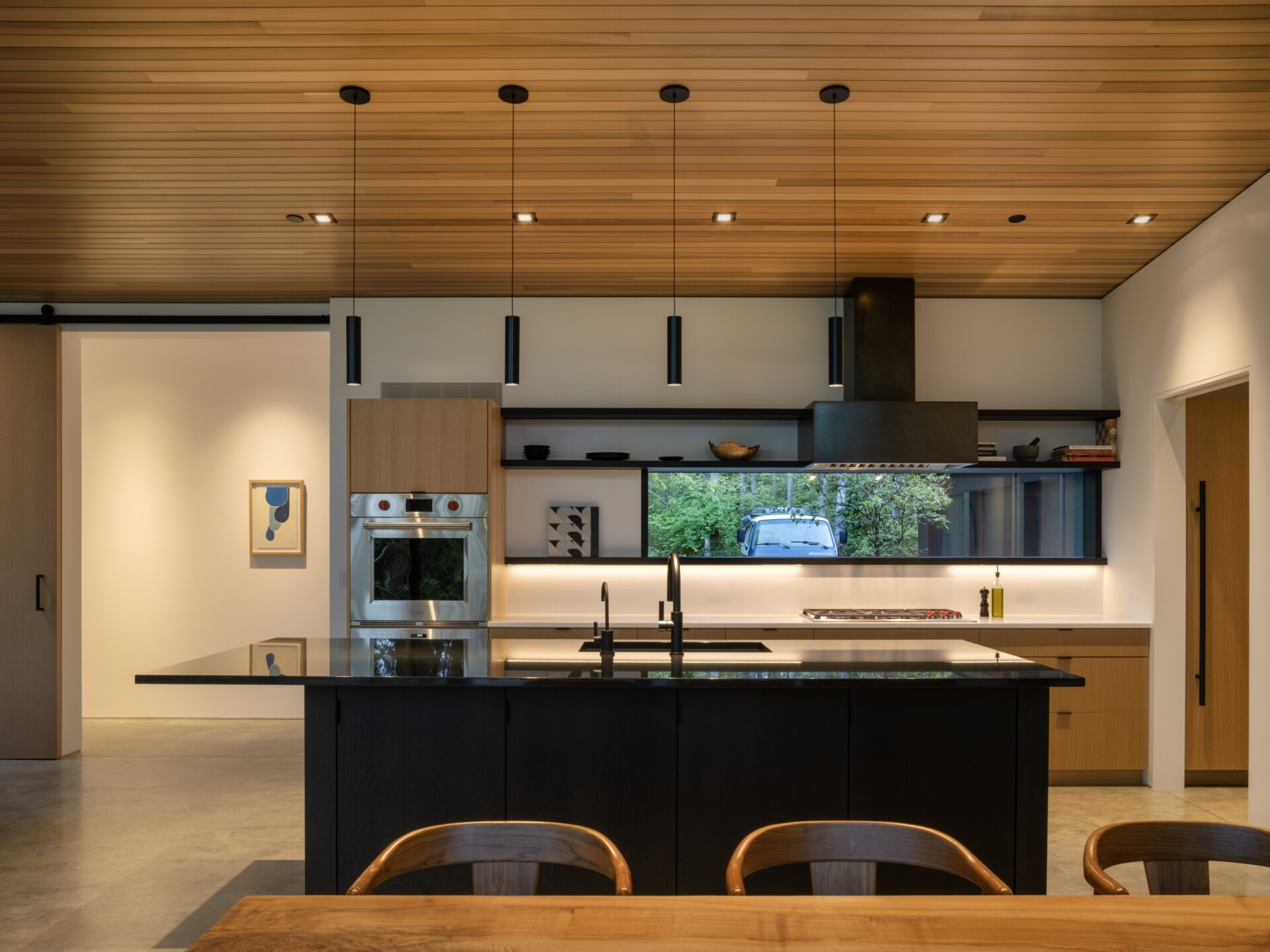
- Kitchen: A study in quiet modernity, with a blackened steel island, matte fixtures, and open shelving that balances function and simplicity. The wood-clad ceiling adds warmth overhead.
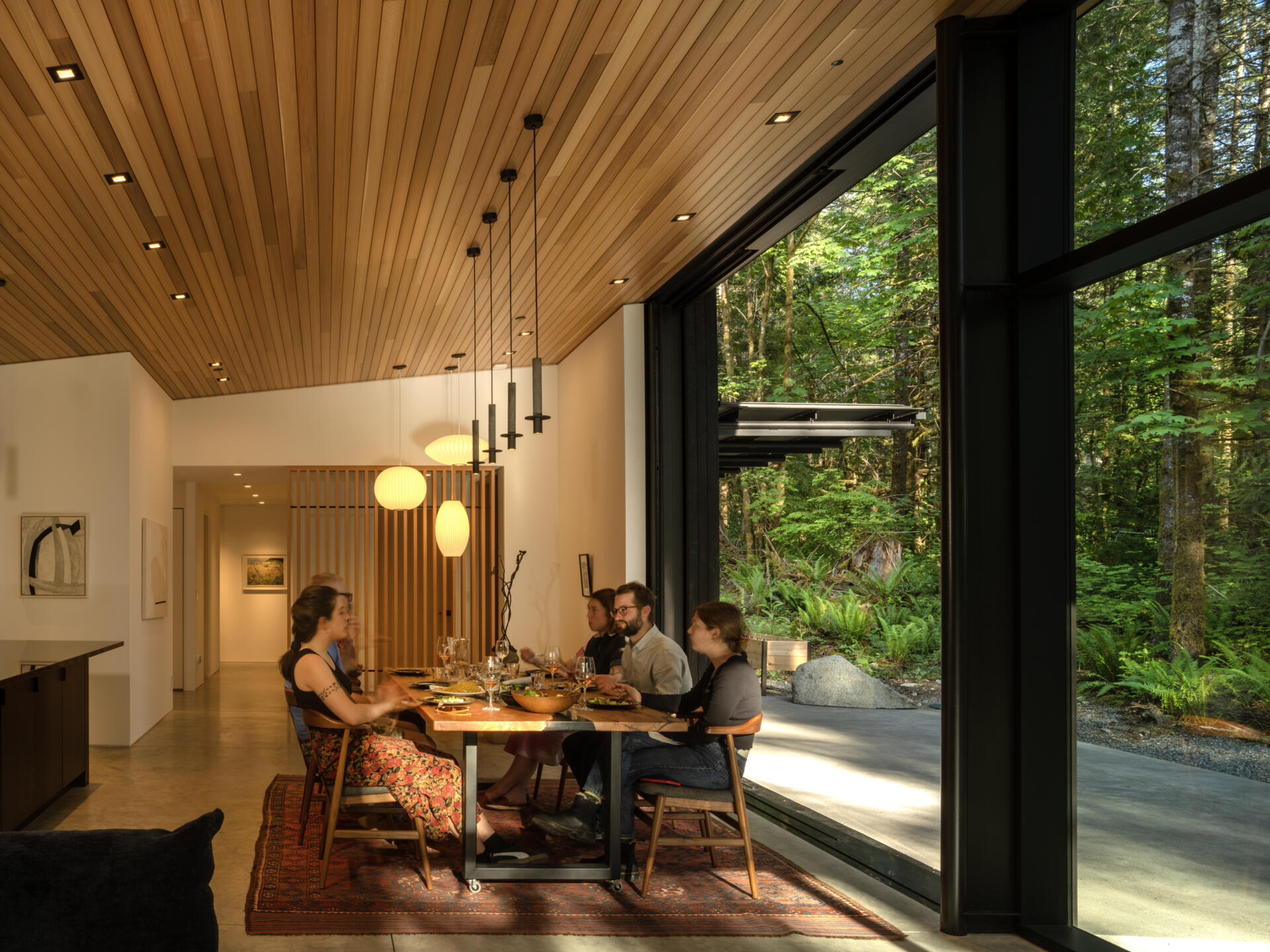
- Dining Area: Flows effortlessly onto a modest patio, where meals are served against an undisturbed backdrop of firs and cedars. Shared materials (stone, timber) dissolve the line between interior and exterior.
Private Sanctuaries in Dialogue with Nature
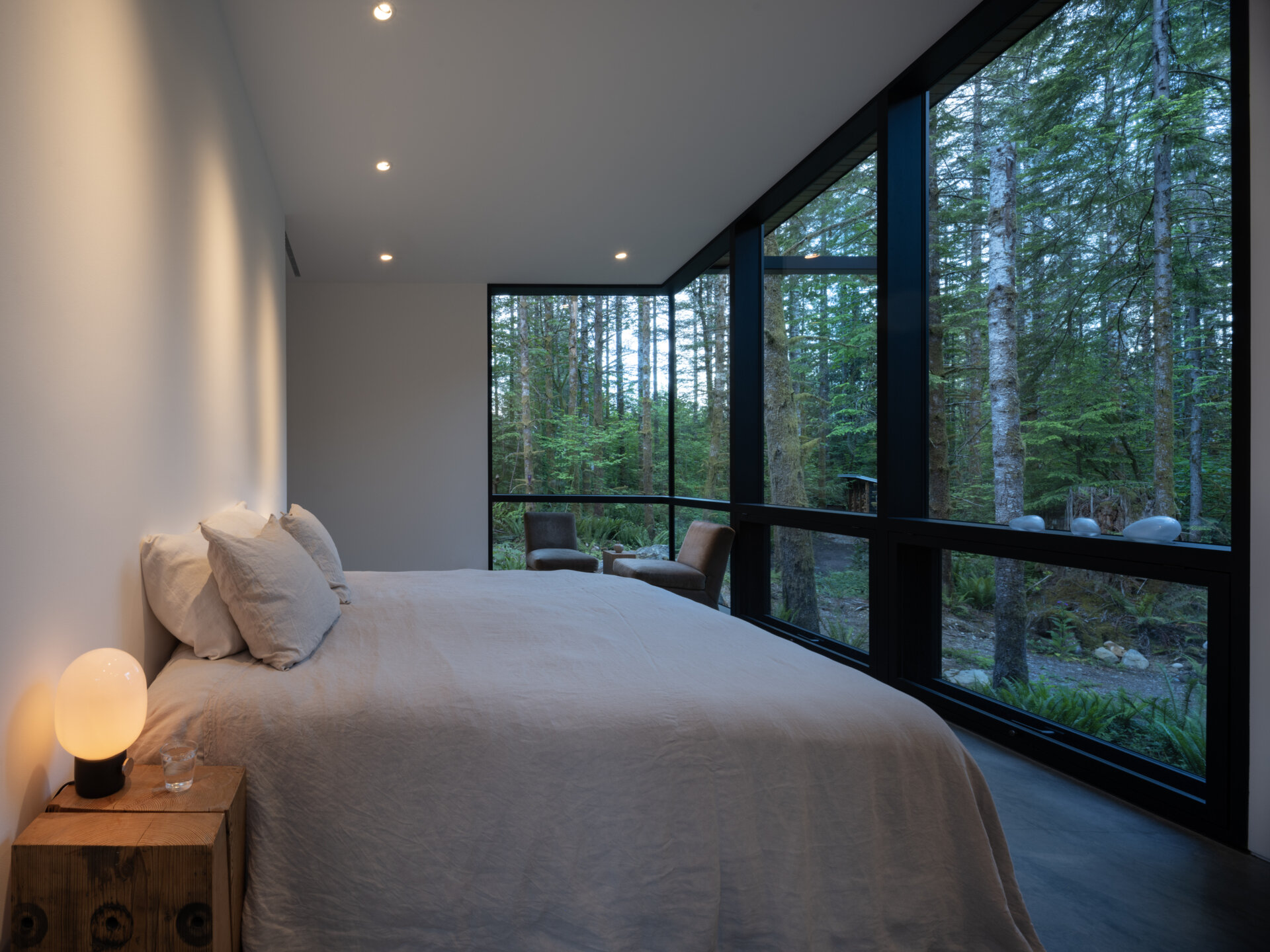
- Primary Bedroom: A cocoon of calm, flanked by trees and softened by natural light. Low-profile furnishings and pale linens keep the focus on the forest-framing windows.
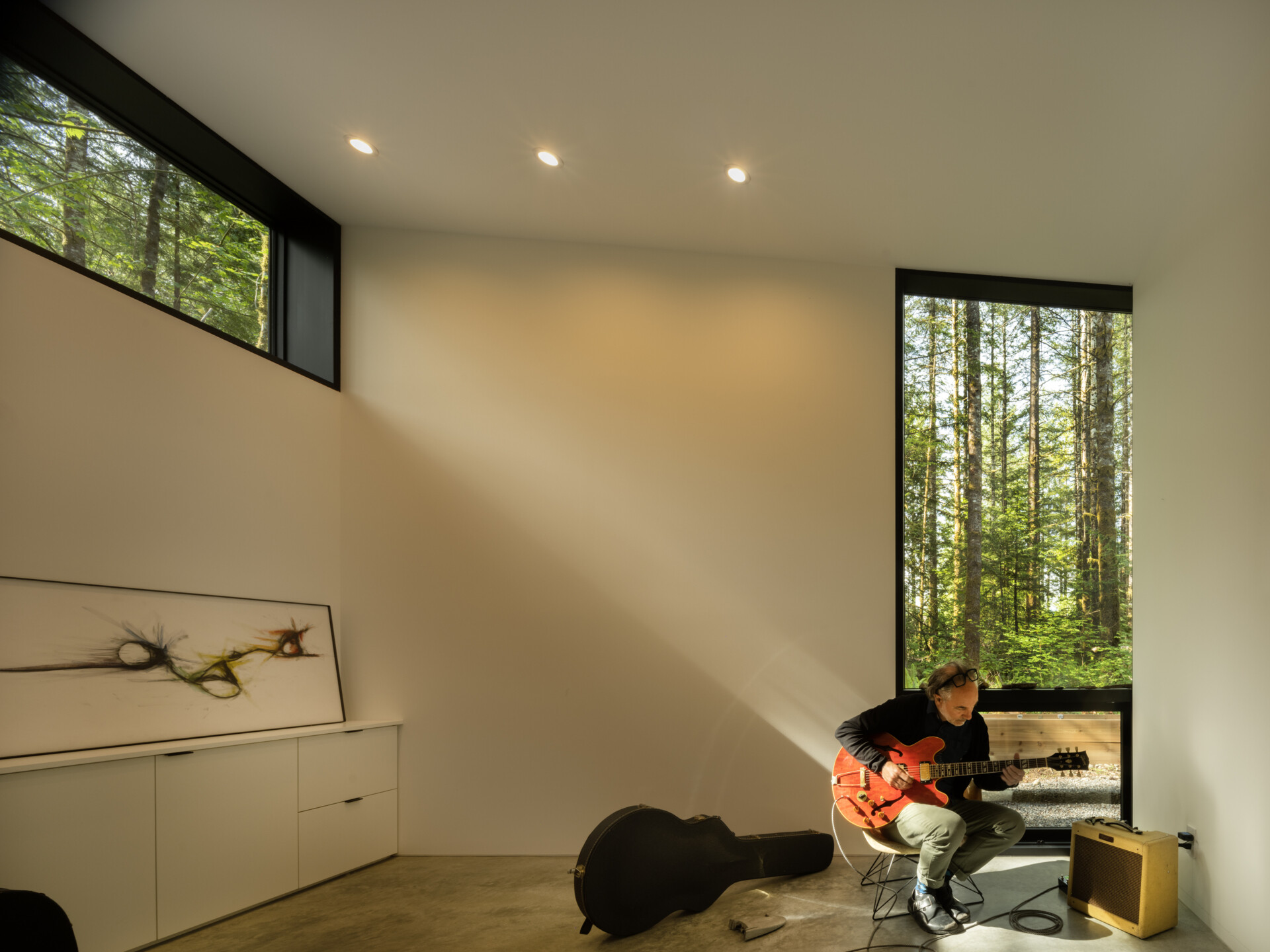
- Music Room: Bathed in light from clerestory windows, with acoustic treatments and minimalist storage to foster focus. Polished concrete floors reflect the shifting canopy outside.
- Bathroom: Tucked behind an ancient tree trunk, the shower becomes a ritual of connection steam mingling with filtered light, moss, and bark.

Final Thoughts: A Home That Listens
The Forest Pavilion isn’t built on the land but with it. It’s a refuge that honors the intelligence of its ecosystem, inviting occupants to live within the forest, not beside it. Every detail from the rain-harnessing roof to the unobtrusive foundation speaks to a deeper philosophy: architecture as a humble collaborator, not a conqueror.
✦ ArchUp Editorial Insight
The Forest Pavilion exemplifies biophilic design at its most poetic, where architecture defers to nature’s rhythms. Its strength lies in a meticulous, almost reverential approach to the site each material and form feels intentional, from the rain-channeling roof to the undisturbed tree trunks. However, one might critique whether such a bespoke design could scale beyond single-family homes, as its hyper-localized solutions resist replication in denser urban contexts. Yet, this is also its triumph: a reminder that the most compelling spaces emerge not from imposing ideas onto a place, but from listening to it. Here, the wild isn’t just a view it’s a cohabitant.
Explore the Latest Architecture Exhibitions & Conferences
ArchUp offers daily updates on top global architectural exhibitions, design conferences, and professional art and design forums.
Follow key architecture competitions, check official results, and stay informed through the latest architectural newsworldwide.
ArchUp is your encyclopedic hub for discovering events and design-driven


