Gothic Architecture: History, Characteristics, and Design Elements That Shaped Europe

Introduction
Gothic Architecture is one of the most influential architectural styles in European history, spanning from the 12th to the 16th century. It is characterized by soaring heights, intricate stained-glass windows that flood interiors with light, and innovative structural solutions that transformed the construction of cathedrals, churches, and urban spaces. This article provides a concise and practical reference on the Gothic style: its origins, characteristics, design elements, regional schools, differences from Romanesque architecture, and a brief look at its impact on modern architecture.
What is Gothic Architecture?
The Gothic style in architecture emerged in northern France (Île-de-France) around the mid-12th century and quickly spread to England, Germany, Italy, and Spain. It developed as both a technical and aesthetic evolution of the earlier Romanesque architecture, taking advantage of structural solutions that allowed for greater heights and larger windows.
The Middle Ages and Architecture
Within the context of Gothic arts in the Middle Ages, architecture was not isolated; it was closely linked with ornamentation, sculpture, stained glass, and illuminated manuscripts. The cathedral served as an urban, spiritual, and educational institution, embodying the city’s ambition and the skill of its craftsmen.

Core Features of Gothic Architecture
Gothic Design Elements
- Pointed Arch: Distributes loads more efficiently than the Romanesque semicircular arch, allowing for greater heights.
- Ribbed Vaults: A network of stone ribs that supports the vault while reducing its weight.
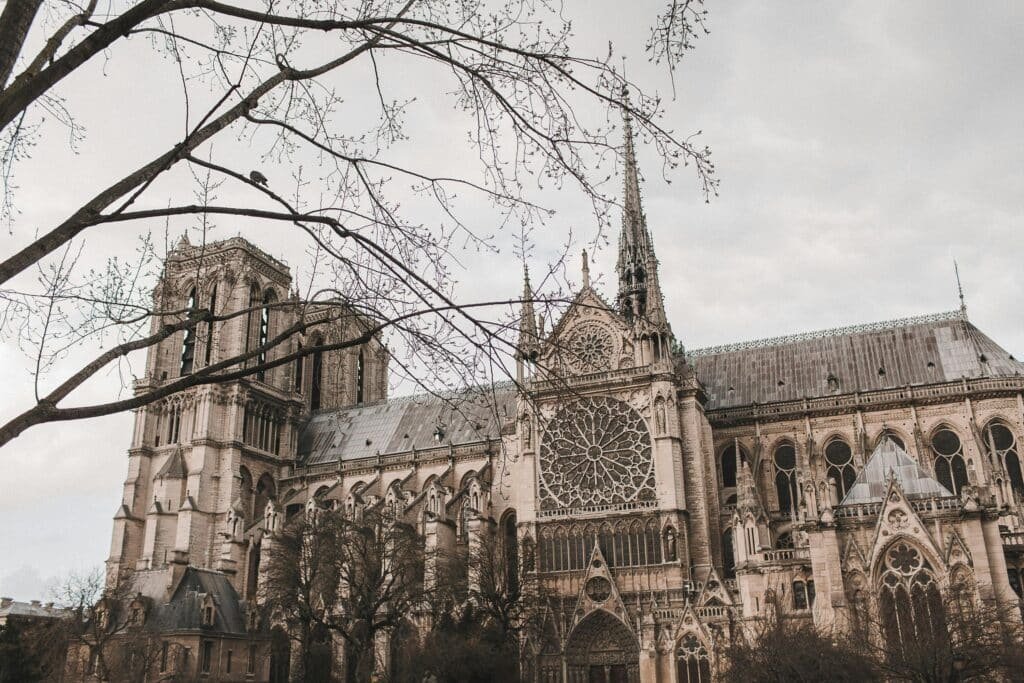
- Flying Buttresses: Transfer the weight of the roof and walls to external columns, freeing the facades for large windows.
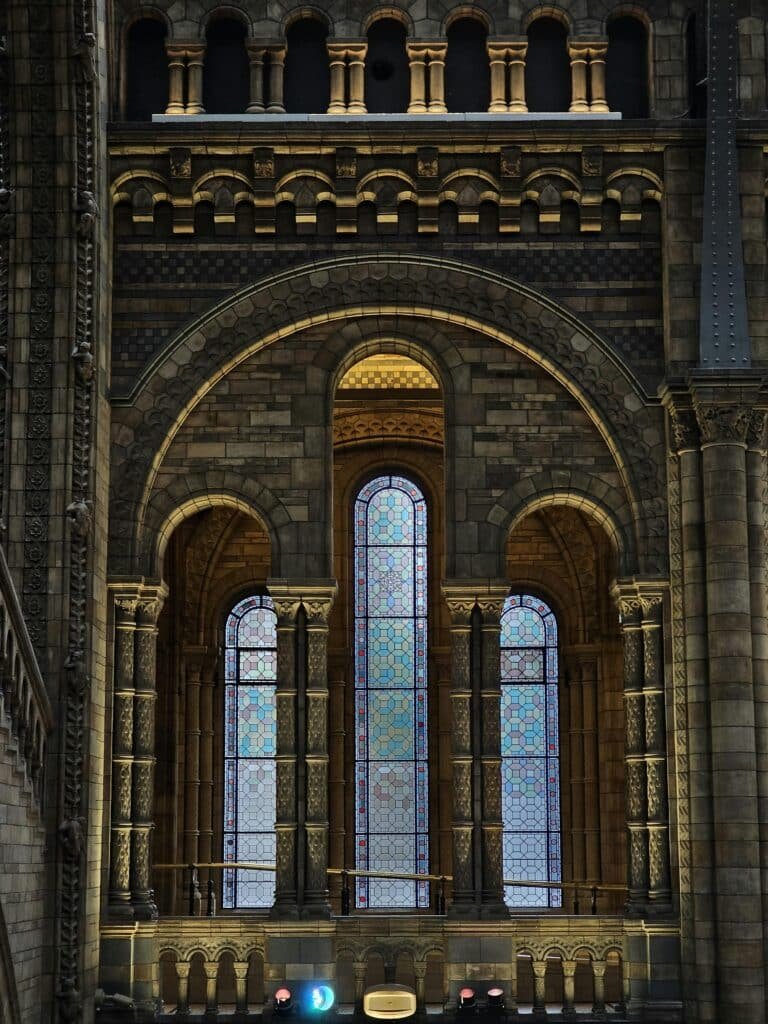
- Stained-Glass Windows: Expansive, decorated glass panels that convey religious stories and bring in colored light.
- Gothic Ornamentation: Decorative tracery, vegetal and symbolic motifs, and intricately detailed portal statues.
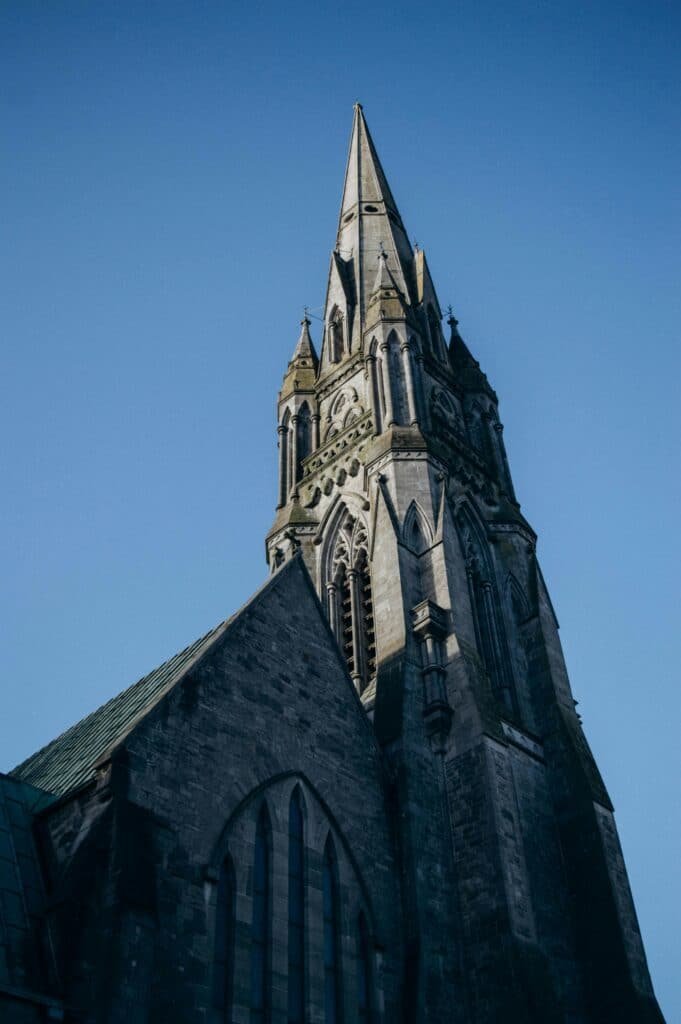
- Gothic Towers and Spires: Emphasize vertical lines and reinforce the building’s upward aspiration.
Visual and Functional Features
- Vertical Emphasis: Creates a sense of soaring upward.
- Triple-Portal Facade with Central Rose Window: Common in many French cathedrals.
- Basilica Layout: High central nave with side aisles and an ambulatory (a walkway behind the altar).
History of Gothic Architecture and Its Phases
Early Gothic / High Gothic
- Focused on new structural solutions and a balance between light and structure.
- Notable examples in France: Chartres Cathedral, Reims Cathedral, and Amiens Cathedral.
Late Gothic (Flamboyant & Perpendicular)
- Late Gothic in France (Flamboyant): Flame-like decorations and intricate tracery.
- English Perpendicular Gothic: Clear vertical grids, fan vaulting, and enormous windows.
- In Spain (Isabelline), Italy, and Germany: Localized versions rich in ornamental details.



Gothic in Europe: Schools and Regional Variations
French Gothic
- Focus on richly decorated facades, rose windows, and prominent flying buttresses.
- Examples: Notre-Dame de Paris, Chartres, Amiens, Reims.
English Gothic Architecture
- Three main phases: Early English, Decorated, Perpendicular.
- Features: Fan vaulting, imposing western towers, windows with vertical tracery.
- Examples: Salisbury, York Minster, Queen’s College in Cambridge (fan-vaulted ceiling).
Germany, Spain, Italy
- Cologne (Germany): An example of soaring heights and intricate detailing.
- Milan (Italy): A brick facade accented with delicate spires.
- Toledo and Burgos (Spain): Rich decorative mix with local influences.
Differences Between Gothic and Romanesque Architecture
Structure and Construction
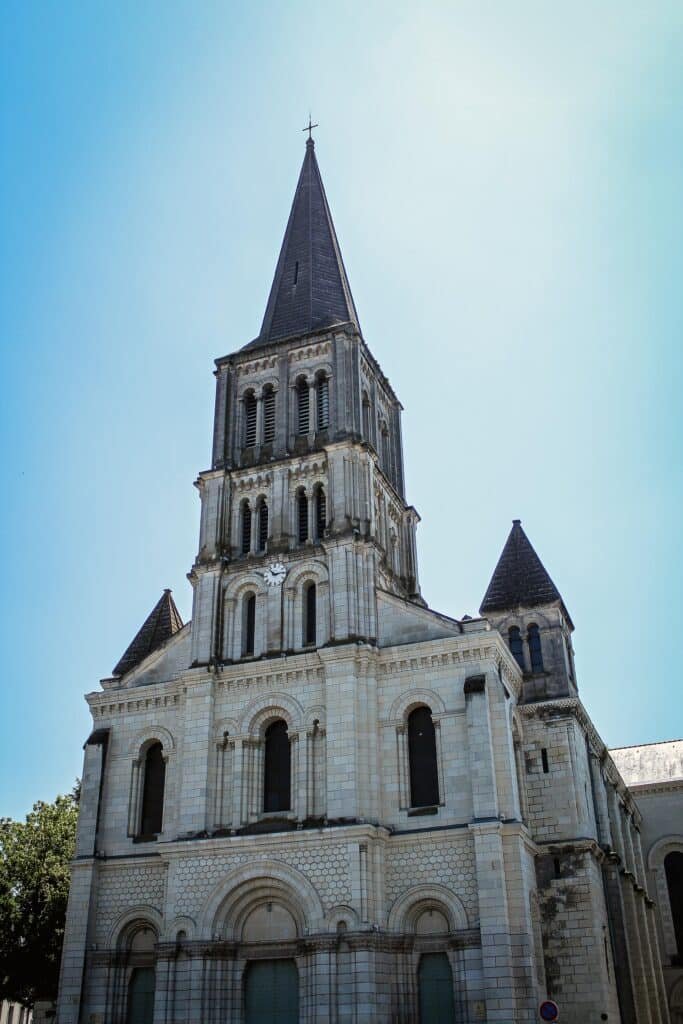
- Romanesque: Semicircular arches, barrel vaults, thick walls, small windows.
- Gothic: Pointed arches, ribbed vaults, flying buttresses, lighter walls, larger windows.
Light and Space
- Romanesque: Tends toward dim lighting and solid, heavy forms.
- Gothic: Emphasizes vertical light, transparency, and stained glass.
Expression and Function
- Romanesque: Highlights mass and solidity.
- Gothic: Emphasizes height, ornamentation, and visual movement.
Famous Gothic Buildings and Cathedrals
- Notre-Dame de Paris (France): Triple-portal facade, flying buttresses, rose windows.
- Chartres Cathedral (France): Early stained glass and distinctive asymmetrical towers.
- Reims and Amiens Cathedrals (France): Exemplars of structural perfection and refined decoration.
- Cologne Cathedral (Germany): Majestic heights and twin towers.
- Milan Cathedral (Italy): Late Gothic marble facade with thousands of statues.
- Salisbury and York Minster (England): Fan vaulting and enormous windows.
- Churches in Castile and Aragon (Spain): Rich late Gothic ornamentation.


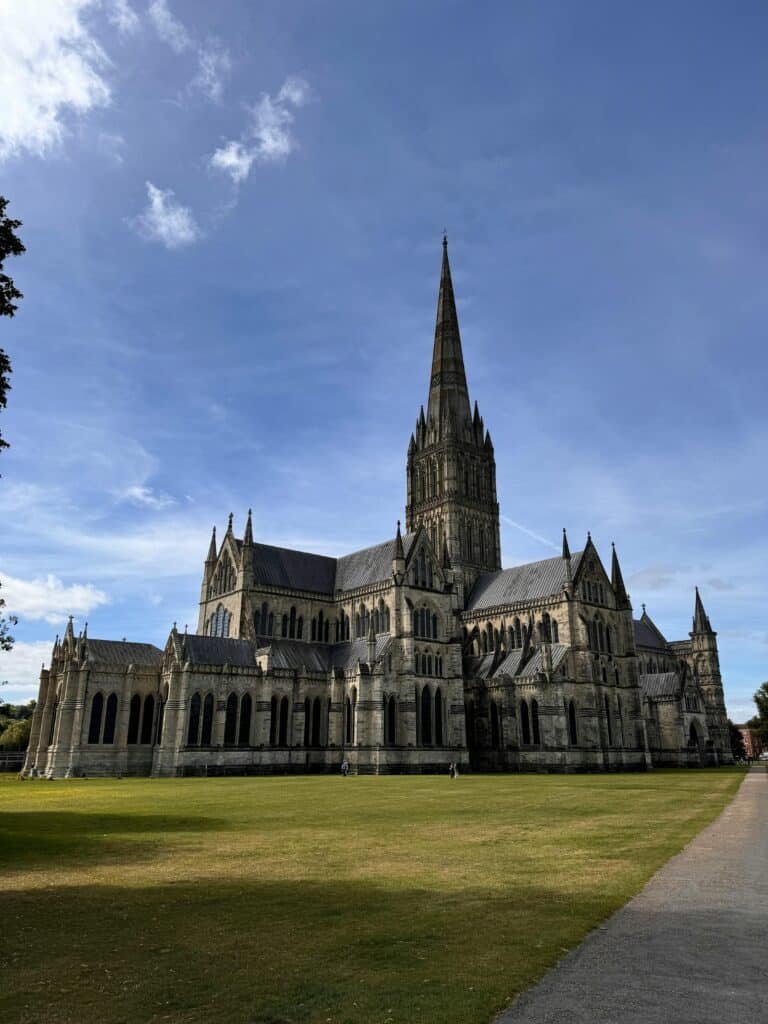
Gothic Ornamentation and Tracery Windows
Stained-Glass Windows
- Light panels that tell biblical and historical stories.
- Colored lead techniques allow for detailed drawings and subtle visual gradations.
Stone Tracery and Carvings
- From simple geometric forms to intricate networks in Late Gothic architecture.
- Vegetal motifs, mythical animals, and statues on doors and buttresses.
Impact of Gothic Architecture on Modern Architecture
- Gothic Revival in the 19th century inspired universities, town halls, and courthouses worldwide.
- In contemporary architecture, clear verticality, transparent facades, and structural innovation appear as extensions of Gothic principles (using lightweight structures to allow wide glass facades).
- Structural thinking, transferring loads outside the envelope to increase openings, remains fundamental in skyscrapers and modern facade systems today.
How to Read a Gothic Building
Quick Steps:
- Observe the facade: Do you see a rose window and sculpted portals?
- Trace the vertical lines: towers, spires, flying buttresses.
- Enter the nave: Notice its height compared to the side aisles.
- Look at the ceiling: Ribbed or fan vaults?
- Contemplate the light: How do the tracery windows shape and distribute it across the space?
FAQ
What is meant by “Gothic style”?
An architectural style that emerged in Europe in the 12th century, characterized by pointed arches, ribbed vaults, and flying buttresses, with a strong emphasis on light and verticality.
What are the main differences from Romanesque architecture?
Gothic architecture uses pointed arches, lighter walls, and large windows, whereas Romanesque architecture relies on semicircular arches, thick walls, and small windows.
Has Gothic architecture influenced modern architecture?
Yes, through structural thinking, the move toward transparent facades, and the pursuit of height and natural light.
Prepared by the ArchUp Editorial Team
Don’t miss the chance to explore more from Architecture, Top News, and Design on the ArchUp website.