House Hökarn: Minimalist Architecture Growing from the Heart of Nature in Sweden

Integration of Architecture with Nature in House Hökarn
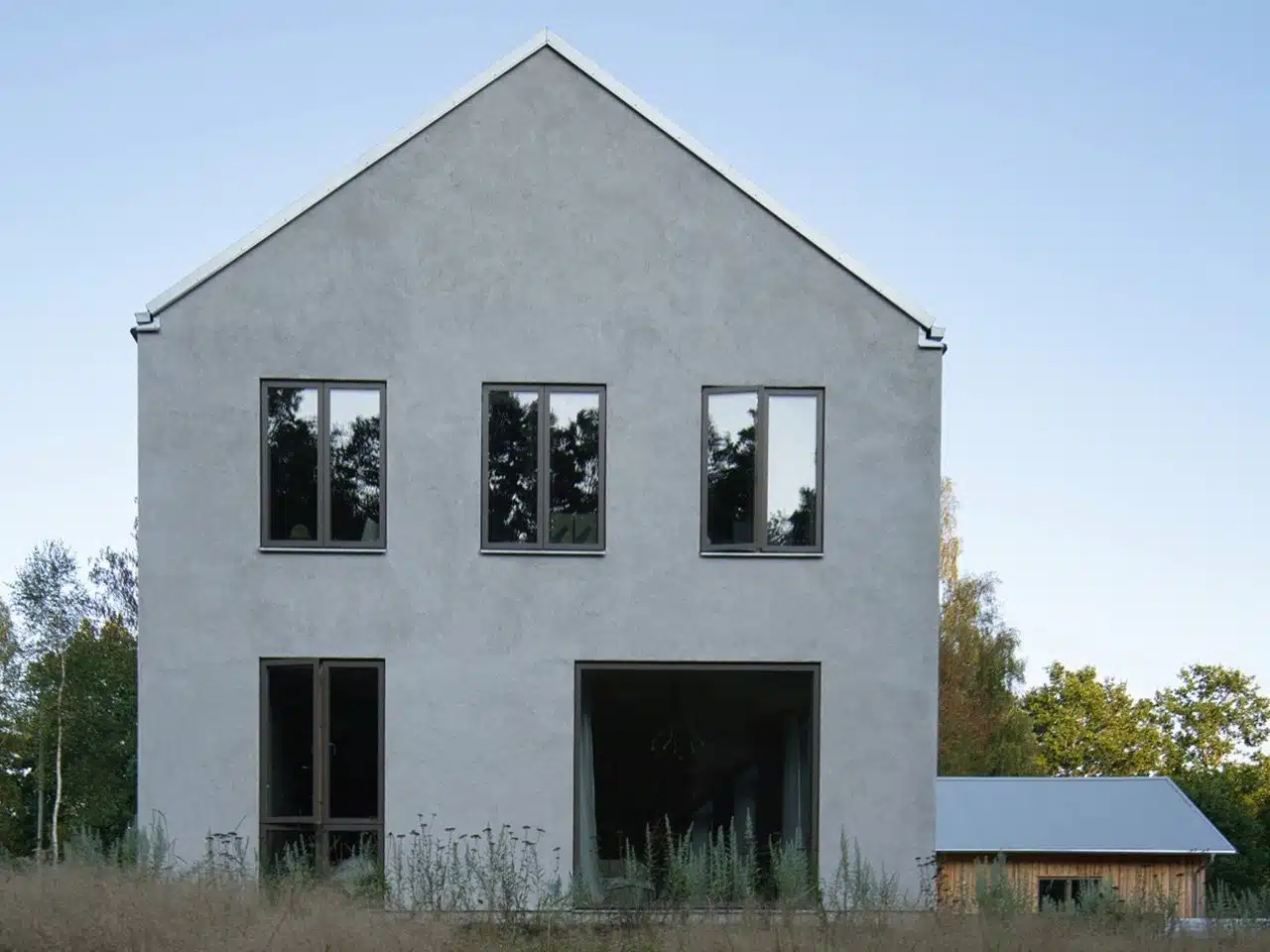
House Hökarn, designed by architect Per Bornstein, stands elevated amid open meadows, appearing as a natural extension of the surrounding oak forests in the Floda region of Sweden.
The design follows a simple architectural language aimed at creating a residence that blends functional living spaces with areas dedicated to relaxation and leisure.
Design Approach: Simplicity as a Core Principle
The architect embraced the removal of unnecessary complexity, allowing essential architectural elements to define the living experience.
The home’s placement within the meadow enhances privacy and fosters a profound connection with the surrounding landscape, creating a serene retreat that combines a sense of stability with the advantage of elevation.
Materials: A Balance Between Authenticity and Modernity
Inspiration from Swedish Traditions
The materials reflect a deep understanding of Swedish building traditions, seamlessly incorporating principles of contemporary minimal design.
The load-bearing walls are coated with a layer of lime plaster, giving them a tactile surface that develops character over time and interacts with the daily changes in light.
Warmth and Comfort Indoors
Inside, pine wood panels cover the spaces, imparting a sense of warmth and acoustic comfort while maintaining the visual continuity that lies at the heart of minimalist design.
Precise Structural Touches
The integration of concrete and steel elements adds structural precision without compromising the material authenticity upon which the project is built.


Balance Between Openness and Protection
The architectural composition of the house strikes a balance between openness to the external environment and protection from its elements, creating interior spaces that convey both a sense of spaciousness and intimacy.
The floor plan allows natural light to enter and enables cross ventilation, two essential elements for year-round comfort in the Swedish climate.
Flow of Spaces and Nature Views
The interior spaces connect seamlessly without excessive segmentation, reducing any sense of confinement often associated with compact homes.
The carefully considered placement of windows frames specific views of the surrounding forest, transforming the external landscape into a living artwork that changes with the seasons.
Guest House: Sustainability and Integration
Recycling as a Design Value
The guest house utilizes recycled materials, demonstrating their potential to enrich architectural quality.
While it draws its material language from the main house, this secondary building retains its own identity within the forest clearing.
A Balanced Architectural Relationship
The relationship between the two buildings forms an integrated architectural complex that meets the needs of both quiet seclusion and social gathering.
The location of the guest house grants mutual privacy for both structures, while maintaining a visual connection across the meadow.


Care as a Core Design Factor
The extended development period of the project reflects the level of care required to craft an architectural design that aspires to timeless quality, steering away from the fleeting appeal of temporary trends.
Since its initial conception in 2019, the design has undergone several stages of development, allowing it to respond to both the client’s needs and the site’s conditions.
The Reward of Architectural Patience
The recent completion of the project serves as an example of how patient design processes can produce architecture that feels both inevitable and natural, giving the building the impression of having grown from the site rather than being imposed upon it.
A New Benchmark for Minimalist Residential Architecture
House Hökarn sets a new standard for minimalist residential architecture in Sweden, proving that design restraint can foster richness rather than impose limitations.
Its success lies in combining contemporary qualities with a timeless character, avoiding stylistic gestures that could render the architecture outdated before its time.
A Case Study in Integration with Nature
The residence serves as a case study demonstrating how the careful selection of materials and thoughtful spatial planning can produce homes that enhance their natural environment rather than compete with it.


House Hökarn leaves a strong impression with its ability to blend architectural simplicity with harmony in its natural surroundings, giving it a calm and comfortable character for both residents and visitors. The choice of natural materials, along with the integration of light and ventilation, adds a high quality of living and strengthens the connection to the environment.
On the other hand, some architecture enthusiasts might find that the minimalist approach lacks certain details or creative touches that would give the building a unique character over the long term. Likewise, the reliance on a limited palette of colors and materials may not appeal to those who prefer greater visual variety or bolder architectural expression.
Prepared by the ArchUp Editorial Team
Don’t miss the chance to explore more from Architecture in fields like Projects and Design on the ArchUp website.