
World’s Highest Bridge Opens in China at 625 Meters Above River

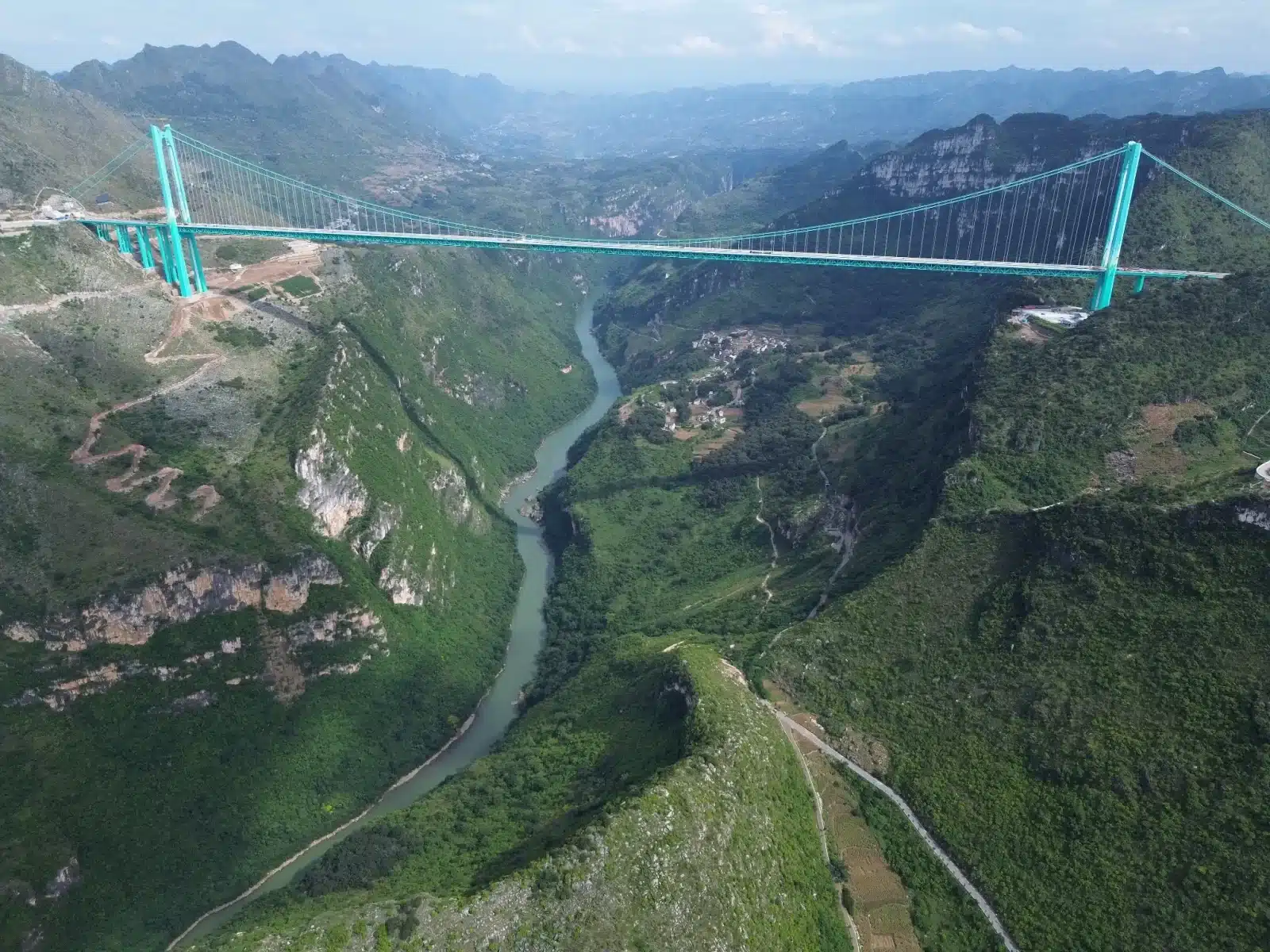
The Huajiang Canyon Bridge has officially opened to traffic in southwest China, claiming the title of the world’s highest bridge. Rising approximately 625 meters above the Beipan River in Guizhou province, this remarkable structure transforms regional connectivity. Construction teams completed the project after more than three years of intensive work, opening it on September 28, 2025.
Record-Breaking Infrastructure Engineering
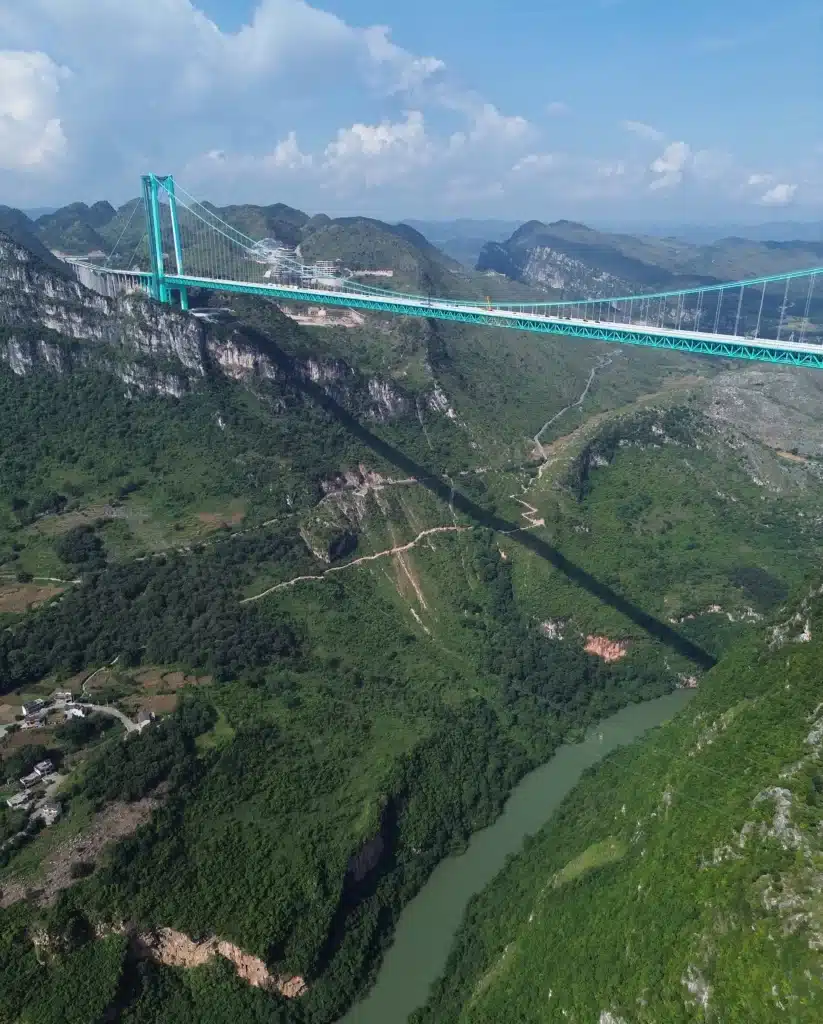
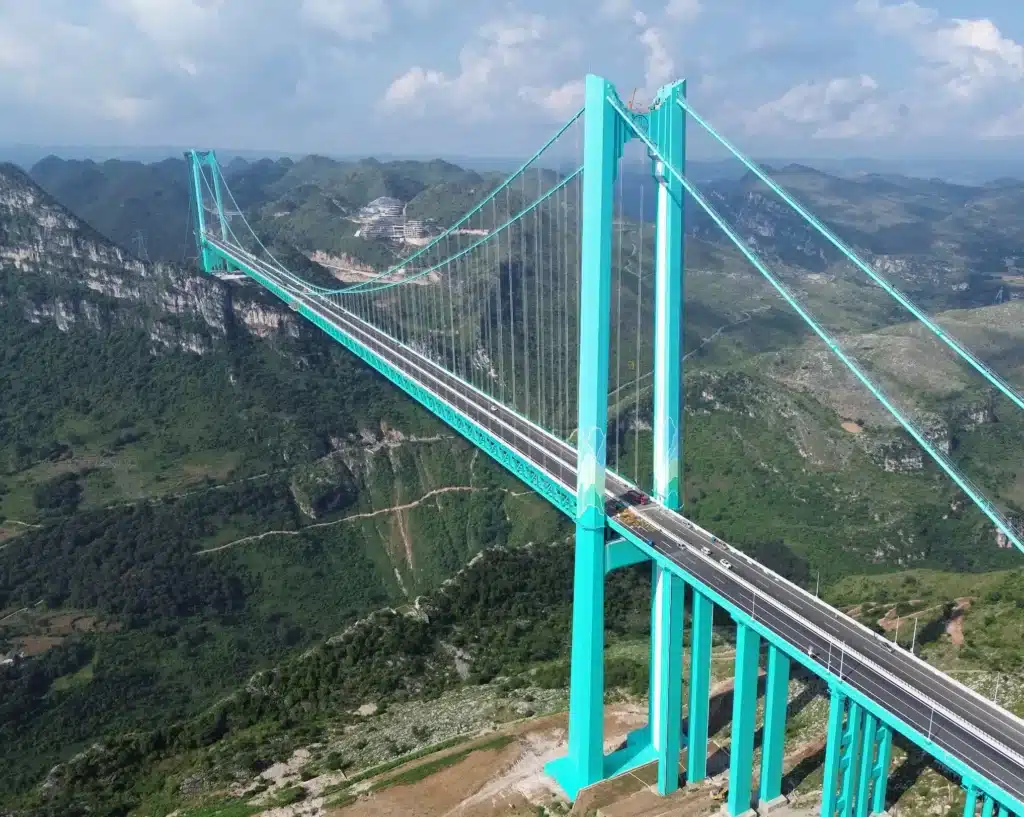
This massive suspension bridge carries the Liuzhi-Anlong Expressway across the dramatic Huajiang Canyon. Measuring 2,890 meters in total length, the structure features a main span of 1,420 meters. The deck height rivals the Shanghai Tower’s elevation above ground. Moreover, it surpasses the nearby Duge Bridge, which previously held the world’s highest bridge record.
The structure represents a significant achievement in construction and engineering. Its steel truss design spans a deep gorge carved by the Beipan River over millennia. Strong winds and challenging topography characterized the construction site throughout the project timeline.
Transforming Regional Connectivity
The bridge dramatically improves access to previously isolated communities. Travel time across the canyon has decreased from approximately one hour to just minutes. This development forms part of broader infrastructure improvements across China’s mountainous southwest region.
Additionally, the project includes tourist-oriented features beneath and alongside the main structure. A glass-walkway viewing platform extends under the bridge deck, offering dramatic canyon views. A glass elevator rises partway up one tower, while a café at the top provides panoramic vistas. Future plans include bungee jumping and paragliding facilities.
Complex Engineering Challenges
Construction teams faced substantial obstacles during development. Remote canyon access complicated material transportation significantly. Unpredictable weather patterns and difficult terrain demanded advanced building materials and construction methods. Engineers implemented enhanced safety systems to withstand the area’s frequent high winds.
A natural waterfall visible from the deck adds scenic value to the crossing. This feature enhances the already spectacular canyon environment surrounding the structure.
Economic and Tourism Impact
The opening coincided strategically with the Lunar New Year travel season. Millions of people journey across China during this period for family reunions. Local authorities anticipate increased tourism and economic development in surrounding communities. Improved access to scenic destinations and nearby towns should boost regional prosperity.
The project demonstrates how modern architectural design responds to extreme geographical challenges. Furthermore, it showcases infrastructure development priorities in China’s less accessible regions.
What impact will this world’s highest bridge have on regional development and tourism in southwest China?
A Quick Architectural Snapshot
The Huajiang Canyon Bridge spans 2,890 meters with a 1,420-meter main span suspension design. Standing 625 meters above the Beipan River, it utilizes steel truss construction to traverse Guizhou province’s rugged canyon terrain. The structure includes glass viewing platforms and elevator access.
✦ ArchUp Editorial Insight
Infrastructure megaprojects in mountainous regions follow predictable production logic. State-driven tourism economics demand iconic crossings that compress travel time while generating visitor revenue streams. The 625-meter height becomes a marketable asset rather than an engineering necessity. Glass platforms, elevators, and bungee facilities indicate a dual-purpose mandate: transportation infrastructure must simultaneously function as destination architecture.
The pattern repeats across Chinese infrastructure development: remote terrain accessibility paired with built-in tourism monetization. This reflects centralized planning models where construction timelines align with national holidays for maximum visibility. The bridge is the logical outcome of state tourism strategy plus regional connectivity mandates plus Lunar New Year travel economics.

★ ArchUp: Technical Analysis of the Huajiang Canyon Bridge in China
Technical Analysis of the World’s Highest Bridge:
This article provides a technical analysis of the Huajiang Canyon Bridge in Guizhou Province, Southwest China, as a case study in overcoming harsh geographical challenges through advanced architectural engineering.
The bridge spans a total length of 2,890 meters, with a main suspended section of 1,420 meters. Its deck rises 625 meters above the Beipan River, making it the world’s highest bridge.
The functional system integrates tourist attractions within the structure, including a glass observation deck beneath the bridge deck, a glass elevator ascending to the middle of one of the towers, and a café at the top.
Relevant Link: Please refer to this article for an in-depth look at suspension bridge design:
Suspension Bridge Engineering: Between Topographical Challenges and Tourist Vision.




✅ Official ArchUp Technical Review completed for this article.