Balancing Furniture and Space: The Philosophy of Integrated Design in Willett’s Studio Project

Introduction: Integrated Design Between Furniture and Space
In the heart of Los Angeles, Willett Studio presented an architectural vision built on a unified principle:
“Design furniture to serve the space, and design space to embrace the furniture.”
This concept is not merely a slogan; it is a practical approach that came to life clearly in one of their latest projects: a private recording studio for producer Kenneth Blume, known as Kenny Beats.
This project stands as a tangible example of how functional design can harmoniously merge with artistic creativity within a single space.
Maximizing a Small Space: Smart and Customized Solutions
In designing this studio, the vision extended beyond acoustic performance.
The focus was on creating a fully integrated living environment—complete with areas for sitting, dining, and relaxation.
This is where custom-designed furniture played a pivotal role, serving two purposes simultaneously:
• Maximizing use of the limited space
• Maintaining both aesthetic and functional integrity
A Return to Simplicity: Drawing Inspiration from the Past, Not Science Fiction
Contrary to modern trends that aim to transform recording studios into spaces resembling high-tech spacecrafts,
this project offers a completely different perspective.
Willett chose to revive the spirit of Motown studios from the 1960s and 70s,
which were rooted in simplicity, collaboration, and spontaneity.
Blending Nostalgia with Modernity
The design was not a rigid imitation of the past,
but rather an attempt to strike a visual and sensory balance—between the warmth of wood,
the softness of curved forms, and the texture of the furnishings.
Together, these elements created an environment that feels both comforting and familiar,
yet infused with a contemporary touch that keeps the space vibrant and alive.
From Vision to Execution: Between Personal Taste and Design Identity
Willett’s approach was guided by Kenny Beats’ personal vision,
inspired by the classic atmosphere of vintage recording studios.
However, it was also seamlessly blended with Willett Studio’s own aesthetic identity—marked by calmness and cohesion.
The main goal was to create a friendly, open atmosphere that encourages free interaction,
without compromising on practicality, comfort, or smooth movement throughout the space.
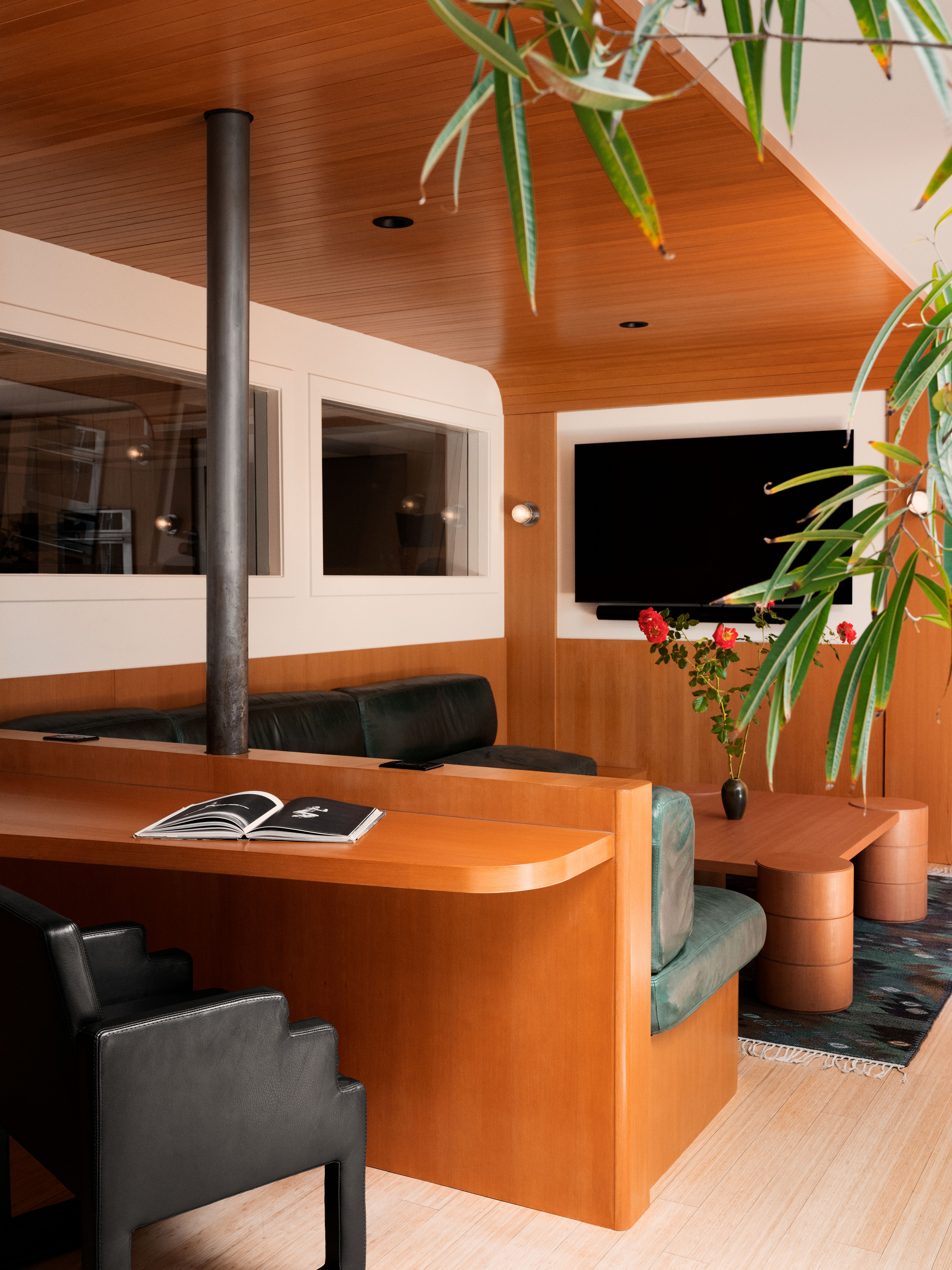

Shaping the Space with Curved Wood: From Rigidity to Warmth
The studio’s interior design embraced warm-toned Douglas fir wood panels,
sculpted into curved forms that softened the previously dominant geometric rigidity of the space.
This approach added a more human and gentle character, transforming the environment into something more welcoming.
Integrated Design as Both Practical and Aesthetic Solution
One of the project’s most defining ideas was the use of built-in elements.
The goal wasn’t merely to save space,
but to create a sense that these components were inherently part of the space, not merely added to it.
Applied Example: The Desk and Poporo Chair
The built-in desk was designed with fluid, sinuous lines that complemented the studio’s architectural flow,
paired with the Poporo chair, upholstered in black,
whose unique shape draws attention amidst the surrounding wooden walls.
Intentional Color Harmony in the Lounge Area
The workspace opens into a lounge featuring a built-in sofa upholstered in olive green leather,
adding visual warmth and rich texture.
This choice was no coincidence; in line with Kenny’s vision, green is historically associated with recording equipment,
and was thus used as a unifying color element throughout the space.
Design Details Serving Both Function and Spontaneity
One of the best examples of merging functionality with flexibility is the inclusion of microphone jacks within the sofa itself,
allowing recording sessions to happen without leaving the comfort of the seating area.
A Modern Touch: The Tonn Table as a Visual Anchor
Completing the visual composition of the lounge is the Tonn coffee table,
whose design draws inspiration from architectural modernism—
serving as a focal point that bridges classical aesthetics with contemporary elements.


Dining Area: Functional and Aesthetic Continuity
As a natural extension of both the work and lounge areas,
the dining space was designed to complete the overall stylistic unity of the interior.
Golden Douglas fir wood was used for the table and bench, paired with black leather chairs,
enhancing visual contrast and adding depth to the space.
Smart Use of Space
The Otto chair, which can easily slide beneath the table, was integrated as a clever space-saving solution—
without compromising on comfort or aesthetics.
These small details, as the designer described them, highlight how a simple trick can create meaningful functional value in a compact space.
Warm Lighting by Santa & Cole
A hanging light fixture from Santa & Cole was added to the area,
providing a soft glow that supports the overall warm and intimate atmosphere of the design.
Designer’s Background: From Interactive Spaces to Custom Furniture
This project marks a new chapter in the journey of Willett,
who launched his own studio in 2022 after years of experience across multiple creative fields.
A Multidisciplinary Perspective
With a background in architecture and graphic design,
Willett approaches furniture and spatial design with a holistic and unconventional vision,
blending aesthetics, function, and storytelling into a unified whole.
Previous Work with Major Brands
Willett previously designed interactive spaces for global brands such as Nike and Stella Artois,
an experience that shaped his ability to craft cohesive design narratives and ensure harmony between architecture and furniture as part of a singular experience.
A New Beginning at Home
Willett’s journey into furniture design began after he and his wife, chef Molly Baz,
moved from New York to Los Angeles.
At that time, he started creating custom pieces for their home—
an experience that would later evolve into the launch of his own design company.
This transition was crowned with the opening of a showroom in the Los Angeles Arts District in 2024,
allowing him to share his work with a broader audience and expand his presence in the field of interior design.

Design as a Means to Harmonize Beauty and Function
In this project, Willett’s deep understanding of the interdependent relationship between furniture and space is clearly evident.
He approaches design not merely as an arrangement of elements,
but as a comprehensive system where function is woven with feeling,
void with mass, and comfort with identity.
A Design Philosophy Beyond Form
According to Willett, design is a tool for “bringing aesthetic joy into the world.”
He views the interaction between furniture and built environments as an opportunity to explore new possibilities for living—
where space becomes more genuine and grounded.
Balanced Composition Through Geometry and Scale
By playing with shapes, controlling proportions, and directing lines,
Willett succeeds in creating environments that feel naturally cohesive and effortlessly composed.
The user intuitively senses that each piece belongs to the space,
and that every corner serves its purpose with flexibility and ease.
✦ ArchUp Editorial Insight
Willett’s project for Blume reflects a design approach that blends historical inspiration with modern touches, a direction increasingly popular among contemporary designers seeking to revive 20th-century aesthetics within modern contexts.
While the design boasts clear visual appeal and tangible warmth,
some may argue that relying on nostalgia can limit true innovation.
However, Willett’s ability to translate that inspiration into a practical and comfortable environment demonstrates a well-executed balance between form and function.
Ultimately, the project stands as a successful example of how a designer’s personal signature can be integrated with the client’s needs, without losing the design’s essence or temporal relevance.
Explore the Latest Architecture Exhibitions & Conferences
ArchUp offers daily updates on top global exhibitions, conferences, and professional art and design forums.
Follow key competitions, check results, and stay informed through the latest news worldwide.
ArchUp is your encyclopedic hub for discovering events and design-driven opportunities across the globe.