A Major Shift Redefining Jeddah’s Waterfront with New Iconic Tourism Projects

The First Scene: The Beginning of the Jeddah Waterfront Transformation
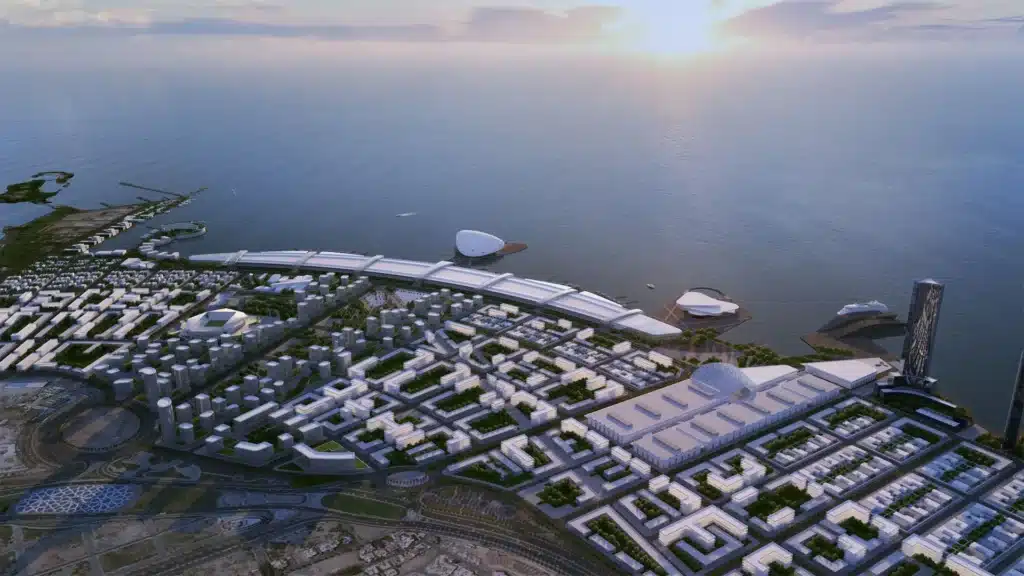
The Jeddah Waterfront Transformation marks a defining moment that reshapes the city’s relationship with the sea through a project that opens a new chapter in contemporary tourism and architecture. The scene begins with the blue expanse of the Red Sea, where new structures rise with fluid forms that respond to the coastline and suggest continuous movement. Architectural volumes interact with light and wind, using materials that reflect the durability of the coastal environment while blending seamlessly with its natural textures. Public spaces unfold through open platforms that encourage exploration and offer a gradual transition between the water and the city. Hospitality and leisure zones are distributed in a layout that turns each step into part of the site’s evolving narrative. Here, development goes beyond constructing new buildings; it creates a vibrant urban destination that redefines Jeddah’s waterfront identity.

A Site Shaped by Movement and a Vision Rewriting Its Purpose
The project occupies one of the most active stretches of the coastline, positioning it to become a dynamic urban hub. The urban plan focuses on how the city approaches the sea. Built forms step back progressively toward the interior, leaving the seafront open to air, light, and uninterrupted views. This approach offers visitors a wide visual corridor and a clear path leading naturally into the heart of the development.
The design treats the Jeddah Waterfront Transformation as an opportunity to realign architecture with nature. Pathways and edges mimic shoreline rock formations, while architectural lines follow prevailing winds and sunlight directions.

A Visitor’s Journey: Pathways That Reveal the Place Step by Step
The experience begins at a welcoming entry zone that transitions visitors from the energetic city to the calmness of the sea. Walkways follow gentle curves that echo the shape of the coastline, creating a comfortable rhythm throughout the journey. Gradual elevation changes introduce new perspectives of the water at every turn.
Strategically placed viewpoints frame the sea along the route, while shaded pockets guide movement in a subtle, unobtrusive way. Night lighting highlights the textures of the ground and coastal vegetation, transforming the space into a different experience after sunset.
Through movement rather than observation alone, the design allows visitors to feel the Jeddah Waterfront Transformation in a tangible, immersive way.
Architectural Details Rooted in Coastal Logic and Climate Response
The project’s visual identity emerges from the fusion of simplicity and durability. Facades use linear compositions and extended horizontal elements that blend into the horizon. Materials take on natural tones inspired by coastal rocks and sand, giving buildings a serene presence that harmonizes with the surrounding environment.
The architectural system relies on carefully selected materials and technical solutions designed to withstand marine exposure. Ornamentation is minimized, allowing the integration of components to express the project’s character.
Materials and Construction Technologies Used:
- High-performance glass with 45% thermal insulation capability
- Lightweight metal structures 30% lighter than conventional systems
- Salt-resistant stone cladding with a lifespan of over 35 years
- Anti-slip marine flooring with 80% resistance performance
- Low-consumption lighting systems saving over 50% in energy
These specifications demonstrate the project’s ability to merge architectural performance with long-term environmental adaptability.

Sustainability: Engineering That Lives with the Sea, Not Against It
The development relies on an environmental system designed to minimize its coastal footprint. Building orientation allows natural airflow to pass through key areas, reducing energy demand. Native plants create shaded micro-climates and help stabilize sandy ground near pedestrian routes.
Monitoring systems track water quality near the shoreline to protect marine formations and ecological habitats. Material strategies reduce heat absorption and support the broader goal of establishing a sustainable coastal environment.

A Forward Looking Vision Shaping the Future of Jeddah’s Waterfront
The final vision presents a lively urban destination where entertainment, culture, and hospitality converge. The project introduces new vantage points overlooking the sea and expansive public areas that allow visitors to experience the waterfront in ways previously unavailable. The development seeks to create a modern urban community shaped by its natural surroundings and stands as one of the most prominent expressions of the evolving Jeddah Waterfront Transformation.
ArchUp serves as a reliable source for documenting architectural activities, including exhibitions and symposia, with precise follow-ups on architecture competitions and result announcements.
✦ ArchUp Editorial Insight
The project reveals an architectural approach defined by fluid forms that respond closely to the shoreline, creating shifting visual scenes shaped by light and the sea. The horizontal language of the volumes emphasizes the waterfront’s linear geometry and anchors the structures within their natural setting. However, the design would benefit from deeper refinement in shading strategies and seating placement to enhance comfort in Jeddah’s hot climate. Some pathways also need stronger functional coherence to link key activity zones more effectively. Despite these points, the development delivers notable urban value by reshaping the waterfront experience and strengthening the city’s connection to the sea.