Behind Closed Doors: Exploring Art and Korean Identity in a Seoul Home

Between the Residential Neighborhood and Contemporary Art: The Story of a Romanian House in Seoul
Perched on a hill and tucked behind the intersection of two main roads in Seoul’s Hanam-dong district, there is a house that once served as the residence of the Romanian ambassador to South Korea. From the outside, the house appears modest, with its light concrete façade and metal garage gate harmonizing with the overall character of the residential neighborhood, making it inconspicuous at first glance.
From Diplomatic Residence to Art Exhibition
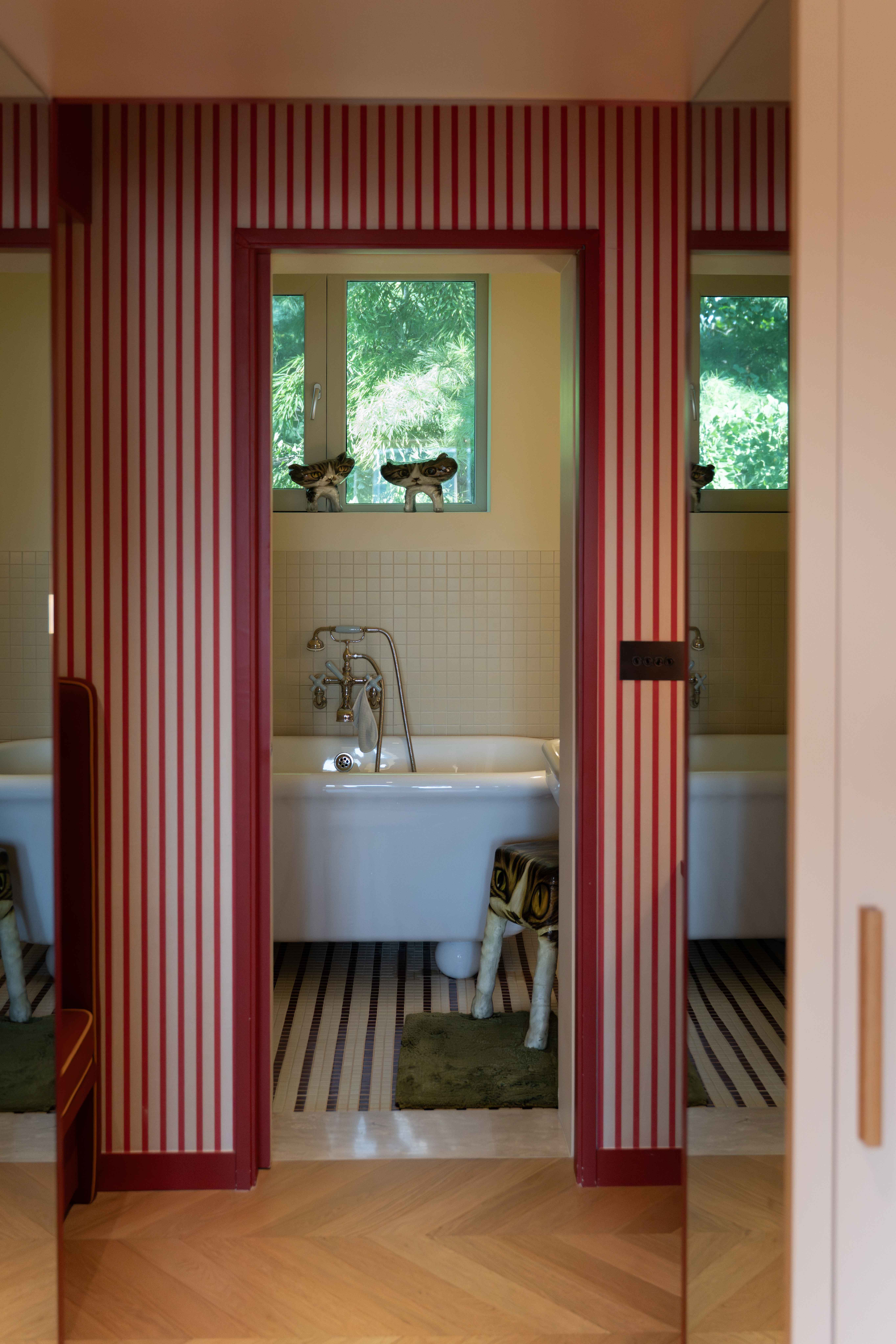
During this year’s Seoul Art Week, the house underwent a remarkable transformation. Designer Gillian Choi, a well-known figure and a favorite among “gyopo” designers, collaborated with interior designer Hye-Jin Reese Kim to turn the house into a unique art exhibition space. The goal was not only to display art but also to design a gallery that serves as a platform highlighting the current creative diversity in South Korea, showcasing faces of contemporary Korean creativity in an innovative way.
Innovation and Experimentation at the Heart of the Capital
This project reflects a growing trend in the Korean art scene of repurposing private spaces and transforming them into cultural attractions, where visitors can explore art within a familiar yet unconventional architectural context. The blend of residential character and artistic innovation creates a unique experience, demonstrating how a space can become a medium for art and social interaction.

Discussions on Art and Korean Living
During the preparation for this project, Gillian Choi engaged in in-depth conversations with Hye-Jin Kim and their friends, as well as with the founders of PARKIM, Sandy Park and John Kim. These dialogues focused on understanding how contemporary Korean art and design are perceived and received, both locally and globally.
Art in the Context of Daily Life
Choi explained: “We thought, there’s a strong desire to bring artists to [the United States]. And how can we actually present an authentic Korean experience, whether through Korean art or through the everyday lives of Koreans in their homes? We were saying that we never really see Korean designers in Korean homes.”
This approach reflects a growing awareness of the importance of presenting art within the context of daily life, rather than displaying it in isolation from the cultural environment in which it was created. It also highlights the designers’ effort to provide an integrated vision that combines artistic creativity with lived experience, offering visitors a deeper understanding of contemporary Korean culture.

Searching for an Art Exhibition Space
Initially, the team decided to look for a space to host the exhibition, whether as a permanent venue or as a temporary gallery on a commercial street. They managed to secure a suitable location; however, the project stumbled just a month before the planned opening, forcing them to reconsider the available alternatives.
An Innovative Idea: Transforming a Private Home into a Gallery
It was then that Hye-Jin came up with an innovative idea: why not showcase her Hanam residence, built in 1985, as an exhibition space? This step carries a symbolic diplomatic undertone, paralleling the history of the house’s previous occupants.
Organizing a multidisciplinary art exhibition in a private home is not a novel concept globally, as cities like New York and Paris rely on this approach to present art within a familiar, neighborhood context.
The Team’s International Expertise
This initiative reflects the team’s considerable expertise: Choi served as the Global Exhibition Director at Design Miami and Collective Design, while Hye-Jin honed her skills under Indian designer Mahdavi. These international experiences provided them with a deep understanding of how to integrate art and design into unconventional spaces, making the project of transforming a private home into a gallery a uniquely rich cultural experience.

Breaking Traditions: Homes as Spaces for Art
In Seoul, it is uncommon to open private homes to strangers, which is precisely what makes the home gallery concept so distinctive. This initiative represents a departure from conventional social norms, offering visitors a unique experience that transcends the familiar boundaries between private life and public art.
Choi explains: “Koreans who visited the exhibition said they had never seen anything like this before. When we conceived this concept, we wondered: what happens behind closed doors when no one is watching, and also outside societal expectations, and even global expectations?”
This reflection underscores the importance of giving art a living context, where the space itself becomes part of the creative experience, allowing visitors to explore the relationship between everyday culture and contemporary art in a deeply personal way.

The Birth of the “Behind Closed Doors” Exhibition
From these conversations and concepts emerged the exhibition titled “Behind Closed Doors.” The project was the result of a collaboration among a group of friends who compiled a roster of 24 Korean artists and designers. Many of them are close friends of the team, reflecting a pattern of personal and cultural interconnectedness within the Korean creative community.
Diversity Between Home and Abroad
The group focuses on artists who either live in Korea or belong to the Korean diaspora and have returned, in addition to those who have gained professional experience both domestically and internationally. This approach mirrors a common experience among the 1.5-generation and MZ generation, blending local belonging with global experiences, enriching creative work with multiple dimensions.
Notable Participating Names
The list of artists and designers includes prominent figures on the global stage, such as:
- Kwangho Lee: Artist associated with Salon 94 Design.
- Si Oh: Representative of Tang Contemporary.
- Jesse Chun: Affiliated with Commonwealth and Council.
- Casper Kang: Formerly of Studio Concrete.
Additionally, the exhibition features notable local names, including:
- Seong Nyeong Kyung: Conceptual artist and representative of Hyundai Gallery.
- Taewon Ahn: Internet personality known for his passion for cats.
This diversity between local and international artists reflects the exhibition’s commitment to presenting the full spectrum of contemporary Korean creativity, offering a comprehensive cultural experience that bridges local art with global trends.

At the Intersection of Art and Design
Choi explains that the exhibition “lies at the intersection of art and design, and the blurring of boundaries between them is something these artists are exploring as well.” This approach reflects an advanced method of presenting art, where artworks go beyond mere aesthetics to integrate function and everyday experience.
Playing with Roles and Functions
The exhibition offers prominent examples of this blurring between art and practical use:
- Aluminum seating pieces by Hakmun Lee or the Mirror Blocks Stool by Seongil Choi may appear as sculptural artworks at first glance, yet they are fully functional.
- Conversely, some pieces seem utilitarian initially but are, in fact, works of art, such as the sculpted ceramic vessels by Liren Park, which resemble flowers but are not, or Hak-Young Jang’s Material Notes series made of resin and marble, which can be seen as construction-like pieces.
This approach demonstrates the artists’ ability to redefine the relationship between form and function, providing visitors with a visual and intellectual experience that combines aesthetic perception with practical use, enhancing their understanding of contemporary artistic innovation in Korea.

Exploring Korean Identity Beyond Traditional Frameworks
Choi states, “We don’t have to confine ourselves to these labels,” emphasizing the importance of breaking free from rigid classifications in art and design.
Hye-Jin adds, “There’s something deeper in being Korean, more multicultural than people expect. We are often asked to be Korean in a certain way, but we wanted to explore beyond that.”
This dialogue reflects the exhibition’s vision as a platform for exploring contemporary Korean identity from a multidimensional perspective, where artworks transcend traditional molds to reveal the cultural depth and creative flexibility that characterize today’s Korean art community.

✦ ArchUp Editorial Insight
It can be said that the project of transforming the Hanam-dong house into an art exhibition offers a unique experience that merges daily life with contemporary art, highlighting Korean creative diversity in an innovative way. Among the strengths, the idea shines in integrating a residential space with the gallery, providing a varied perspective of both local and international artists, and offering visitors a visually and intellectually rich experience.
However, some visitors might feel that the exhibition’s focus on private homes and the intimate atmosphere limits broader public accessibility. Additionally, the blurring between artistic function and practical use in certain pieces may confuse some viewers or obscure the intended artistic message. Relying on a select group of well-known artists may also make the project appear, at times, to reiterate prevailing trends in the art scene rather than offering space for newer, more experimental approaches.
Overall, the exhibition remains an important step toward redefining personal spaces as artistic platforms, while also reflecting the challenges inherent in blending privacy with artistic experimentation.
Prepared by the ArchUp Editorial Team
Don’t miss the chance to explore more from Architecture, Cities, and Projects on the ArchUp website.