When a Robot Becomes a Friend: A Look into the Design Philosophy of Kriket 3000

Cute Robots: A Rare Phenomenon in Tech History
Throughout history, only a handful of robots have managed to balance technical efficiency with an emotionally disarming appearance. Earning them remarkable mass appeal. Some of the most notable examples include Baymax, Wall-E, EVE, and Rosey, the robot maid from The Jetsons. Occasionally, Astro Boy is added to this short and exclusive list.
Kriket 3000: An Attempt to Revive the Friendly Robot
In this context, the design of Kriket 3000 emerges as a fresh attempt to revisit this rare approach. Its design cleverly combines cuteness with capability, aiming to present a robot that looks trustworthy and approachable at first glance.
Drawing Inspiration from the Past for a Brighter Future
It is worth noting that the industrial designer and artist Shaun Wellens is the mind behind Kriket 3000. Building on his extensive experience with robot design, Wellens chose this time to look backwards. Instead of sticking to conventional futuristic imagery. He explains that Kriket’s design is inspired by products from the 1960s and 1970s. It aims to evoke a sense of nostalgia fused with modern design standards. Through this, the project expresses a genuine desire to revive a spirit of excitement and optimism for a brighter technological future.


Artificial Intelligence: Between Trust and Concern
It is quite interesting that the last time Shaun Wellens worked on a robot design was actually before ChatGPT even existed. Over the past four years, the world has witnessed significant transformations with the growing presence of artificial intelligence in people’s daily lives. These are shifts that have redefined many concepts and behaviours.
Although the majority sees AI as a genuine opportunity to improve and simplify life, concerns about its potential risks remain strong and persistent. For this reason, it has become essential for technology itself to inspire trust and a sense of safety among people.
How Does Kriket Reflect This Philosophy?
Within this context, Wellens sought to capture this psychological need through the design of Kriket 3000. Making it more than just a smart machine. Instead, it stands as a visual entity that radiates familiarity and reassurance in an age where anxiety about AI technologies continues to grow.
Soft Design: How Can a Robot Look Non-Threatening?
When it comes to robot design, it is helpful to understand how the exterior shape can influence the user’s psychological perception. One of the simplest ways to make a robot appear harmless is to eliminate sharp edges and rigid corners. These are replaced with smoother, more fluid shapes.
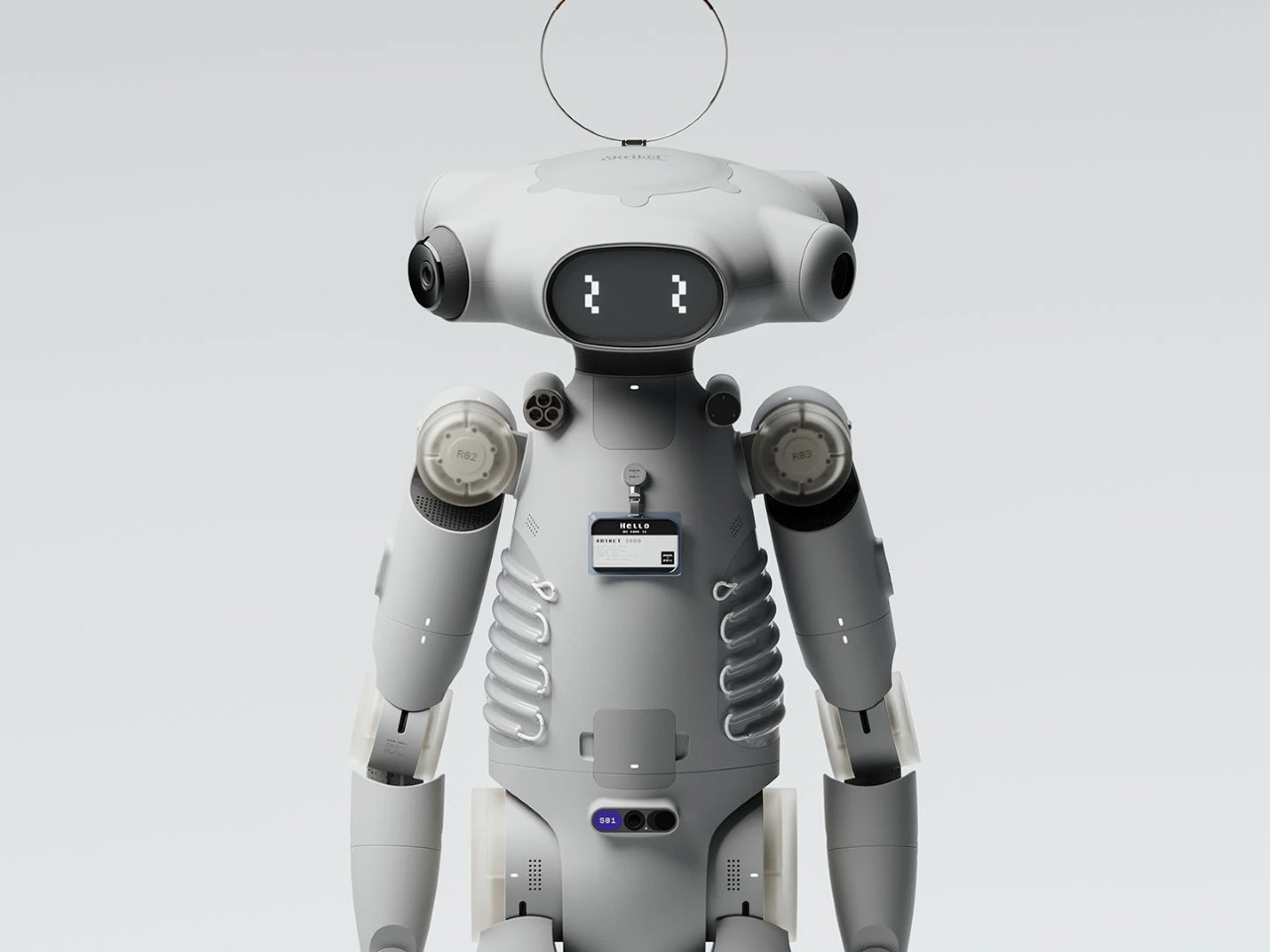
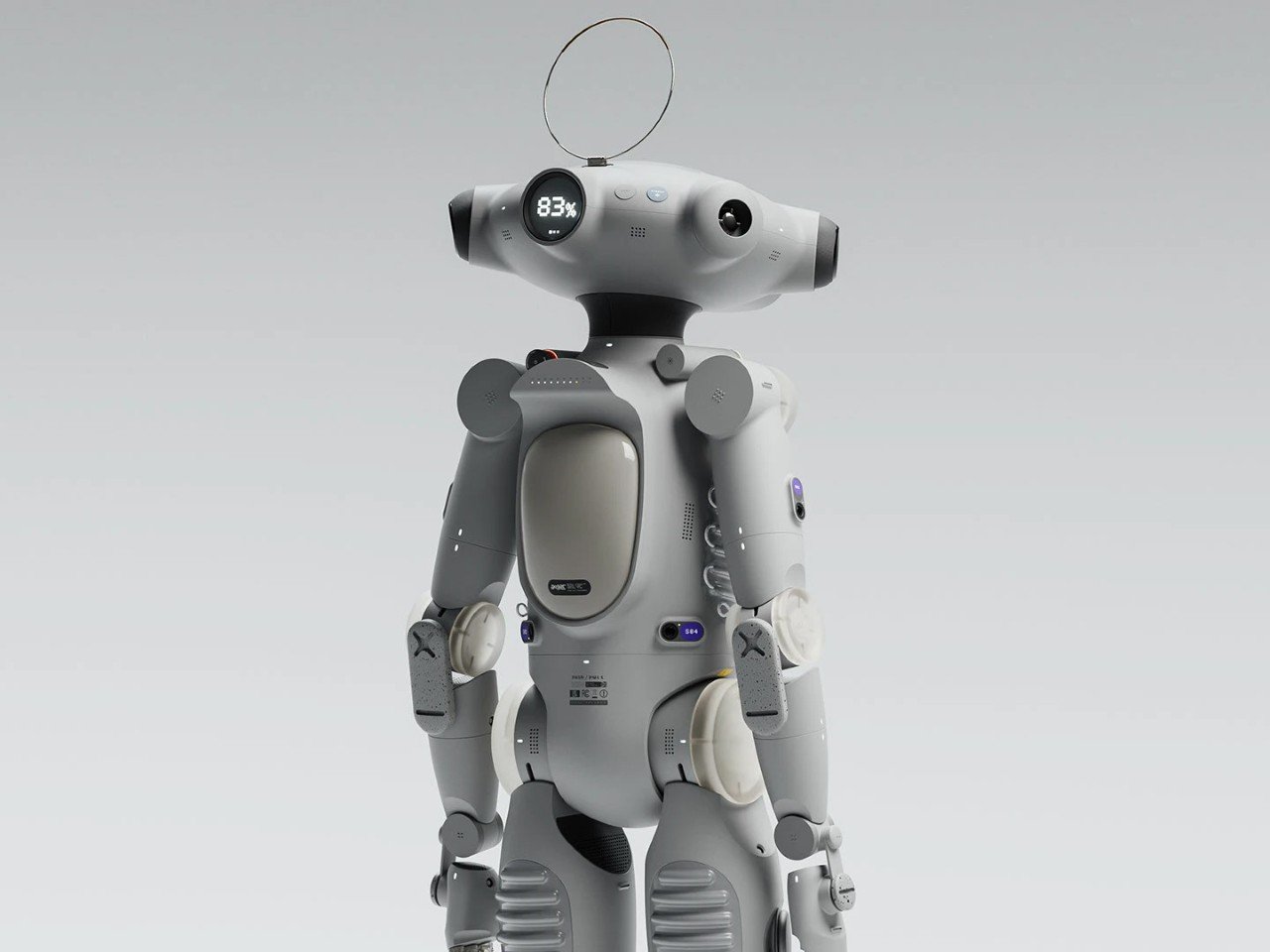
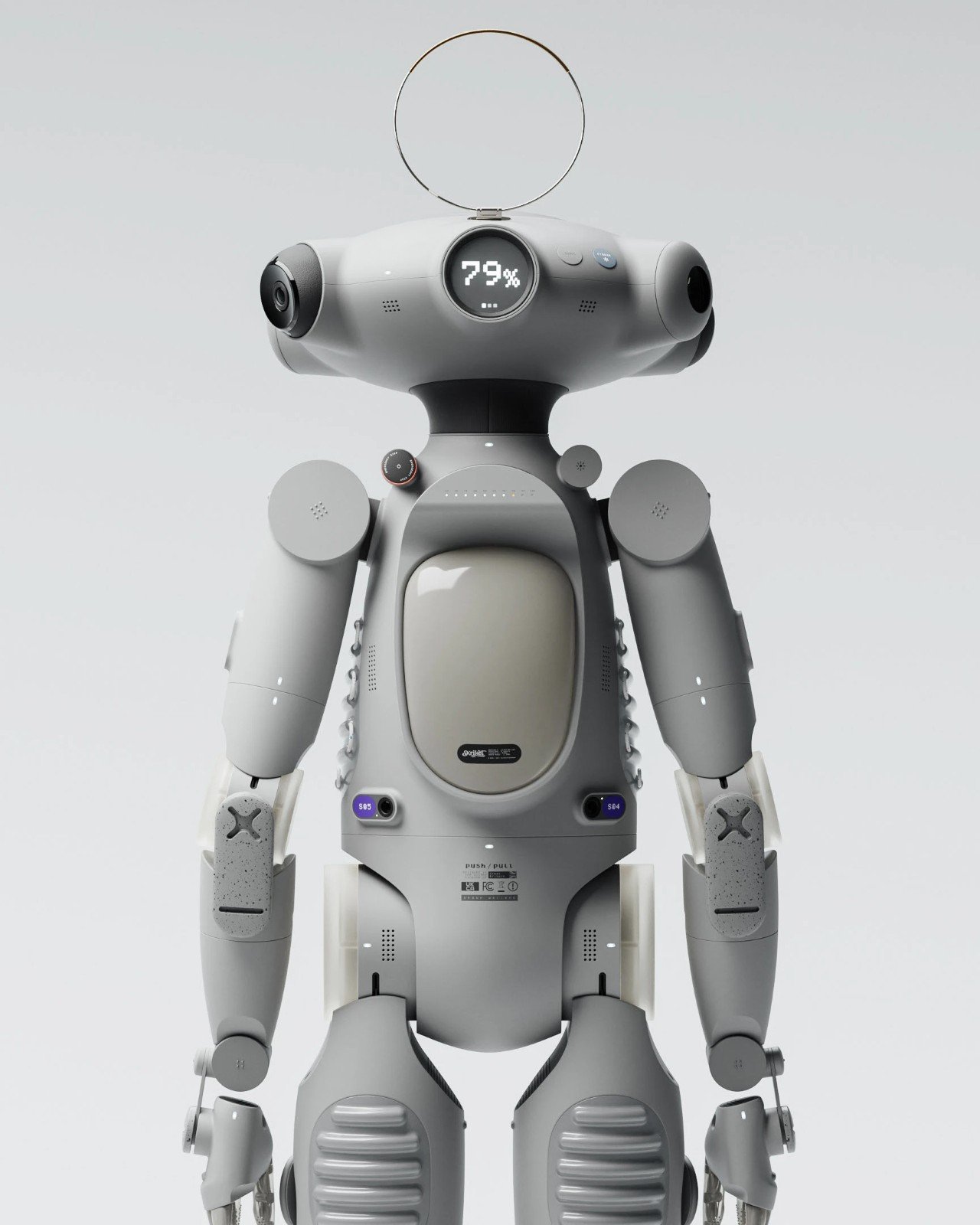
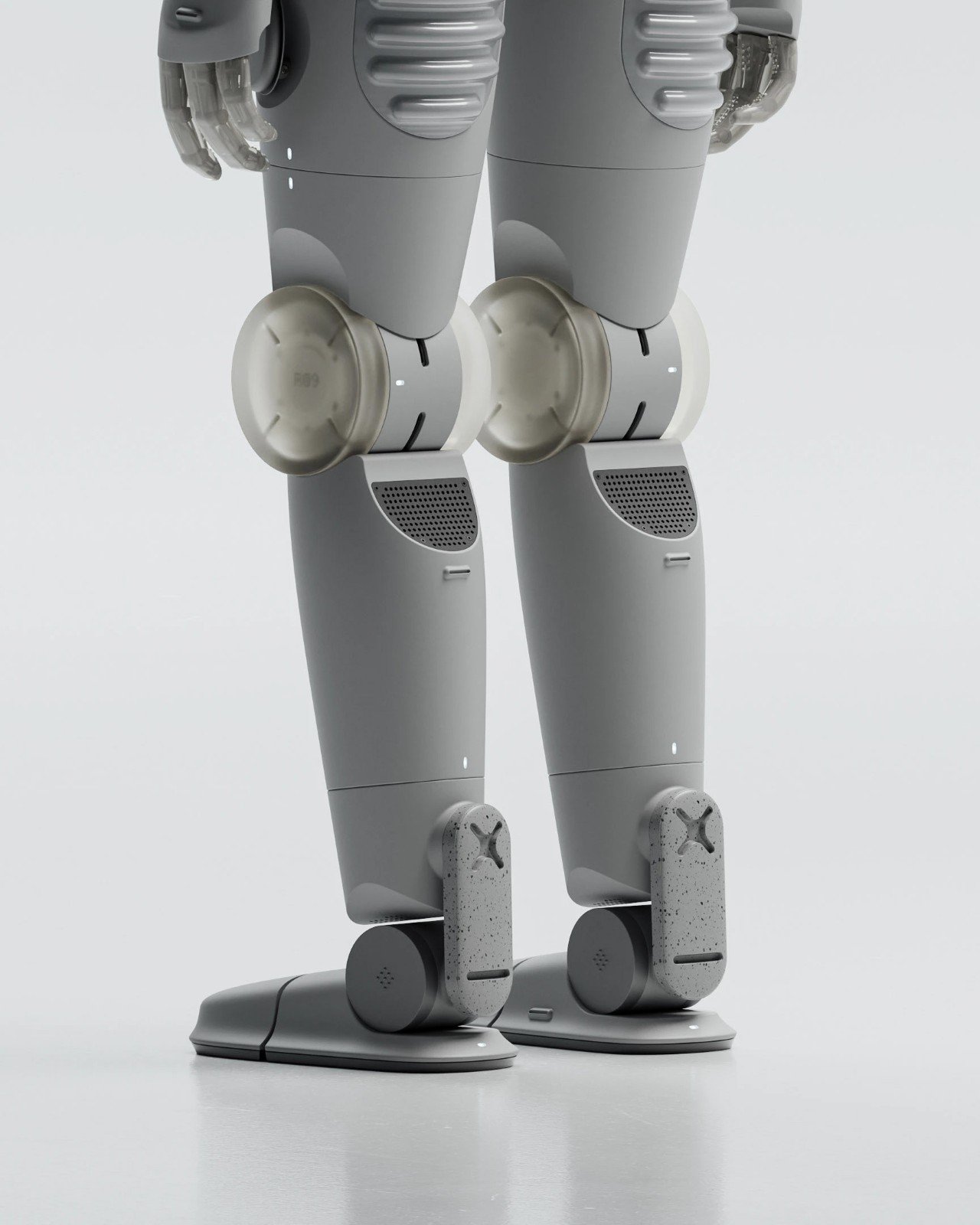
This is exactly where Kriket 3000 stands out as an example of soft design language. It mainly relies on a clean, bright white appearance that conveys a sense of both cleanliness and kindness. It is reminiscent of the famous character Baymax from Big Hero 6. However, unlike Baymax’s minimalist form, Kriket 3000 features intricate details that reflect contemporary design thinking. Its structure includes well-defined joints in the arms and legs, a backpack-like battery pack, and artificial rib elements. Additionally, it has an antenna shaped like a subtle halo, giving the robot a unique “angelic” touch.
An Unconventional Head: Design Language and Communication
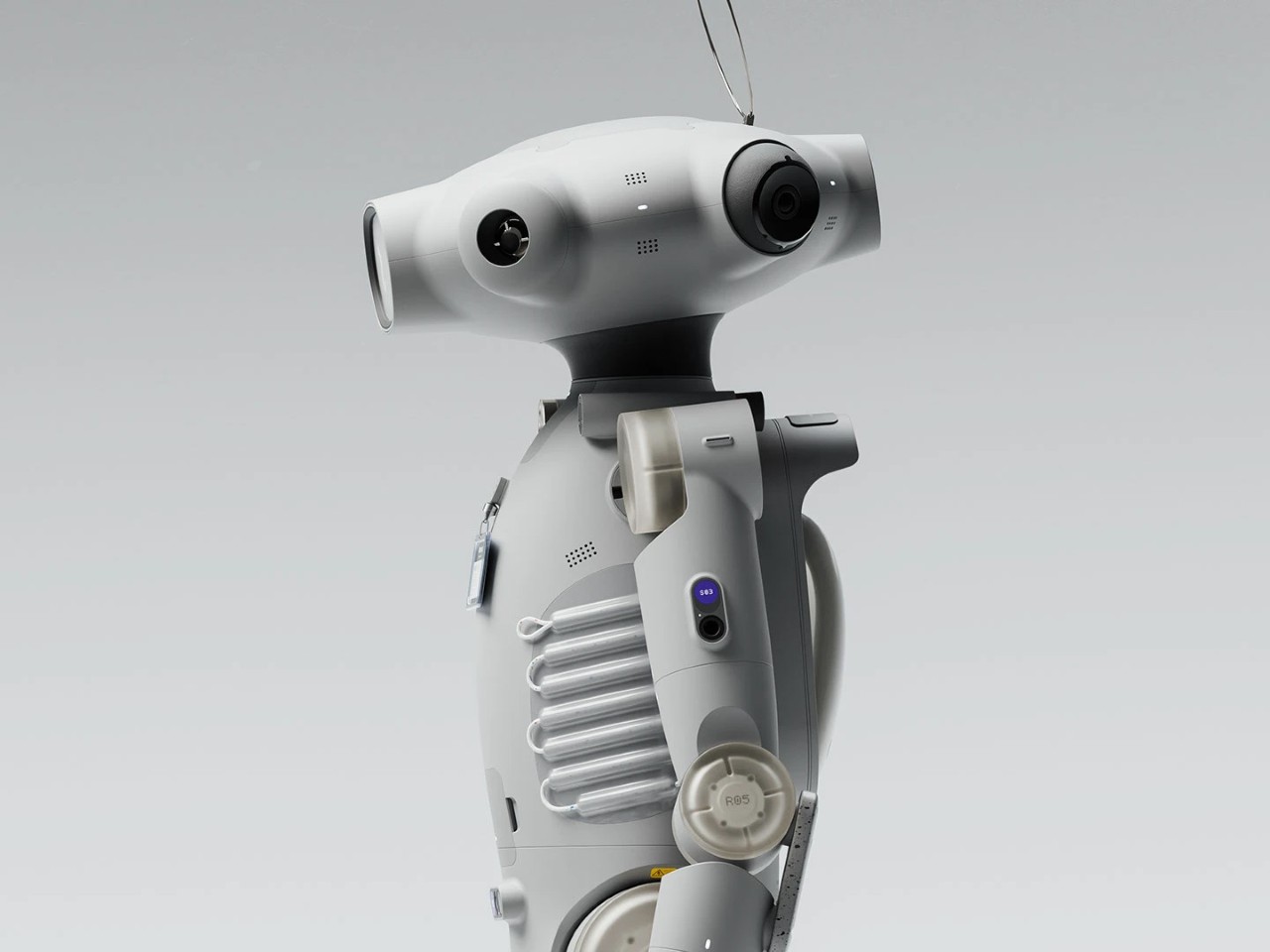
The unique appeal of Kriket 3000 extends to its head design as well. It features unexpected elements that make it feel more relatable to users. To start with, the head does not follow a traditional shape. Instead, it appears relatively wider compared to the body. This intentional disproportion creates a “childlike” look, reminiscent of how children’s and teenagers’ heads appear larger in proportion to their bodies before they fully grow.
From a practical perspective, the head of Kriket 3000 is equipped with multiple cameras that provide 360-degree awareness. Meanwhile, sensors distributed across its body accurately measure distance and depth. To enhance interaction, a front-facing screen functions as the robot’s “face,” displaying its eyes in a familiar way that mimics how robots typically express emotions.
On the back, an additional screen shows Kriket’s battery level in real time. Although this detail is not strictly essential, it adds an extra layer of data transparency. It reinforces trust between the robot and its environment.

A Conceptual Design with a Deeper Message
Ultimately, Kriket 3000 can be seen as more than just a passing idea or a purely conceptual design. It offers a clear framework that shows how robots can earn people’s trust through their form and visual language. The design creates the impression of a friendly “staff member” who feels approachable. This is thanks to its simple appearance and small human-like details — such as the name tag attached to its chest, which adds a subtle human dimension to interacting with it.
Through this idea, Kriket 3000 presents an alternative to the cold or intimidating robots that might cause anxiety, like the robotic dogs developed by some tech companies. Here, the value of friendly design becomes essential for smoothly integrating robots into everyday human life in a natural, reassuring way.
✦ ArchUp Editorial Insight
Kriket 3000 should not be seen merely as an aesthetic concept, but rather as proof that design language can build bridges of trust between humans and machines. In a world where robots often advance with cold or even unsettling features, Kriket stands out as a small-scale study. It reminds us that soft details and a “human-like” approach are not a luxury. They are a necessity if we wish to coexist with technology without fear.
Explore the Latest Architecture Exhibitions & Conferences
ArchUp offers daily updates on top global exhibitions, conferences, and professional art and design forums.
Follow key competitions, check results, and stay informed through the latest news worldwide.
ArchUp is your encyclopedic hub for discovering events and design-driven opportunities across the globe.