

Opening a New Urban Project Redefining Contemporary Living in Saudi Arabia

: The Beginning of the Urban Narrative
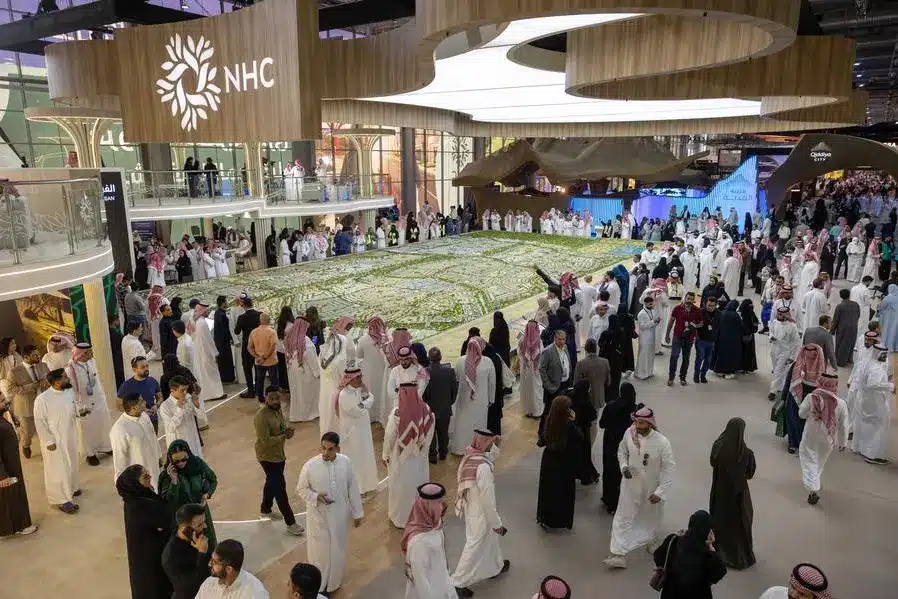
The urban project begins as a spatial journey that shifts from concept to experience. The site transforms into a setting that guides visitors to explore new layers of contemporary living. The first steps reveal a carefully orchestrated interaction between light, materials, and movement. This shapes an immediate sense of openness and balance.
Visitors move from outdoor areas with filtered natural light to indoor spaces arranged with gradual shifts in privacy. The narrative approach shows that the site does more than offer residential units. It presents a reformulated understanding of the relationship between people and the built environment.

Site and Design Concept: A Calm Interpretation of Place
The urban project is positioned within a network of roads and open spaces that allow visitors to understand its location with ease. The design draws from a concept that reorganizes residential circulation through clear facade composition and intuitive pathways.
The idea begins with analyzing soil behavior, wind direction, and natural lighting levels. These factors shape the layout of volumes and movement corridors.
Horizontal lines establish stable visual clarity, while the proportional balance between height and width enhances spatial legibility without excess. This approach offers a living environment that residents can easily read and move through, avoiding exaggerated forms or strategies disconnected from their surroundings.
Movement Experience: Pathways That Guide Without Directing
Movement inside the urban project unfolds through routes that extend from shaded outdoor plazas to primary entrances. These plazas create a gradual transition from public to private zones, while the internal pathways are organized to ensure efficient day-to-day circulation.
Short loop corridors connect service areas with residential zones, reducing walking distances and improving clarity of direction. Natural light openings enhance the movement experience by directing visual lines toward communal nodes such as small courtyards and shared seating areas.
The visitor’s journey follows measured shifts between shadow and light, and between open courtyards and enclosed rooms, reflecting a functional understanding of the residents’ daily rhythms.

Materials and Techniques: A Clear Structure Without Excess
The project relies on materials selected for operational efficiency and visual stability. Concrete forms the primary structural system, providing long-term durability, while the facades integrate metal shading elements and thermally balanced timber surfaces.
Key Materials and Construction Techniques:
- Structural concrete with a compressive strength of 35 MPa to ensure stability.
- Metal shading panels reducing thermal gain by 28%.
- Double-glazed Low-E glass lowering heat absorption by 45% while maximizing controlled daylight.
- Acoustic wall insulation reducing noise levels by 38%.
- Heat-reflective roof coatings reducing cooling demand by 22%.
These techniques support a stable living environment that aligns with functional needs without relying on decorative exaggeration.

Environmental Integration: A Measured Relationship with Climate
The design focuses on using the local climate rather than resisting it. Facades are oriented to capture cooler breezes and limit direct solar exposure during peak hours. This orientation reduces energy consumption and improves indoor air quality.
Native planting in outdoor spaces strengthens the visual and ecological link between the built form and the ground, while deep overhangs shield pathways and courtyards from harsh sunlight.
The aim is to create a clear and balanced relationship between spatial volumes and natural elements, allowing visitors to sense how the place interacts with its environmental context.
: Living Shaped by Daily Human Patterns
The urban project does not merely introduce residential units; it proposes a model shaped by an understanding of daily human behavior. The final vision focuses on producing a living environment that is intuitive, easy to navigate, and enriched by purposeful material and technical choices.
The project approaches space as part of a wider system that includes climate, movement, and functional needs. This produces a reliable urban experience rooted in real-life patterns rather than promotional narratives.
For verified updates on global activities, visit ArchUp’s architecture events section, featuring documented coverage of leading exhibitions and conferences, along with continuously updated architecture competitions and official results.
✦ ArchUp Editorial Insight
The architectural treatment unfolds through a controlled transition between open spaces and interior zones. Light acts as a visual guide, directing visitors across different layers of the design. The spatial composition uses stable massing and horizontal lines to create visual clarity. The material palette adds depth without being excessive.
The design balances functional legibility with environmental coherence. However, the strong horizontal rhythm may limit experiential variation in some areas. Still, the project delivers urban value through clear circulation. It provides a spatial environment that users can easily interpret and engage with.


ArchUp Editorial Management
The article provides an analytical perspective on the Saudi urban project as a case study in redefining contemporary living experiences. To enhance its archival value, we would like to add the following technical and design data:
We would like to add that:
· Structural Data: Reinforced concrete structure with 35 MPa compressive strength, 25 cm thick floor slabs with 4 kN/m² load capacity, and thermally broken aluminum window frames
· Environmental Control Systems: 45 kWh solar panels, radiant cooling systems with energy efficiency ratio of 4.2, and 10 cm thick thermal insulation reducing heat transfer by 65%
· Advanced Materials: Double Low-E glass with 1.8 W/m²·K thermal transmittance, self-compacting concrete with 40 MPa strength, and sound-insulating materials with NRC 0.7
· Environmental Performance: LEED Gold certification with 72 points, achieving 35% energy consumption reduction through advanced shading and thermal insulation systems
Related Link:
Please review for a comparison of sustainable housing projects:
[Sustainable Housing Architecture: From Design to Implementation in Urban Environments]
https://archup.net/tiny-homes-in-british-columbia/