Lightship AE.1 Atmos and Panos: A New Generation of Electric Caravans with TrekDrive and a Quieter Camping Experience

Background on the Model
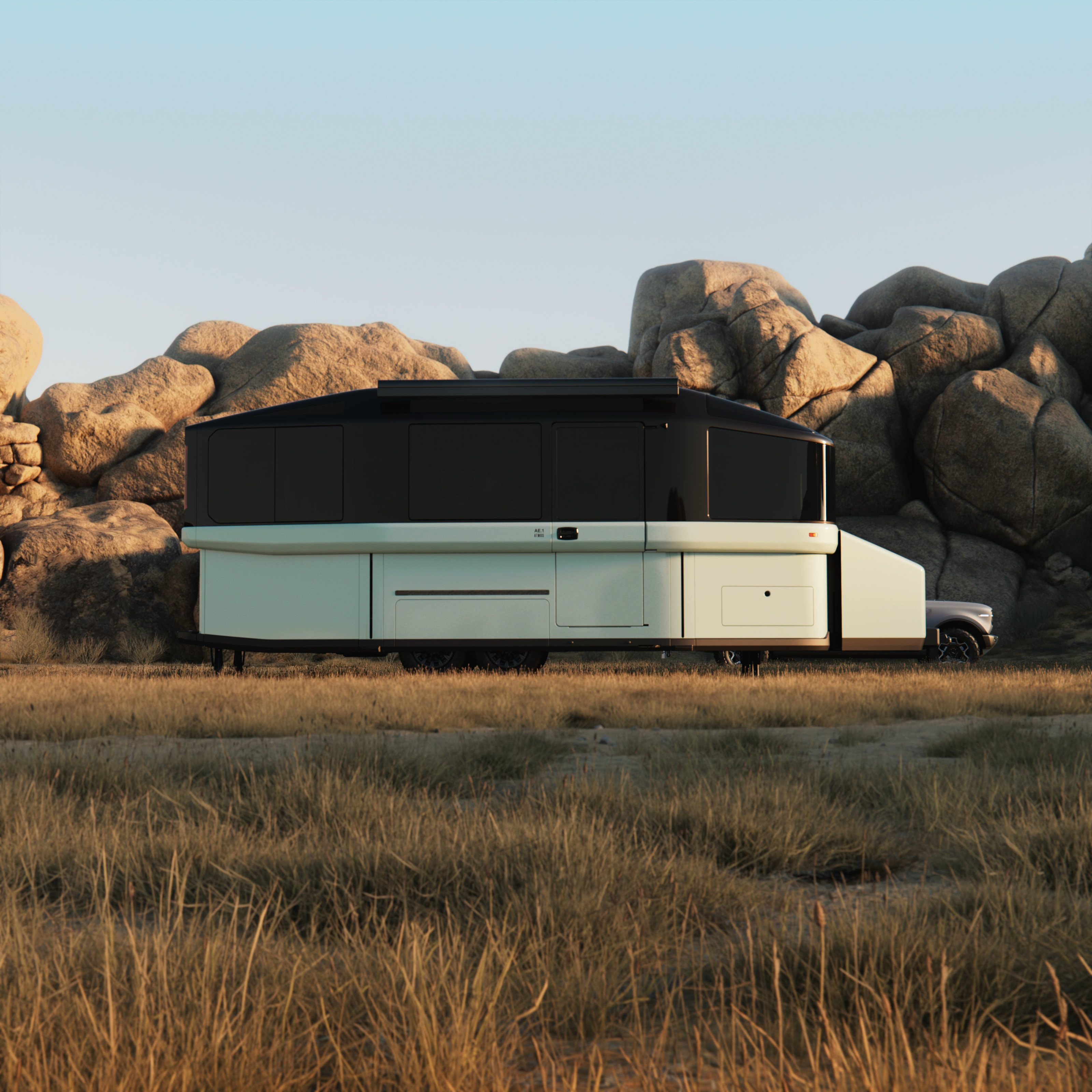
The model was first launched under the name Lightship L1 in 2023, marking a step toward introducing a new concept in the world of mobile caravans. In its latest update, the new version appeared as the Lightship AE.1 Cosmos Edition, offering an evolved vision of modern camping.
Transition to the Next Generation
This edition represents a sleek update to the traditional caravan, featuring a fully integrated electric design supported by electric assistance, reflecting a growing focus on sustainable mobility solutions.
It is worth noting that the production of this first batch coincided with the company’s announcement, headquartered in San Francisco and Colorado, of providing two new levels of equipment as complementary editions.
The Two New Models: Atmos and Panos
The company introduced two new models in the Lightship AE.1 series: Atmos and Panos. Both incorporate the company’s exclusive propulsion technology known as TrekDrive, which represents a breakthrough in electric caravan design.
What is TrekDrive Technology?
This technology integrates a battery and electric motor within the caravan’s body, significantly reducing the effort required to tow it. The result is the ability to cover longer distances more efficiently, while maintaining lower energy consumption for the towing vehicle.
A Quieter Camping Experience
When stationary, TrekDrive provides an exceptionally quiet camping environment, free from the usual noise of generators, enhancing overall comfort during camping.
Independence from the Towing Vehicle
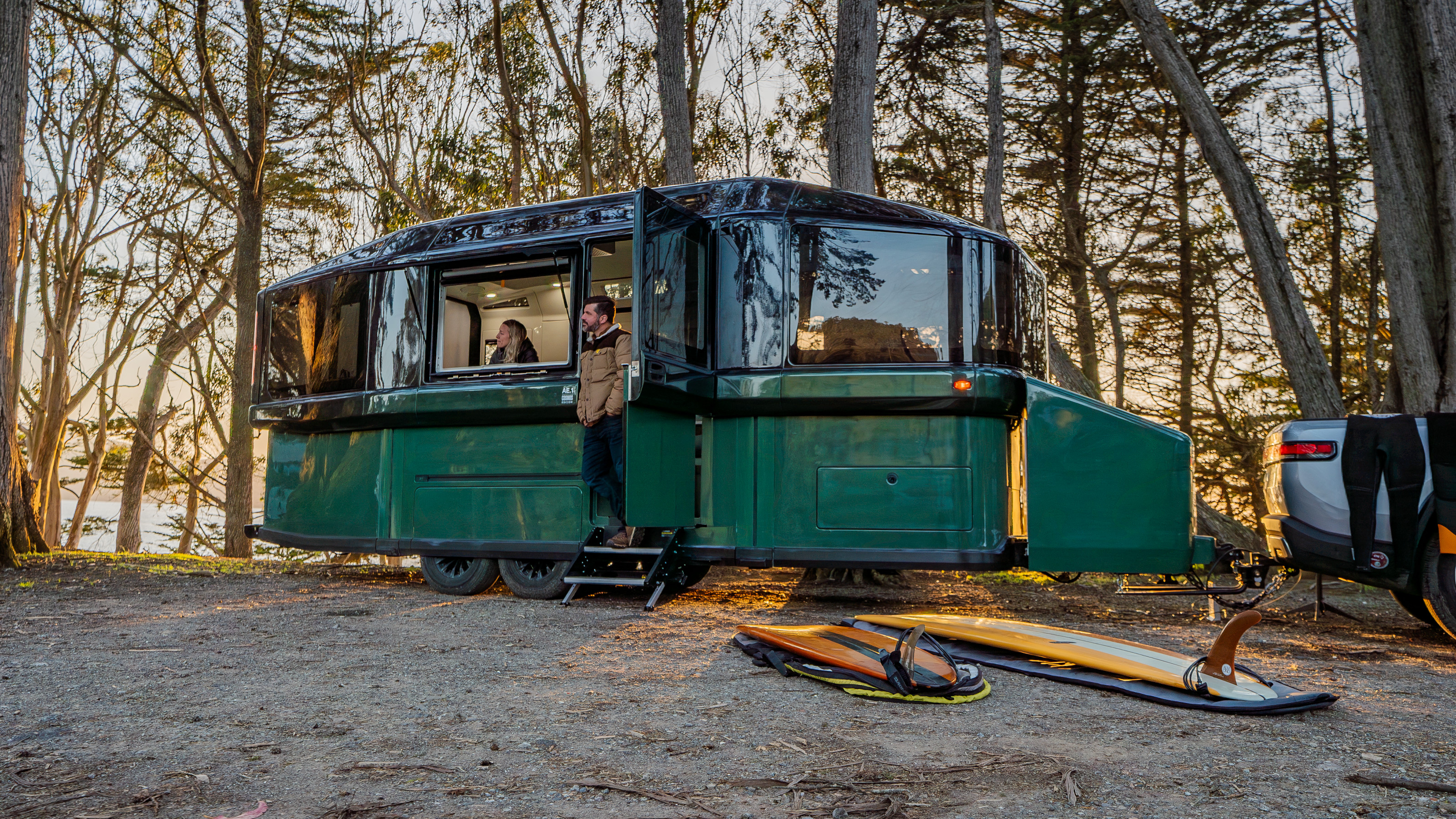
One of the most notable advantages, especially for electric vehicle owners, is that TrekDrive operates independently from the towing vehicle. This is particularly evident when paired with vehicles like the Rivian R1T, where the caravan utilizes an integrated set of sensors to monitor forces such as acceleration, braking, and turning, then automatically adjusts the propulsion system to adapt smoothly to these changes.

Continuity in Luminous Design
The interiors of the new editions maintain the luminous approach that made the original Cosmos version renowned, with touches that enhance the sense of spaciousness and comfort inside the caravan.
AE.1 Atmos Specifications
This model comes equipped with a 77 kWh battery, supported by integrated 1.8 kW solar panels on the roof, providing a sustainable power source for daily operation during trips.
Integrated Features for Extended Trips
The standard equipment in the AE.1 Atmos includes a fully equipped kitchen featuring:
- Cooking stove
- Refrigerator/freezer
- Dishwasher
- Microwave
- Additional fittings to meet camping needs
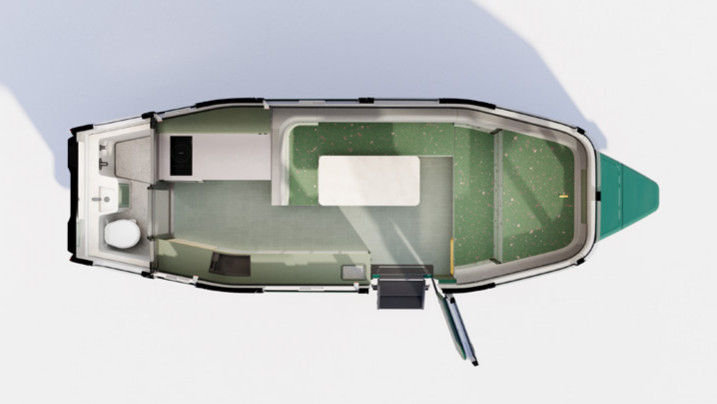
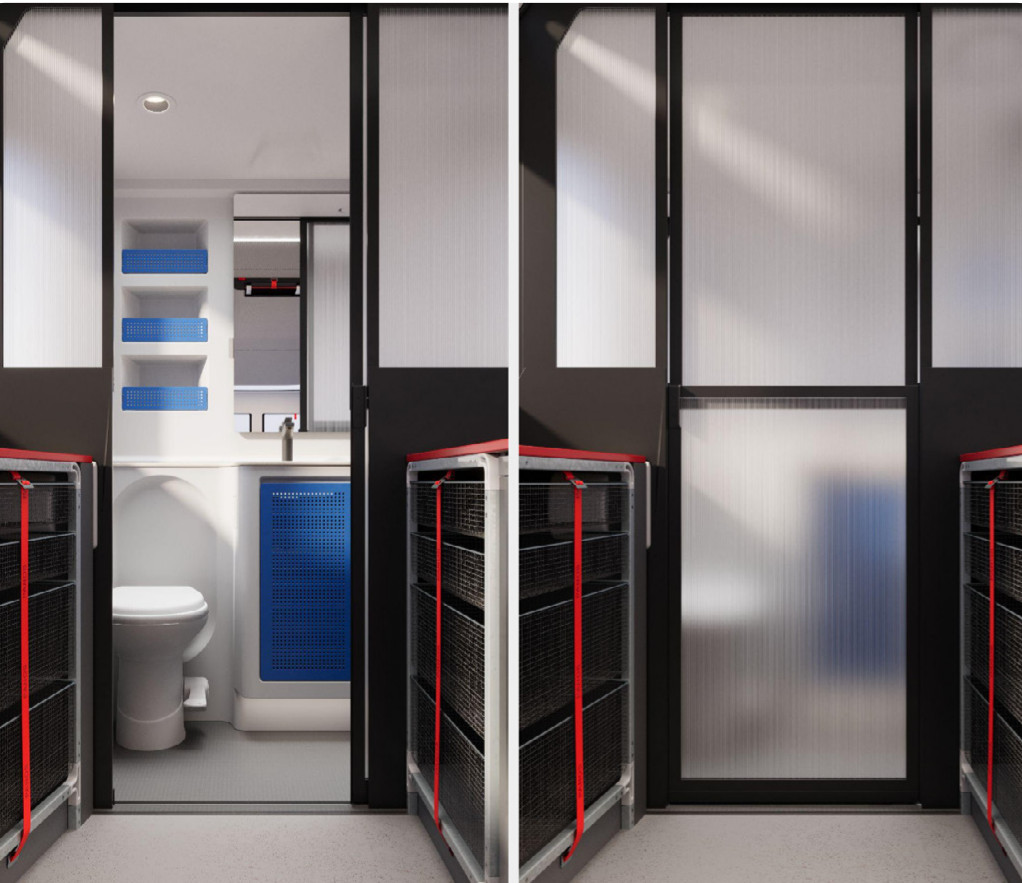
It also includes a bathroom spanning the full width of the rear section of the caravan, offering greater comfort during use.
Towing Technologies in the Atmos Model
The Atmos comes equipped with a comprehensive set of towing technologies, including:
- Electric stabilizing jacks
- Automatic leveling system
- LookOut surround-view camera system for monitoring the surroundings while on the move or stationary
Exterior and Interior Colors
The exterior design maintains a simple and calm character, with colors including:
- Pale Green-Gray (ShadeMoss)
- Brown (GraniteBraun)
- Traditional caravan white (SnowLine)
Inside, four color schemes are available, based on varied upholstery and wall decorations, partially inspired by mid-century designs.
Panos Model: A More Economical Option
The Panos serves as the more budget-friendly alternative in the series, with a reduced 44 kWh battery and solar panel capacity halved compared to the Atmos. Some advanced towing technologies become optional.
Differences in Interior Features
- No dishwasher
- The main sleeping area is fixed and cannot be converted into a seating area
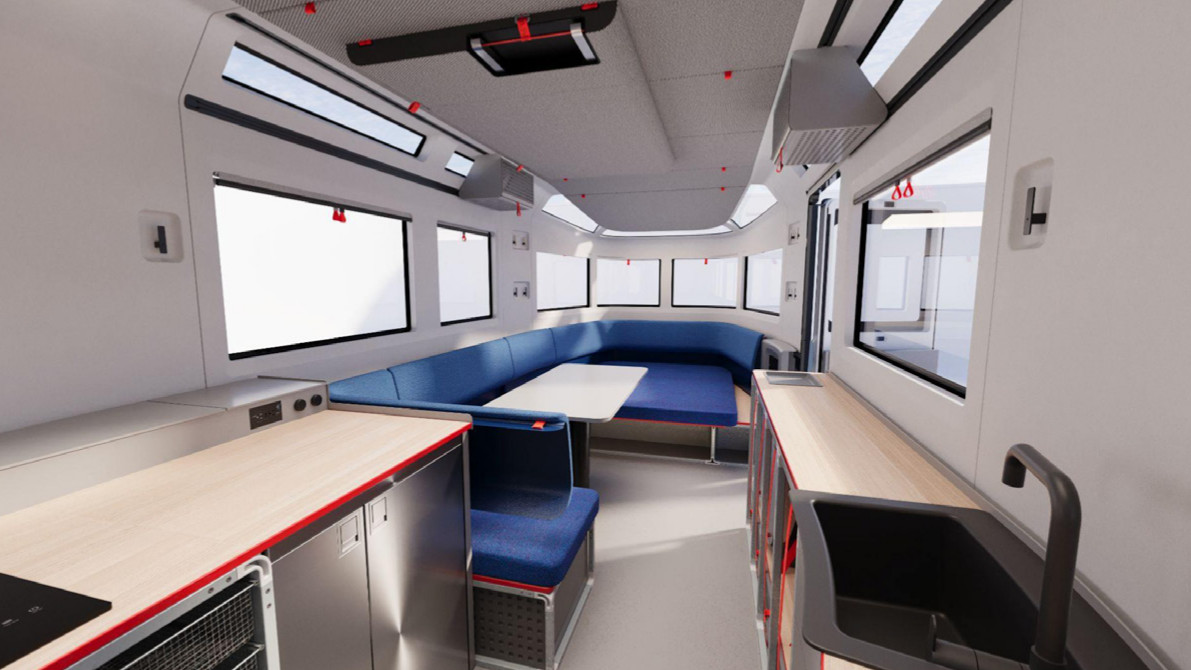
- Single interior option with a nautical blue design accented with red touches
Interior Capacity
Both Atmos and Panos can accommodate up to four people; however, limiting occupancy to two provides a more spacious and comfortable experience, evoking the feel of a roomy loft.
Lighting and Ventilation
The interior features ten panoramic windows that allow abundant natural light, including four operable windows equipped with integrated insect screens, ensuring good ventilation while maintaining privacy.
Additional Options
Both models offer the option of an automatic awning, providing extra shaded space during outdoor camping.
✦ ArchUp Editorial Insight
The Lightship AE.1 Atmos and Panos caravans offer a unique experience that combines technological innovation with comfortable interior design, while providing efficient and quiet mobility. Advanced batteries and TrekDrive technology deliver notable independence, complemented by a luminous interior and smart storage and sleeping spaces, making trips more comfortable.
However, some differences in battery capacity and the Panos model’s features may present a challenge for those seeking maximum performance or interior spaciousness. Additionally, the limited interior color options in certain editions may not satisfy all tastes.
Overall, these caravans blend practical and technological solutions with certain constraints related to budget-friendly options and features, making them suitable for those who value innovation and comfort within a defined range of budget and space.
Prepared by the ArchUp Editorial Team
Don’t miss the chance to explore more from Architecture in fields like Design and Projects on the ArchUp website.