

Ludlstraße An Innovative Residential Experience Between City and Nature

Introduction
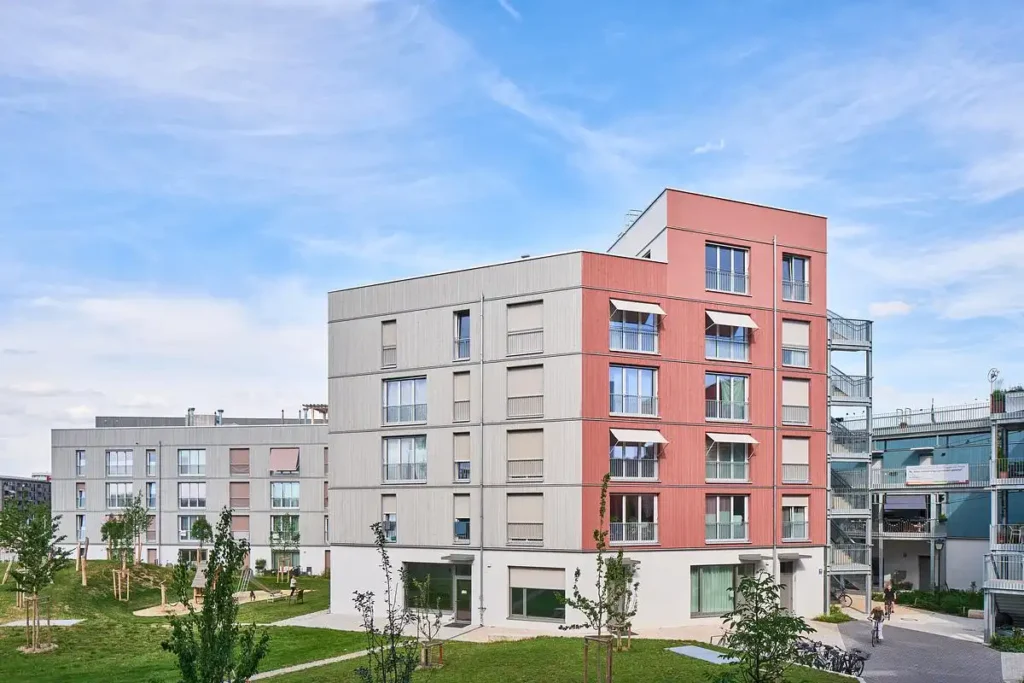
In a transitional zone between the city and the countryside in Munich, a residential complex has been developed. It embodies a contemporary approach to urban living. Ludlstraße offers a comprehensive living experience, combining individual apartments, shared residential units, and cluster apartments. The design also creates spaces for social interaction and circulation, connecting buildings with open areas. The project demonstrates how architecture can balance privacy and community interaction, integrate the built environment with nature, and harmonize functional and public spaces.
Project Location and Type
The complex is situated in an area that serves as a link between the urban environment and the surrounding countryside, allowing for flexible residential solutions adapted to their context. The development consists of five buildings of varying sizes and forms, forming a lively architectural ensemble with multiple functions. The contrast between the buildings reflects a philosophy of diversity within unity, yet remains coherent in its architectural identity, enabling integration with both urban and natural surroundings.
Design Concept and Architectural Approach
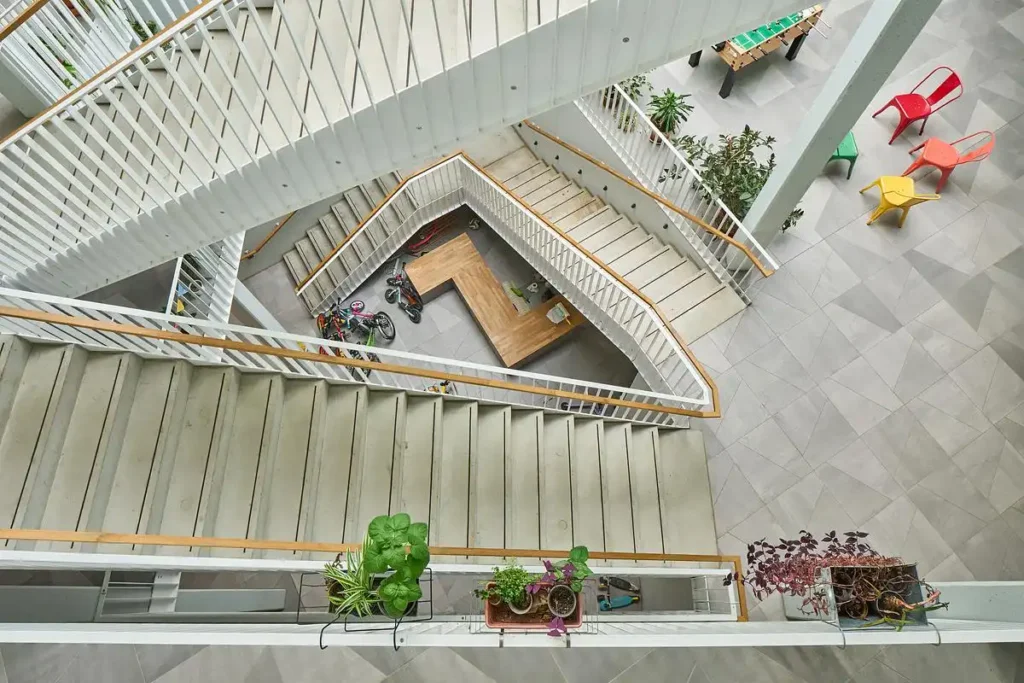
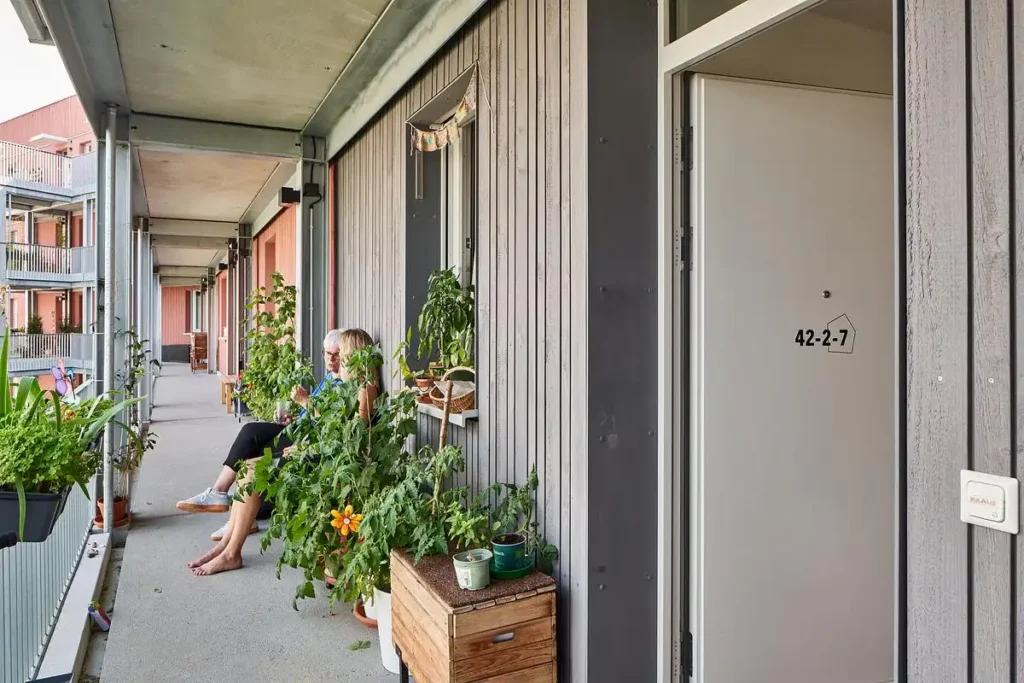
The Ludlstraße design emphasizes visual and functional diversity. Each building presents a distinct form while remaining connected to the others through internal pathways, pedestrian bridges, and shared terraces. These circulation spaces serve not only as access routes but also as meeting points and communal areas, providing varied views across the complex and enriching the residents’ spatial experience.
The central concept of Ludlstraße is to blend private life with shared community spaces. Some individual apartments were reduced in size to allow for communal indoor and outdoor areas, fostering social interaction and a strong sense of belonging. The complex thus offers more than just residences; it delivers a fully integrated daily living experience.
Materials, Sustainability, and Environmental Interaction
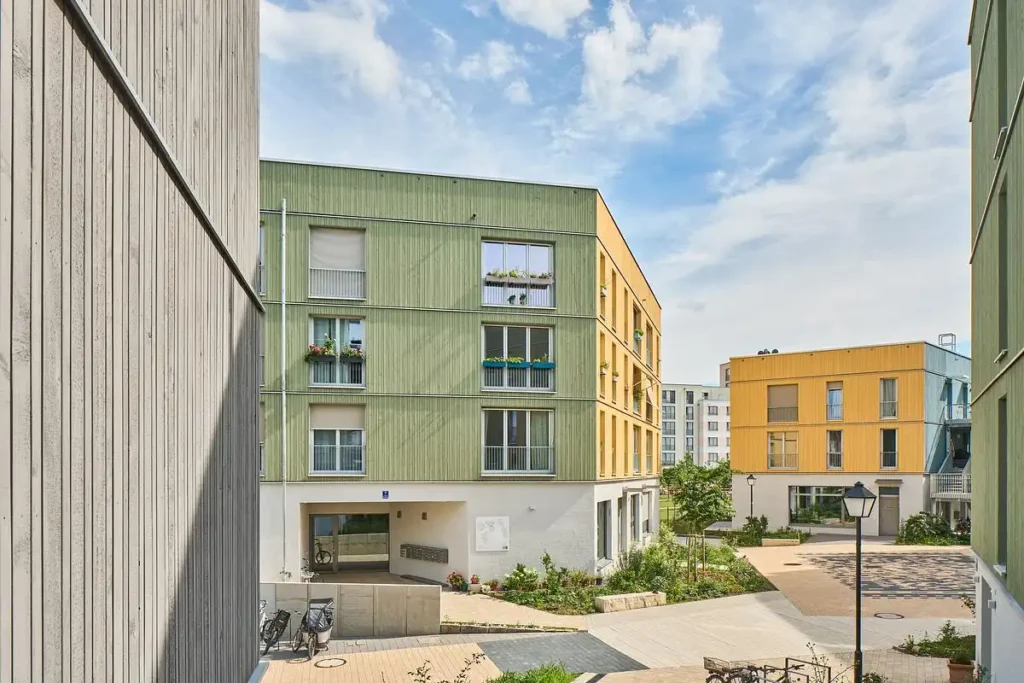
The design incorporates sustainable and adaptable materials, allowing for natural ventilation, abundant daylight, and optimal thermal performance. Exterior surfaces, walls, and windows are designed to provide a balance between protection from climatic conditions and visual connection with the surrounding environment.
Extensive green spaces, inner courtyards, and enclosed gardens complement the building arrangement, creating a contrast between private and public zones, and between natural and urban environments. These green areas not only enhance aesthetics but also improve environmental comfort, well-being, and air quality, while regulating local microclimates.

Community and Environmental Interaction
The complex reflects a vision of integrated urban living. Shared spaces, pathways, and internal bridges encourage spontaneous encounters and community activities, while smaller apartments offer privacy when needed.
Public spaces, from expansive meadows to traditional enclosed courtyards, demonstrate the design’s ability to accommodate multiple uses. This diversity allows residents to choose between isolation and social engagement, fostering a dynamic social network within the complex while maintaining a direct connection with nature.
Architectural and Conceptual Values
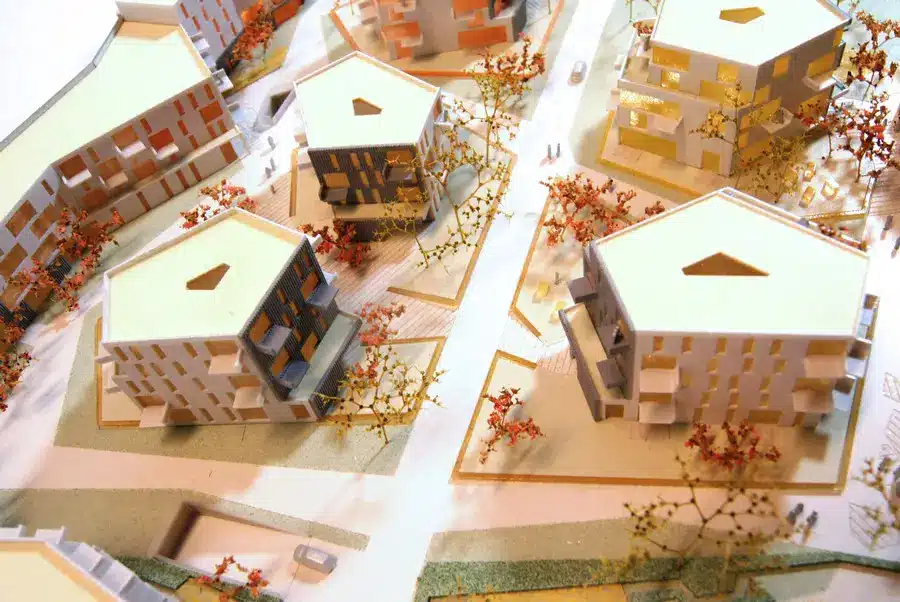
The project prioritizes the integration of form, function, and community. It offers more than buildings; it delivers a holistic living experience. The variation in scale and form illustrates a philosophy of flexibility and diversity, while consistent materials, pathways, and overall geometry unify the architectural identity.
The design also highlights how architecture can serve as a medium for social and environmental interaction, making communal spaces essential for strengthening connections among residents and enhancing quality of life.
Project Summary
Ludlstraße exemplifies a contemporary model of multi-functional, multi-level urban living, balancing privacy with community, built form with nature, and functionality with public space. Its design provides a flexible and sustainable environment capable of adapting to future needs while delivering a rich and diverse residential experience aligned with the demands of modern urban life.
Project Summary Table
| Element | Description |
|---|---|
| Location | Transitional zone between city and countryside in Munich |
| Project Type | Multi-building residential complex |
| Number of Buildings | 5 buildings of varying sizes and forms |
| Unit Types | Individual apartments, cluster apartments, shared residential units |
| Shared Spaces | Internal bridges, terraces, gardens, circulation paths |
| Design Concept | Diversity within unity with a coherent architectural identity |
| Materials | Sustainable materials allowing natural ventilation and daylight |
| Environmental Interaction | Integration of green spaces, gardens, and meadows with enclosed courtyards |
| Objective | Create a diverse, flexible, and nature-connected community |
| Sustainability | Flexible and sustainable design adaptable to future needs |
✦ ArchUp Editorial Insight
The Ludlstraße complex stands out with its clear visual diversity across five buildings, where the scale and form of individual apartments, cluster units, and shared residential spaces vary, complemented by internal pathways, bridges, and terraces that enhance visual continuity and spatial dynamism. The design approach emphasizes a balance between privacy and social interaction, though maintaining a consistent architectural identity across all structures occasionally poses challenges. Nevertheless, the shared spaces and inner gardens foster community engagement and create a cohesive living environment, granting the project significant urban value as a flexible and diverse model of contemporary residential design.
Architecture professionals can follow ArchUp’s events section for verified updates on exhibitions, conferences, competitions, and results.


The Ludlstraße residential development embodies Munich’s evolving dialogue between urban density and ecological mindfulness. Situated in a temperate continental climate, the architecture leverages generous daylight and cross ventilation to reduce mechanical energy reliance. Beyond form, its material palette—likely incorporating timber and recycled composites—echoes Germany’s shift toward carbon-neutral construction. Yet what distinguishes this project is its quiet negotiation between private and communal living: green courtyards blur the boundary between apartment and park, while façades rhythmically alternate between transparency and solidity, framing the Bavarian skyline with restraint. In this sense, Ludlstraße is not merely a housing complex but a statement on how future European urbanism can harmonize with nature without aesthetic compromise.