Modern Architectural Design in Covent Apartment: A Balance Between Contemporary Style and Historical Touches

Renovating a Historic House and Transforming It into a Modern Apartment in London
Renovating old homes is one of the challenges that requires balancing the preservation of the historical character of a place with adding modern touches that fit the requirements of contemporary life. In this context, the architectural studio Carmody Groarke redesigned a penthouse apartment in London. They used angled aluminum panels to add a rooftop terrace, which gave the building a unique architectural touch.
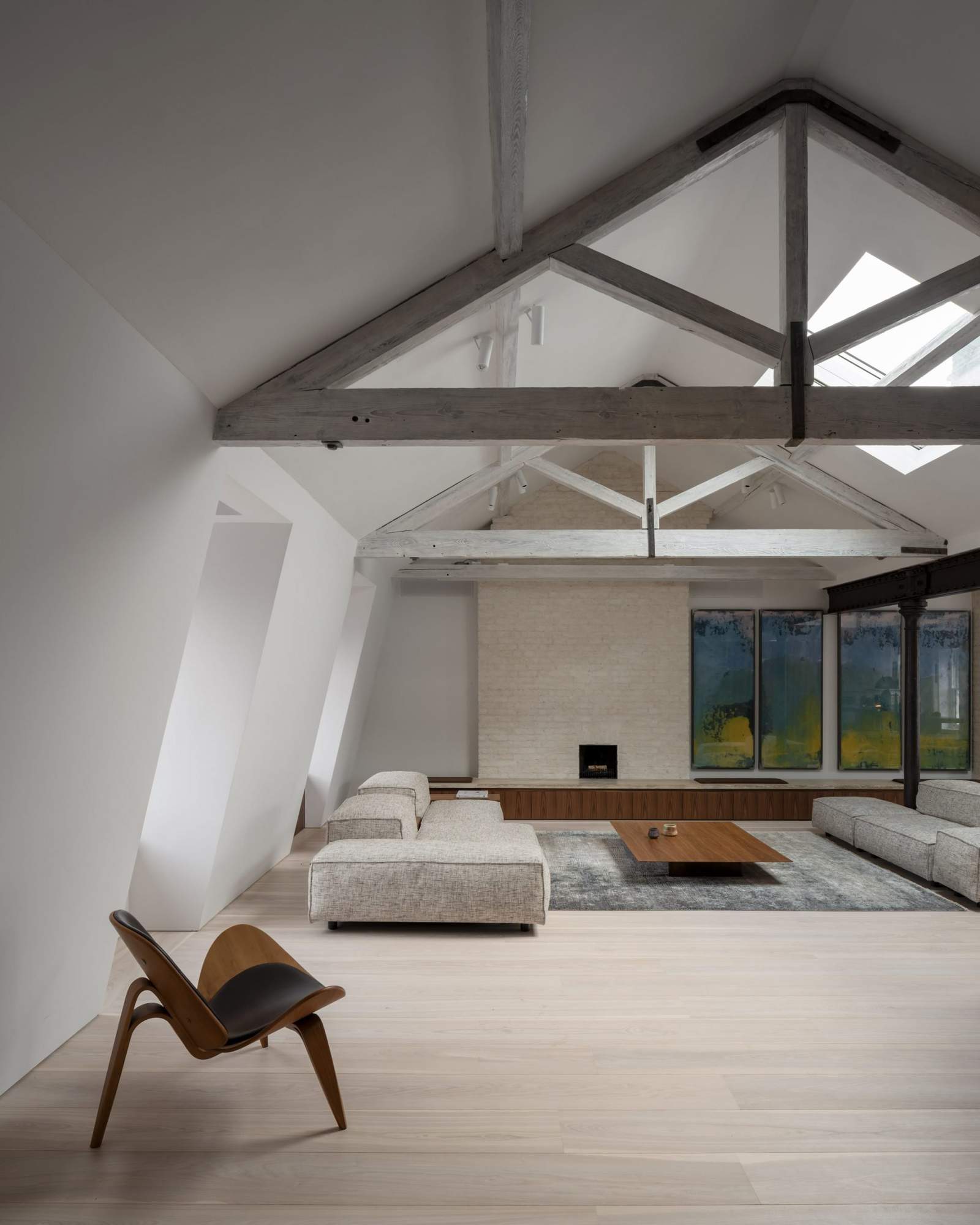
The renovation of this home was not limited to aesthetic aspects only. It also included improving the functionality of the spaces. For instance, the top two levels of a nineteenth-century Grade II-listed house in Covent Garden were renovated. The aim was making it more compatible with the needs of modern family life. The interior spaces were enhanced to ensure comfort and improve the flow of natural light within the apartment.
Through these modifications, Carmody Groarke demonstrated how architecture can blend the old and the new in a balanced way. They did so without affecting the home’s historical identity. Meanwhile, they introduced enhancements that are in line with the modern era.
Expanding the Interior Spaces of Covent Garden Garden Apartment
The upper level of the Covent Garden garden apartment features fully open living spaces. These spaces are illuminated by skylights inserted between the original ceiling beams. This design choice allows natural light to flood the area, creating a bright and airy interior atmosphere.
In an effort to optimize space utilization, Carmody Groarke expanded the upper floor by adding a distinctive extension to the kitchen. This extension consists of a glazed area that opens directly onto a rooftop terrace. Not only did this addition provide stunning views of the surrounding environment, but it also made the interior spaces more expansive and flexible. This enhanced the connection between the interior and the exterior.
Using Aluminum in the Exterior Design of the Covent Garden Apartment
The sand-blasted aluminum panels, 25 millimetres thick, were carefully designed to cover the apartment’s exterior. These panels were arranged in a way that mimics the spacing of the windows in the building below. This enhanced the harmony of the design with the surrounding environment.
🔗 Read also:
Commenting on the design, Carmody Groarke stated: “At the rear of the site, which does not face the sea, the new rooftop wing extends to encompass the upper floor area. This includes a new kitchen inside and a sheltered rooftop terrace outside.” This expansion reflects how spaces can be creatively utilized to incorporate new elements into an old structure without disrupting the overall harmony of the building.


Integrating Modern Design with Historic Structure in London
In an innovative project, the Carmody Groarke studio embedded a concrete house inside an old brick warehouse in London. This reflects how modern elements can be harmoniously integrated into traditional structures.
Commenting on the project, Carmody Groarke explained: “It requires innovative thinking to extend the familiar roof while adding generous and carefully designed openings. This achieves a subtle balance that enhances the existing brick extension in London.” This architectural vision highlights how the challenges posed by old structures can be addressed while maintaining a sense of openness and modernity.
He added, “Its seamless metal panels appear to lean against each other in a state of structural balance, where these solid metal panels achieve an ideal equilibrium.” This interpretation reflects the harmony between modern design and traditional materials. It creates a balance between aesthetics and durability in architecture.

Using Aluminum to Create Visual Contrast in the Apartment Extension
Carmody Groarke chose aluminium for the apartment extension. This decision aimed at contrasting with the surrounding brick buildings and creating a glowing effect.
Explaining this choice, the studio stated: “Aluminium was selected for its lightness and ability to create a sense of visual satisfaction.” This modern material gives the new wing a distinctive presence. It forms a bold silhouette that stands out against the city skyline.
The studio added: “It contrasts sharply with the surrounding brick surfaces, creating an artistic contrast that enhances the character of the space.”
Kitchen and Lower Floors Design in Covent Garden Apartment
In the kitchen, sandblasted stainless steel units are integrated. This references the metal panels on the surface. This creates a distinct contrast with the silver travertine lines on the floor. This blend of materials reflects a balance between modernity and natural touches.
In the lower floor, there is an entrance hall and bedrooms featuring walnut woodwork. This adds a touch of warmth and comfort to the interior spaces, enhancing the sense of intimacy within the home.
About Carmody Groarke Studio
Carmody Groarke Studio was founded in 2006 by Kevin Carmody and Andy Groarke. The studio is known for its innovative projects. These include, in addition to the Covent Garden apartment, Mackintosh’s Hill House shed near Glasgow and the corrugated aluminium ticket pavilion for the theatre in Hamburg. These projects reflect the studio’s commitment to finding a balance between aesthetics and functionality in architectural design.