MVRDV’s Sun Rock in Taiwan: A Solar-Powered Beacon of Sustainable Architecture

A Landmark for Renewable Energy in Taiwan
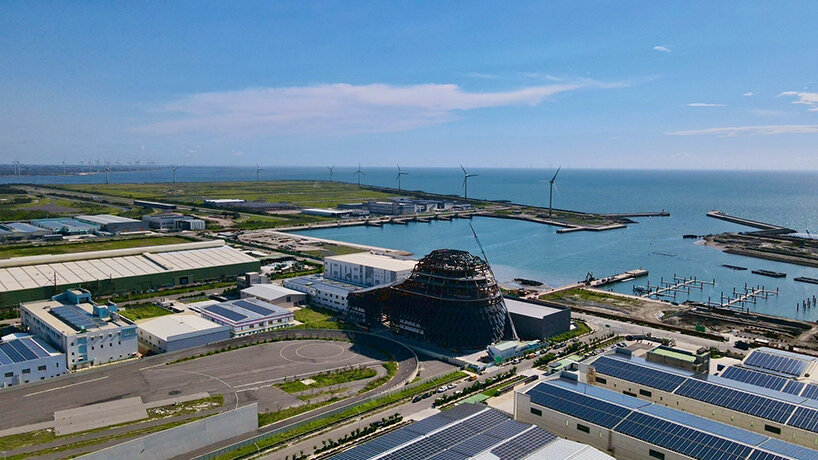
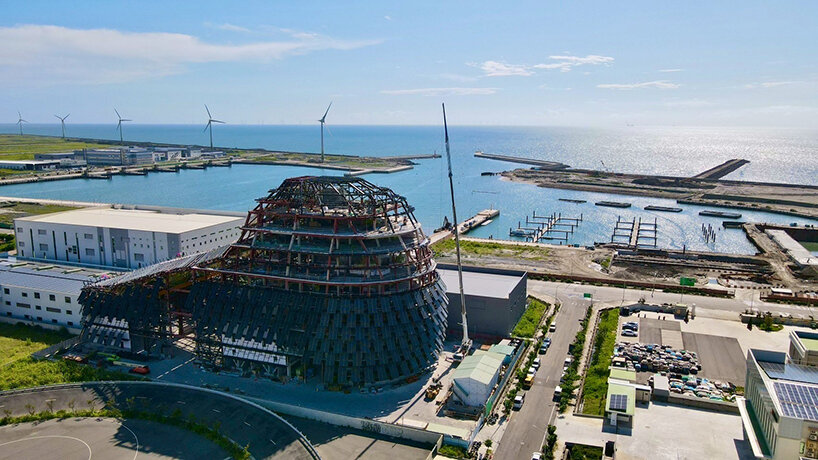
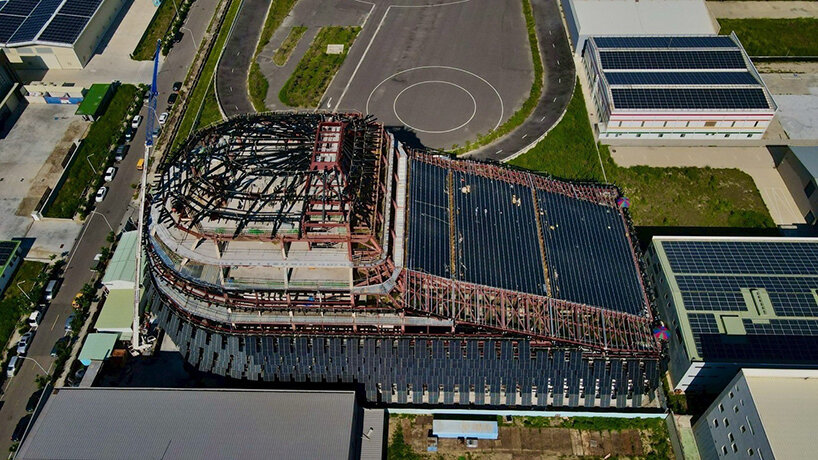
MVRDV’s Sun Rock, a groundbreaking solar-clad structure, has reached its topping-out milestone at the Changhua Coastal Industrial Park in Taiwan. Designed for Taipower, Taiwan’s state-owned utility company, this facility is more than just a storage and operations hub—it’s a symbol of the country’s renewable energy ambitions.
With its fully photovoltaic-covered facade, the building is engineered to maximize solar energy absorption while making a bold architectural statement. First unveiled in January 2022, the project is now nearing completion, setting a new benchmark for sustainable infrastructure in Asia.
A Building Designed for Maximum Solar Efficiency
Form Follows Function: A Solar-Optimized Geometry
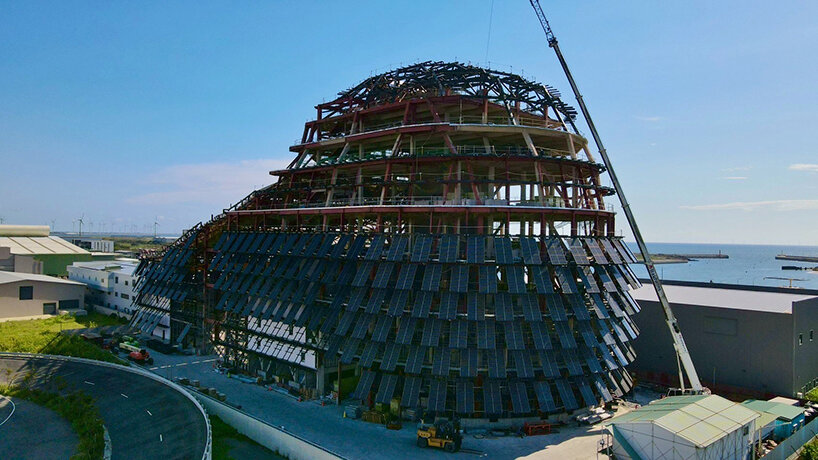
The Sun Rock stands out with its rounded, domed silhouette, a shape meticulously designed to harness sunlight from every angle. The structure’s northern dome captures early and late sunlight, while its southern slope is optimized for the intense midday sun. This intelligent orientation ensures that the building operates at peak solar efficiency throughout the day.
A Facade That Works Like a Solar Farm
MVRDV has transformed the building’s exterior into a high-performance solar generator:
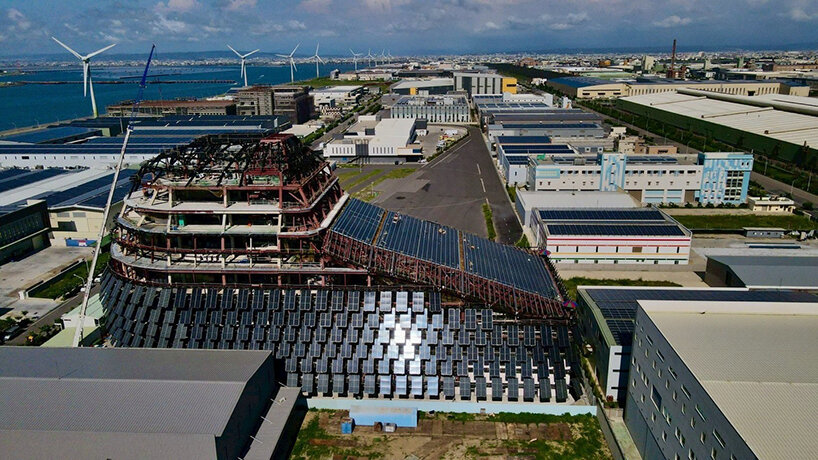
- Pleated Facade: The angled pleats serve as mounting surfaces for photovoltaic (PV) panels, each positioned for optimal sunlight exposure.
- Strategic Window Placement: Carefully placed windows maintain natural lighting inside without compromising energy generation.
- Self-Sufficient Powerhouse: The building is expected to produce nearly one million kilowatt-hours (kWh) annually, making it fully energy-independent. With potential expansions, it could generate 1.7 million kWh per year, feeding excess power back into Taiwan’s grid.
Beyond Functionality: A Symbol of Sustainable Progress
A Dual Role: Operations Hub + Renewable Energy Icon
While the Sun Rock serves as a functional facility (housing workshops, offices, and storage for Taipower), its expressive design elevates it into a symbol of Taiwan’s green energy transition.
Winy Maas, MVRDV co-founder, explains:
“We clad the entire facade with photovoltaics, allowing the building to become a tool of energy production. It’s not just a building—it’s an active participant in Taiwan’s renewable energy ecosystem.”
Key Architectural & Environmental Features
- 4,000+ sqm of Solar Panels: Integrated seamlessly into the curved facade.
- Energy-Generating Skin: Unlike traditional buildings, the Sun Rock’s exterior actively produces power.
- Future-Ready Design: Scalable for additional PV panels, boosting its contribution to Taiwan’s renewable grid.
Why the Sun Rock Matters for Taiwan’s Energy Future
Taiwan’s Renewable Energy Goals
Taiwan has set ambitious targets to phase out nuclear power and increase renewable energy reliance. The Sun Rock aligns perfectly with this vision by:
✔ Reducing dependence on fossil fuels
✔ Demonstrating large-scale solar integration in architecture
✔ Inspiring future sustainable infrastructure projects
A Model for Global Solar Architecture
The Sun Rock proves that industrial buildings don’t have to be purely utilitarian—they can also be visually striking and environmentally impactful. As cities worldwide push for net-zero emissions, MVRDV’s design offers a blueprint for merging aesthetics with energy efficiency.
A New Era of Solar-Powered Architecture
The Sun Rock is more than a building—it’s a statement. By maximizing solar energy capture while maintaining architectural elegance, MVRDV has created a landmark that embodies Taiwan’s sustainable future.
As the structure nears completion, it stands as a beacon of innovation, proving that renewable energy and striking design can go hand in hand.
A Vision for the Future: How Can This Design Transform Tomorrow’s Cities?
Sun Rock raises a critical question: What if buildings of the future became energy producers rather than consumers? More than just an aesthetically pleasing or functional structure, it presents a new vision for urban architecture, where every building facade becomes a source of clean energy. This model could be applied to skyscrapers in megacities, where vast vertical surfaces offer ideal spaces for solar panel integration. It could also be combined with vertical farming systems or rainwater harvesting to create fully self-sufficient buildings. In a world increasingly in need of sustainability, Sun Rock stands as tangible proof that architectural design can be part of the climate solution, paving the way for a revolution in how buildings are designed and operated worldwide.
Catch up on the latest projects, trends, and bold ideas in the world of “architectural” content on ArchUp.