

Completion of Phase One at New Port Residential Development in Bydgoszcz

New Port architecture marks a key step in reimagining post-industrial land along the Brda River in Bydgoszcz. Designed by BBGK Architekci, the project integrates historic structures with contemporary residential forms. Architecture guides the transformation of an idle shipyard into a layered urban quarter.
Design Concept
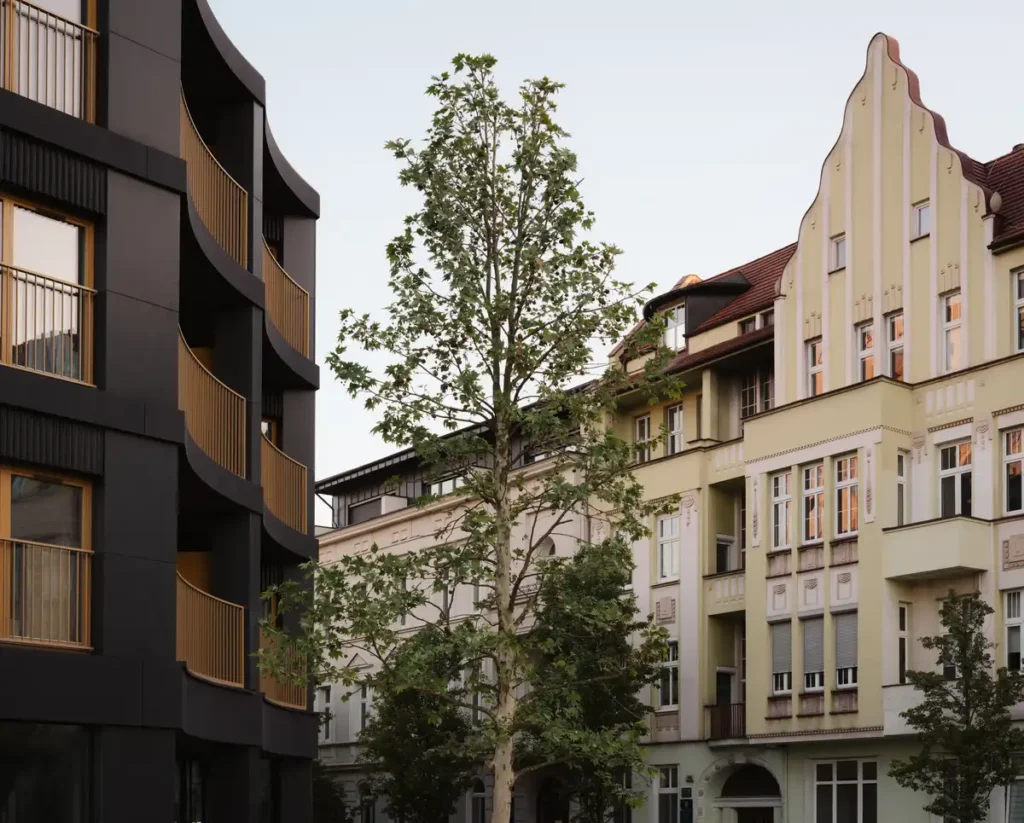
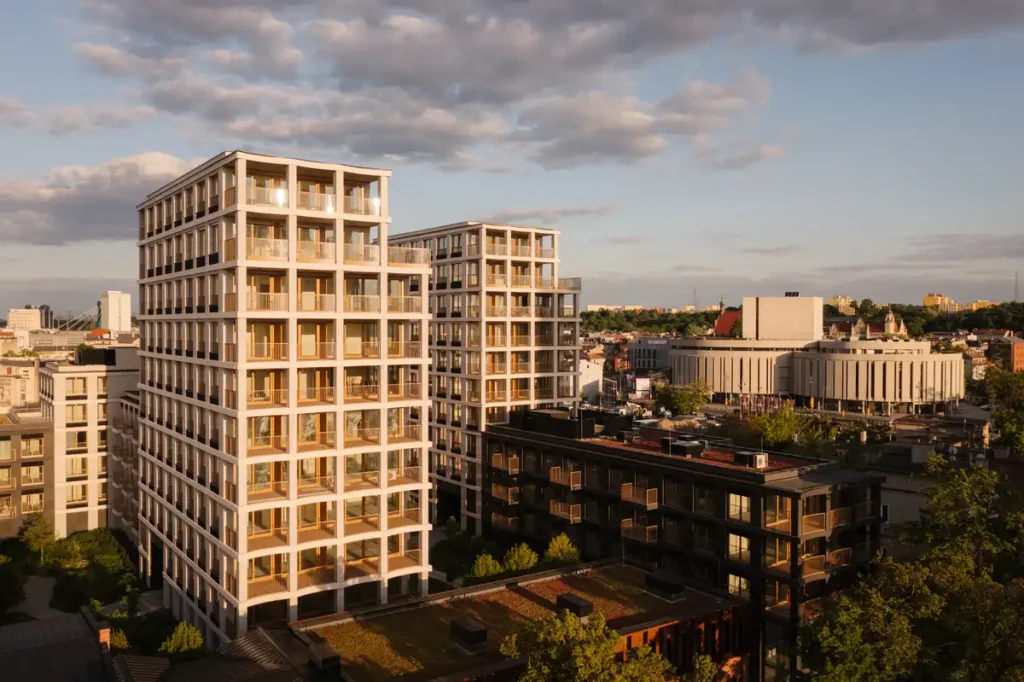
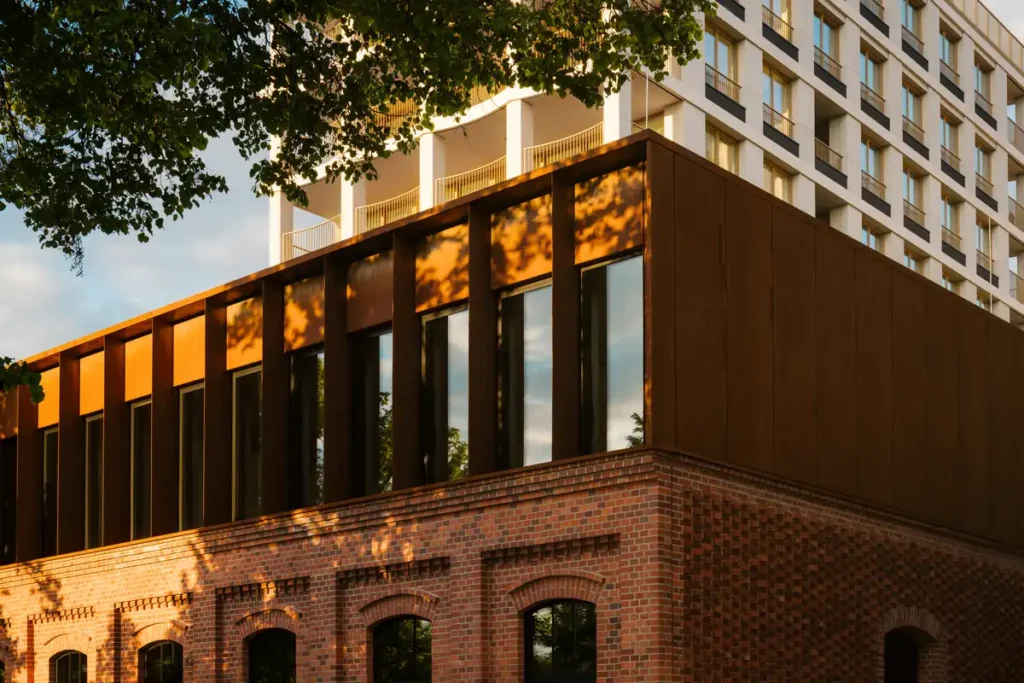
New Port sits on a former industrial site that once housed a 19th century shipbuilding factory. The masterplan preserves three industrial buildings and one historic tenement, all restored under the supervision of heritage conservation experts. The layout forms four inner-city blocks intersected by a north south urban avenue and an east west pedestrian passage, lined on both sides with public functions. At the heart of this restructured fabric lies New Port architecture, featuring four 11-storey towers that add vertical emphasis two of which have been completed in this phase. Together with the Nordic Haven building across the river, these towers frame a new urban gateway. This approach reflects broader strategies in cities and urban planning for the rehabilitation of former industrial sites.
Materials & Construction
New buildings rise four storeys, with recessed upper floors. Façades are minimal, defined by rhythmic loggia grids and wave like concrete cornices. Light grey sandstone panels, black granite, colored architectural concrete, and timber window frames are used throughout. River-facing apartments include three meter terraces and full height glazing. Adaptive reuse techniques follow models in ArchUp’s archive. Material choices align with standards in building materials. Ground floors host retail or services to activate street life.
Urban Impact and Public Space
Around 20,000 plantings fill courtyards, pocket squares, and the riverside promenade. The central avenue functions as a traditional commercial street. The name New Port recalls the site’s shipyard past without romanticizing it. The project contributes to debates in cities about spatial equity and post-industrial reuse, especially in mid-sized Polish towns.

Future Phases and Open Questions
This phase includes seven buildings with 177 apartments, retail, and office space. Three more phases are planned. No preserved buildings will be demolished. All work follows conservation rules. As construction continues, the project will test whether such models support long term social diversity. Can regenerated industrial zones become inclusive urban quarters or do they accelerate gentrification?
Architectural Snapshot: New Port by BBGK Architekci layers historic fabric, mid rise housing, and tower accents into a post-industrial riverside quarter in Bydgoszcz.
ArchUp Editorial Insight
The article frames New Port in Bydgoszcz as a measured post industrial redevelopment blending historic fabric with contemporary housing blocks. At the heart of this transformation lies New Port architecture, which conveys material details and urban layout with clarity yet avoids confronting deeper questions about social inclusivity or the commodification of industrial memory. Credit is due for its neutral tone and emphasis on public space integration. Yet the narrative remains confined to the language of urban renewal, sidestepping whether such projects genuinely re-embed place or merely repackage it for a curated demographic.


