

A Seoul Project Redefining the Connection Between Sound and Nature in Urban Space

From a Forgotten Land to a Vibrant Cultural Destination
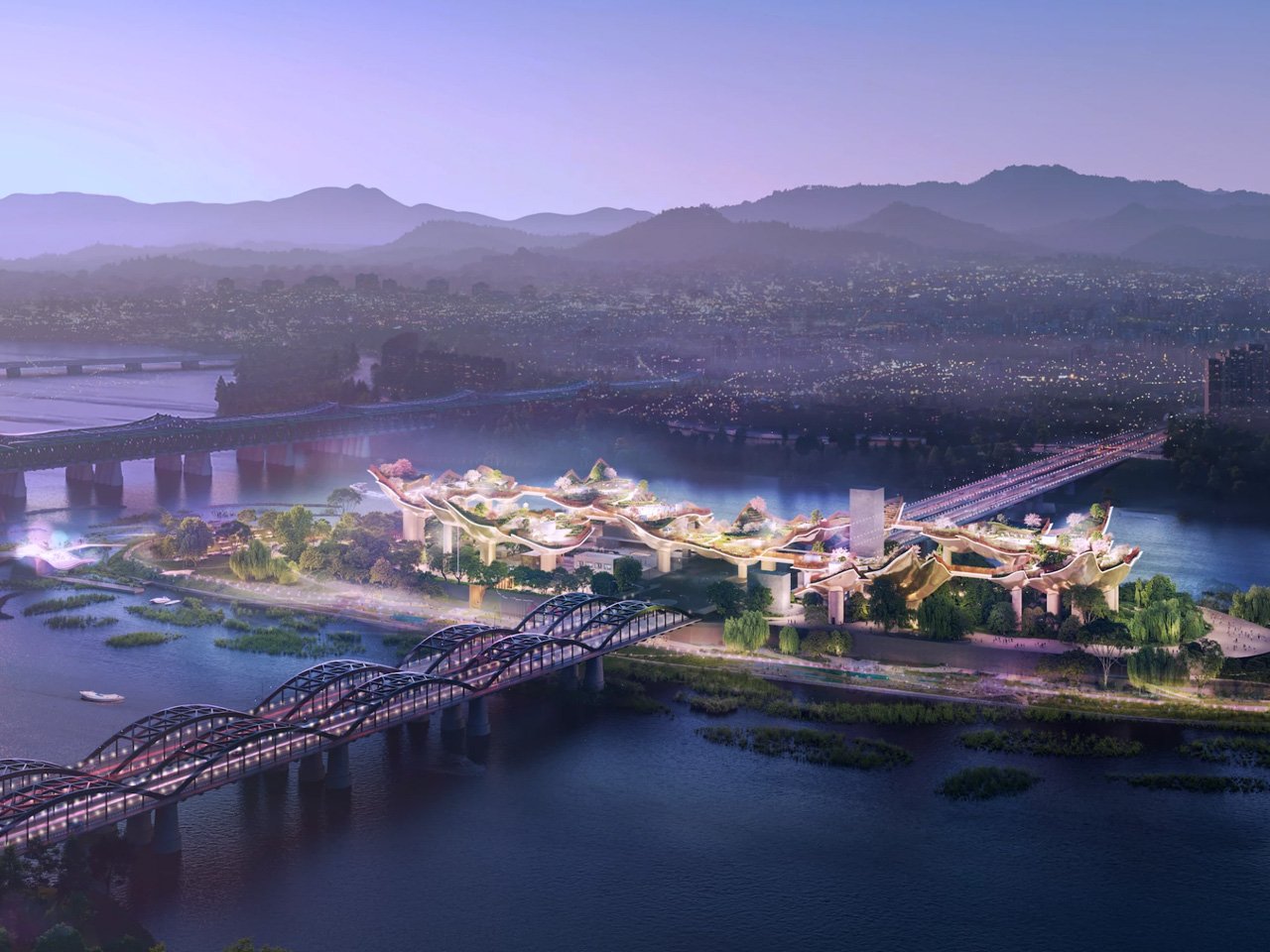
On the banks of the Han River in Seoul, South Korea, Nodeul Island stands as a living example of how architectural redesign can breathe life into forgotten spaces.
For many years, the island remained a neglected urban area, until an ambitious project began aiming to transform it into a cultural hub that intertwines nature, art, and community.
The Beginning of Transformation: Thomas Heatherwick’s Vision
Under the guidance of renowned British architect Thomas Heatherwick, known for his distinctive touch on global projects, the idea of revitalizing the island emerged, combining architectural innovation with human-centered experiences.
This vision came after Heatherwick won a highly competitive international design competition, giving the project global momentum and reflecting the growing interest in projects that connect design with cultural identity.
The Birth of the “Soundscape” Project
In October 2025, Heatherwick Studio officially launched the Soundscape project, expected to become a landmark turning point in Korea’s cultural scene.
The project aims to create an interactive space merging sound, nature, and art, turning the island into a destination for human connection in an age marked by increasing digital isolation.
From a Waste Storage Site to a Stunning Masterpiece
An Unexpected Beginning
The roots of Nodeul Island date back to 1917, when it was created by the Japanese colonial administration for industrial purposes. For decades, this artificial island was nothing more than a waste storage site, making it a symbol of urban neglect and earning it the nickname “the forgotten island” in Seoul.
Long Isolation and Gradual Forgetting
Closed to the public for many years, the island became an abandoned space outside the city’s collective awareness. Over time, it seemed almost impossible to imagine that this silent place could reclaim its role in Seoul’s urban fabric.
The Launch of Transformation
This perception changed with Seoul city government’s initiative to revive the island. The government launched an international competition to design a new project that would offer an innovative architectural vision connecting nature and culture.
The Decisive Moment
After a full year of exhibitions, consultations, and public voting, the Soundscape project proposed by Heatherwick Studio won in May 2024, marking the beginning of a new phase defined by creativity and the revival of spatial memory.
A Design Inspired by Sound and Mountains
Harmony Between Nature and Art
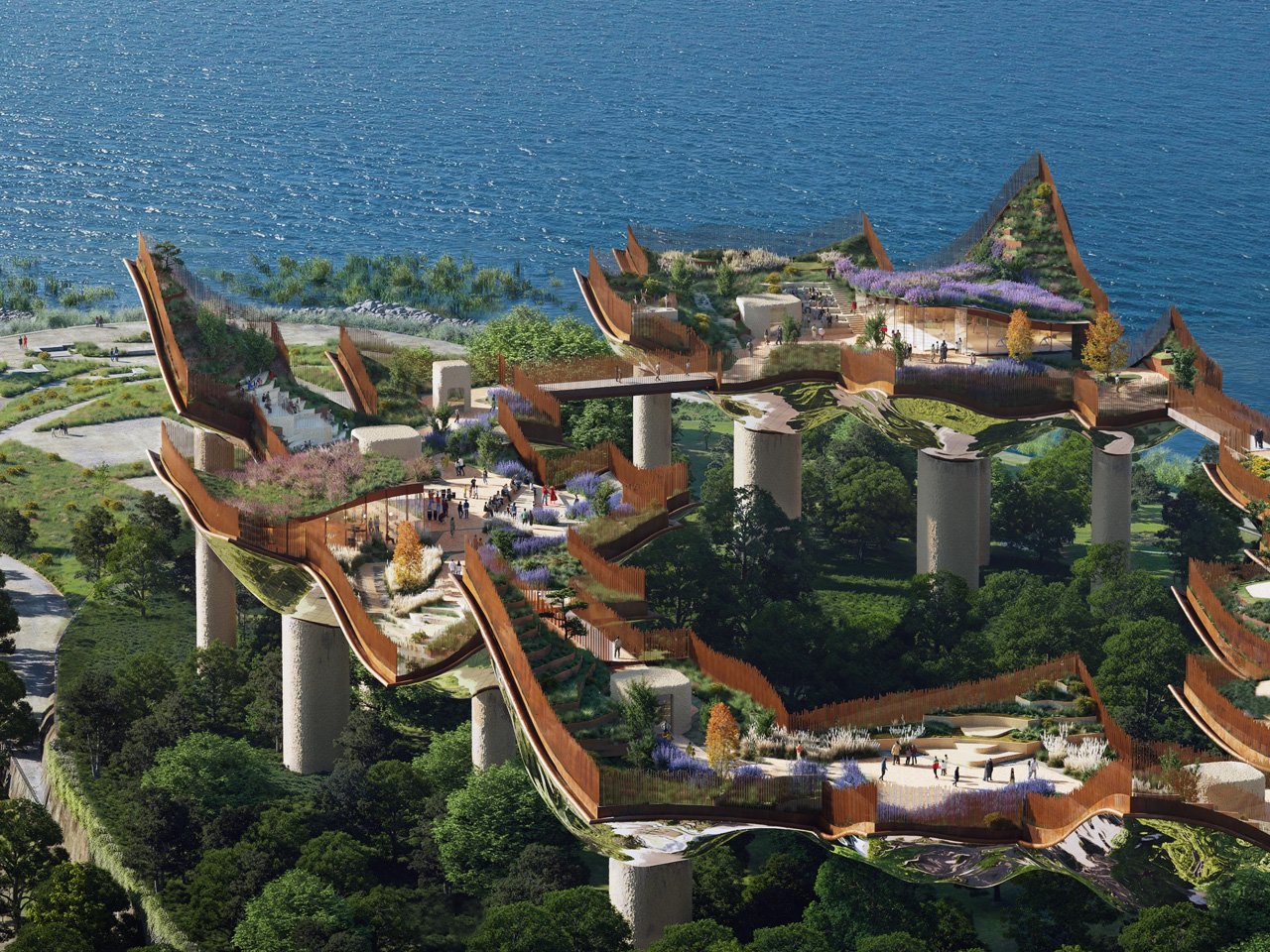
The winning design of the Soundscape project is distinguished by its unique integration of Seoul’s geographical nature with the musical character of the site. The core concept draws inspiration from the city’s mountainous terrain and the wave-like forms of sound, producing a sensory experience that merges visual scenery with auditory rhythm.
The Language of Form and Meaning
Architect Thomas Heatherwick describes the project as “a journey through multi-level dramatic spaces”, where architectural volumes twist and bend like sound waves moving through the air. This flowing movement not only conveys visual beauty but also serves as a visual embodiment of sound itself.
Floating Islands and a Skywalk
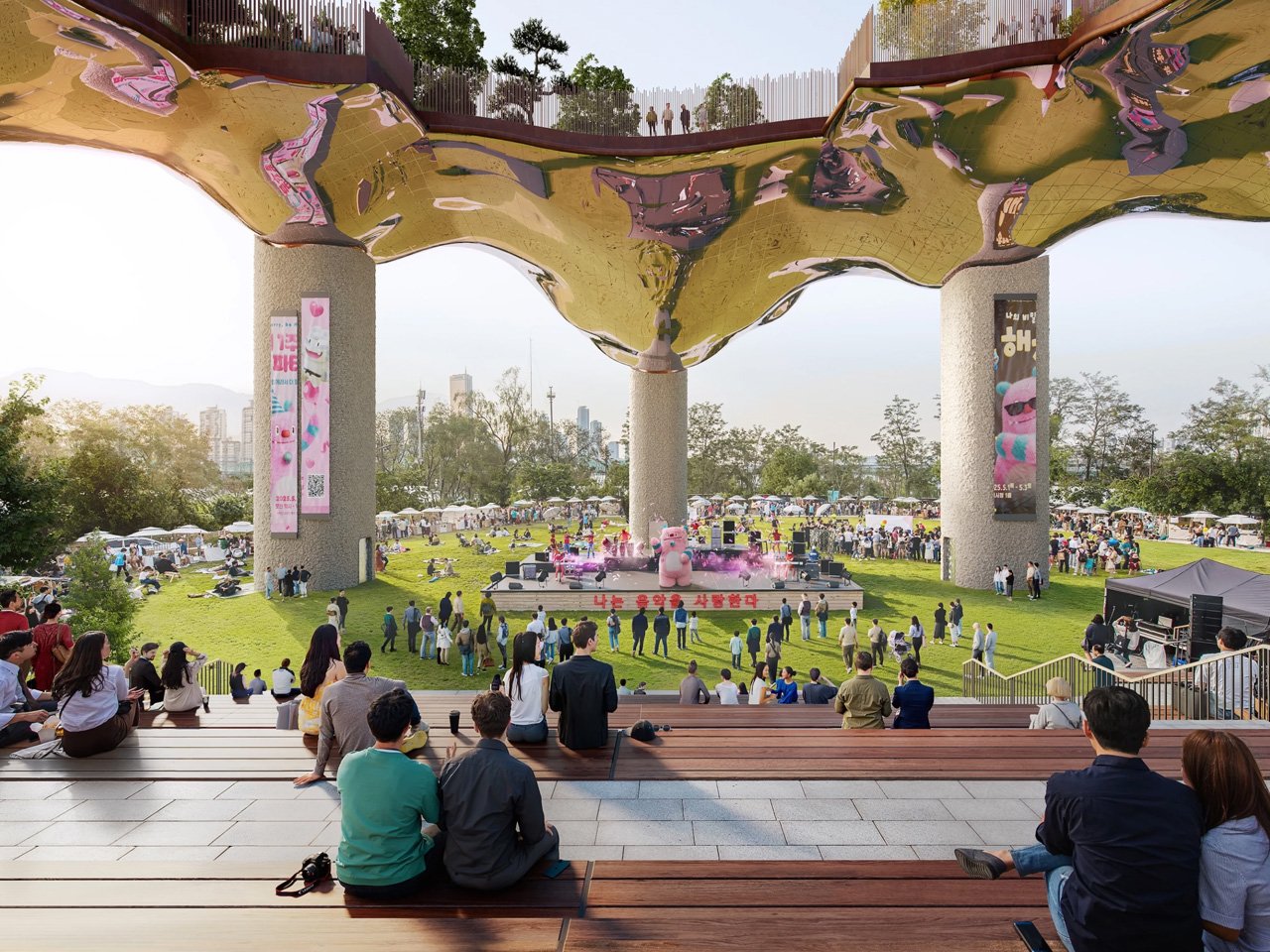
The design features a series of floating islands suspended in the air, functioning as elevated rest points offering visitors panoramic views of Seoul’s skyline.
These islands are connected by a 1.2-kilometer-long skywalk, providing a walking experience that combines visual drama with spatial harmony, creating a scene that feels like music materialized in space.
A Cultural Destination for the Digital Age
Humans Facing Digital Isolation
In an era of increasing reliance on technology and declining real-world social connections, the Soundscape project offers an architectural vision that addresses this challenge through a return to direct human experience.
Thomas Heatherwick believes that the solution to loneliness in the digital age is not more screens, but rather tangible spaces that bring people together through music and nature.
Spaces That Merge Creativity and Experience
Within this project, Nodeul Island has been transformed into a comprehensive cultural hub featuring a wide range of artistic facilities, including:
- Professional recording studios
- Small concert halls
- A waterfront amphitheater
- A dedicated K-pop experience center
These facilities go beyond entertainment, aiming to create an environment that encourages interaction and collaborative artistic production.
A Multi-Sensory Sound Experience
The project transcends traditional cultural centers through unique elements such as an anechoic chamber for sound experimentation, a music café, and even a karaoke bar, making the experience more akin to a sensory journey that blends listening with active participation.
Balancing Humans and Nature
Alongside its artistic character, the project emphasizes environmental sustainability. Its design incorporates native plants and animals and contributes to the enhancement of natural systems along the Han River’s banks.
Thus, Soundscape becomes more than just a cultural destination; it is an effort to restore balance between humans and their environment in a rapidly digitalizing world.
✦ ArchUp Editorial Insight
The Soundscape project demonstrates the potential to repurpose a neglected space into a culturally immersive environment, representing a significant conceptual step in connecting architecture with music and nature.
However, many elements of the project remain subject to practical and operational challenges. The engineering complexity of the floating islands and the skywalk may pose long-term maintenance difficulties, while the high costs of operating the diverse facilities could limit accessibility for a broader audience.
Additionally, the project’s long-term environmental and social impact remains unclear, particularly regarding sustainable interaction with nature and the balance between cultural activity and local life.
Prepared by the ArchUp Editorial Team
Don’t miss the chance to explore more from Architecture, Projects, and Design on the ArchUp website.


