Princeton University Art Museum Opens in a Design by a Controversial Architect Accused of Sexual Misconduct

A New Cultural Landmark in the Heart of New Jersey
Princeton University, located in the state of New Jersey, USA, has opened its new Art Museum a building that balances academic heritage with contemporary creativity. Despite the controversy surrounding its designer, the project stands as a remarkable architectural addition to the university’s campus.

Architecture that Celebrates Light and Shadow
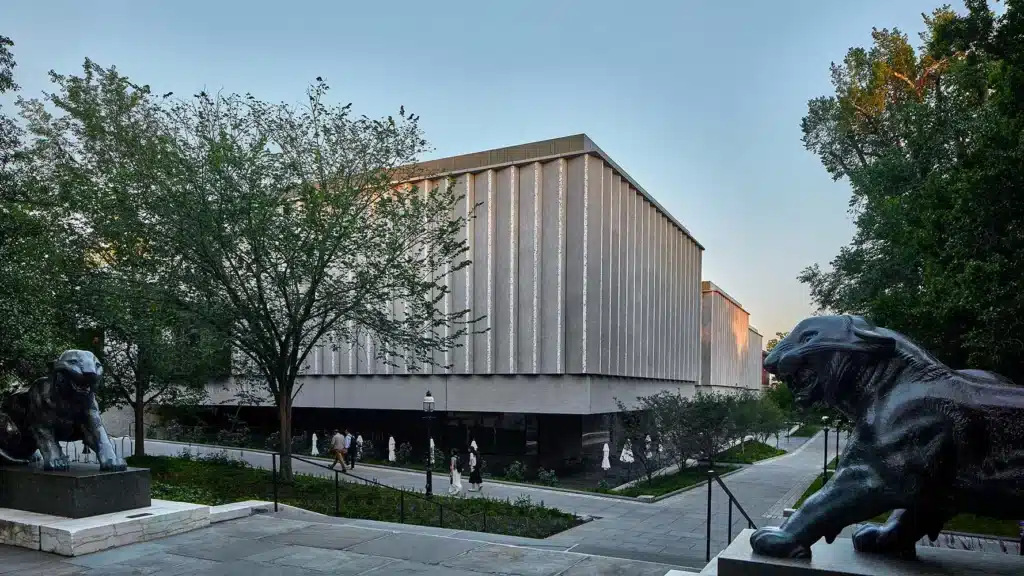
The museum appears as a layered composition of solid stone volumes and transparent glass links. The design creates a dynamic dialogue between light and shadow. It was conceived as an open space for interaction between art and the university community. Indoor galleries connect seamlessly with outdoor courtyards, blending movement and openness across the site.

Symbolism and Visual Harmony
At the museum’s entrance, visitors are welcomed by a spacious plaza anchored by the iconic bronze tiger sculptures, long recognized as a symbol of Princeton’s identity. This gesture bridges the university’s historic legacy with its cultural future. Large glass façades offer panoramic views of the campus, allowing visitors to experience a visual interplay between architecture and nature.

Flexible and Evolving Interior Spaces
Inside, the museum’s layout allows flexible use. Designers made the exhibition halls easy to reconfigure for different shows and events. This approach turns the building into a living, adaptable structure that evolves with time and audience interests. The material palette blends warmth and solidity, reinforcing the building’s presence as an architectural expression of balance between beauty and function.
Strengthening Princeton’s Cultural Identity
With this opening, Princeton enriches its campus with a new cultural landmark that reaffirms its position as a center of thought and creativity. The building transforms architecture into a language of connection between the university, its community, and the wider world.
✦ ArchUp Editorial Insight
This article examines the new Princeton University Art Museum as a spatial narrative linking academic heritage with cultural identity through compositions of stone solidity and glass transparency. The imagery reveals refined gradations of light and shadow that enhance visual openness and contextual harmony. While the material clarity is evident, the design prompts questions about the depth of the interior experience and its adaptability to evolving museum functions. The dialogue between massing and public zones could be more conceptually unified. Nevertheless, the project stands as an architectural statement redefining the intersection of art and education within the campus landscape.
Explore the Latest Architecture Exhibitions & Conferences
ArchUp offers daily updates on top global architectural exhibitions, design conferences, and professional art and design forums.
Follow key architecture competitions, check official results, and stay informed through the latest architectural news worldwide.
ArchUp is your encyclopedic hub for discovering events and design-driven opportunities across the globe.