The new Plum Village architectural project for Plum Village Buddhist Monastery

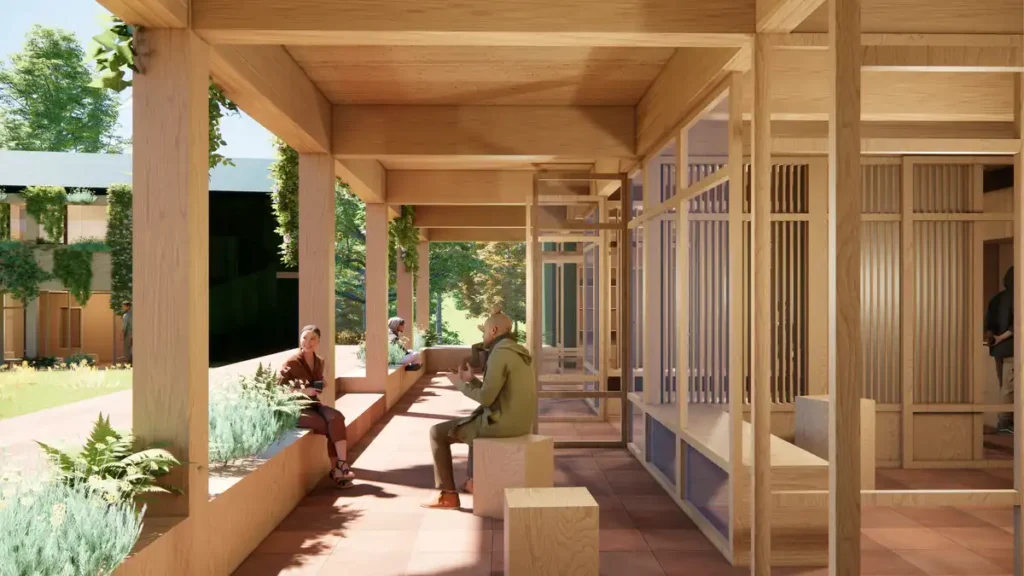
The Plum Village architectural intervention in southern Dordogne, France, has received construction approval for its first collaboration with MVRDV. This initiative responds to rising visitor numbers while honoring mindfulness and ecological care. It includes a new nunnery, renovated bookshop, and four guest houses across the Upper and Lower Hamlets. Developed as a non profit effort through deep dialogue with monastic residents, the design rethinks spiritual infrastructure in line with Engaged Buddhism. The approach embodies a contemplative response to the climate crisis, using low-impact building materials and car free cities principles even in rural settings while adhering to strict construction guidelines. The project’s evolution will be followed as part of global news on faith based buildings, and its strategies contribute to broader discourse on sustainability in contemporary architectural design.
Design Concept
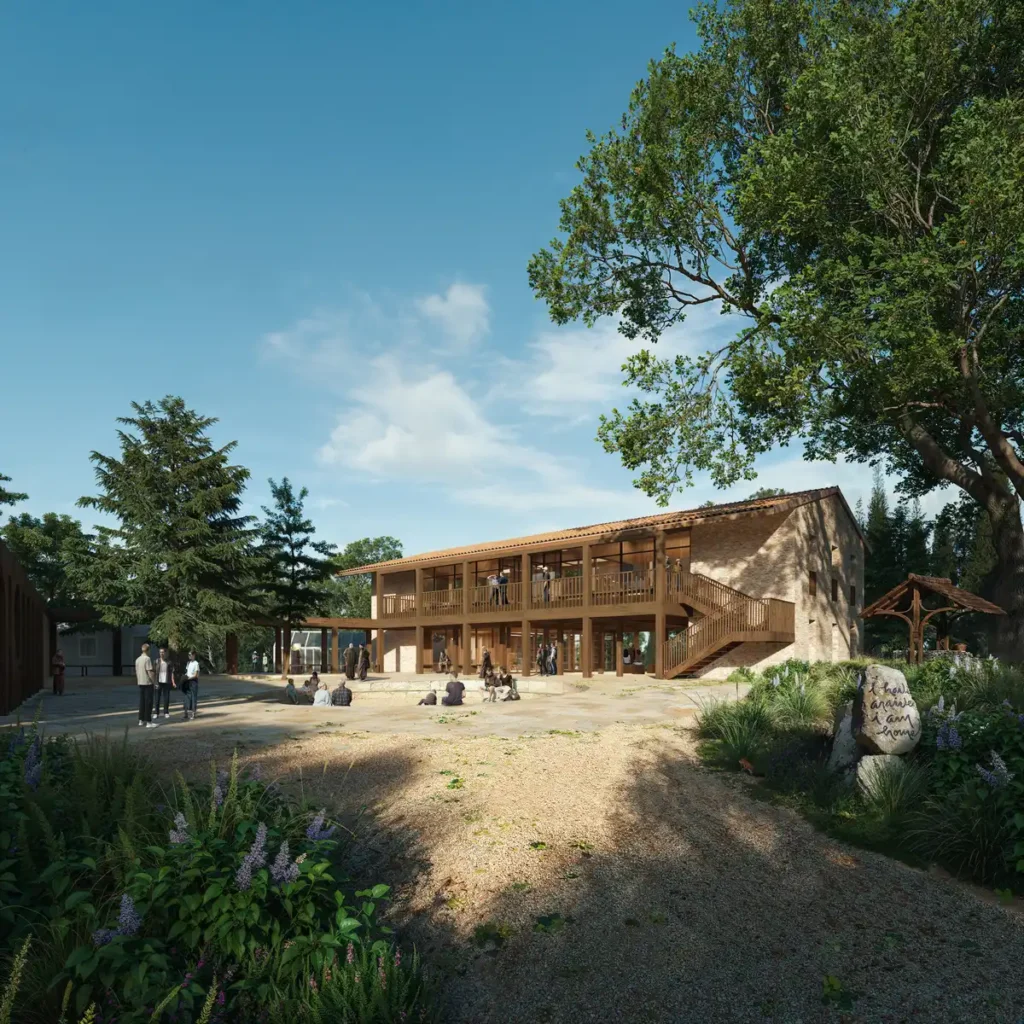
MVRDV began immersive workshops at the monastery in 2023. Their masterplans treat each hamlet as a responsive organism. The Upper Hamlet plan approved by Thénac’s council creates car-free zones and clearer arrival paths. The Lower Hamlet adds a courtyard nunnery for 76 residents and a new dining hall. These moves prioritize calm over expansion, aligning with core principles of architectural design.
Materials & Construction
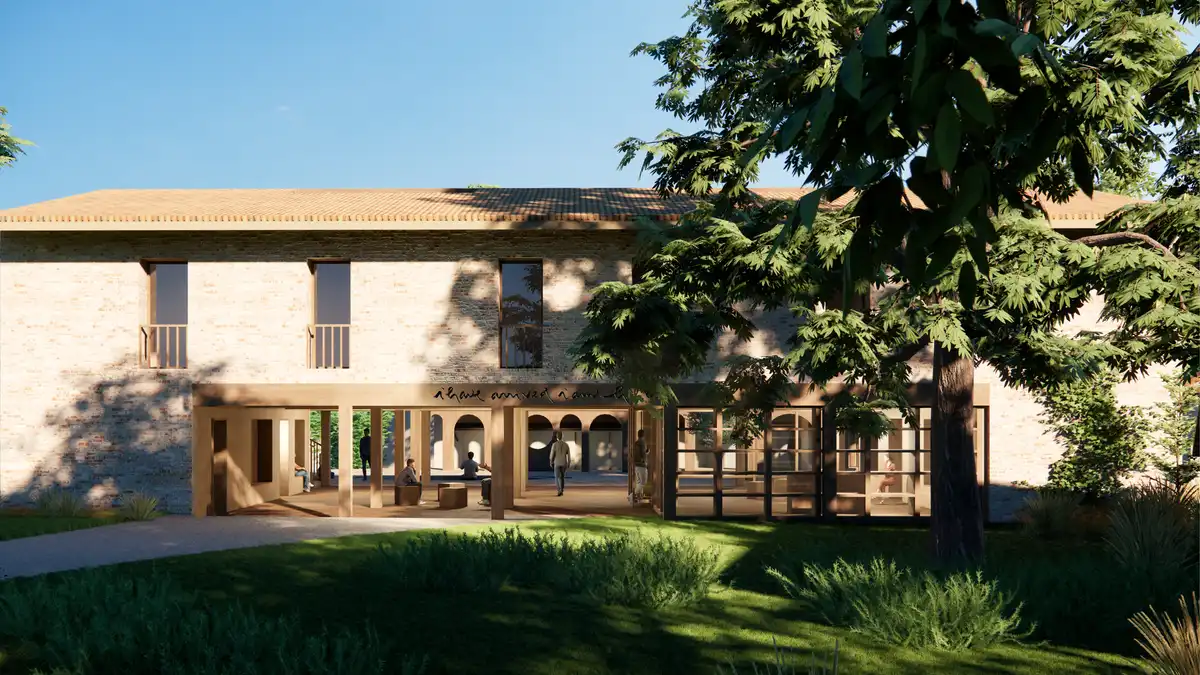
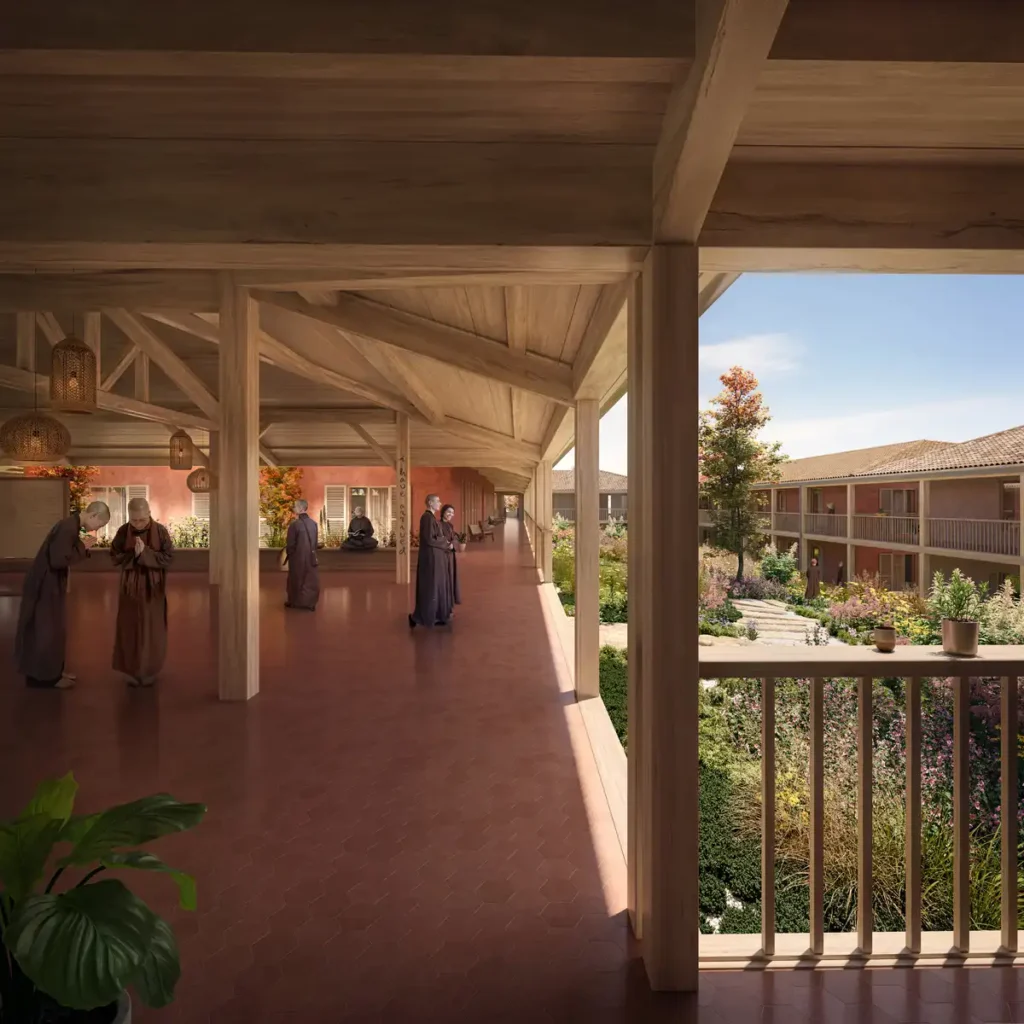
The Plum Village architectural intervention employs prefabricated timber frames with straw insulation in the new nunnery to reduce embodied carbon. Guest houses adopt wood structures and U shaped layouts organized around communal areas, reinforcing collective living. The historic stone barn housing the bookshop retains its original shell but receives a covered terrace and modular wooden shelving a gesture of respectful reuse. These decisions reflect a deliberate commitment to low-impact building materials, selected in close coordination with Bordeaux-based co-architect MoonWalkLocal and engineering consultants to meet rural French construction regulations while aligning with the monastery’s ecological ethos.
Sustainability
Solar panels appear in both masterplans. Landscaping includes bird habitats to naturally control mosquitoes. Renovation is favored over new builds, and circular material flows are standard. These strategies support the ethics of sustainability, where ecological action mirrors spiritual practice.
Urban and Community Impact
Though rural, the site hosts up to 800 retreatants in peak seasons. Current infrastructure strains under this load. The new layout reduces congestion and restores silence. This reveals how even remote sites need thoughtful spatial planning a concern often tied to cities. The evolution of this site will be covered in global news.
Can this balance of growth and restraint become a model for other contemplative communities?
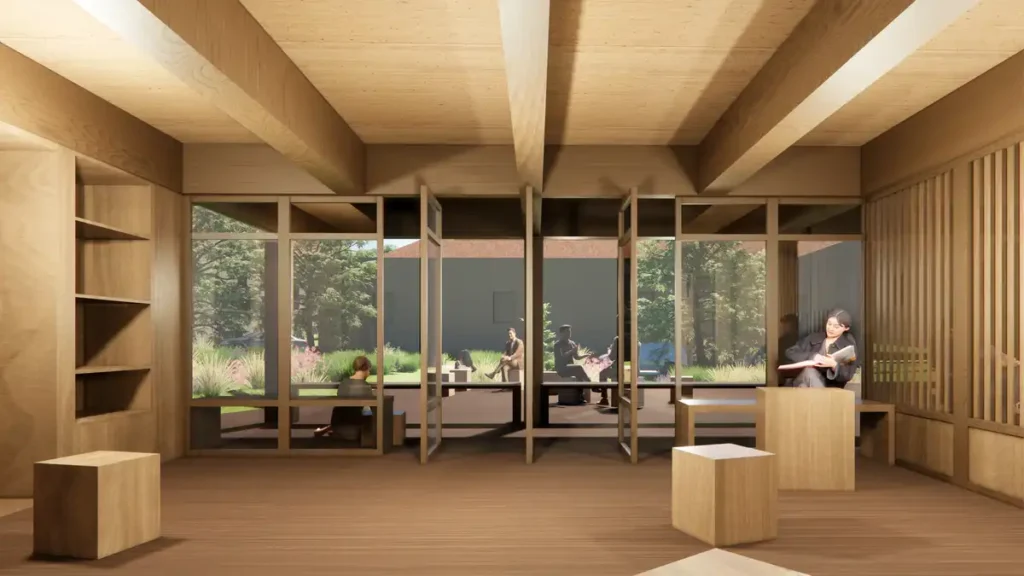
Architectural Snapshot: Plum Village Monastery in France receives approval to construct a new nunnery and guest houses using timber and straw, in a project merging mindfulness and sustainability.
✦ ArchUp Editorial Insight
The approval of MVRDV’s interventions at Plum Village marks a rare convergence of contemplative ethics and contemporary architectural practice. The project’s narrative crafted through immersive workshops and bio based materiality positions renovation as resistance to extractive development. At the heart of this shift lies the Plum Village architectural proposition: a design language that refuses spectacle yet engages global expertise. Yet its dependence on a globally branded firm risks aestheticizing monastic humility into architectural theater. Still, the deliberate avoidance of expansion in favor of spatial reorganization offers a subtle critique of growth-driven paradigms.