

Retirement Living in Shanghai An Architectural Experience for the Third Age

In one of Shanghai’s neighborhoods, a new architectural project redefines post-retirement living. It transforms architecture from a mere shelter into a human centered interactive space. Here, comfort, social interaction, and psychological well being come together. The project treats aging not as a phase of isolation but as a stage that can stay active and connected to the urban fabric. It moves away from the conventional constraints of traditional senior housing.

Rethinking Retirement Living
The conceptual core of the project emphasizes that people aged 65 and above should not live in isolation. Instead, they are provided with an environment that allows daily participation in communal life. The buildings are designed not only for accommodation but also to encourage social activity and informal interaction. The architectural units are arranged to enable smooth circulation between open and enclosed spaces, creating continuous movement that strengthens the connection between interior and exterior areas.
The project consists of 22 interconnected volumes, linked by both elevated and ground-level pathways. This forms a flexible architectural network that supports mobility and interaction while maintaining the identity and independence of each unit. The layout reflects the guiding principle of the project: integration over isolation, creating an urban environment that encourages multigenerational participation.

Architectural Approach: Light, Movement, and Openness
The masterplan follows an inside out principle. Public spaces extend toward the city, while private zones reach into the heart of the complex. Elevated corridors connect different clusters, providing walking paths. Internal courtyards form small gathering areas, promoting physical activity and spontaneous social interaction.
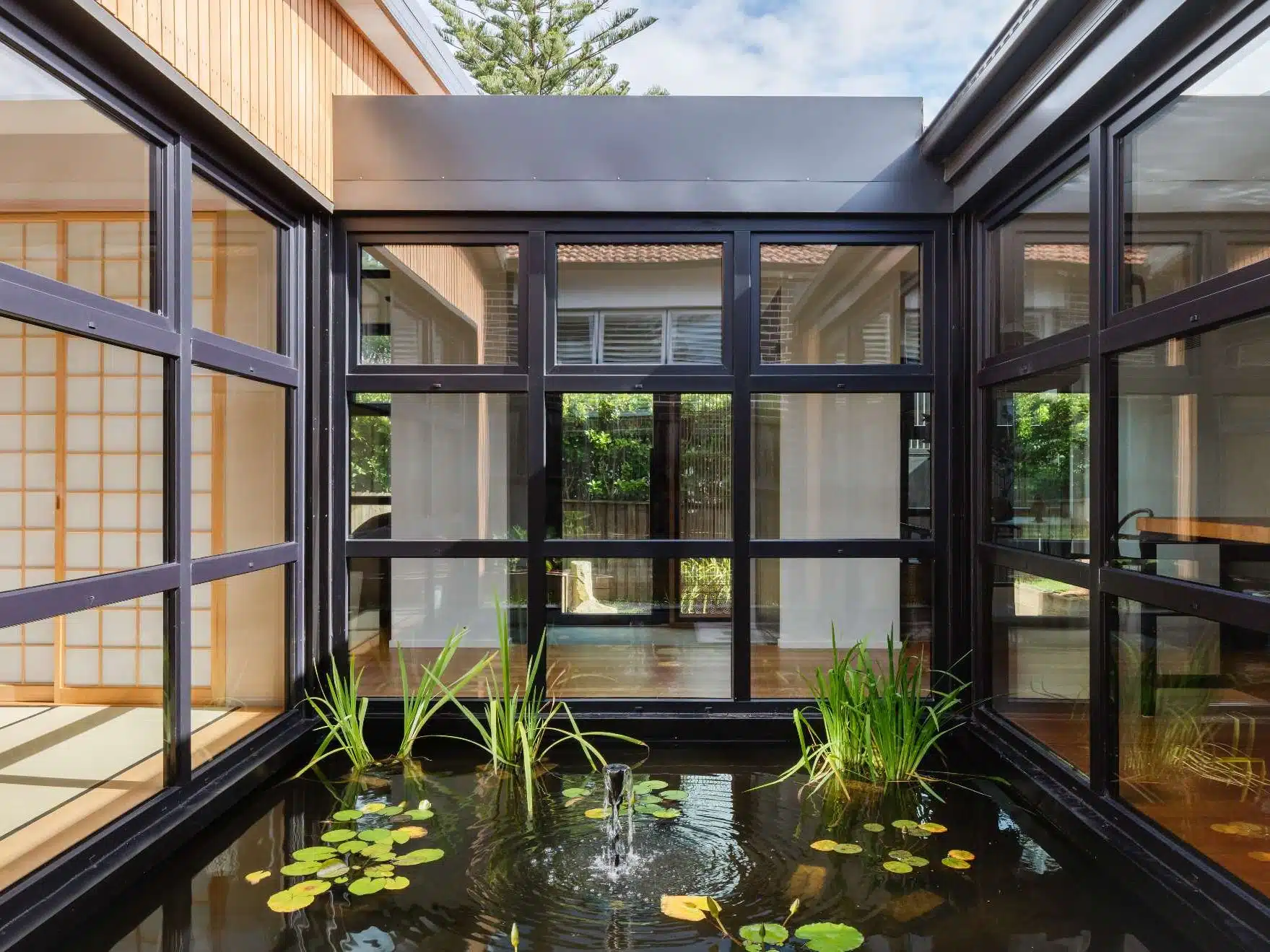
Natural light plays a key role in the spatial experience. It penetrates deep into the buildings, creating a sense of openness and a visual connection with the surrounding environment. The balance between transparent facades and natural materials serves a dual purpose: enhancing psychological comfort and maintaining sensory continuity throughout the space.
Human Centered Design for Mobility and Flexibility
The project places strong emphasis on everyday mobility, with circulation paths designed as elevated corridors 2.8 meters wide and ramps with gentle 1:12 slopes, ensuring accessibility for people of all ages. Seating areas are placed every 15 meters, creating comfortable resting points along the route.
The lighting system operates at a 3500K color temperature with automatic brightness control, supported by motion sensors in corridors and bathrooms to enhance both safety and energy efficiency.
Non-slip flooring with a friction coefficient greater than 0.6, combined with dual handrails at 70 and 90 cm, ensures a secure and inclusive environment.
Architectural flexibility defines the spatial layout, with nearly 40% of the spaces reconfigurable, allowing movable walls to adapt interior functions and layouts according to evolving user needs.

Flexible Spaces as a Tool for Adaptation
A defining feature of the project is its flexible spatial design. Open halls, wide corridors, and small studio units are designed to accommodate evolving functions such as workshops, temporary exhibitions, or small community activities. This transforms the architecture from a rigid structure into a living system responsive to its residents’ needs.
Covered courtyards, balconies, and elevated glazed walkways are not only structural elements but also instruments to mediate the relationship between movement and social interaction, encouraging daily exploration and casual encounters among residents and visitors alike.

Social and Conceptual Dimensions
Moving away from the conventional closed retirement model is a fundamental philosophical shift.The project redefines aging within the urban context, positioning people aged 65 and above as active participants in city life rather than passive recipients of care.
The design is based on a core belief: architecture can be a medium for dignity and autonomy, not just a physical container. Walking paths, access to gardens, and interactive communal areas contribute to a sense of belonging and daily engagement, countering the monotony and isolation often associated with traditional senior housing.

Conclusion: Architecture as a Vehicle for Reimagining Aging
The Retirement Living in Shanghai project exemplifies an architectural approach that balances privacy and openness, stability and flexibility. It demonstrates how architecture can create environments that respect the third age, encourage movement and interaction, and redefine the relationship between human life and the built environment.
Here, architecture is not merely about constructing buildings but about shaping a lived, human centered experience, offering a model for future urban communities for people aged 65 and above in global cities.

Conclusion
The Retirement Living in Shanghai project represents an advanced architectural and human centered model that redefines post-retirement life. By integrating open spaces, flexible pathways, and internal courtyards, the project creates an environment that balances privacy and openness, comfort and social interaction. Here, architecture is not merely a structure but a means to enhance dignity, autonomy, and community integration, providing residents with a constantly renewed daily experience. The project offers a forward-looking vision for age-friendly urban planning, proving that the third age can be an active and vibrant phase within the urban fabric.
ArchUp provides an encyclopedic database featuring updates on major events and exhibitions, with regular updates to competitions and official results.
Project Summary Table
| Element | Details |
|---|---|
| Project Type | Urban retirement housing |
| Location | Residential neighborhood, Shanghai |
| Number of Units | 22 interconnected architectural volumes |
| Core Concept | Integrating seniors into the urban fabric instead of isolating them |
| Design Features | Elevated and ground-level pathways, internal courtyards, open movement routes |
| Conceptual Dimension | Enhancing autonomy, dignity, and social interaction |
| Architectural Message | Architecture as a vehicle for human-centered aging |
✦ ArchUp Editorial Insight
The Retirement Living in Shanghai project consists of 22 interconnected architectural volumes, linked by elevated and ground-level pathways that weave through courtyards and open spaces, encouraging movement and social interaction. Glass facades allow natural light to penetrate and provide visual connections to gardens and walkways, creating a sense of openness and connection with the surrounding environment. Critically, the design demonstrates clear flexibility in spatial use, though it could benefit from more shaded areas to mitigate peak sunlight. Nevertheless, the project successfully presents a holistic urban model that respects residents’ privacy while fostering dignity, engagement, and a sense of belonging.



ArchUp Editorial Management
The article provides a profound humanistic analysis of the design philosophy for the elderly, with a distinguished focus on social and psychological aspects. To enhance its archival value, we would like to add the following technical and design data:
We would like to add that:
· Circulation Paths: Overhead walkways with a width of 2.8 meters and slopes not exceeding 1:12, featuring rest seating at 15-meter intervals.
· Lighting System: 3500 Kelvin lighting with automatic intensity control, equipped with motion sensors in corridors and bathrooms.
· Materials: Non-slip flooring (friction coefficient >0.6), with handrails at two heights (70 cm and 90 cm).
· Flexibility: 40% of the spaces are reconfigurable, featuring movable walls that allow for adjustments based on changing needs.
Related Link:
Please review for a comparison of age-friendly housing projects:
[Designing Sustainable Aging Communities in Asian Cities]
https://archup.net/bamboo-housing-for-earthquake-resilience-in-myanmar/
تم التعديل