Revitalizing Urban Spaces: How Play and Participation Transform Cities

Cities have the unique opportunity to foster community engagement, creativity, and social interaction by integrating play and participatory design into urban planning. Playable spaces—ranging from interactive installations to dynamic playgrounds—encourage learning, physical activity, and emotional development, particularly for children. However, their benefits extend to all ages, creating vibrant, inclusive environments where people connect and collaborate.
This article explores how cities can harness playful interventions and participatory approaches to enhance public spaces, promote sustainability, and strengthen community bonds. We’ll examine real-world examples of innovative urban play installations and discuss best practices for designing engaging, accessible, and environmentally conscious spaces.
Why Play Matters in Urban Planning
1. Fostering Social, Cognitive, and Emotional Development
Play is not just for children—it’s a fundamental aspect of human development. In urban environments, well-designed play spaces help:
- Enhance social skills through cooperative play and interaction.
- Boost cognitive abilities by stimulating problem-solving and creativity.
- Support emotional well-being by reducing stress and encouraging joy.
2. Strengthening Community Engagement
When citizens actively participate in designing their public spaces, they develop a stronger sense of ownership and belonging. Participatory urban planning:
- Encourages collaboration between residents, designers, and policymakers.
- Ensures inclusivity by addressing diverse community needs.
- Promotes democratic decision-making in city development.
3. Enhancing Sustainability Through Playful Design
Many modern play installations incorporate eco-friendly materials and adaptive reuse concepts, such as:
- Recycled and locally sourced materials (e.g., rope, reclaimed wood).
- Low-impact structures that blend with natural surroundings.
- Multifunctional spaces that serve both recreational and cultural purposes.
Innovative Examples of Playable Urban Spaces
Cities worldwide are embracing playful interventions to revitalize public areas. Below are some standout projects that demonstrate the potential of creative urban design.
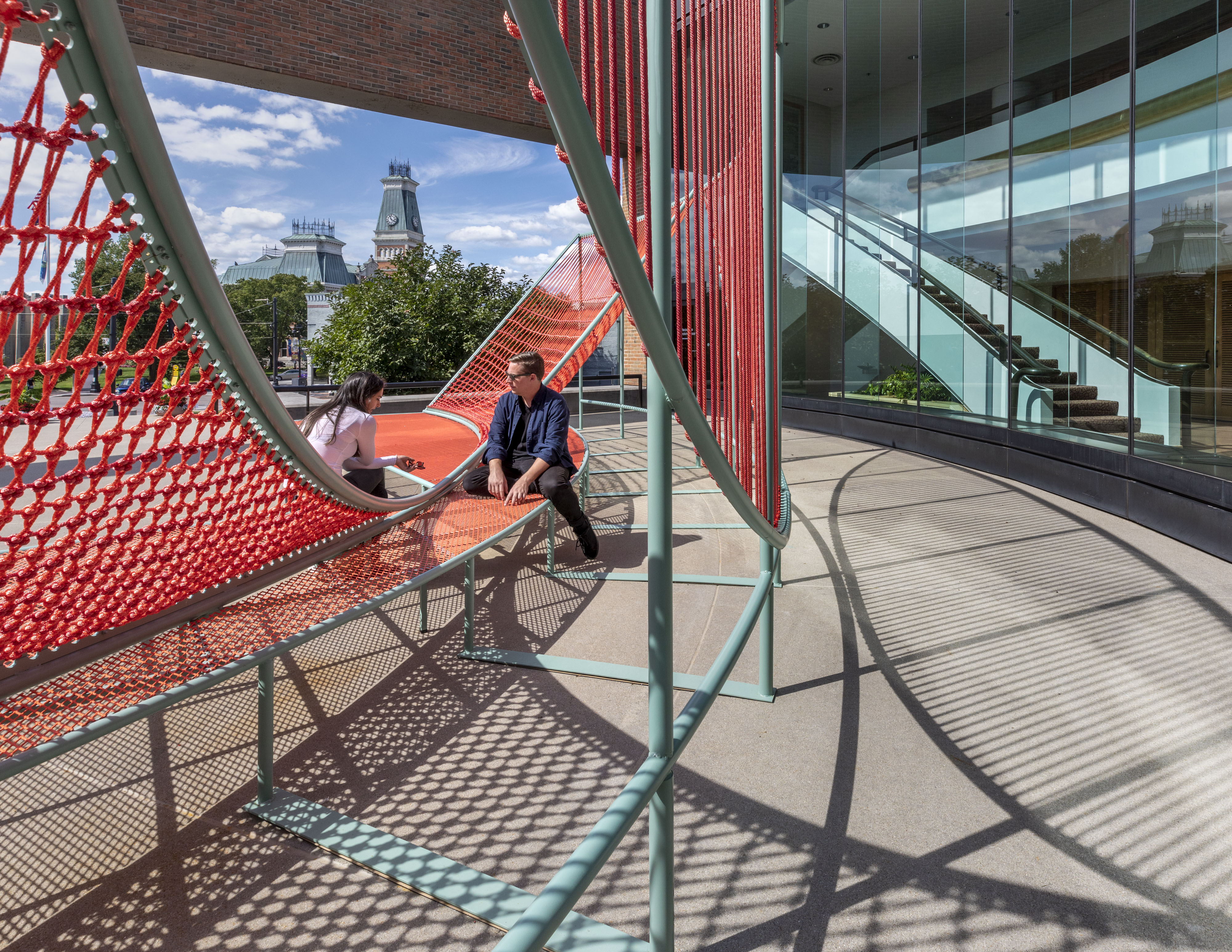
1. Soft Civic (2019) – Columbus, Ohio
- Location: Columbus City Hall
- Materials: Custom-fabricated structures with colorful woven surfaces
- Key Features:
- A site-specific architectural installation blending art and play.
- Hosted community events centered on democracy and leadership.
- Encouraged active participation through immersive, tactile experiences.
This project transformed a historic civic space into an interactive hub, proving that play can coexist with formal urban architecture.
2. Netscape – A Knitted Rope Pavilion
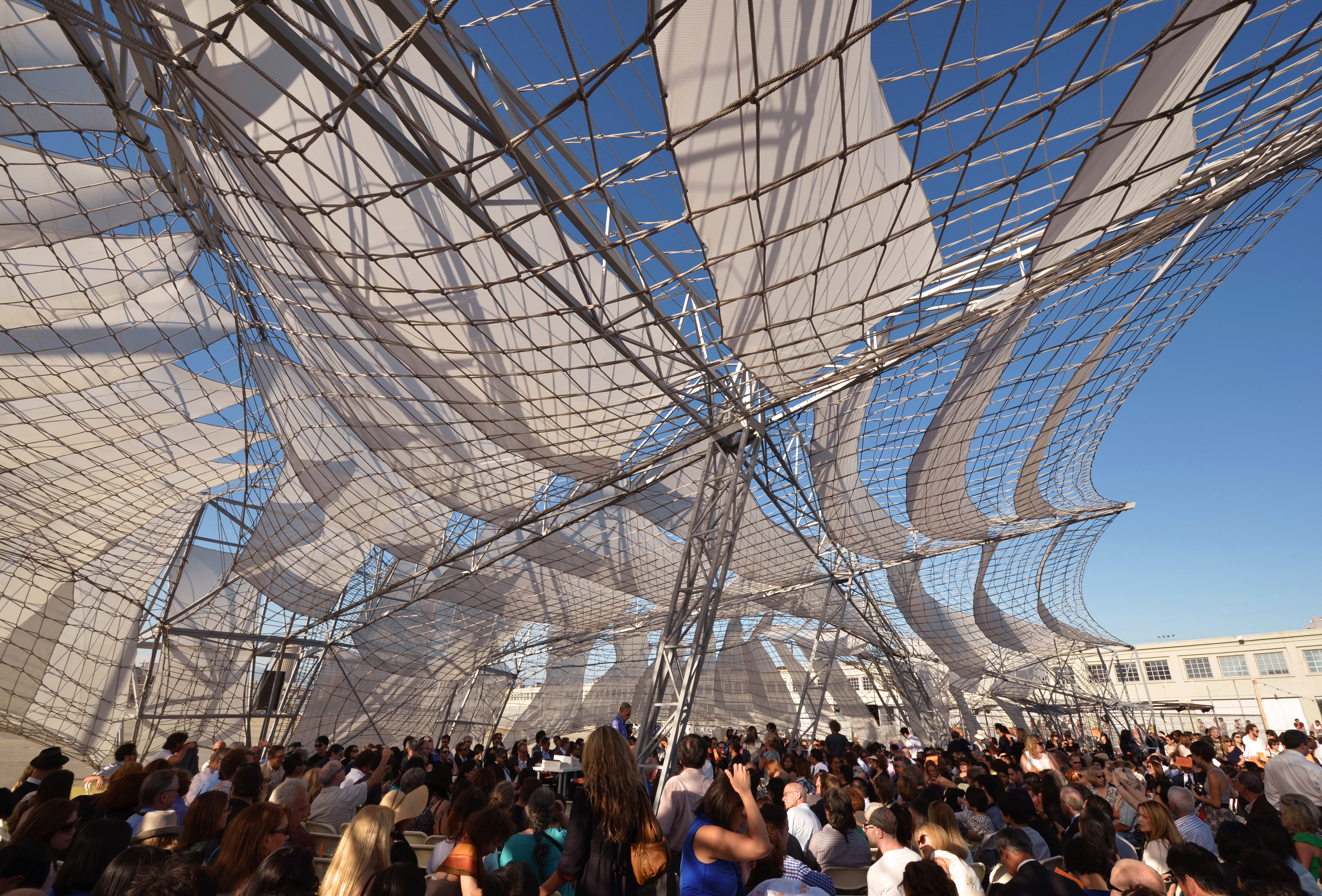
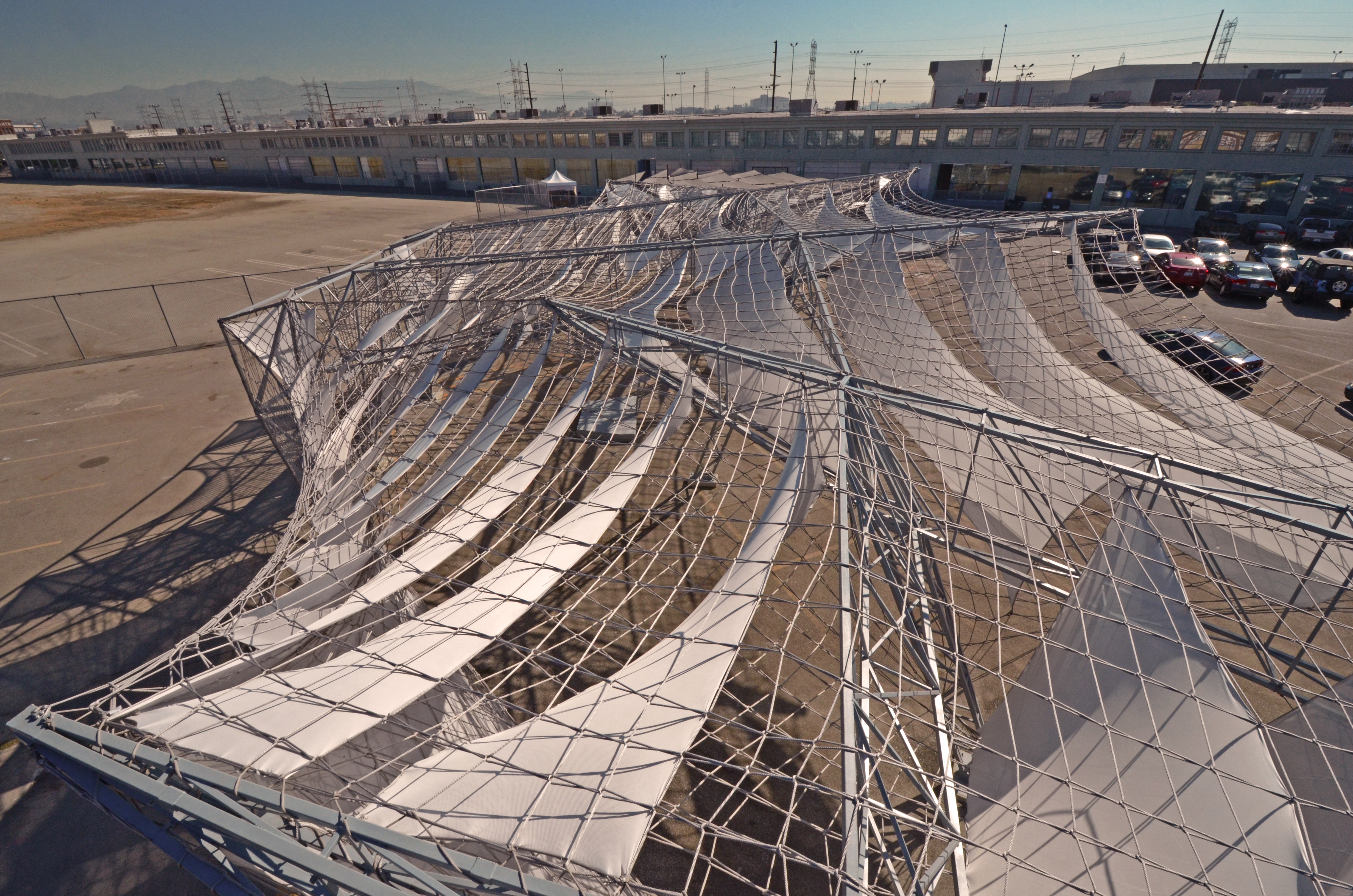
- Materials: 45,000 linear feet of knitted rope, steel, fabric shade louvers
- Key Features:
- A sail-like canopy creating a dynamic, shaded gathering space.
- Inspired by traditional knitting techniques, forming a 3D, billowing structure.
- Adapted to wind and light, offering an ever-changing visual experience.
Netscape exemplifies how unconventional materials can redefine public spaces while maintaining functionality and beauty.
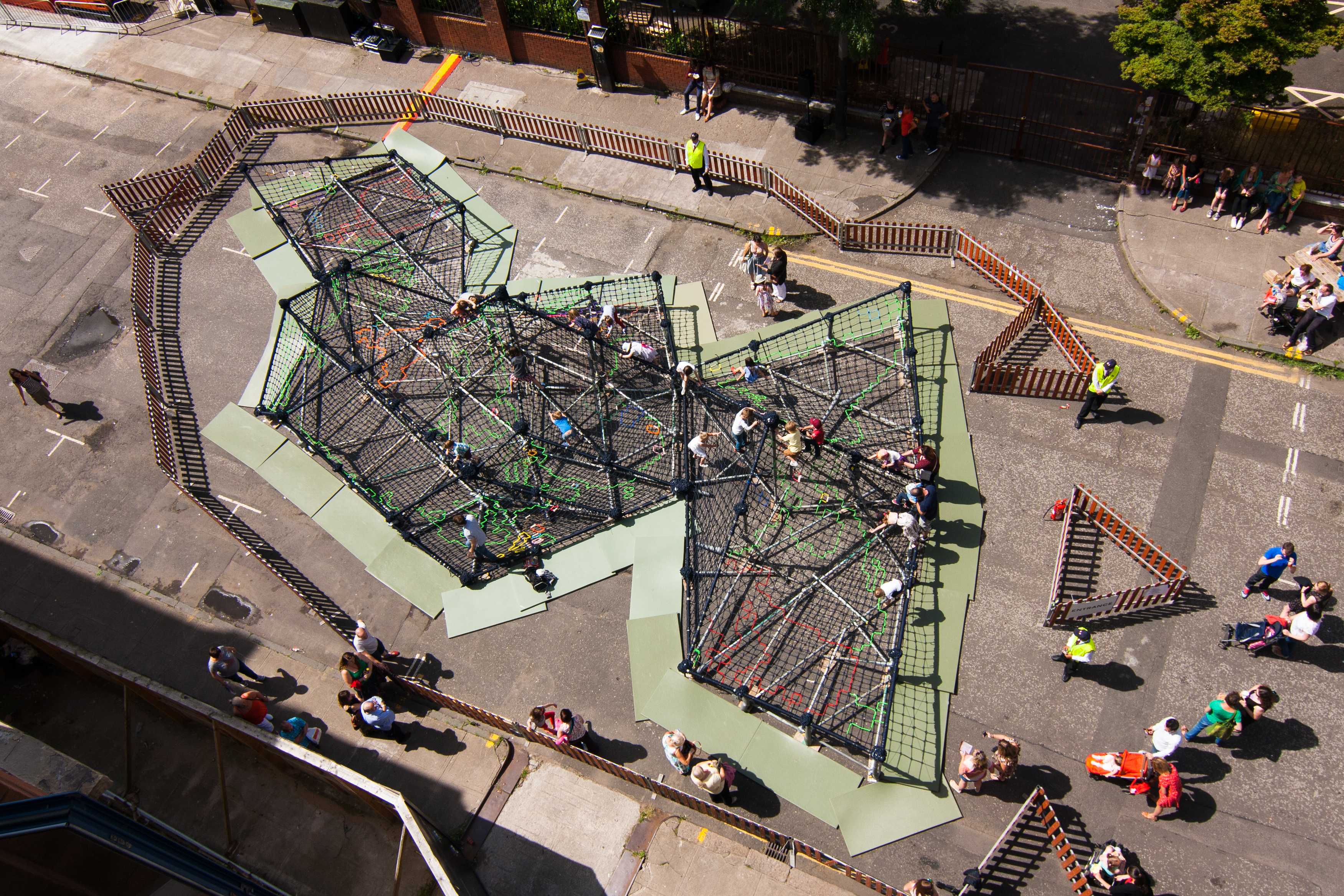
3. The Rope Factory (2013) – Glasgow, Scotland
- Location: Brunswick Street, Merchant City
- Materials: Multicolored ropes representing Commonwealth nations
- Key Features:
- A three-day interactive installation engaging local communities.
- Included storytelling and collaborative net-weaving activities.
- Celebrated cultural diversity through tactile, participatory art.
This project highlighted how temporary installations can leave lasting social impacts by fostering unity and creativity.
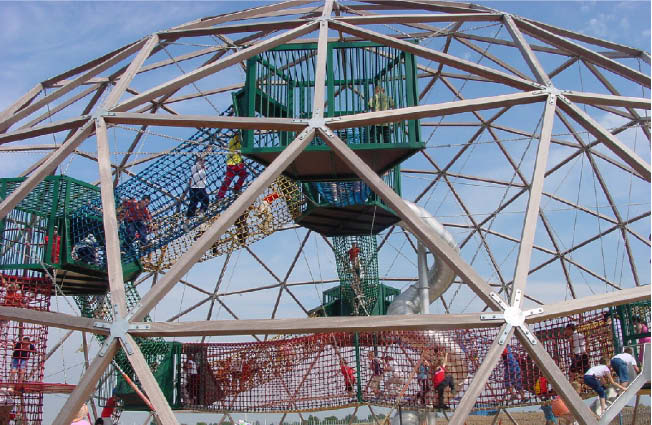
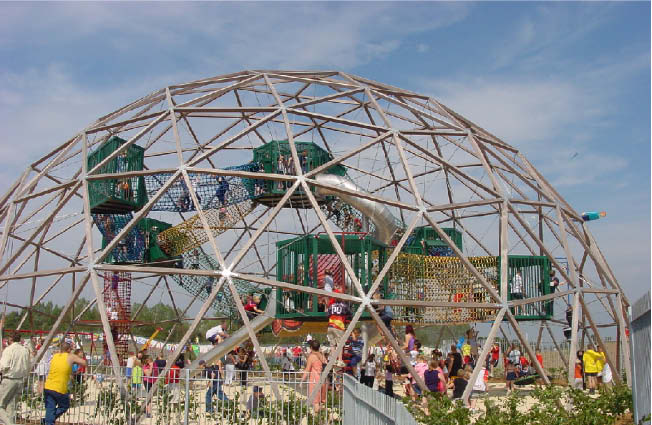
4. PlayDome – Hengrove Playpark, Bristol, UK (2002)
- Materials: Azobé hardwood, rope ladders, net tunnels, slides
- Key Features:
- A 25-meter geodesic dome encouraging climbing and exploration.
- Safe yet adventurous play environment for children.
- Durable, weather-resistant design blending aesthetics with functionality.
PlayDome remains a benchmark for sustainable, long-lasting play structures.
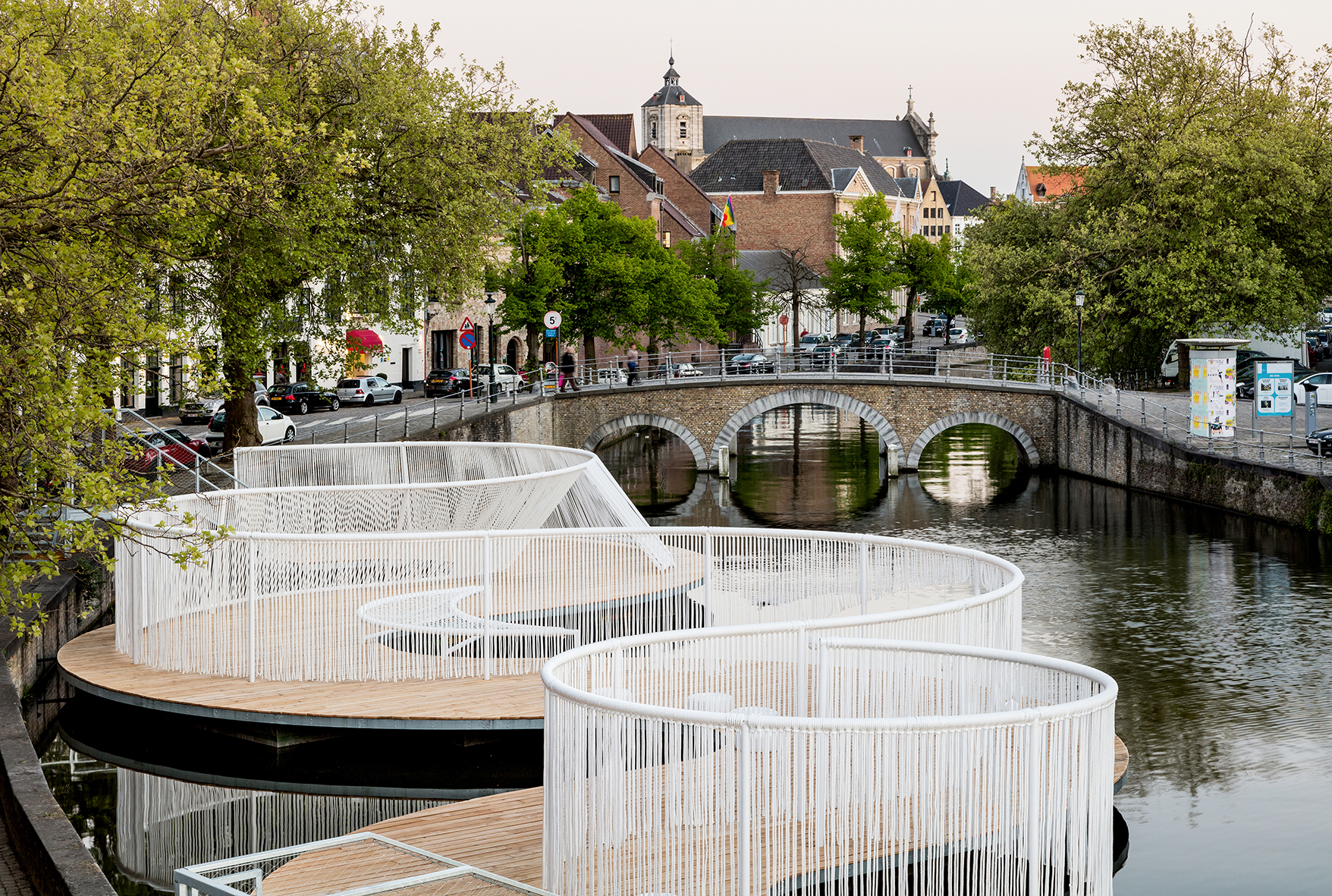
5. Floating Island (2018) – Triennale Brugge, Belgium
- Location: Canal-side installation
- Materials: Pontoons, metal frames, rope curtains
- Key Features:
- A floating pavilion merging art, architecture, and play.
- Rope curtains created shifting shadows, altering perceptions of space.
- Responded dynamically to wind and light, offering an ever-evolving experience.
This installation demonstrated how water-based play spaces can engage urban dwellers in new ways.

Best Practices for Designing Playable Cities
To successfully integrate play into urban planning, cities should consider:
1. Prioritizing Inclusivity
- Ensure accessibility for children, seniors, and people with disabilities.
- Incorporate sensory-rich elements (textures, sounds, colors).
2. Encouraging Community Co-Creation
- Host workshops and participatory design sessions.
- Gather feedback from diverse demographic groups.
3. Using Sustainable and Adaptive Materials
- Opt for recycled, biodegradable, or locally sourced materials.
- Design flexible structures that can evolve over time.
4. Blending Play with Functionality
- Combine seating, art, and play elements in multifunctional spaces.
- Integrate greenery and natural elements for a holistic experience.
Conclusion: Building Cities That Play
The future of urban planning lies in creating spaces that inspire joy, collaboration, and sustainability. By embracing playful interventions and participatory design, cities can:
Enhance community well-being
Promote environmental responsibility
Foster creativity and social connection
From rope-based installations to floating pavilions, innovative projects worldwide prove that play is not just an afterthought—it’s a vital component of thriving urban ecosystems.
What’s Next?
- Advocate for play-inclusive policies in your city.
- Participate in local urban design initiatives.
- Explore DIY play projects to transform underused spaces.
By reimagining cities as playgrounds for all, we can build more livable, engaging, and resilient communities.
Catch up on the latest projects, trends, and bold ideas in the world of “architectural” content on ArchUp.