Fingers Point to Bamboo Scaffolding After Devastating Fire in Hong Kong Residential Complex

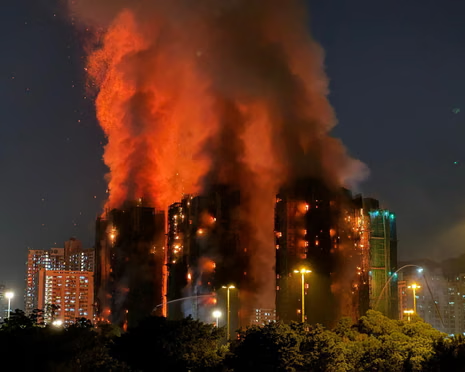
A massive fire broke out at Wang Fuk Court in Tai Po, Hong Kong, claiming 55 lives and injuring over 70 people, while around 300 remain missing. The blaze started on bamboo scaffolding on one 32 story tower, then spread quickly via green nets and plastic sheets to neighboring buildings. Hot weather and strong winds accelerated the fire’s path, challenging firefighting efforts for more than 24 hours. The incident raised questions about the safety of bamboo scaffolding in high-rise buildings and the standards for external materials and construction techniques.
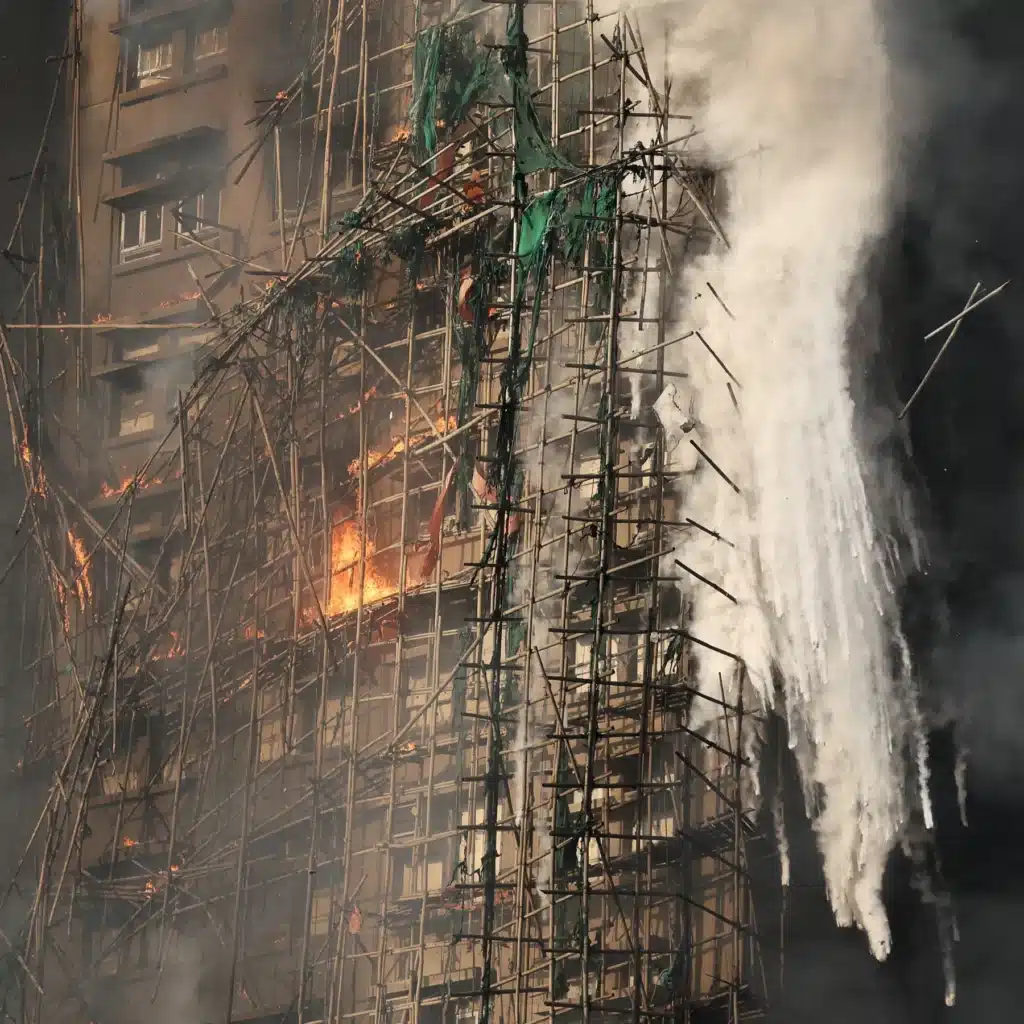
Fire Path Through the Scaffolding
The first path of the fire was along the bamboo scaffolding covering the tower facade, creating a flammable surface at great heights. Flames moved into the green nets attached to the scaffolding and reached plastic sheets on other towers. Winds and heat allowed fire to penetrate balconies and cracks, affecting interior spaces. The visual impact shows how materials and techniques interact with environmental factors to accelerate fire spread, highlighting the need to test scaffolding and coverings for fire resistance.
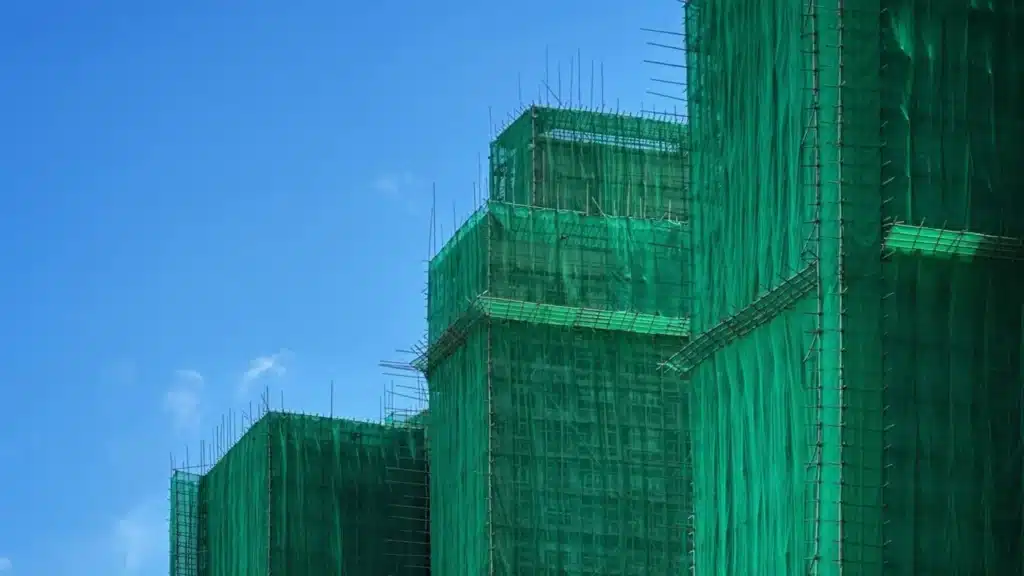
Materials and Construction Techniques
The building used materials that contributed to the fire spread:
- Bamboo Scaffolding: 70% of the exterior during renovations; lightweight and easy to install but flammable
- Green Cover Nets: 15% of the exterior; meant to protect from dust and sunlight, but helped fire transfer
- Polystyrene Foam on Windows: 5% of facade; highly flammable and sped up fire movement
- All materials should comply with Code of Practice for Bamboo Scaffolding Safety, with fire-retardant properties
The distribution shows how different exterior materials directly affect building response in emergencies, emphasizing strict material and installation standards.
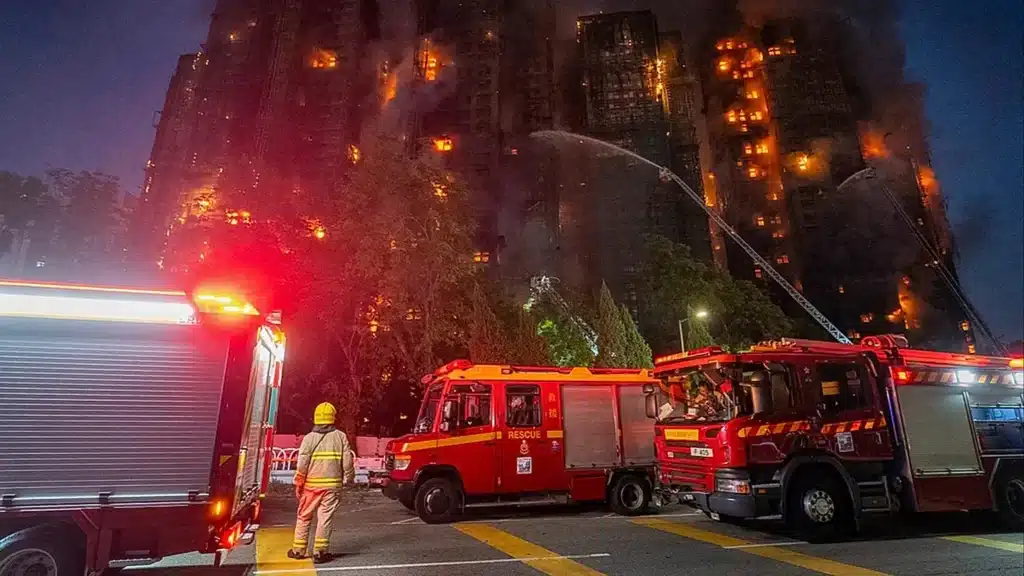
Walking Through the Building After the Fire
The complex has 8 towers, each 32 stories, housing around 2,000 apartments for 4,800 residents. Walking through the tower, one can see how the bamboo scaffolding fully covered facades, allowing fire to move between towers. Open balconies and green nets acted as bridges for the fire, while interior spaces suffered from smoke and heat penetration. This scenario demonstrates how high rise facade design and exterior materials influence occupant safety.

City Response and Scaffolding Inspection
Authorities announced inspections for all residential complexes undergoing major renovations to ensure scaffolding and external materials meet safety standards. The goal is to verify fire resistance and prevent similar incidents. This highlights the importance of combining structural safety with material management in high-density cities like Hong Kong.
Environmental Integration and Architectural Challenges
Wang Fuk Court sits in a dense urban area with pedestrian paths and streets interwoven with the towers. The urban environment constrains scaffolding design and coverings. Green nets, while intended for dust protection, contributed to fire spread, showing the need for testing any exterior material against environmental conditions. The case demonstrates that high rise facade design must consider fire pathways and integrate safely with surrounding urban fabric.
Key Lessons
- Using bamboo scaffolding requires strict fire-resistant standards
- Exterior coverings like nets and foam can directly impact building safety
- High-rise facade design must anticipate fire movement and environmental interactions
- Monitoring renovations is essential to protect residents and maintain structural integrity
ArchUp continuously documents leading architecture exhibitions and conferences, offering verified coverage of international competitions and official results within an open-access database.
✦ ArchUp Editorial Insight
Wang Fuk Court stands out with its high facades covered by bamboo scaffolding and green nets, creating a dense visual layer integrated with the surrounding urban fabric. The movement through towers and open balconies allows gradual paths for light and air, while the materials reveal safety challenges in high rise buildings. Design analysis highlights that reliance on flammable scaffolding exposes residents to potential hazards, emphasizing the need for comprehensive evaluation of exterior materials and construction techniques. Despite these critiques, the complex demonstrates how architectural structures can merge with the urban environment to meet residents’ needs.