Sensory Design as a Tool of Empathy: An Insight into Liz Westar’s Experience and the Dream View Bench

Sensory Design: The First Language We Understand Instinctively
Danish designer Liz Westar states:
“In many ways, sensory design is a superior language – one we all speak instinctively. From the moment we are born, touch is the first sense we experience, and it forms the foundation for how we connect with the world and feel love.”
This quote highlights a fundamental idea: the senses are not merely tools of perception, but channels of emotional expression and communication. Design is not just seen through the eyes—it is felt through physical interaction, from the texture of a material to the curvature of a form.
Bringing the Concept to Life in Tangible Design
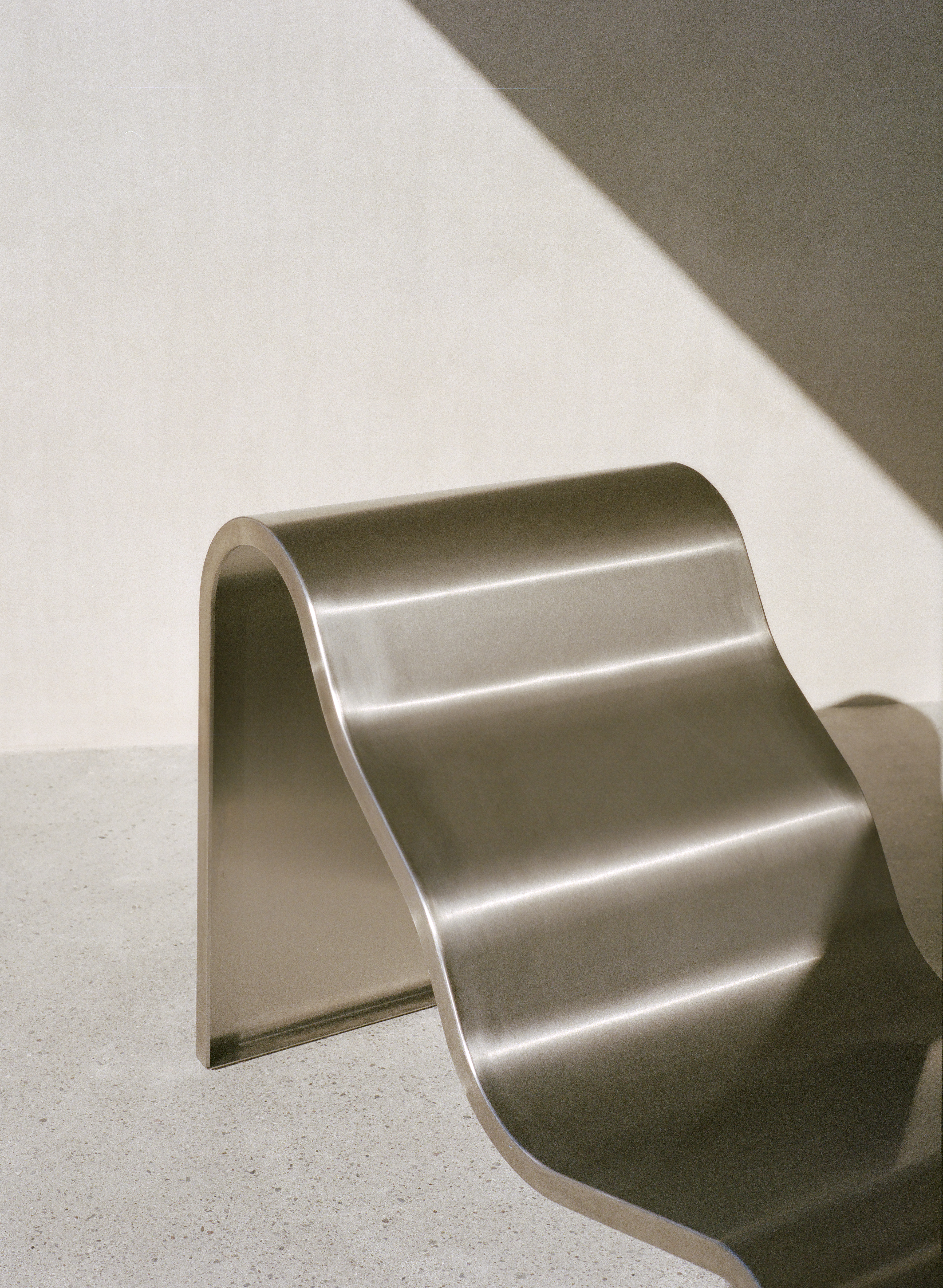
To translate this philosophy into a real-world example, Liz Westar developed a project that embodies sensory design in both its simplicity and depth. We’re talking about the Dream View Bench, which features:
- Construction from stainless steel
- Flowing curves reminiscent of ocean waves
- A fusion of industrial solidity and natural organic form
These elements go beyond creating a mere piece of furniture. They offer a sensory experience that invites the user to interact with the space—to sit, reflect, and connect.
Design as a Tool for Emotion
What sets this type of design apart is its ability to evoke emotion and memory—not just through visual appeal or function, but through its very material presence. Curves, softness, warmth or coolness of materials… these elements communicate with both our physical and emotional memory.
Exhibition in the Artistic Scene
The Dream View Bench made its debut during the 3 Days of Design event, held from June 18 to 20, 2025. This exhibition offered the public a chance to engage directly with the concept of sensory design—away from screens and static images, in a space where feeling takes center stage.
Beyond Function: Design as an Invitation to Reflect
Liz Westar continues her exploration of sensory design, stating:
“When we design with the senses in mind, we’re not just creating spaces and objects that serve their functions—we’re crafting experiences that allow people to feel, reflect, and thrive.”
This perspective emphasizes design’s role in shaping environments that connect with people psychologically and emotionally—not just physically. Sensory design, as Westar sees it, has the potential to create mental and emotional states shaped by the intention behind every detail.
The Senses as a Gateway to Self-Understanding
Westar adds:
“Sensory design enables us to create calming, stimulating, or revitalizing atmospheres. Through our senses, we explore, discover, and understand the world—and understand ourselves too.”
This quote reflects how sensory interaction with objects can become a tool for self-discovery, not just a way of experiencing the external environment.
Form Follows Feeling
The Dream View Bench was manufactured in Denmark and features:
- Smooth curves that follow the contours of the human body
- A sloped surface that invites reclining with ease
- A design that encourages reflection and skyward gazing
These characteristics are no coincidence. In an interview with Wallpaper, Westar shares her vision:
“My intention was to create a playful and soothing sensory experience that aligns with the shape of the body—an open invitation to pause and slip into a daydream.”
The Sky as a Space for Reflection
She continues describing the experience:
“[The form] encourages the body to lean back and look upward, where the sky becomes a blank canvas for reflection and imagination.”
So, this isn’t just a bench—it’s an open space for dreaming, calm, and inner connection. A design that encourages stillness amid the chaos, inviting the body to become a vessel for meditation and imagination.


Challenging the Elements: A Design That Withstands and Reflects Nature
Since the Dream View Bench was designed for outdoor use, it had to withstand various weather conditions—sun, rain, and wind. The choice of stainless steel was intentional, not just for its strength and durability, but also for its distinctive visual and tactile qualities.
Designer Liz Westar explains:
“The polished surface softens the harsh industrial nature of the material, giving it a more inviting and human touch.”
When Design Reflects the Sky
Beyond its function, the bench carries an aesthetic and meditative dimension. The reflective metal doesn’t just mirror its surroundings—it becomes one with them. Westar adds:
“The reflective quality of the metal allows the bench to echo its surroundings—especially the sky—as if it literally brings the sky down to earth.”
This visual interaction between material and environment ensures that every experience on the bench is unique, shaped by the light, weather, and setting.
Design as a Human Experience Born from Pain
Behind this project lies more than just imagination—it stems from a deeply personal journey. After losing several loved ones in cold, clinical medical environments, Westar began to ask:
How can design ease the weight of life’s most difficult moments?
She recalls a pivotal moment:
“When my aunt spent her final days in a hospice in 2011, the experience was completely different.”
She continues:
“The space was warm, welcoming, and comforting—it offered dignity and peace amid sorrow. That moment completely changed the way I approach design.”
From Pain to Purpose
This experience inspired the designer to create pieces that go beyond form and function—pieces that respect human dignity and provide comfort, even in life’s hardest moments. The Dream View Bench is a direct manifestation of that philosophy: a piece that invites people to pause, reflect, and perhaps heal—even in silence.

When Empathy Becomes a Design Methodology
Designer Liz Westar continues to reflect on the experience that shaped her design consciousness:
“Later, I returned to that hospice as a student, for one of my first design projects. I interviewed nurses, the palliative care team, and families to understand what made that environment so healing.”
This return wasn’t just a visit—it was a journey to uncover the human core of design. Rather than focusing on aesthetics or performance, Westar sought to understand how space itself could offer comfort during life’s most fragile moments.
Weaving Beauty into the Everyday Fabric of Life
From this experience, Westar emerged with a personal dream that evolved into a clear professional vision. She says:
“My dream is to weave the empathy and beauty found in palliative care settings into our homes, workplaces, and cities—into the everyday fabric of life—so that design quietly, but powerfully, supports us wherever we are.”
This is an invitation to rethink design—not as decoration, but as a tool for emotional and psychological care. In a fast-paced world, the quiet comfort offered by thoughtful design becomes a subtle form of support—unseen, yet deeply felt.
✦ ArchUp Editorial Insight
From a conceptual and philosophical standpoint, the project deserves praise—particularly for its symbolic use of material to encourage reflection and slowness in a fast-paced world.
However, on the practical side, certain concerns arise. The reflective steel, while visually striking, may not be the most suitable choice for high-temperature environments. Moreover, the absence of functional features—such as a backrest or shade—could limit its usability in everyday contexts.
The Dream View Bench does not aim to be a seat for everyone—it is a curated emotional experience. More visual statement than fully functional product, it may resonate deeply with some while leaving others hesitant. And perhaps that’s precisely its purpose.
Explore the Latest Architecture Exhibitions & Conferences
ArchUp offers daily updates on top global exhibitions, conferences, and professional art and design forums.
Follow key competitions, check results, and stay informed through the latest news worldwide.
ArchUp is your encyclopedic hub for discovering events and design-driven opportunities across the globe.