From the Heart of Copenhagen to the Embrace of Nature: The National Museum of Denmark’s Journey Between Urban and Rural Art

The Main Building of the National Museum of Denmark
The main building of the National Museum in Copenhagen is considered one of the most prominent cultural landmarks in the Danish capital. Its construction dates back to the late 19th century, making it a living testament to the historical era the city witnessed at that time.
The Architectural Imprint of Vilhelm Dahlerup
The building was designed by Danish architect Vilhelm Dahlerup, with technical assistance from Georg E. W. Møller. Dahlerup is recognized as one of the leading figures in Copenhagen’s architectural scene, with his name associated with several iconic landmarks such as:
- The Elephant Gate in Carlsberg
- The Ny Carlsberg Glyptotek Museum
- The Hotel D’Angleterre
His numerous travels across Europe had a clear impact on his aesthetic vision and played a vital role in shaping a distinctive architectural identity for the city during the 19th century.
A Style Inspired by the Renaissance
Dahlerup drew inspiration for the museum’s design from the Italian Renaissance, a period he was particularly passionate about. This influence is reflected in the harmony and grandeur that define the building’s façades and decorative details.
Authentic Materials and a Majestic Façade
Unlike some of his other works where he employed concrete or imitation materials, Dahlerup insisted here on using natural resources such as marble, limestone, and brick. The result was a building with an authentic character, delighting the eye with its exterior beauty even before stepping inside its halls, which are filled with artistic masterpieces.
Materials as a Key to Architectural Identity
The choice of materials plays a fundamental role in shaping the architectural character of the new branch of the SMK Museum, scheduled to open on August 29, 2025, in a small village called Doverodde, near the Thy National Park in northern Jutland.
The Vision of Architect Reiulf Ramstad
The project bears the signature of architect Reiulf Ramstad, who was commissioned to design it in 2021. Ramstad explains his architectural philosophy by saying:
“Instead of building from scratch, we relied on what was already there , stone, wood, silence, and wind.”
This approach reflects a respect for the local environment and integrates the new building seamlessly with the natural elements of its surroundings.
Financial Support to Realize the Dream
The idea of expansion was not born overnight; the museum’s management had long envisioned opening a branch outside Copenhagen. This dream was made possible thanks to a generous donation from the A.P. Møller Foundation and Chastine McKinney Møller, which gave the project a significant push toward realization.
The Site’s Past and Its Transformations
The chosen site was not an empty plot but rather a blend of old and diverse buildings, including:
- A historic farm dating back to 1852
- A massive brick warehouse built in 1854
- A towering 42-meter grain silo constructed in 1962
- A collection of other structures in various stages of decay
This diversity in the architectural background added a layer of historical depth to the project, making the design process closer to a revival of the place rather than its erasure.
Reviving Historic Buildings
The historic farm has been carefully restored and now houses:
- The museum café
- Administrative offices
- Two apartments for artists and researchers in residence
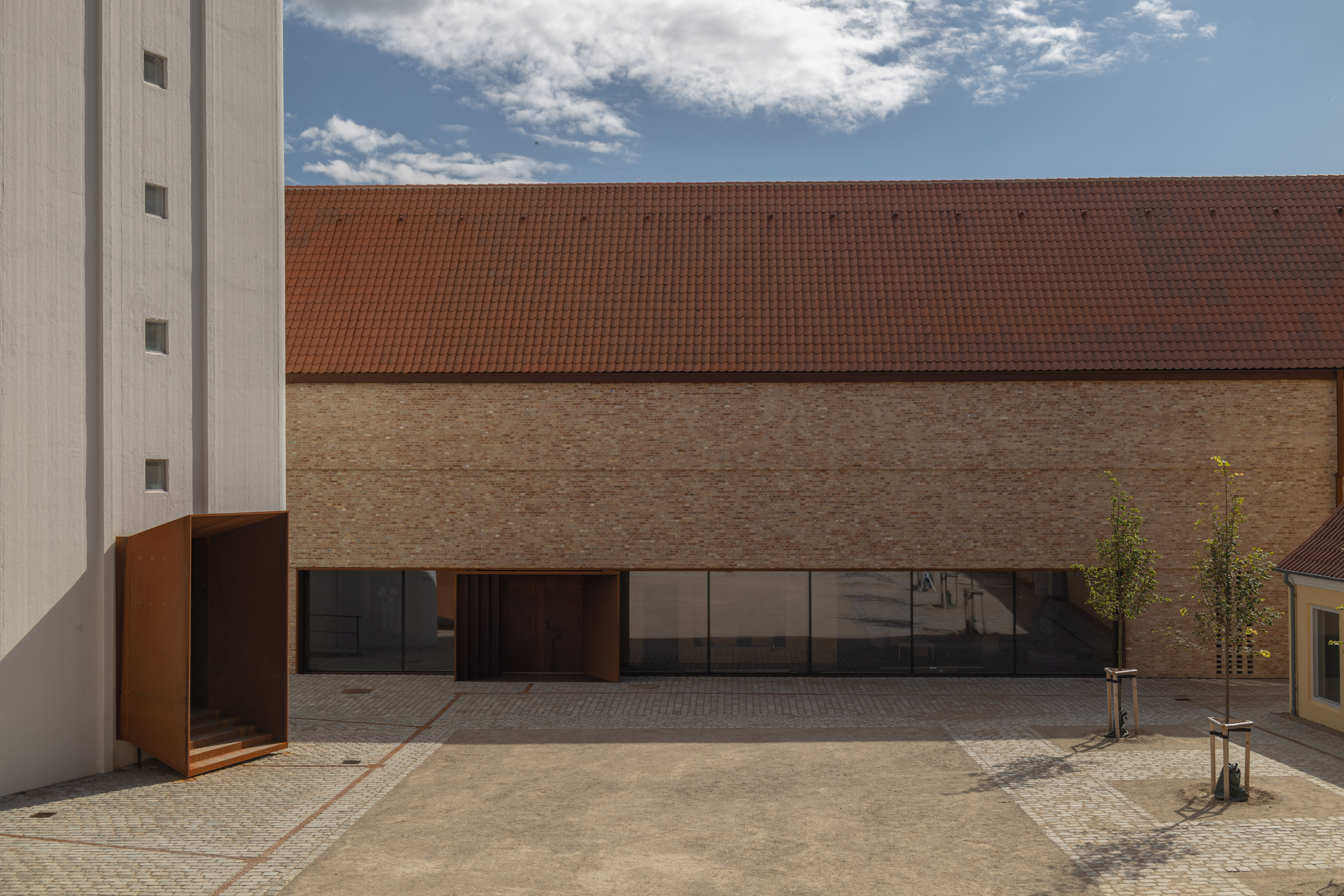
As for the silo built in 1962, it has been transformed into a striking new landmark. It was repainted and fitted with a large corten steel entrance, turning it into a viewing platform overlooking the surrounding landscape. In addition, the silo has also been repurposed as an exhibition space, featuring three small galleries dedicated to temporary exhibitions.
From Warehouse to New Building
The old warehouse was originally intended to host the museum’s main exhibition. However, structural assessments revealed that its construction did not meet the strict standards required to display artworks spanning nearly seven centuries of European art history.
As a result, the warehouse was carefully dismantled, with its original bricks cleaned and reused in the façade of the new building. The same footprint and height were preserved, creating both a visual and historical connection with the past, while delivering a modern building that meets contemporary curatorial requirements.
Design Philosophy
Architect Reiulf Ramstad explains his vision:
“When I was invited to design the new branch of the National Museum, I understood from the beginning that the project was not about imposing something on the place, but about responding to what was already there. It was about shaping a space where art and nature, culture and community, could not only coexist, but also enhance one another.”
In this sense, the new building becomes not just a venue for exhibitions, but a bridge between local memory and global art, between nature and humanity.

Towards the Integration of Art and Nature
The renewal project was not limited to the interior buildings alone, but also extended to include outdoor facilities that enhance the visitor’s open-air experience. The architects proposed the addition of:
- A small kayak hotel
- Shelters around fire pits
- A dry dock with a workshop to support the Viking Ship Guild already active on site
These facilities are part of a local initiative known as the “Nature Village”, aimed at creating a direct link between natural activities and cultural ones, so that art at SMK Thy becomes an extension of the everyday experience of the place.
Nature as Part of the Museum’s Mission
Astrid la Cour, Director of the National Gallery, explains this philosophy by saying:
“We invite our visitors to be present in the artwork, in the architecture, and in nature. We want to encourage them to take their time and pay attention. More broadly, I want nature to play a fundamental role in our work in the future.”
Between Urban Art and the Art of Nature
With this approach, the SMK Thy branch emerges as a complementary step to the main building in Copenhagen. While the original branch embodied the art of the European city in the 19th century, the new branch represents the art of open nature in the 21st century. It is a transition from the urban realm to a rural space where art and nature breathe together, in a constant dialogue between humanity and the environment.
Rural Simplicity with High Quality
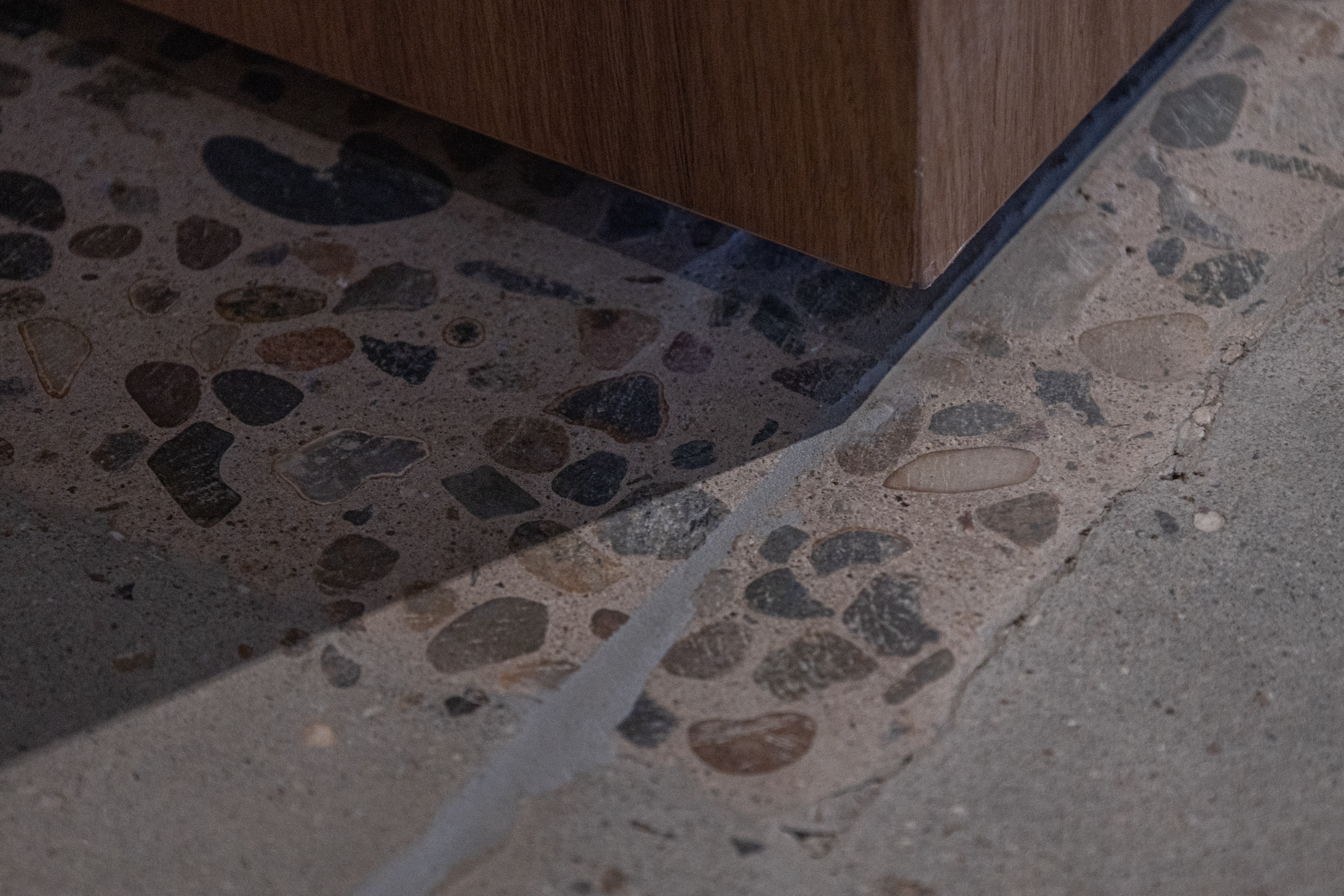
The new buildings surrounding the restored historic farm and the reconstructed warehouse are characterized by a simple and honest wooden architecture, evoking an atmosphere close to village life. The materials and structural elements were deliberately left exposed, such as:
- The massive wooden beams supporting the roof
- Oak panels from Dinesen used to clad the dry dock
- Raw planks with natural edges covering the small firepit shelters
This intentional exposure of details gives visitors the opportunity to directly observe craftsmanship and the quality of execution.
The Philosophy of “Quality over Sustainability”
Architect Reiulf Ramstad explains his perspective by saying:
“I truly believe that the more we talk about sustainability, the less sustainable it becomes. Instead, we should be talking about quality.”
This principle is clearly reflected in:
- The careful reuse and repurposing of original materials
- The precise placement of the new buildings
- The integration of architectural details balancing authenticity and modernity
Art in the Heart of “Nowhere”
The adopted approach extends beyond architecture to the very concept itself: bringing some of the finest treasures of Danish art to a place that might otherwise be perceived as “the middle of nowhere.” In doing so, the site becomes a space where art, nature, and craftsmanship converge into one holistic experience.
Art Returns to Its Original Home
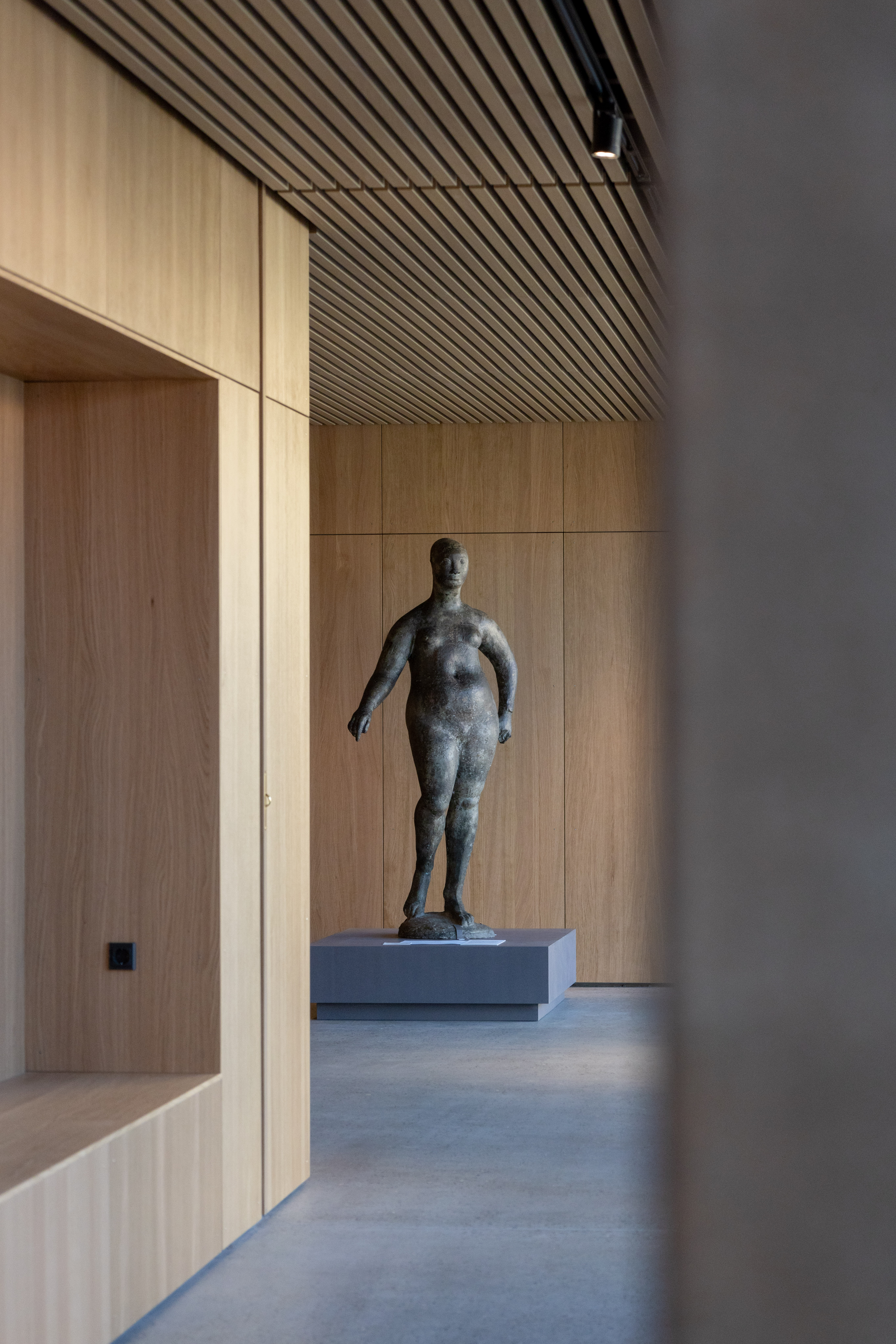
Although the project represents a new architectural expansion, at its core it carries a profoundly meaningful, almost poetic moment that brings things full circle. Much of the National Gallery’s collection , which exceeds 200,000 pieces , revolves around depicting the beauty of nature. Among these works are paintings that captured the stunning landscapes of Thy National Park, which surrounds the current site of the new museum.
Now, part of this art is returning to its original home, creating a direct dialogue between the canvas and the natural scenery that inspired it in the first place.
A Presence Beyond the Capital
Astrid la Cour, Director of the National Gallery, explains this vision by saying:
“As a national cultural institution, we aim to be relevant beyond the capital , not by becoming local, but by being present and engaged with local life.”
A New Cultural Beacon
Just as the silo rises on the horizon and can be seen from afar, SMK Thy is expected to become a new cultural beacon , one that unites art and nature while giving the region a distinctive identity that ties the past to the present and the future.
✦ ArchUp Editorial Insight
The SMK Thy branch project represents a qualitative addition that merges art and nature into a unique experience, enhancing the museum’s presence beyond the capital and reviving historic buildings with a contemporary architectural touch that respects the local environment.
At the same time, this initiative may raise questions about the capacity of a remote rural site to attract visitors sustainably, as well as about balancing the preservation of the local character with the introduction of new buildings that could alter the original identity of the place.
Amid these advantages and reservations, the project remains a cultural and architectural endeavor worthy of attention, carrying both significant promises and realistic challenges.
Prepared by the ArchUp Editorial Team
Don’t miss the chance to explore more from Architecture, Archive, and Buildings on the ArchUp website.