

The Solar Vineyard House: Where Architecture Meets Sustainability and Nature

Linking Modern Architecture with the Natural Environment
Modern architecture is increasingly striving to integrate homes with their surrounding natural environments. However, many designs still treat sustainability and aesthetics as competing priorities, often resulting in compromises that can diminish either the environmental effectiveness or the visual appeal of a project.
Challenges of Homes in Vineyard Regions
Homes built in vineyard regions face unique challenges. They must preserve the rich agricultural heritage of the area while simultaneously meeting contemporary living requirements and environmental responsibilities. The outcome often manifests as a compromise between aesthetic and functional goals, without achieving true integration between the two.
Innovation in the Solar Vineyard House
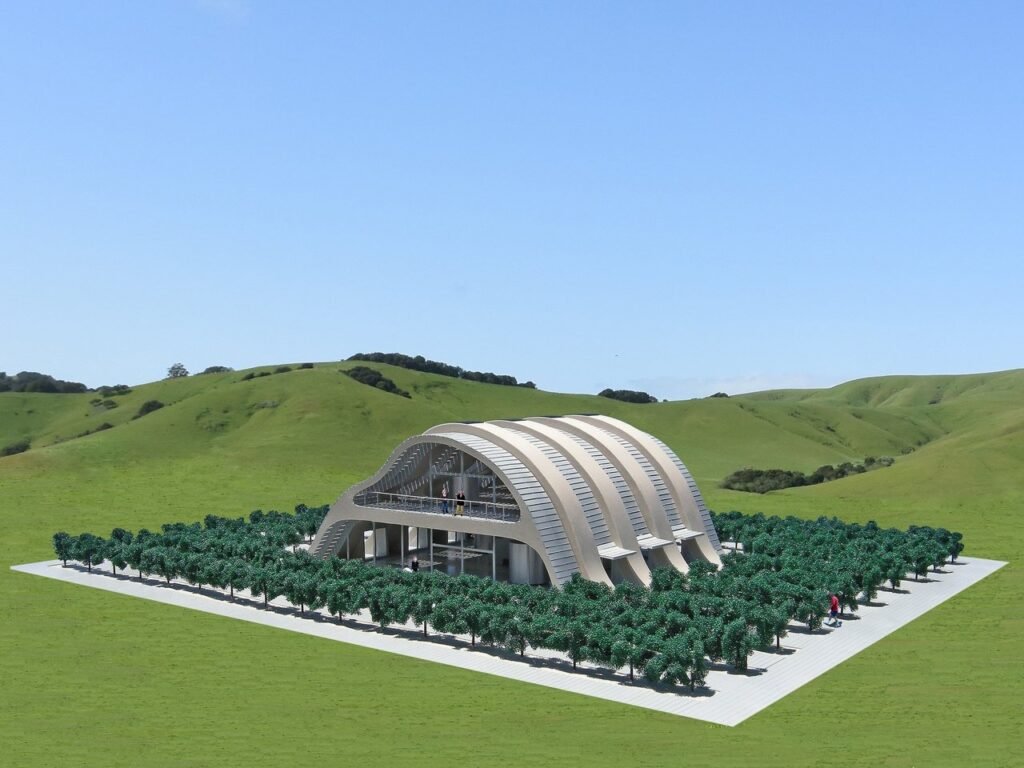
Unlike traditional solutions, Michael Jantzen’s design for the “Solar Vineyard House” represents a notable exception. This conceptual design spans 5,000 square feet and integrates multiple functions: it is not merely a residence, but also includes a private vineyard and a small winery, offering a prime example of sustainable architecture.
Combining Comfort with Productivity
Located in a temperate climate in California, the house allows for the seamless integration of residential comfort with the daily rituals of winemaking. Through this integration, everyday living aligns with agricultural activity, reflecting a balanced approach that combines beauty, functionality, and sustainability.

Nature-Inspired Architectural Design
The architectural form of the house captures attention at first glance, thanks to four dramatic arched sections made of concrete composite. These arches reflect the rolling hills that the vineyard regions of California are known for, creating a direct visual link between the building and its surrounding environment.
Integrating Indoor and Outdoor Spaces
These arches are connected through large glass panels, allowing expansive views of the landscape while maintaining the sculptural character of the design. Through this combination of glass and concrete, a balance is achieved between openness to the outdoors and internal privacy, reflecting an architectural philosophy that prioritizes harmony between the building and nature.
Sustainable Wooden Pathways
Sustainable wooden pathways wind through the carefully planted vineyard, serving a dual purpose: they act as circulation routes within the space, while also adding natural elements of shade and beauty. This innovative use demonstrates how aesthetic function can be integrated with practical sustainability in contemporary architectural design.


Naturally Integrating Sustainability
What sets this design apart is the integration of sustainable elements into the core of the building, rather than treating them as afterthoughts. Four large, curved solar panels have been installed on the southern side of the house to supply a portion of its energy needs, while maintaining the aesthetic flow of the design.
Natural Ventilation and Smart Shading
Natural ventilation and deep shading barriers enhance the building’s efficiency, covering nearly all glass surfaces. This strategy reduces the need for mechanical cooling while simultaneously creating comfortable outdoor spaces that can be used for vineyard activities or hosting guests.
Integrated Sustainability and Comfort
By combining solar energy, natural ventilation, and carefully oriented shading, the design achieves a balance between sustainability and everyday comfort, making the house a practical example of how environmental and social standards can be seamlessly merged with architectural beauty.

Water Management and Material Selection
The environmental approach in the design extends to water management and careful material selection. Rainwater harvesting systems have been implemented to store and use water for irrigating the house and the planted vineyard, while sustainably sourced wooden pathways help minimize the project’s environmental footprint.
Integrating Sustainability and Beauty
This design highlights how eco-friendly features can enhance architectural beauty rather than compromise it. By incorporating these environmental elements from the early planning stage, a balance is achieved between sustainability, functionality, and aesthetics, making it a practical model of contemporary sustainable architecture.


Interior Flexibility and Modular Design
The house’s interior spaces adopt a modular approach that balances functionality with poetic aesthetics. The open upper and lower levels accommodate cylindrical units of varying sizes, equipped with wheels to allow easy rearrangement as needed.
Design Inspired by Winemaking
These units are based on a design inspired by fermentation tanks used in wineries, creating a link between agricultural activity and interior design. They encompass everything from living areas, winemaking equipment, and food preparation zones to storage spaces, reflecting both practical and aesthetic integration simultaneously.

Playing with Natural Light and Living Experience
The aesthetic impact of the house is revealed in how natural light interacts with the interior spaces throughout the day. Sunlight filters through the solid wooden panels, creating dynamic patterns that continuously shift across floors and walls, adding a lively visual dimension to the space.
Visual Connection with the Natural Surroundings
The expansive glass areas provide a constant visual connection to the surrounding vineyard, turning the natural landscape into an integral part of the daily living experience rather than merely an external view. This design reflects an architectural philosophy aimed at harmoniously and sustainably integrating humans with their environment.


Strengthening the Connection Between Design and Agriculture
This house demonstrates how every design decision reinforces the connection between architecture, agriculture, and sustainable living. The modular interior spaces adapt to different needs, whether for an intimate family dinner or harvest celebrations, while the surrounding vineyard setting provides a balance between beauty and functionality.
A Vision for the Future of Sustainable Architecture
The “Solar Vineyard House” invites us to imagine homes that celebrate their environments rather than dominate them. This approach suggests possibilities for architecture that grows organically from its natural and cultural context, supporting human needs and ecological health, while creating spaces that feel truly alive and offer a fully integrated, sustainable living experience.

✦ ArchUp Editorial Insight
The Solar Vineyard House leaves a distinctive impression in terms of integrating architecture with nature and sustainability, particularly in how it designs flexible interior spaces and maintains a continuous visual connection with the surrounding vineyard, reflecting a clear awareness of both environmental responsibility and architectural beauty. However, questions remain regarding the practical applicability of such solutions on a larger scale, the complexity of managing multifunctional spaces, as well as the relatively high construction and maintenance costs compared to conventional homes. Despite these reservations, the project can be considered an important model for forward-thinking sustainable architecture, with certain practical constraints that may limit its widespread adoption.
Prepared by the ArchUp Editorial Team
Don’t miss the chance to explore more from Architecture in fields like Design and Projects on the ArchUp website.


