

The Solar Winds Pavilion: An Architectural Experience That Combines Beauty and Renewable Energy

Renewable Energy in Commercial Architecture: Between Concealment and Display
Renewable energy systems in commercial buildings are often treated as secondary elements. They are either placed behind facades or on rooftops, as if they are merely necessary but visually unappealing additions. While practical, this approach misses a significant opportunity: transforming these sustainable technologies into an integral part of the architectural experience itself.
An Opportunity to Enhance the Experience
In industries such as winemaking, visitors are often connected to natural cycles and the idea of environmental stewardship. Here, renewable energy systems can shift from being mere technical details to experience-enhancing elements, adding aesthetic and cultural value rather than diminishing it.
An Alternative Architectural Vision
Architect Michael Jantzen presented a different perspective with his conceptual project, the Solar Winds Wine Tasting Pavilion. Instead of hiding energy technologies, he placed them at the heart of the design. Solar panels and wind turbines are no longer just functional devices; they become sculptural elements that reflect the beauty of the building and convey its environmental message.
A Design That Captures Attention at First Glance
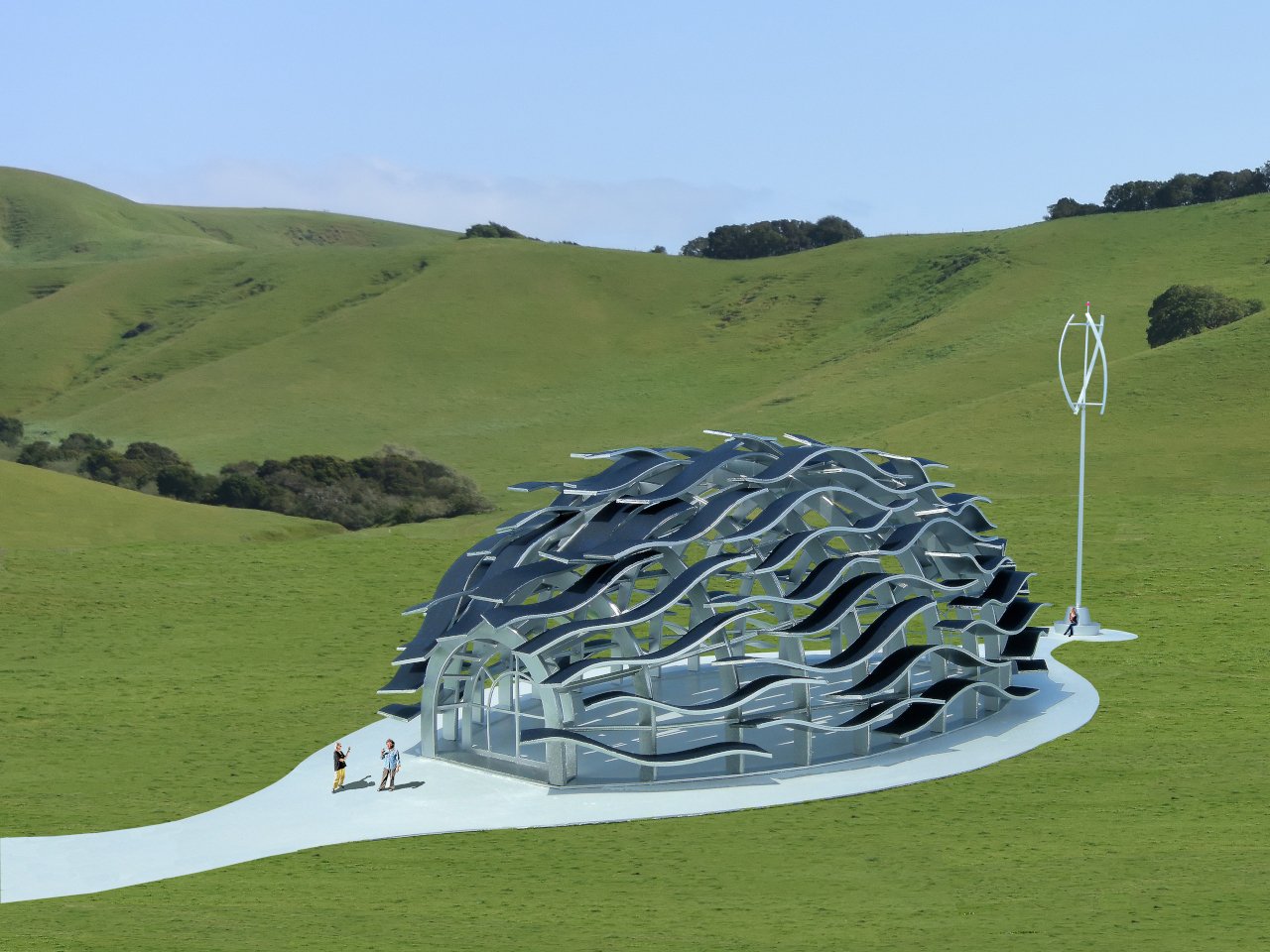
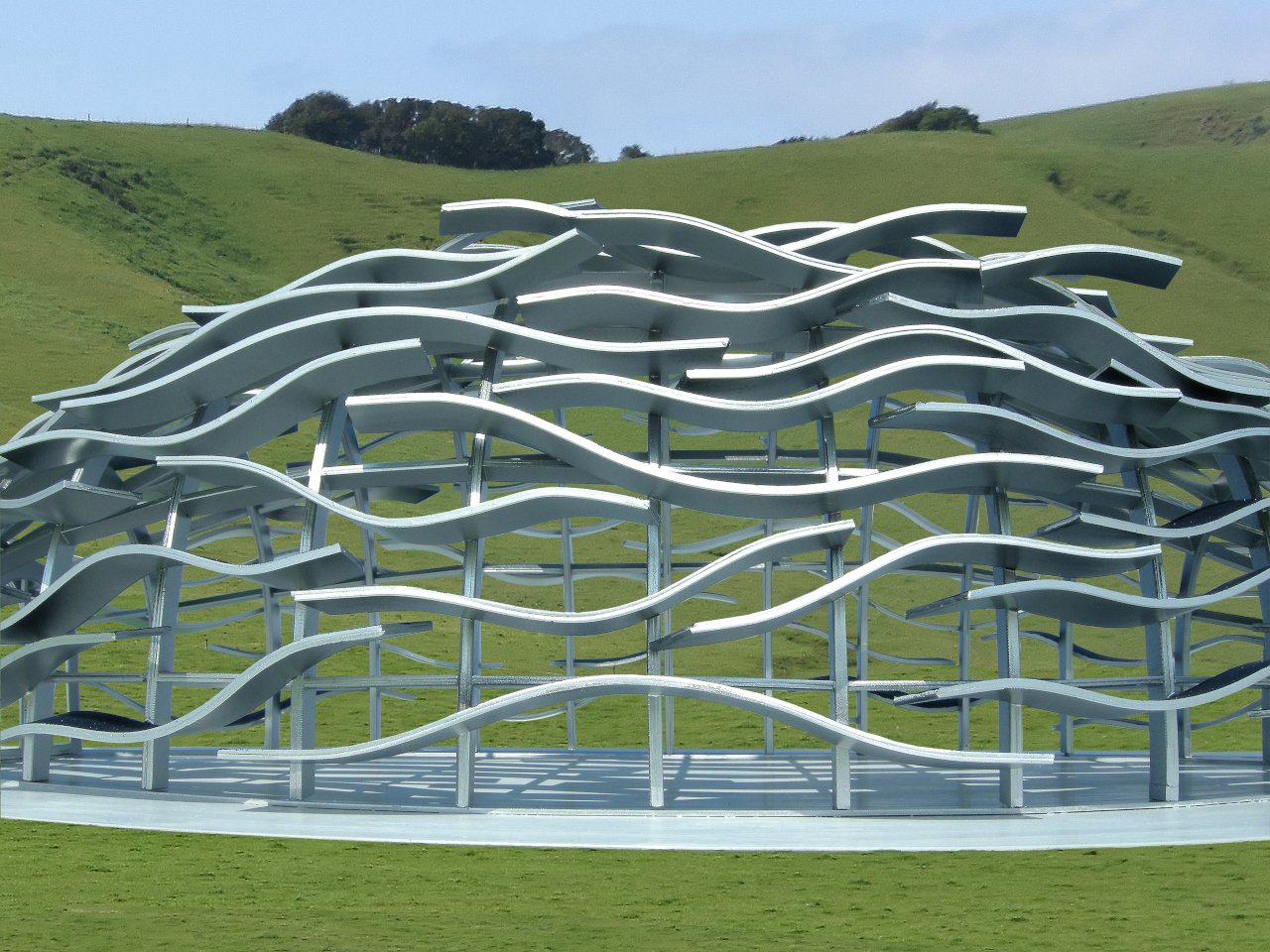
The Solar Winds Pavilion stands out through a flowing sequence of curved steel panels that extend across the structure like frozen waves. These panels were shaped using two different radii, giving the canopy a dynamic, undulating motion that echoes the rolling hills of the vineyards.
Between Organic and Futuristic
This composition conveys a dual sensation: it feels simultaneously organic, as if part of nature, and futuristic, like a piece of contemporary architectural art. It’s as though the grape arbors themselves have transformed into a sculptural masterpiece.
A Smart Structural Framework
The structure relies on steel arches supported by horizontal braces, while spaces are clad with glass panels that can open and close automatically. This technology allows for natural ventilation control, creating a flexible environment that adapts to changing weather conditions without compromising the fluidity of the design.
Flexibility in Use
In the pavilion’s open version, the glass can be entirely removed, turning the space into an open-air canopy for gatherings. This makes the design versatile, capable of serving multiple purposes without losing its aesthetic identity.

Energy as Part of the Visual Landscape
In this pavilion, renewable energy systems are not hidden in the background; they become an integral part of the visual composition itself. Flexible photovoltaic panels are integrated into the curved surface at carefully calculated angles to capture the maximum amount of sunlight. The result is electricity generation that serves both the pavilion and the connected main winery.
A Unified Visual Element
The concept extends beyond energy-producing panels alone. Non-solar panels are painted in matching colors, maintaining visual uniformity while providing shade for interior spaces. This creates a balance between aesthetics and function.
A Turbine That Adds Power and Drama
Next to the pavilion stands a vertical-axis wind turbine, not only generating electricity but also adding a dramatic visual element to the scene. Its streamlined form harmonizes with the sculptural character of the pavilion, while circular seating around its base offers visitors a space to reflect and observe both technology and the surrounding landscape simultaneously.

An Immersive Interior Experience
The design extends beyond the exterior appearance, with equal attention given to the interior experience. The curved panels cast intricate, shifting shadows on the pavilion floor, creating a dynamic environment that changes with the movement of the sun. This continuous interplay of light and shadow adds a poetic quality to the space, where visitors can enjoy wine tasting or attend special events amidst an atmosphere that reflects the presence of natural forces in their daily lives.
Deeper Symbolic Dimensions
But the impact is not purely aesthetic. The structure, which echoes the vineyard trellises, evokes a fundamental relationship: how grapevines rely on their supporting frameworks to grow and bear fruit. Through this symbolism, the design suggests that buildings, too, can grow and evolve in harmony with their environment and energy sources, rather than existing as isolated entities.


Toward a New Vision for Sustainable Architecture
This project presents a different perspective that challenges conventional approaches in winery design and sustainable architecture more broadly. Rather than treating renewable energy systems as secondary elements, they become the central focus of the architectural experience. Visitors thus encounter a unique combination: enjoying fine wine in a space whose every detail celebrates the technology that powers it.
An Invitation to Imagination and Inspiration
Through the Solar Winds Pavilion, Michael Jantzen invites us to imagine buildings that do not shy away from their energy sources but proudly display them, just as they showcase their contents. This approach opens the door to architecture that educates, inspires, and delights, while simultaneously advancing a future in which sustainability becomes a visible aesthetic element, not just a hidden addition.
✦ ArchUp Editorial Insight
It can be said that the Solar Winds Pavilion presents an innovative vision that combines artistic beauty with sustainable energy, offering visitors a distinctive sensory experience. Several positive aspects stand out, such as the harmony between form and function and the ability to integrate energy technologies in a visually appealing way, reflecting a commitment to sustainability and innovation.
Nevertheless, some aspects require deeper evaluation: the complex design may pose challenges in terms of maintenance and production costs, and the intensive integration of technology could limit the replicability of this model in other contexts or smaller projects. Additionally, the impact of the symbolic experience may remain limited for visitors less interested in the environmental or artistic dimensions of the space.
Thus, the pavilion can be seen as a concept rich in ideas and visual stimulation, while also raising questions about practical implementation and future scalability, providing room for reflection and discussion on how to achieve an optimal balance between innovation and real-world considerations.
Prepared by the ArchUp Editorial Team
Don’t miss the chance to explore more from Architecture, Buildings, and Design on the ArchUp website.


