The Healdsburg House Project: Exploring Sustainability and Passive Resilience in Residential Architecture

Historical and Geographical Context
The project is situated in a mountainous area northeast of Healdsburg, California, accessible via a winding road that was formerly used by horse-drawn carriages. This setting reflects a blend of natural terrain and traditional routes that once served rural communities in the 19th century.
Impact of Natural Disasters on the Built Environment
The original house was destroyed by fire during the 2019 Kincade Fires, resulting in the loss of its off-grid structure. This event highlights the importance of adapting to natural hazards in building design, whether through site selection or the implementation of alternative energy and infrastructure systems.
Adopting a Lifestyle Integrated with Nature
The destruction of the original building presented an opportunity to rethink the way of living, leading to an approach focused on harmony with the surrounding landscape. This direction reflects the spirit of neighboring historic communities, such as the “Pine Flat” area, which emerged during the mineral boom in the Mayacamas Mountains in the 1870s, indicating the interconnectedness of environment, society, and local history.


Focus on Sustainability and Durability
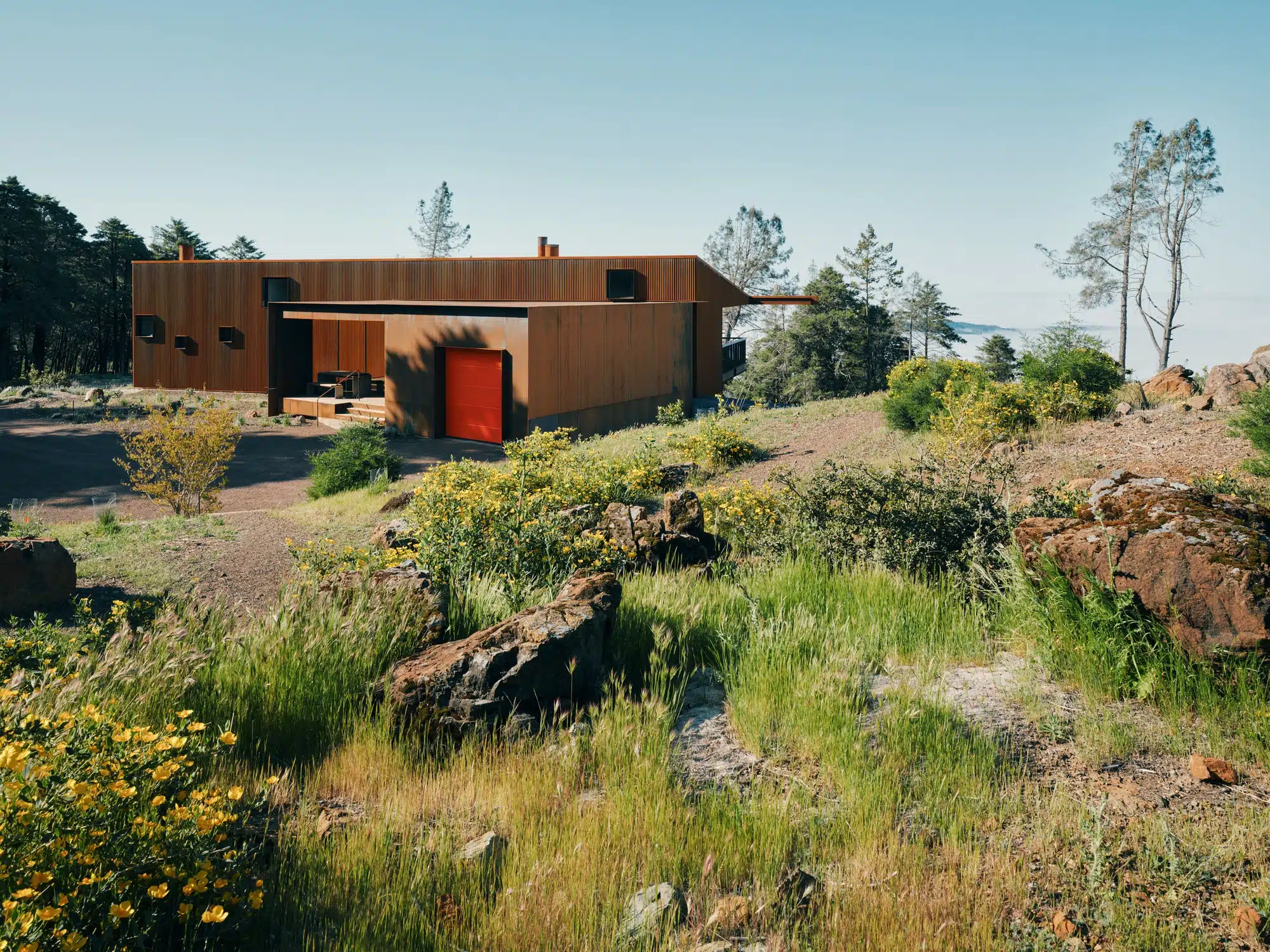
The design of modern homes in wildfire-prone areas aims to combine durability, low maintenance, and a long building lifespan. This approach underscores the importance of selecting fire-resistant materials, such as treated steel and fire-rated cladding, in addition to using spark screens and exterior sprinklers, effectively reducing fire-related risks.
User-Centric Design
Ease of access plays a crucial role, particularly for elderly individuals or those with mobility needs. Consequently, the design incorporates a wide entry ramp, ample spaces for maneuvering wheelchairs, and a pre-installed elevator location. Maintaining the bedroom level aligned with the kitchen, dining, and living areas further facilitates daily movement and minimizes obstacles.
Integrating Safety with Daily Comfort
This project demonstrates how a balance can be achieved between protection from natural hazards and user comfort. Implementing advanced safety standards extends beyond infrastructure to encompass the daily user experience, making the home more sustainable and suitable for long-term living. More examples of thoughtful interior design integration can be found in similar projects.


Sustainability and Resource Reuse
The project highlights the importance of reusing existing foundations and walls, with approximately 90% of the original concrete being repurposed. This approach helps preserve embodied energy and reduces the need for additional excavation, demonstrating how sustainable design can minimize a building’s environmental impact while maintaining structural durability.
Relationship Between Architectural Form and Nature
The design is based on a rectangular barn shape occupying the old angular foundation, with extended elements beyond the plan serving as a sculptural entry step and a glass light well. This approach balances simplicity and functionality, aligning the simple form with the surrounding hill contours, creating a quiet presence within the natural landscape.
Integrating Safety and Environmental Cues
A concrete chimney on the main floor frames the view of fire within the landscape, reminding users of potential hazards. The entrance ramp extends expressively toward the western hill slope, while the natural water basin reinforces a visual and poetic dialogue, emphasizing the importance of respecting on-site water resources.
Minimizing Waste and Using Local Materials
The site’s relative isolation increased the significance of available materials, prompting a focus on utilizing existing elements and reducing waste. This represents a practical approach to sustainable construction, combining environmental efficiency and aesthetics while respecting locally available resources.

Off-Grid Design
These facilities reflect a passive survival approach, aiming to minimize reliance on external power and water networks. The solar energy system has been developed to include panels, inverters, and optimized batteries, enhancing the ability to generate electricity sustainably and continuously.
Comprehensive Water Management
The project relies on collecting all rainwater and retaining it on-site. The suspended downspout flows into a steel basin, then into a vegetated retention area before reaching a retention pond that serves as a backup source for firefighting. This approach demonstrates how water management can be integrated with sustainability and environmental risk mitigation.
Harnessing Natural Resources
Local springs provide drinking water and water for daily use, including a tank dedicated to a fire hydrant and sprinkler system. The concrete basin also utilizes a Pelton wheel to generate additional hydropower, creating a multifunctional, renewable system for water cooling. Similar methods are discussed in research on sustainable water systems.
Wastewater Treatment
Wastewater is treated in a restored leach field, reflecting the importance of integrating sustainable environmental solutions into architectural design. This approach reduces environmental impact and enhances the building’s independence from conventional infrastructure.

Architecture as a Tool for Living
The project demonstrates that residential architecture can go beyond mere aesthetics to become a tool that addresses the needs of daily life. Here, the home is not just a space to live in; it is shaped and adapted according to the requirements of the site and surrounding environment.
Adapting to Environmental Hazards
As communities expand into wilderness areas, the importance of improving building systems and materials to withstand natural disasters becomes evident. The project illustrates how sustainable architecture can balance aesthetics, comfort, and environmental safety, making buildings more functional and extending their lifespan in a sustainable way.

✦ ArchUp Editorial Insight
The Healdsburg House project can be seen as a model demonstrating how residential architecture can respond to environmental hazards while integrating sustainability and passive survival strategies. A key positive aspect is the focus on reducing reliance on external networks and reusing existing materials, providing a framework for thinking about sustainable design.
However, several potential limitations emerge when attempting to generalize this approach to other projects. First, heavy reliance on passive survival strategies and renewable energy may not be practical in all environments, particularly in areas with limited infrastructure or fewer natural resources. Second, designing the house to align with the terrain and surrounding landscape can impose strict constraints on architectural form and interior functionality, potentially reducing flexibility of use. Third, the integration of water, energy, and ventilation systems requires precise maintenance and high technical knowledge, which may pose a challenge for users or future maintenance teams.
This project can serve as a case study for rethinking how sustainability and passive survival can be applied practically, taking into account the balance between environmental ambition, design flexibility, cost, and maintainability. It reflects the potential to develop more adaptable and realistic solutions when designing new buildings in wilderness environments, while recognizing that each site has its own unique requirements and environmental and technical conditions. More examples of innovative approaches are available in the Archive.