
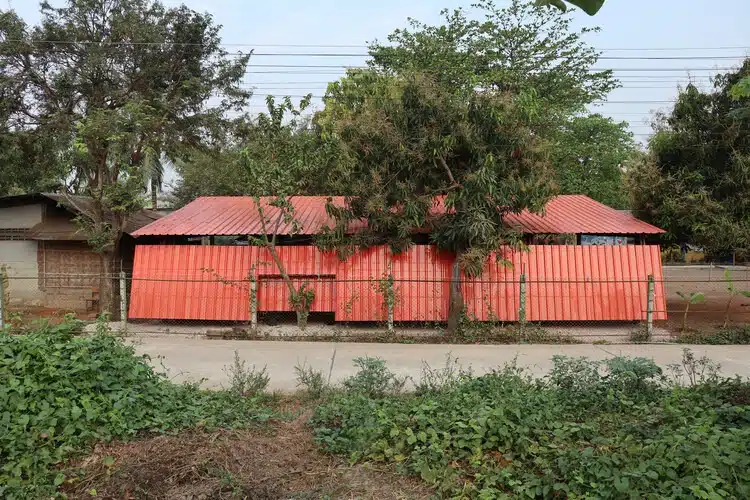
Sustainable Infrastructure Projects at Irrawaddy Flower Garden School: Innovative Design and Educational Challenges

Infrastructure Project for Irrawaddy Flower Garden School
Introduction to the School
Irrawaddy Flower Garden School is an educational institution dedicated to Burmese migrants and is operated under the supervision of an NGO in Thailand. The school is located approximately five kilometers from the Thai-Burmese border and serves 185 students, from kindergarten through eighth grade. Following the military coup in Burma on February 1, 2021, the school witnessed a significant increase in student enrollment, leading to new challenges in classroom management and infrastructure.
Infrastructure Challenges
Although most schools are registered with the Thai Ministry of Education, infrastructure projects aimed at securing funding are not officially included in this process. As a result, temporary buildings are often constructed with very basic facilities and lack long-term sustainability. These structures are typically simple and limited in their ability to meet growing educational needs.
Impact on the Educational Process
The limited infrastructure results in a clear shortage of available classrooms, forcing the school to share spaces among different classes. In some cases, the kitchen or outdoor areas are used as classrooms, which affects the quality of the educational experience and poses additional challenges for both teachers and students.
Analytical Conclusion
Overall, the school’s infrastructure project exemplifies the challenges faced by educational institutions in conflict-affected and migrant areas. It highlights the importance of long-term planning and sustainable support to ensure a stable learning environment that meets the needs of all students.


The First Project in 2024
Project Objectives
The first project in 2024 focused on expanding the school’s infrastructure through the construction of two new classrooms. This expansion was in response to the clear shortage of available classrooms, which had forced the school to share spaces among classes or use areas not designated for teaching.
Implementation Mechanism
The project was carried out in collaboration with a small group of architecture students and young architects, alongside support from local workers. Construction took five weeks and was executed directly on the school site, providing an opportunity to apply flexible solutions tailored to the actual needs of the location.
Impact Analysis
The addition of the two new classrooms significantly improved the learning experience by reducing classroom sharing and providing students with a more organized educational environment. The project also offered architecture students and young architects a real-world, hands-on experience, enhancing their practical skills in design and construction within resource-limited educational contexts.


Design of Frame Units and Their Role in Enhancing the Learning Environment
Roof Structure and Support
Three types of A-shaped frame units were designed to support the metal roof, forming the structure for both the lower and upper roofs. This design was not limited to structural considerations alone but also allowed flexibility in distributing interior spaces to meet the needs of different classrooms.
Providing Spaces for Play and Learning
The spacing between the structural columns created an opportunity to establish low seating for children, which can be used for sitting or playing. This design reflects attention to the psychological and social aspects of children, providing a comfortable and stimulating space for informal educational activities.
Multi-Functional Walls and Columns
The partition wall between the two classrooms acts as a physical barrier to control noise levels, improving the quality of the learning environment and reducing student distractions. Additionally, bamboo columns were integrated into the wall to form shelves along the sides of the classrooms, adding both functional and aesthetic dimensions simultaneously.


The Second Semester Project
Project Objective
After completing the first project in 2024, the team returned to the school a year later to implement a larger project focused on constructing a new classroom building to support the informal education program. This phase featured entirely different space requirements compared to the previous construction, due to the nature of the educational program and the students’ need for a larger group environment.
Design of Educational Spaces
The new classroom was designed to accommodate fifty students, allowing integration of students from different grades during English language lessons. The building’s entrance includes a small reception area used for gathering students before classes begin, enhancing organization and smooth flow within the school.
Educational Impact Analysis
This project contributes to improving the group learning experience by enabling students to interact with peers from different levels, stimulating linguistic and social engagement. The design also provides ample space for flexible educational activities and reflects the importance of advanced planning to meet the needs of informal education programs.
Project Site Challenges and Construction
Limited Site and Tight Spaces
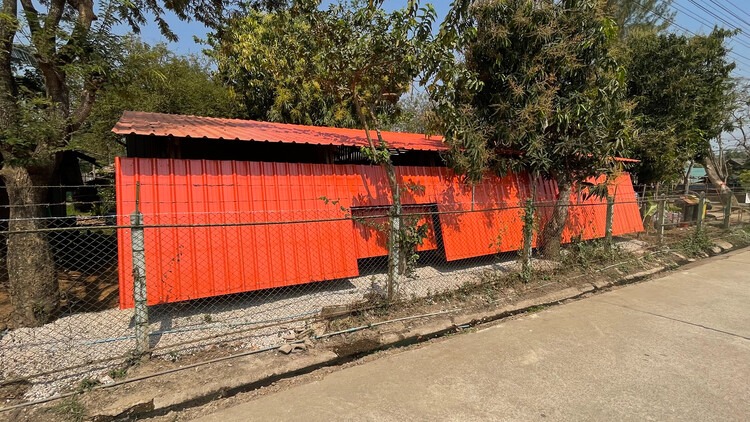
The site is located between the surrounding fence and the public canal, adjacent to an existing small administrative building, making it narrow and challenging in terms of construction feasibility. Before excavation could begin, the foundations of an old building had to be removed, adding an extra challenge to the construction process.
Dealing with Natural Obstacles
Tree roots along the fence further restricted the building’s width to only 5 meters, requiring careful planning to distribute spaces efficiently within the classroom.
Timeframe Achievement
Despite these challenges, the team managed to complete the classroom construction within five weeks, using the same practical and flexible methods applied in the 2024 project. This reflects the team’s ability to adapt to spatial and temporal constraints.


Architectural Excellence and Design Inspiration
Deviation from Traditional Architecture
This project differs from the traditional architecture typically seen in schools or workplaces, due to the influence of the local climate, culture, and construction methods specific to the area. This difference required a flexible design approach that integrates educational needs with the environmental and cultural characteristics of the site.
Field Research as the Basis for Design
At the beginning of the project, field visits were organized to the school to observe the flow of lessons and understand how students used different spaces. These visits formed the foundation of the design concept by gathering inspiration and analyzing daily educational activities.
Implementation and Local Collaboration
Design and planning were completed during the initial days, while clay bricks for the walls were produced directly on site in close collaboration with local workers. This cooperation facilitated the exchange of numerous practical building techniques and knowledge, adding an educational and developmental dimension for both young architects and local workers.


Use of Local Materials and Environmental Sustainability
Reliance on Local Materials
The majority of materials used were sourced locally, with a focus on creating an environmentally sustainable building. For example, recycled teak wood was used, obtained from a local company specializing in wood recycling.
Challenges in Adapting to Materials
Due to the nature of the recycled wood, the pieces were often irregular in size, necessitating on-site adjustments or modifications to ensure compatibility with the overall project objectives. This challenge provided the team with an opportunity to implement flexible design solutions suited to the available materials.
Outcome of Design and Adaptation
This approach resulted in a unique design that balances sustainability and aesthetics, allowing the team to overcome constraints and create an innovative and suitable learning environment for students while maximizing the use of locally available resources.


✦ ArchUp Editorial Insight
The project provides an example of the feasibility of implementing educational initiatives in resource-limited conditions in an innovative and sustainable manner. Among its strengths are the focus on expanding classrooms and enhancing the learning experience, the use of locally sourced and environmentally conscious materials, and the integration of flexible design solutions that promote social interaction among children. However, several limitations remain, such as the restricted available space, challenges associated with recycled materials, and the ongoing need for maintenance to ensure the long-term sustainability of the buildings. This makes the project a valuable step toward improving the educational environment, while also highlighting the constraints of execution in educational contexts facing multiple limitations.
Prepared by the ArchUp Editorial Team
Don’t miss the chance to explore more from Architecture in fields like Buildings and Design on the ArchUp website.


