Suzhou Tongli Villa: A Serene Retreat Blending Nature and Minimalist Design

Introduction: The Art of Thoughtful Dwelling
In the ancient water town of Suzhou renowned for its UNESCO-listed gardens and slow-living heritage the Tongli Villa redefines modern tranquility. Designed by Hangzhou Shihe Design, this home embraces stillness, natural textures, and architectural poetry. Unlike lavish estates, its beauty lies in whispered details: the grain of dark wood cabinetry, the curve of a handmade ceramic, and the dappled light filtering through a sculptural tree.
Key Features of the Suzhou Tongli Villa
1. A Mood-Enhancing Entrance
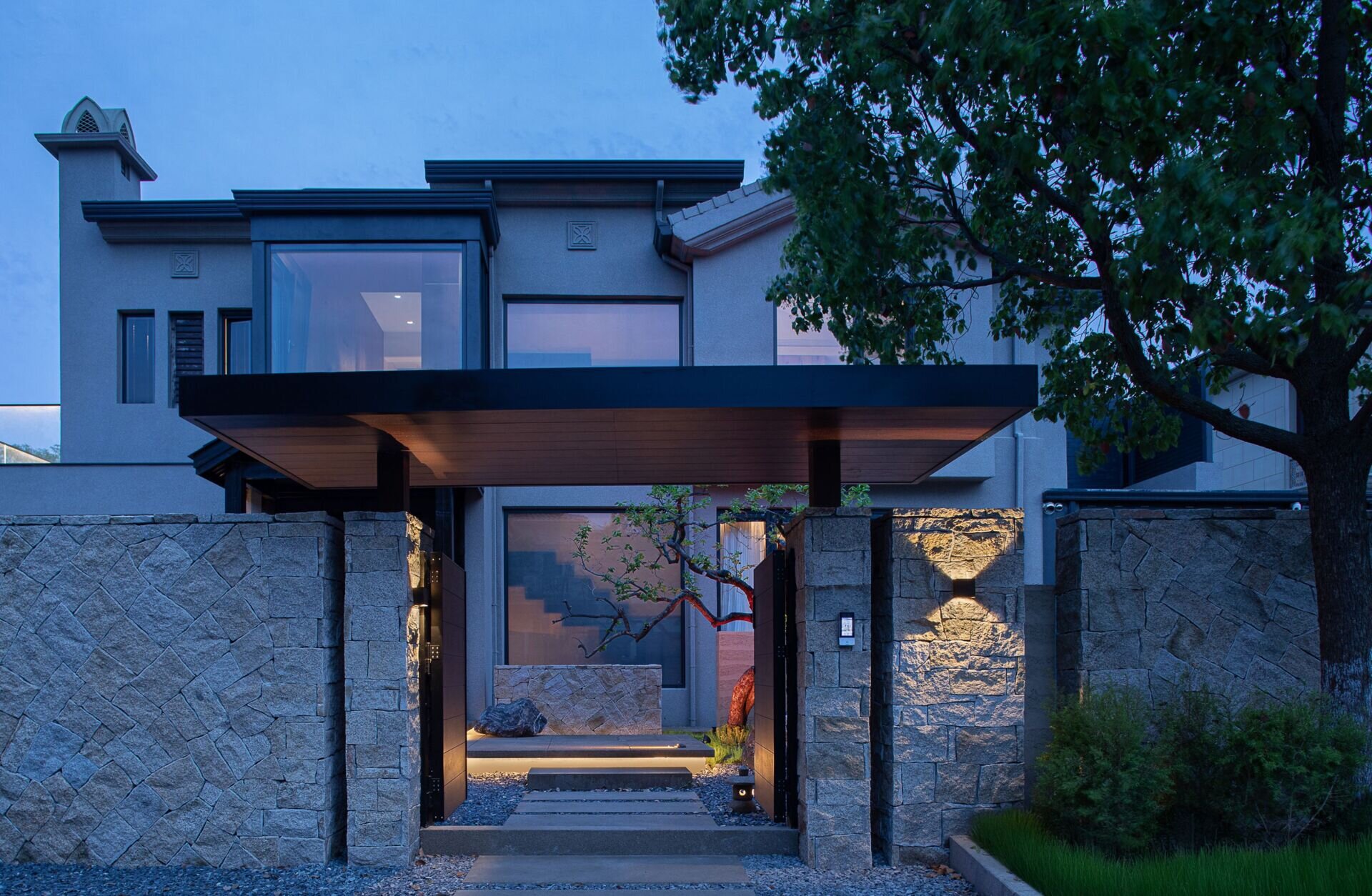
The facade sets the tone with cool gray stone, crisp black framing, and warm wood accents under a minimalist canopy. Geometric lines merge strength and softness, while architectural lighting casts elongated shadows, evoking a gallery-like precision.
2. The Courtyard: A Meditation in Stone and Light
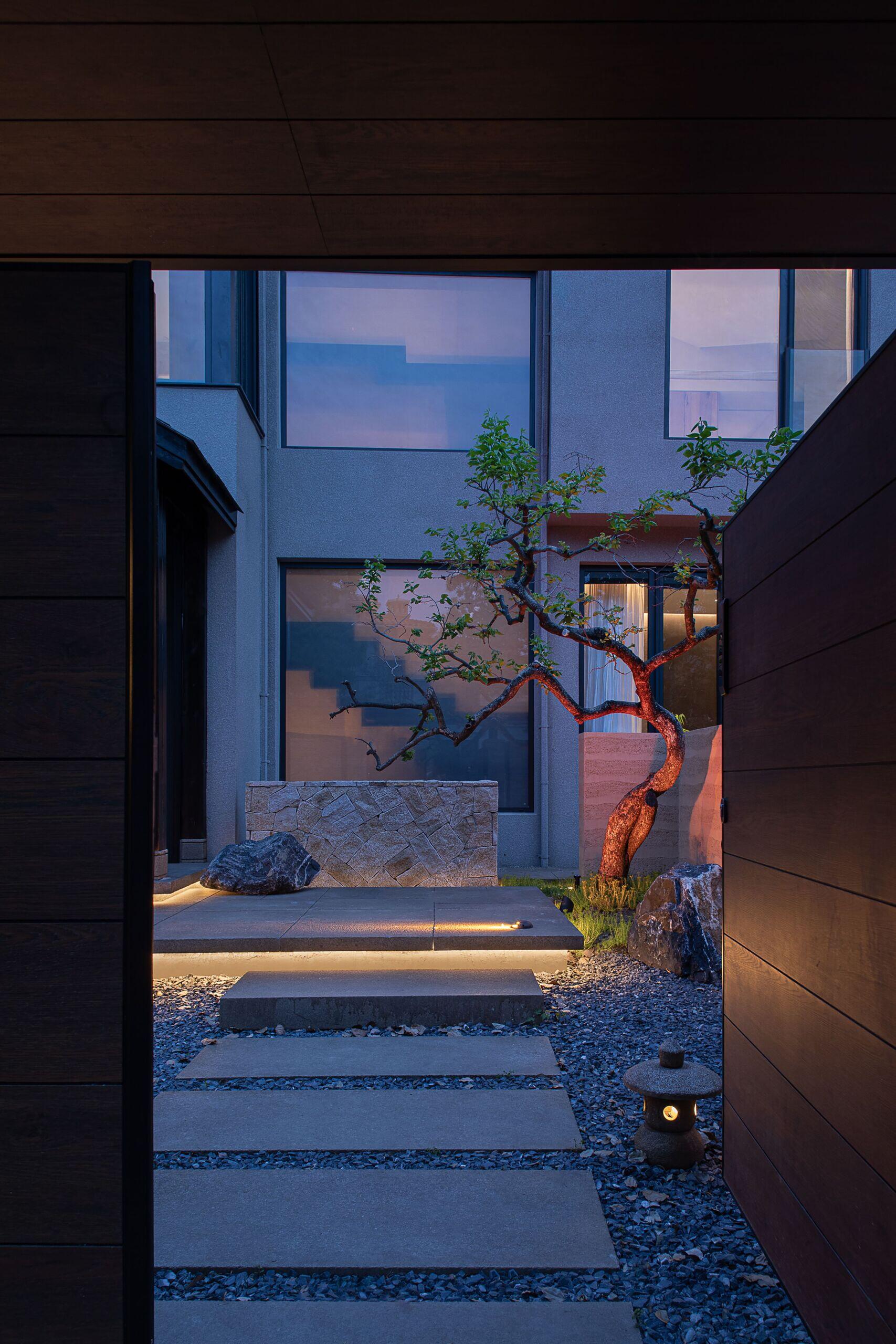
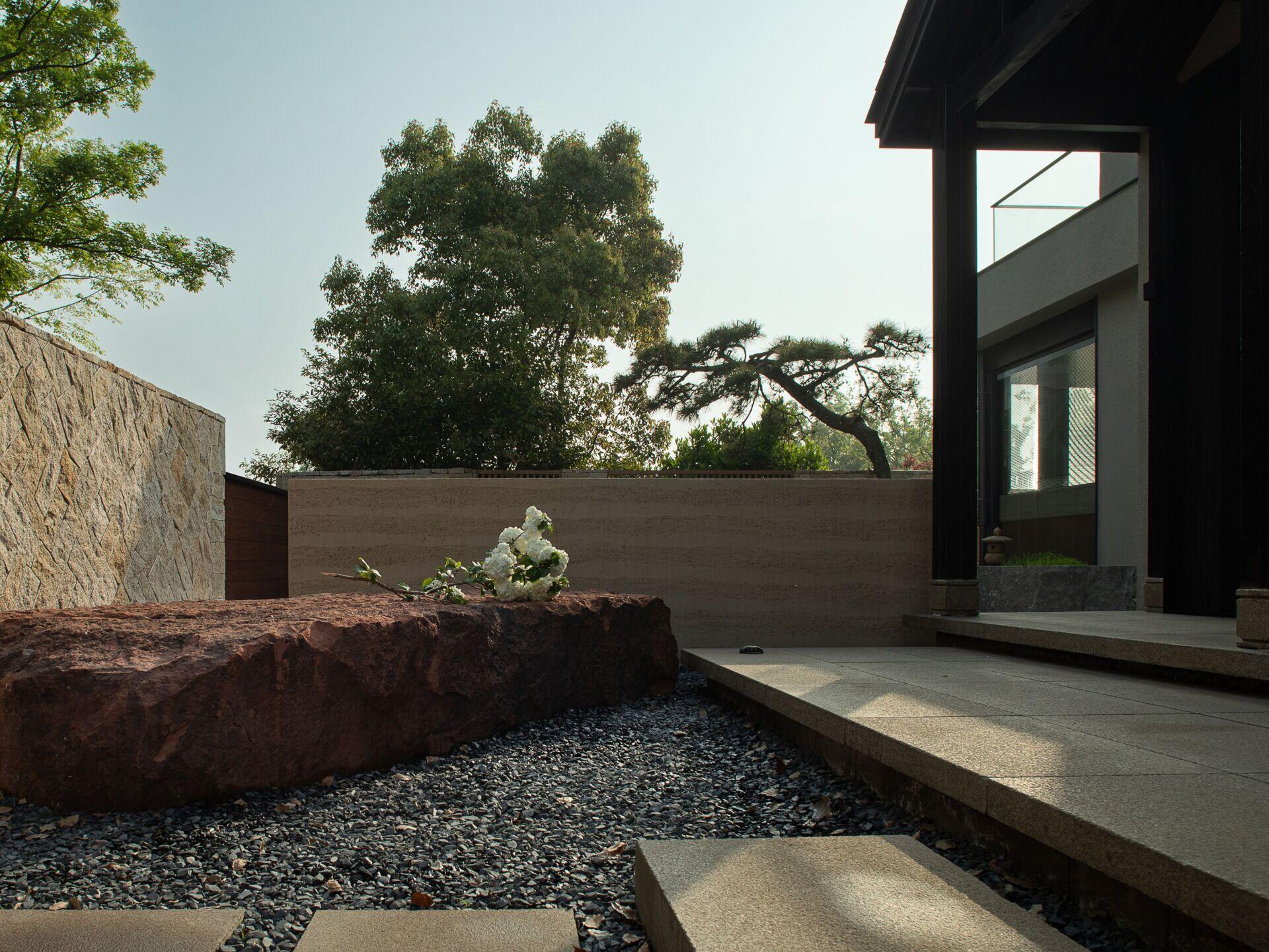
A single gnarled tree stands sentinel in the courtyard, its trunk illuminated by uplighting that paints textured walls with ethereal patterns. Underfoot, concrete pavers float over gravel, creating a rhythmic pathway. The bold red stone centerpiece contrasts with pale walkways, embodying wabi-sabi imperfection.
Pro Tip: For readers inspired to recreate this, consider drought-resistant ground cover (like moss or creeping thyme) for low-maintenance serenity.
3. Earthy Elegance in the Living Spaces
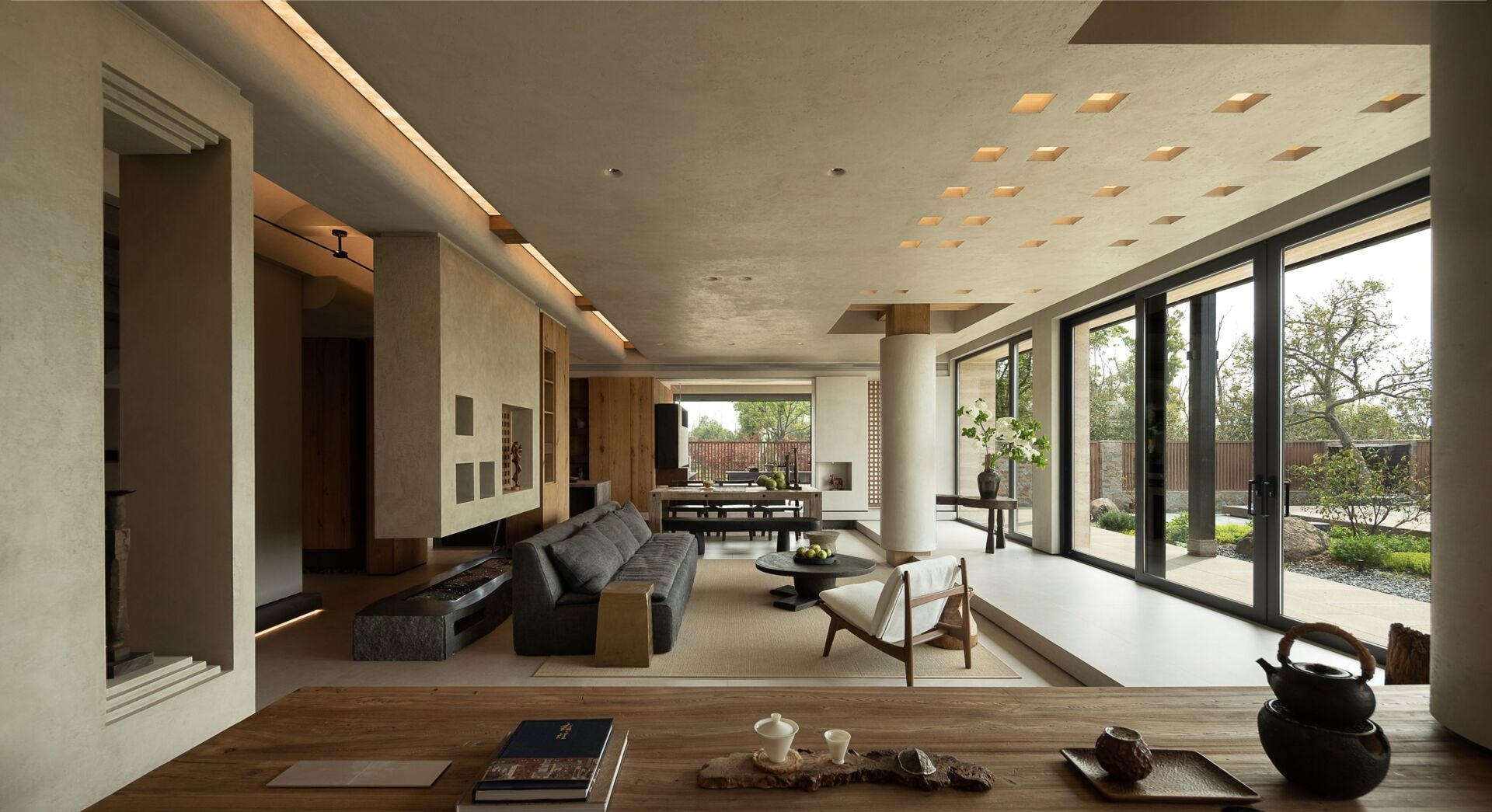
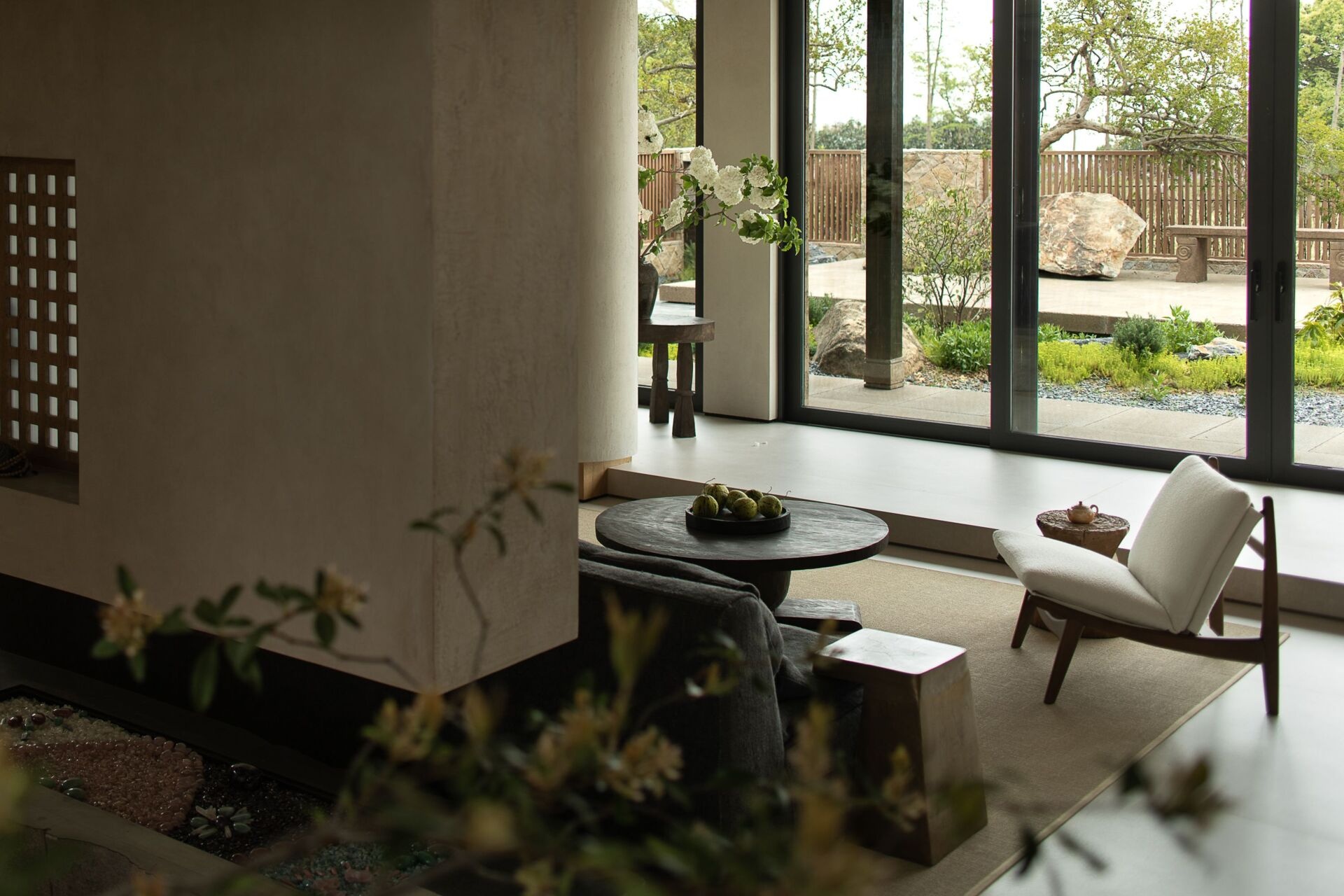
- Dark wood cabinetry anchors the living area, framing a handcrafted ceramics display like a private museum.
- A curved bench seat and potted branch introduce organic asymmetry.
- The dining zone features a solid wood table with stone bases functional art for slow meals.
Design Insight: Shihe Design prioritizes material honesty each element reveals its natural texture, from rough-hewn stone to unfinished timber.
4. The Kitchen: Warmth Meets Sculptural Contrast
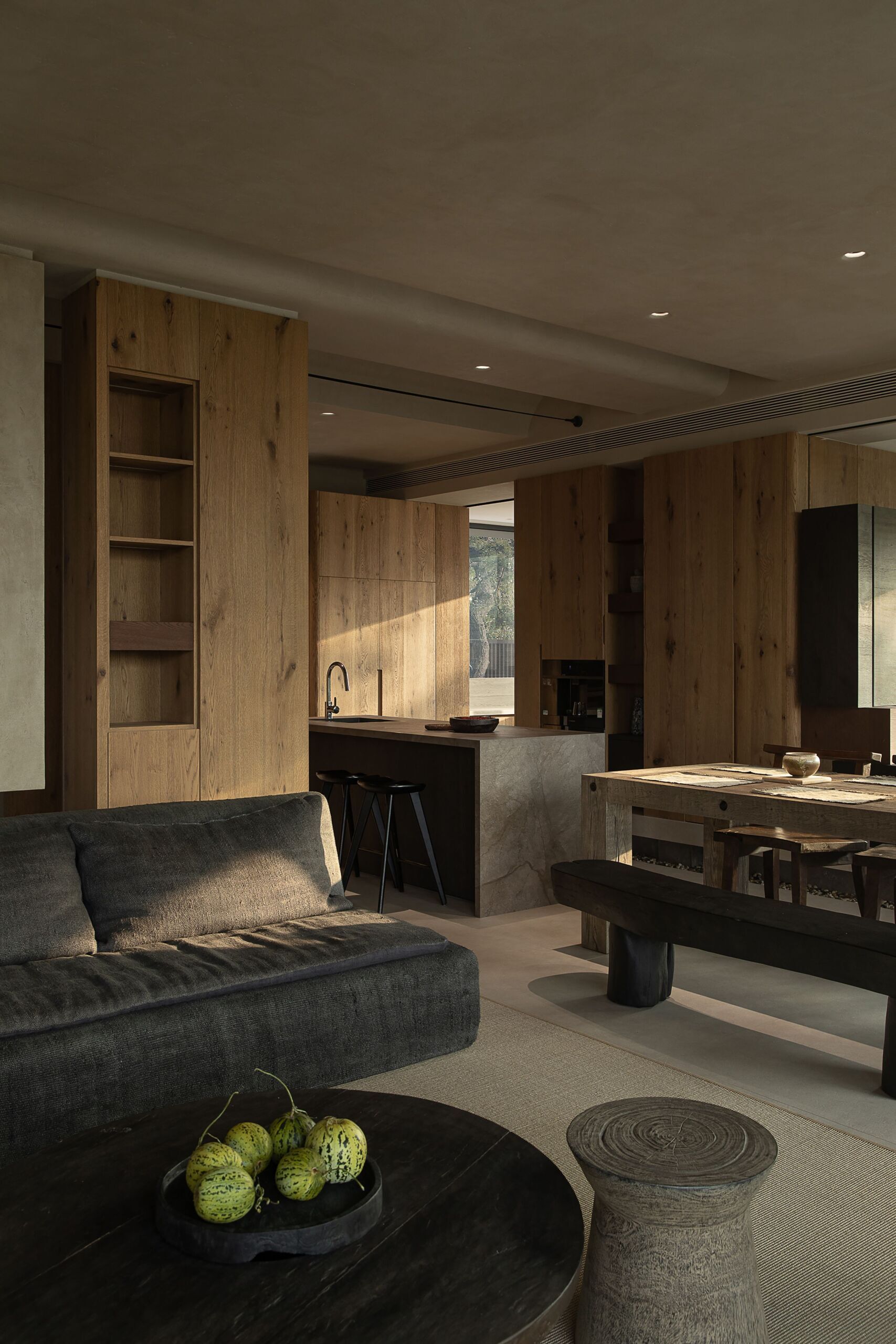
Raw wood cabinetry wraps the kitchen in warmth, while a matte stone island catches afternoon light. A recessed fireplace lined with polished stones adds tactile contrast proof that utility can be poetic.
5. The Floating Staircase & Tea Room
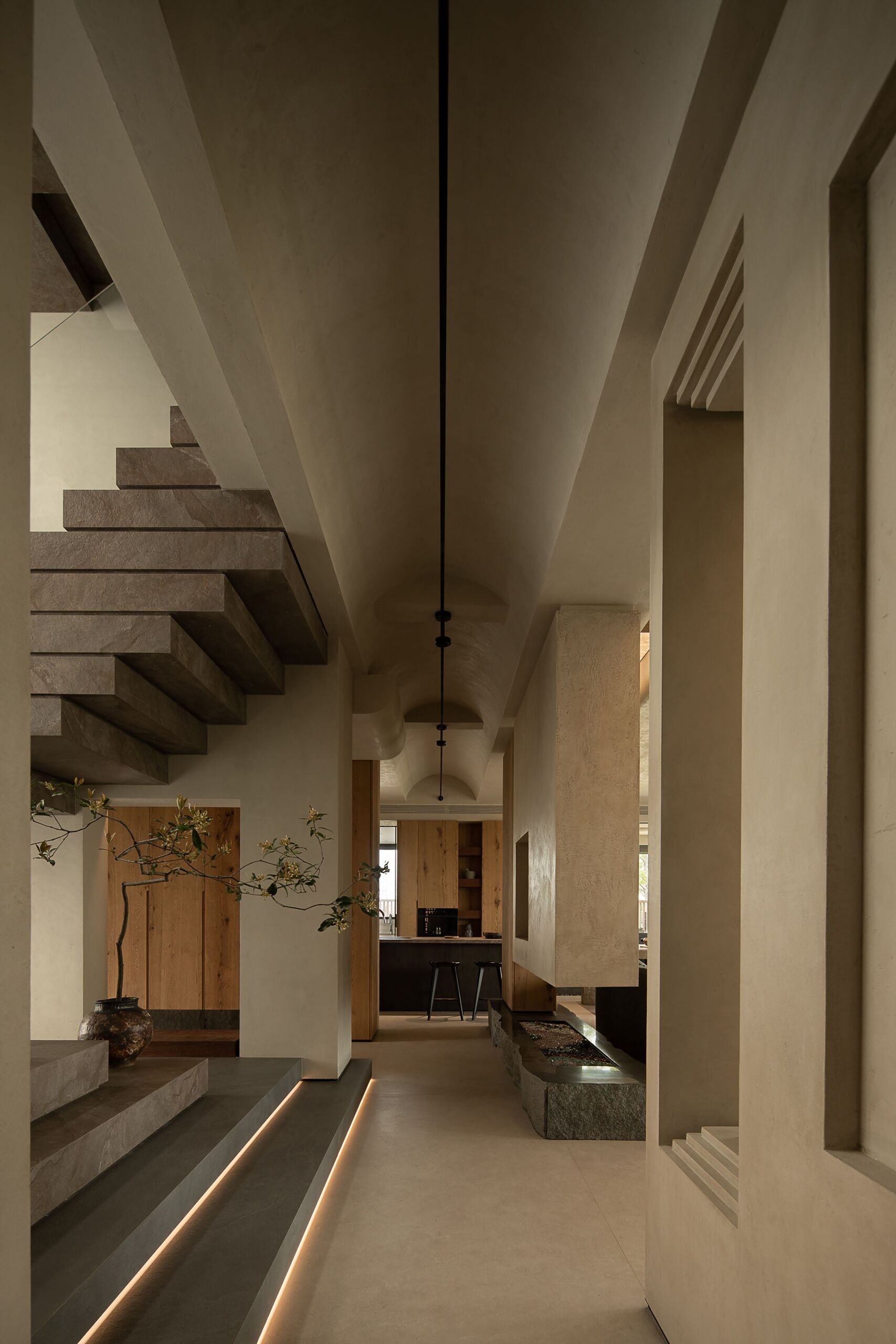
- Sculptural staircase: Stone treads appear to hover, backlit by frosted windows.
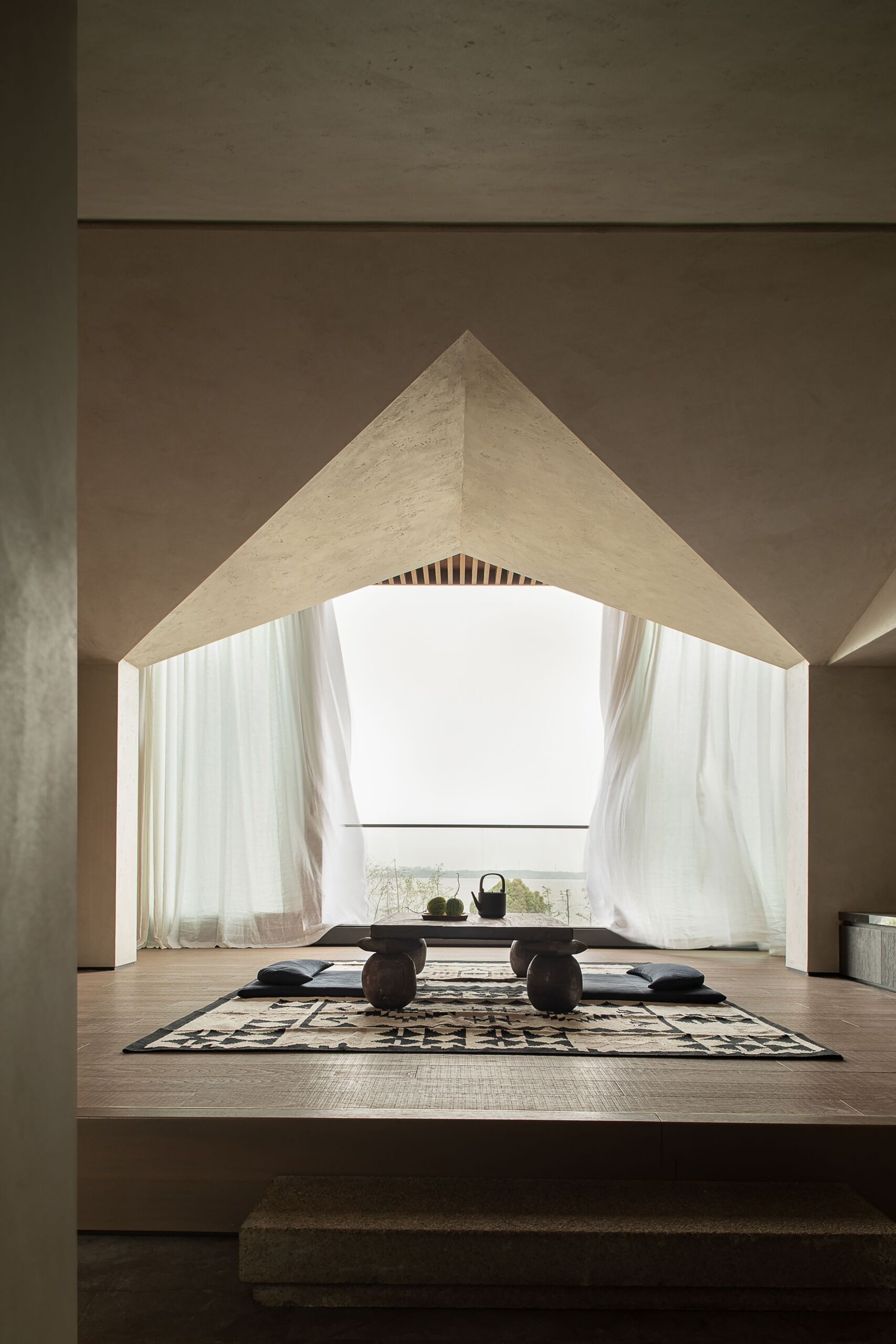
- Sky-high tea room: A low wooden table rests on a woven rug, framed by billowing curtains. The folded ceiling mimics origami, shifting with the sun.
Cultural Nod: This space channels Suzhou’s tea culture a ritual of pause and presence.
6. Primary Suite: A Cocoon of Calm
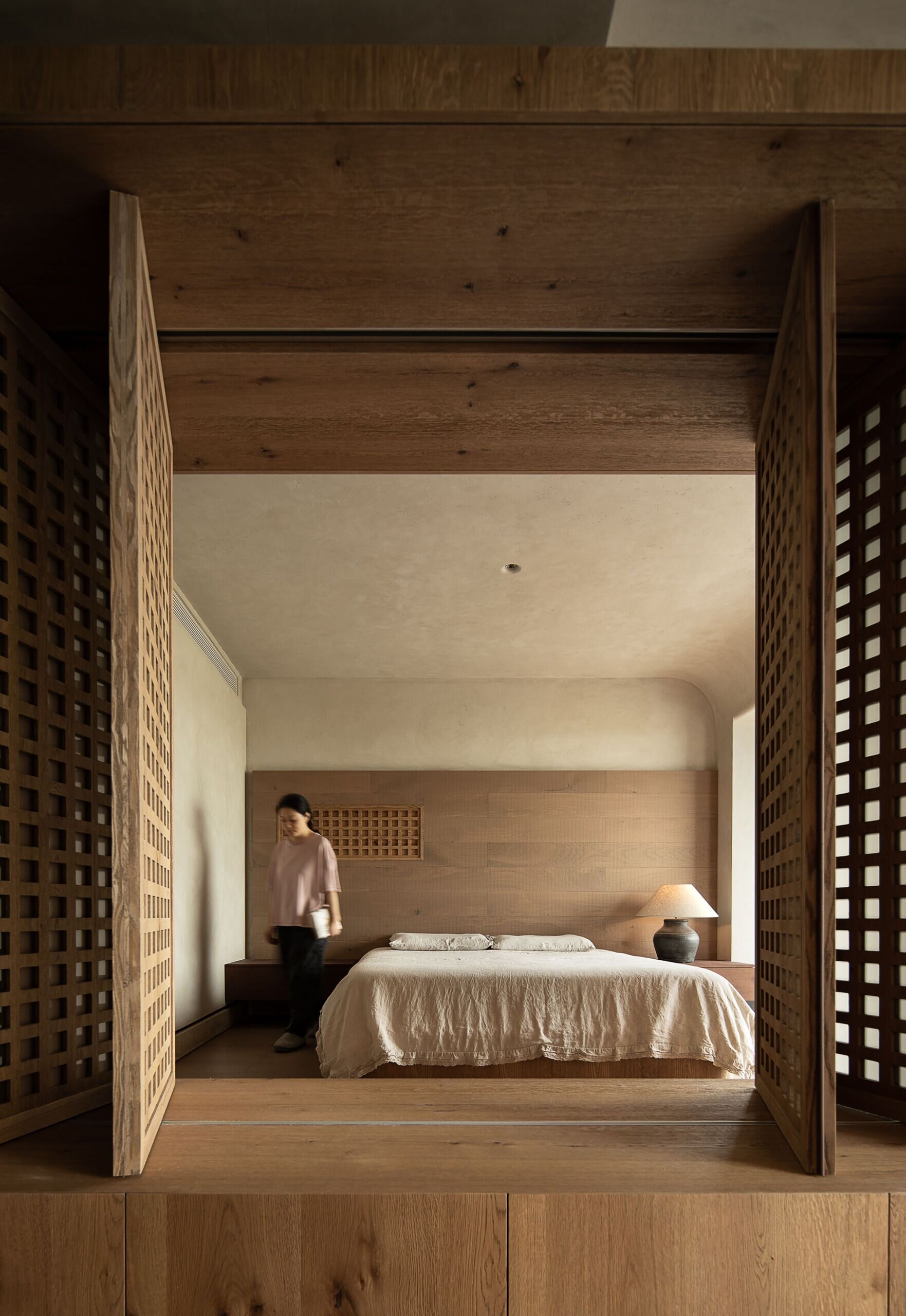
Sliding lattice panels diffuse light, while a curved wood bathtub overlooks the garden. The workspace blends seamlessly, with a vintage lamp and desk carved from a single timber slab.
Wellness Angle: The design promotes biophilic healing connecting occupants to nature through materials and sightlines.
Design Philosophy: “The Home as a Partner”
As Shihe Design notes:
“The end of design is not the work. It’s whether the person who truly lives in it, from morning till night, always coexists with the space in a comfortable, peaceful, and relaxed manner.”
This philosophy manifests in:
- Rammed earth walls that breathe with the climate.
- Floor-to-ceiling glass blurring indoor/outdoor boundaries.
- Negative space allowing rooms to “rest.”
Conclusion: Why This Home Resonates
The Tongli Villa isn’t just a dwelling it’s a meditative practice. For those seeking design that nurtures stillness, it offers a blueprint: less ornament, more intention; less noise, more soul.
Explore More with ArchUp
ArchUp documents the evolving profession of architects worldwide, from career insights and research to project profilesand industry news. Our editorial team publishes global salary trends, career advice, and opportunities for emerging talents. Learn more on our About page or Contact us to collaborate.