Sydney Olympic Park 2050 Master Plan Envisions Nature-Positive Urban Transformation

The Sydney Olympic Park Authority has unveiled a comprehensive architecture master plan transforming the precinct into a high-density urban suburb. The 2050 vision integrates 430 hectares of protected parklands with new residential developments. The plan addresses Sydney’s housing crisis while honoring Wangal cultural heritage and advancing sustainability goals.
Ambitious Population Growth Drives Infrastructure Expansion
Sydney Olympic Park currently houses approximately 5,000 residents. However, the population is forecast to surge beyond 30,000 by 2050. This represents growth exceeding 450 percent across the 640-hectare site.

Therefore, the Master Plan 2050 allocates significant land for social infrastructure expansion. The construction plan includes ten new playgrounds, nine outdoor public spaces, and four sports fields. Moreover, two school sites will be integrated alongside a library, community hub, and cultural center.
The residential strategy prioritizes key workers and social housing within vertical buildings. Housing units will occupy lower floors of towers or cluster within community-focused developments. The New South Wales Department of Planning guides this staged approach to address historical disconnects between large-scale infrastructure and residential needs.
Five Distinct Neighborhoods Shape Urban Design
The master plan organizes the precinct into five neighborhoods rather than treating it as uniform space. Each neighborhood serves specific functions within the broader urban planning framework.
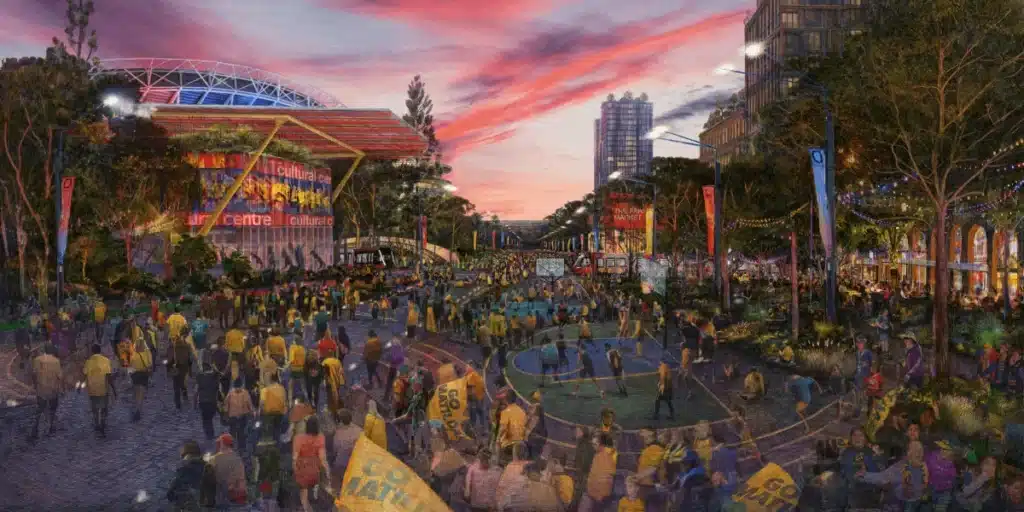
The Urban Centre functions as a mixed-use hub combining residential, commercial, and retail activities. High-rise developments will rise directly above metro and train stations, maximizing transit-oriented efficiency. Meanwhile, the historic State Abattoir precinct will transform into a cultural anchor housing the new library.
The Eastern Neighbourhood connects the Urban Centre to Bicentennial Park through striking vertical architecture. This area accommodates a primary school and indoor recreation facilities. The existing P6 car park will convert into residential buildings overlooking the Brickpit.
Sustainable Mobility and Heritage Integration
The Southern Neighbourhood features a major pedestrian and cyclist bridge over Sarah Durack Avenue. This infrastructure safely links residents to the Urban Centre and metro stations. Additionally, a micro-freight transfer hub will manage local deliveries, reducing heavy vehicle presence in residential streets.
Haslam’s Neighborhood transforms industrial and parking land along Haslams Creek into residential enclaves. Buildings will range from six to twenty storeys using sustainable building materials. The Edwin Flack Neighbourhood provides northern transition space, encouraging student housing and innovative build-to-rent models.
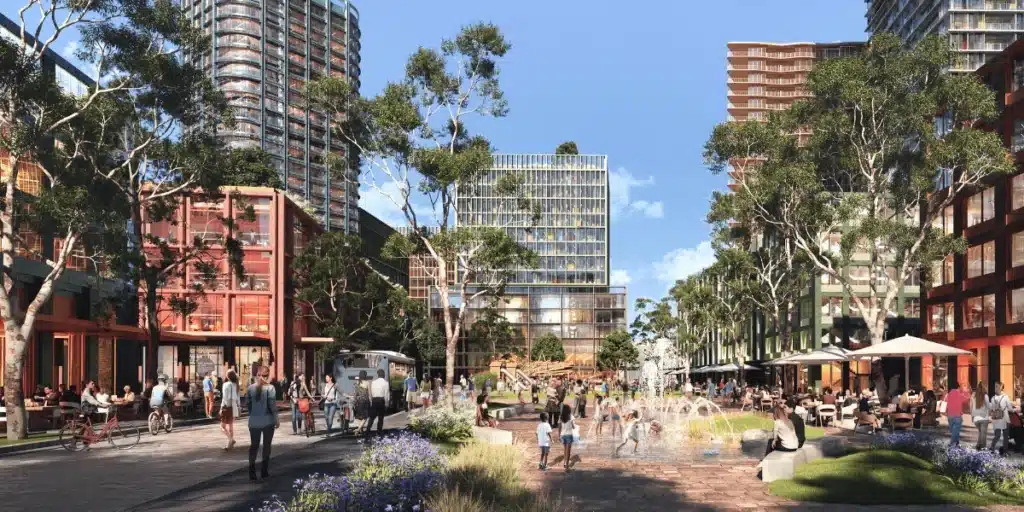
The plan builds upon the precinct’s legacy as host of the first Green Games. Circular economy strategies and decarbonization goals drive the sustainability vision forward.
A Quick Architectural Snapshot
Sydney Olympic Park 2050 reimagines 640 hectares through nature-positive urban planning. Five distinct neighborhoods will accommodate over 30,000 residents by mid-century. The master plan integrates cultural heritage, construction innovation, and green infrastructure. This represents Australia’s ambitious approach to sustainable urban transformation.
✦ ArchUp Editorial Insight
Sydney’s housing crisis has reached a critical point where government intervention becomes unavoidable. The Olympic Park transformation reflects a broader shift in Australian urban policy. Authorities now prioritize density over suburban sprawl.
The 2050 master plan responds to multiple pressures simultaneously. Land scarcity in central Sydney drives development toward underutilized precincts. Transit infrastructure investments demand higher population densities to justify their costs. Meanwhile, climate commitments require concentrated development patterns that reduce car dependency.
The emphasis on key worker housing signals a recognition of essential labor shortages in urban cores. Rising property values have pushed service workers to distant suburbs, creating operational challenges for cities.
Heritage integration serves both cultural reconciliation goals and tourism economics. The vertical suburb model maximizes land value while preserving parkland for public use.
This project is the logical outcome of housing affordability collapse, transit investment imperatives, and post-pandemic urban restructuring policies.