The Enigmatic Nuraghe Genna Maria and Sardinia’s Timeless Architecture

Overview
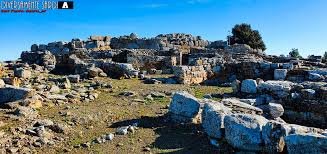
Rising from the rolling hills of Villanovaforru in southern Sardinia, the Nuraghe Genna Maria stands as a silent witness to one of Europe’s most mysterious civilizations — the Nuragic culture. Built more than 3,000 years ago, this megalithic tower complex defies time, blending primitive strength with astonishing precision in design and construction.
While much about its builders remains unknown, the Nuraghe reflects an architectural mastery that continues to intrigue archaeologists and inspire contemporary architects exploring organic, context-driven design.
Architectural Significance
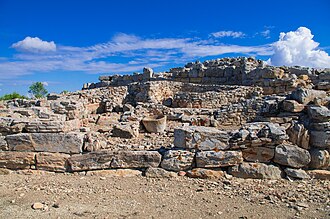
The structure of Nuraghe Genna Maria follows a truncated conical form, typical of Sardinia’s nuraghi, built from massive basalt stones arranged without mortar — a technique that speaks of both engineering genius and deep environmental awareness.
Its design features:
- A central tower (keep) surrounded by defensive walls and secondary chambers.
- A spiral staircase carved within the thick stone walls leading to the upper terrace.
- An internal courtyard, possibly used for ritual or communal gatherings.
This architectural complexity, achieved without written plans or advanced tools, embodies a balance between defense, community, and spirituality.
Cultural Context
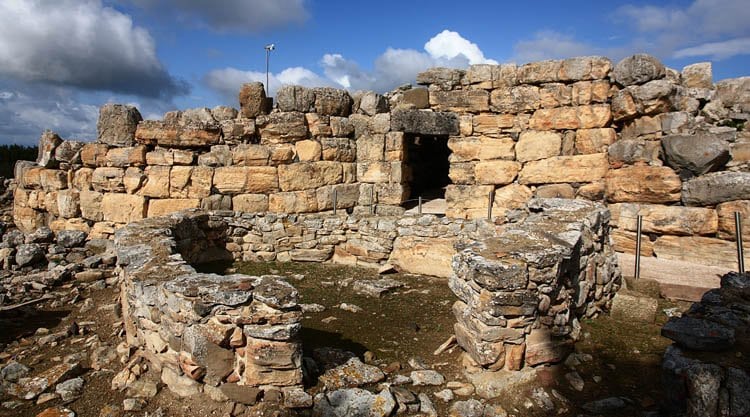
The Nuragic civilization thrived between 1900 and 730 BCE, yet no written records survive. The nuraghi — over 7,000 across Sardinia — remain their most enduring legacy.
Nuraghe Genna Maria, located on a strategic hill, provided visibility across the Campidano plain, symbolizing both protection and power. Excavations have revealed ceramics, bronze objects, and domestic tools, offering glimpses into daily life and sacred rituals.
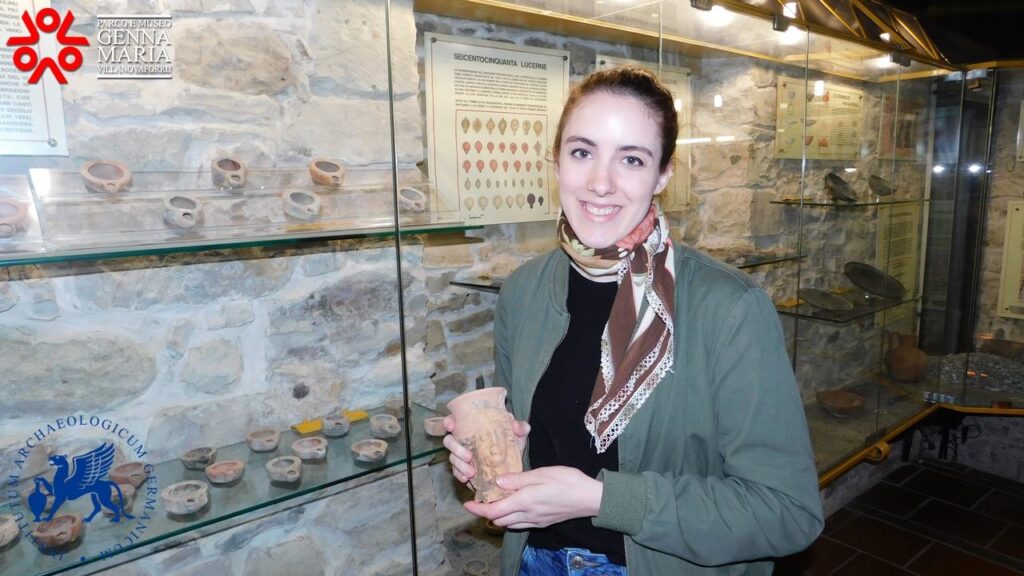
Today, the site also features a museum that preserves these artifacts, linking ancient ingenuity with modern education and cultural tourism.
Legacy and Modern Influence
Architects studying vernacular and resilient design often reference the Nuragic architecture as a model for climate-adaptive construction.
The use of local materials, thermal mass, and circular layouts mirrors contemporary movements in sustainable architecture — reminding us that innovation often begins in the past.
Conclusion
The Nuraghe Genna Maria stands not merely as a ruin but as a philosophy carved in stone. It represents humanity’s eternal dialogue with nature — a structure where defense becomes harmony, and mystery becomes memory.
From its basalt blocks to its panoramic hilltop view, the site remains a timeless call to rediscover architecture as a language of endurance and identity.
✦ ArchUp Editorial Insight
The Nuraghe Genna Maria stands as a silent mediator between human ingenuity and the raw permanence of stone. Its circular layout and basalt construction reveal a deep environmental awareness — a form of prehistoric sustainability long before the term existed. Yet, while its geometry reflects functional clarity, the absence of written records leaves questions about its true societal purpose. Was it purely defensive, or did it serve as a sacred observatory aligned with natural rhythms? Through AI-driven reconstruction and spatial analysis, scholars now reinterpret these ruins not as relics, but as active data points in the story of Mediterranean resilience. The project reminds us that architectural heritage gains renewed relevance when technology is used not to replace memory, but to amplify contextual understanding and material expression.