

The Sax A New Architectural Landmark Redefining Rotterdam’s Skyline

A Composition That Plays to the City’s Rhythm
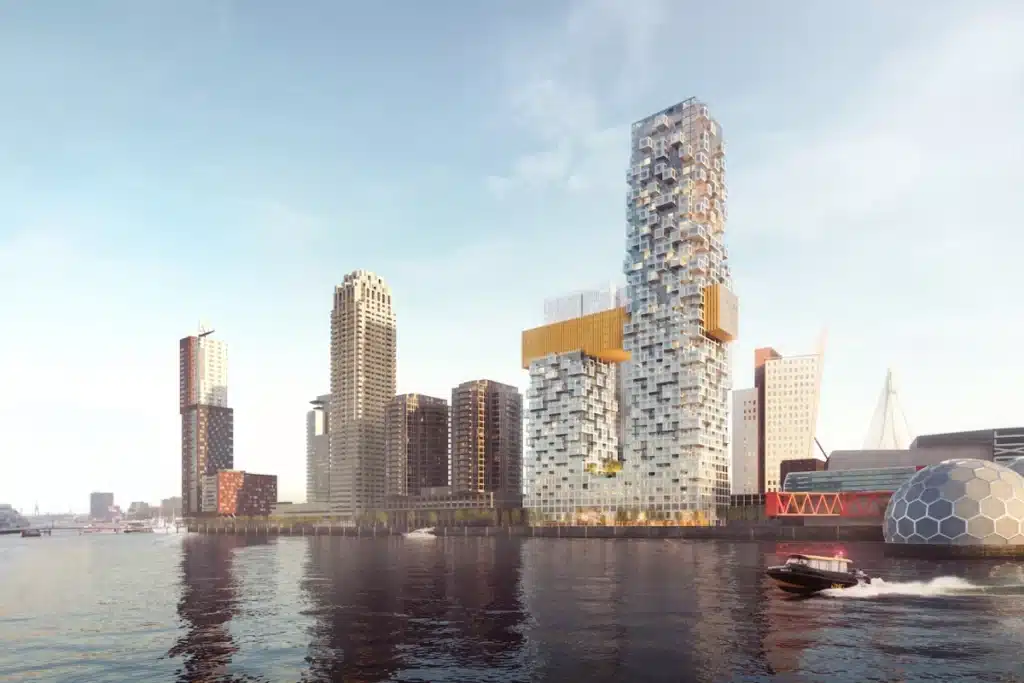
In the heart of Rotterdam, The Sax project rises as one of the city’s most striking riverfront landmarks. The design draws inspiration from the saxophone, an instrument known for its fluid motion and expressive rhythm. The development includes two residential towers linked by a golden sky bridge about one hundred meters above the ground. Together, they create a dynamic composition that plays a visual melody across the cityscape.

Layered Design and Interaction with Light
The building’s metallic, rippling façades reflect sunlight in constantly changing ways throughout the day. As the sky transforms, the structure seems to shift in appearance. The towers rise gradually, creating a sense of motion that makes them appear to sway softly with Rotterdam’s urban rhythm.
Vertical Living and Shared Spaces
The Sax introduces a new approach to urban living through the concept of a vertical neighborhood, where terraces and open spaces are distributed across multiple levels. The sky bridge between the towers houses residential floors and a shared viewing terrace that overlooks the harbor, offering residents a blend of privacy and openness while fostering community interaction in elevated spaces.

Integration with the Urban Fabric
The building’s transparent glass base opens directly to the surrounding streets, allowing the structure to merge seamlessly with the city’s movement and life at ground level. This design approach strengthens the relationship between architecture and public space, turning the building into a natural extension of Rotterdam’s evolving urban fabric.

Balance Between Structure and Fluidity
The project achieves a distinct balance between structural strength and sculptural softness, combining simplicity of form with bold, rhythmic detailing. Together, the towers stand as an architectural statement reflecting Rotterdam’s ongoing pursuit of innovation and design excellence.

✦ ArchUp Editorial Insight
The article examines an architectural project that balances natural beauty with protective function through a design transforming the riverfront into a sequence of interconnected elevated gardens. The island like composition uses natural tones and terraced levels to visually reconnect the city with the water. However, questions remain regarding the long term resilience of such a model amid climate challenges and maintenance demands. Still, the project stands as a forward-looking interpretation of how nature and urban form can coexist within coastal environments.
Explore the Latest Architecture Exhibitions & Conferences
ArchUp offers daily updates on top global architectural exhibitions, design conferences, and professional art and design forums.
Follow key architecture competitions, check official results, and stay informed through the latest architectural news worldwide.
ArchUp is your encyclopedic hub for discovering events and design-driven opportunities across the globe.


