Former U.S. Embassy in London Transformed into a Hotel, Raising Questions of Architecture and Memory

In the heart of Grosvenor Square stands the building that once served as the U.S. Embassy London. This sealed diplomatic fortress is now reborn as a luxury hotel attempting to reconnect with the city after decades of isolation. The building’s transformation is a fascinating shift from its days with the U.S. Embassy London to its current role.
From Fortress to Open Front
Originally built in the mid-20th century, the structure embodied an era of austere modernism. Its imposing façade and monumental scale dominated the street. The recent transformation of the site has stripped away many of the barriers that once made it feel like a fortress. It presents a more open and accessible face reminiscent of the U.S. Embassy London. Yet the question remains: is opening a few passages and corners enough to truly re-establish its bond with the surrounding urban fabric?

A Building Between Past and Present
Efforts were made to preserve the original character of the design, but the outcome is not without contradictions. Between the symbolic strength of the initial composition and the softer demands of a hospitality program, there is a clear tension. The clash between the strict modernist identity and the new role as a place of leisure produces a dual character. This is distinctive, yet reveals the limits of adaptation when a building’s new use does not fully align with its origins as the location of the U.S. Embassy London.

A Critical Reading
The conversion has undoubtedly succeeded in reopening the building to the public, an urban gain in its own right. But architecturally, the debate continues: do such projects revive historic structures, or do they impose new functions that alter their meaning? This especially applies to iconic sites like the former location of the U.S. Embassy in London.
✦ ArchUp Editorial Insight
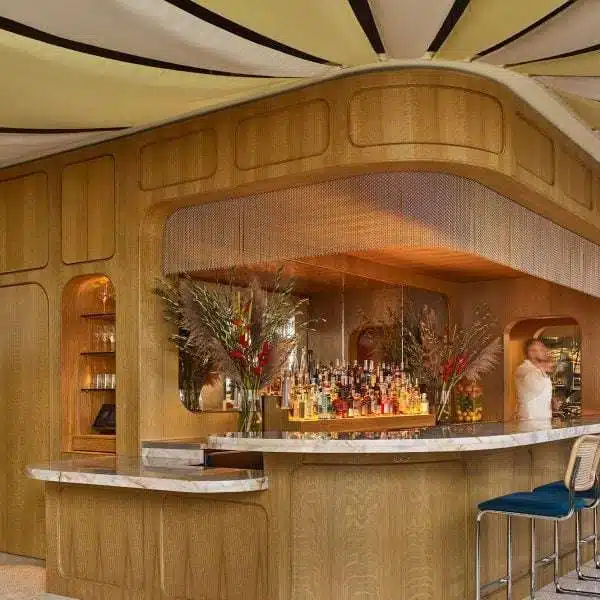
The transformation of London’s former embassy presents a redefined architectural narrative. Images reveal a stern stone façade and strong horizontal lines rooted in mid-century modernism. The interior volumes appear generous, softened by light strategies that attempt to foster openness and urban dialogue. Yet a question arises: does this intervention truly reconnect the building to its context? Or does its symbolic weight still keep it apart? Balancing the integrity of its original identity with the demands of hospitality introduces a subtle tension. Nevertheless, the project stands as a significant case of adaptive reuse that preserves architectural memory. It offers renewed spatial relevance, highlighting its historic role with the U.S. Embassy London.
Explore the Latest Architecture Exhibitions & Conferences
ArchUp offers daily updates on top global architectural exhibitions, design conferences, and professional art and design forums.
Follow key architecture competitions, check official results, and stay informed through the latest architectural news worldwide.
ArchUp is your encyclopedic hub for discovering events and design-driven opportunities across the globe.