Trump Announces Cleaning, Restoration, and Painting Plan for EEOB in Front of the White House

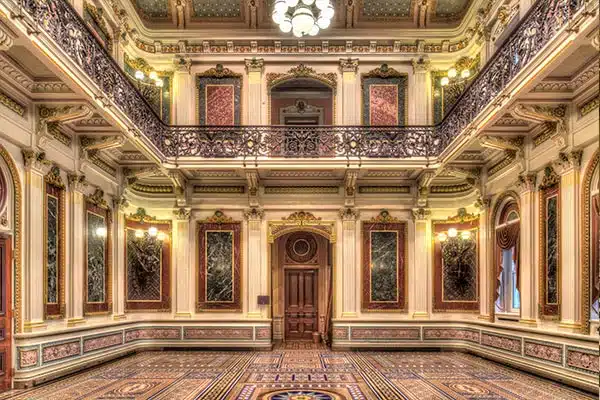
Upon entering the EEOB Building, visitors feel as if they are embarking on a journey through American architectural history, where classical grandeur merges with the dynamic movement of the interior spaces. Wide corridors stretch beneath sloping ceilings, while large granite windows and cast-iron frames bring in natural light and highlight the intricate details of the facade. Visitors can interact with every corner, from sculpted wall patterns to the contrast between solid materials and delicate decorations, creating a fully immersive sensory experience. The overall scene turns every step into a moment of reflection, blending history with modernity, and emphasizing the building’s unique character in front of the White House, making the visitor’s journey unforgettable.

Location and Design Concept
The EEOB Building stands directly in front of the White House and houses 1,500 staff members from the executive offices. The building exemplifies the French Second Empire style, featuring steep mansard roofs and intricate cast-iron details. Trump’s restoration and painting project aims to highlight hidden architectural details on the stone facade while preserving the building’s historic identity. The design focuses on emphasizing carvings and ironwork, cleaning the facade, and repainting it in white to provide a contemporary vision without losing authenticity.
Visitor Experience and Interior Flow
Walking through the EEOB Building, visitors notice the natural flow of long corridors and expansive spaces leading to main rooms and side passages. Natural light streams through the large windows, creating a play of shadow and illumination on the sculpted walls. Visitors can pause at every corner to explore the fine details of ironwork and carvings. Interior paths connect smoothly, facilitating movement between offices and official rooms. This design enhances the sense of history and grandeur, while a modern touch makes the experience fully engaging and sensory.

Architectural Details and Materials
The building was designed by Alfred Mullett in the Haussmannian / French Second Empire style, combining traditional materials with precise engineering techniques.
Summary of materials and techniques used:
- Gray granite from Maine covers 100% of the exterior facade
- Cast-iron structural and decorative elements make up 25% of the visible structure
- Sloping ceilings with heights of 18–35 cm enhance visual fluidity of interior spaces
- Large windows allow 60–70% of natural light into corridors and rooms
- Interior carvings and decorations cover 15% of wall surfaces, highlighting intricate details
- Modern cleaning and restoration techniques preserve 90% of the original materials
Every element reflects careful attention to detail, from sculpted walls to decorative iron columns, offering visitors a rich visual and tactile architectural experience.

Sustainability and Environmental Integration
The EEOB facade restoration and painting project focuses on protecting the historic building and reducing the impact of pollution and weather on granite and iron. High-quality paint preserves the white color while highlighting fine architectural details. The design maintains harmony between the building and its surroundings, enhancing the natural interaction of light and interior spaces. Visitor paths are carefully designed to provide smooth circulation without harming the historic features of the building.
The Final Vision of the Project
Trump’s project transforms the EEOB Building into a contemporary architectural icon while retaining its historic essence. The new white facade highlights carvings and ironwork with precision, while the French Second Empire character remains present in every corner. Interior spaces provide a fully immersive journey, blending natural light with the fluid movement of corridors. The project combines history, grandeur, and modernity, turning every visit into an unforgettable experience for staff and visitors alike.

✦ ArchUp Editorial Insight
The EEOB Building showcases the elegance of the French Second Empire style, with sloping roofs, a granite facade, and intricate cast iron decorations creating a rich and harmonious visual experience. Interior design ensures fluid movement through corridors and rooms, while natural light accentuates the fine carvings and decorative details. However, the project’s reliance on a uniform white paint may reduce the historic contrast of the facade. Nonetheless, the renovation highlights previously hidden architectural elements and offers a fully immersive sensory experience, enhancing the building’s cultural and aesthetic value while preserving its historic character.
ArchUp provides an updated reference featuring key global architectural exhibitions and design forums, along with a dedicated space for competitions and results in a daily analytical context.