

Plan B: When Architecture Becomes a Mental and Emotional Refuge Underground

Plan B: Underground Architecture for the Unknown
In times of turbulence and uncertainty, the search for safe and sustainable housing becomes more of a necessity than a choice. Within this context, the concept of “Plan B” has emerged. It is one of the architectural models redefining secure living and self-sufficiency, away from external threats.
From the Idea of Safety to a Fully Integrated Space
“Plan B” is designed as an underground home located 15 meters below the surface, spanning an area of 2,280 square meters. The idea goes beyond a traditional shelter—it is a comprehensive system for daily life. It is developed to face global challenges such as pandemics and natural disasters.
A Design Balancing Security and Functionality
From the outside, the structure resembles the entrance to a modern museum or a military facility. This reflects a design philosophy that balances reliability with visual appeal. Although the visible surface area above ground is only 172 square meters, its ability to be constructed in various locations grants it unique flexibility. This includes locations within forests or near residential buildings.
Accessibility and Evacuation Plans
To enhance safety, the structure is equipped with three main entrances. In addition, there is a helipad. A fire-resistant evacuation loop provides quick escape options from any point within the building. This ensures the highest levels of protection for its inhabitants.


Self-Sufficiency: From Infrastructure to Food
Fully Autonomous Systems
One of the most remarkable innovations in the “Plan B” project is its complete self-reliance. All infrastructure systems are designed to operate independently from the outside world. This includes:
- Water system
- Sewage system
- Closed-loop ventilation with heat recovery
- Air purification from multiple sources
With these systems in place, the facility ensures uninterrupted daily life, even if essential services above ground become inoperative.
Food Production as a Core Element
Self-sufficiency goes beyond just water and air—it also encompasses on-site food production.
Dedicated areas have been allocated for growing fruits and vegetables using advanced phyto-equipment technologies. There are also extensive spaces for long-term food storage.
Continuity in Isolation
This comprehensive system is a smart response to both voluntary and enforced isolation. It enables residents to live for weeks—or even months—without relying on any external source. This makes it an architectural model tailored to the challenges of both the present and the future.


Interior Spaces That Blend Functionality with Psychological Comfort
A Design That Goes Beyond Pure Function
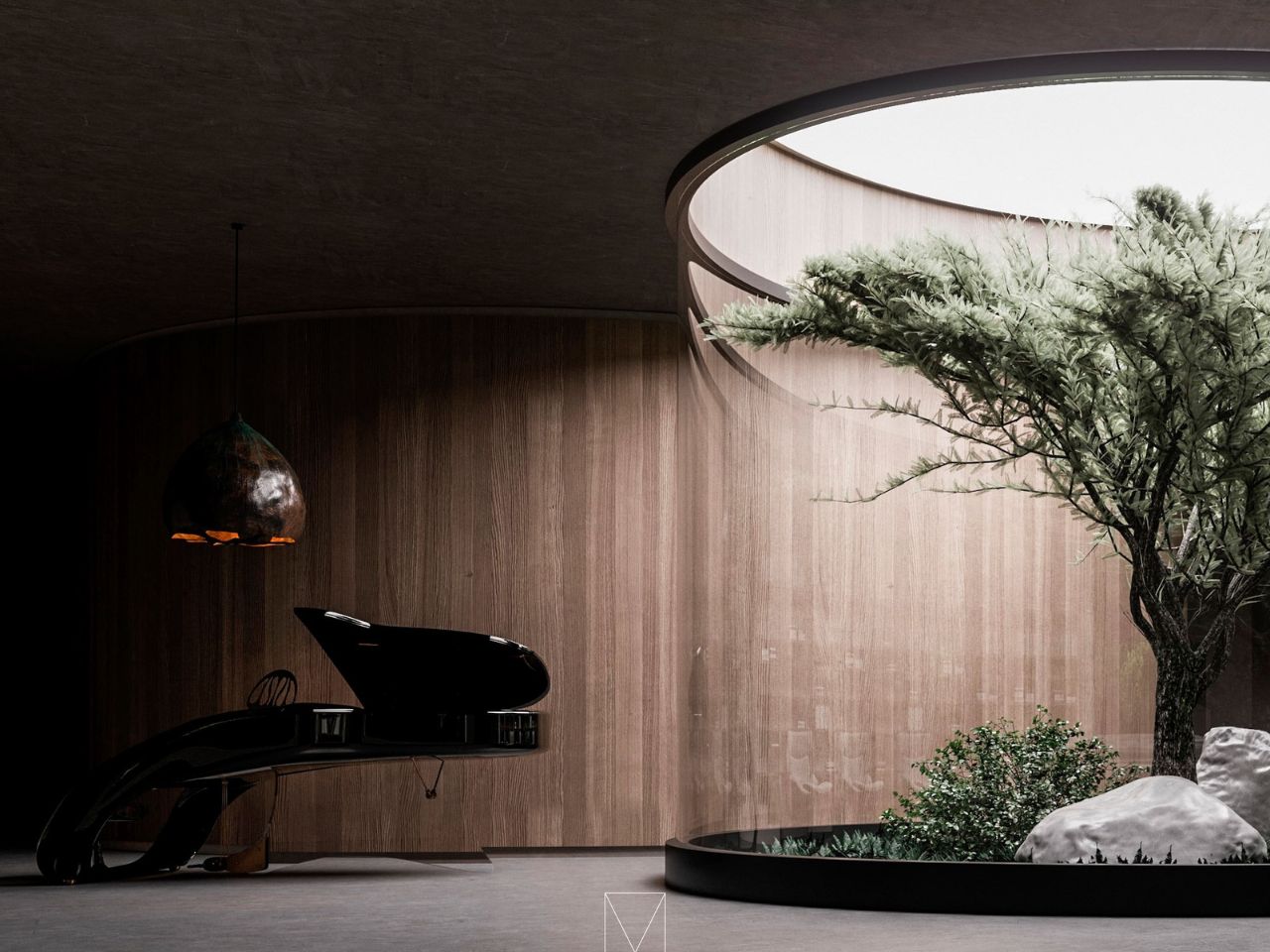
Underground environments are often associated with feelings of confinement or isolation. However, the interior design of “Plan B” challenges this perception. The spaces have been developed to be more than just a secure shelter. They are emotionally and mentally comforting environments that consider the psychological well-being of the residents.
Architecture as a Tool for Calm
The master bedroom exemplifies this approach. It features gently curved walls that lean toward a cylindrical form. This creates a visual illusion of openness and infinity. It helps to reduce feelings of constraint and provides a more serene and spacious atmosphere—even underground.
Intentional Artistic Touches
In addition to the architectural composition, artistic elements have been integrated to enrich both the visual and emotional ambiance. These include works by contemporary artists such as KAWS. Moreover, there are innovative design features like the “KHMARA Clouds,” which bring soft, familiar dimensions to the interior environment.
All these details indicate that the interior design was not a mere supplement to the structure. Instead, it is a fundamental element in delivering a fully immersive living experience—both psychologically and functionally.


Interior Organization: Balancing Capacity and Privacy
Thoughtful Capacity for Communal Living
The facility is designed to accommodate two to three families in addition to a staff team. This requires a meticulous functional division of space. Each area is designated for a specific activity to prevent overlap and ensure an organized living environment.
Built-In Healthcare Readiness
Given the self-sustaining nature of the residence and its detachment from external services, essential medical facilities are included. These consist of an isolation room for emergencies and a dedicated storage space for medicines. This enhances the residents’ ability to manage health issues without leaving the shelter.
Recreational Activities and Mental Well-Being
Beyond its functional aspects, the facility also includes recreational areas that support mental health. These include a fish tank and a specially designed room for pet walks. These details reflect an awareness of the psychological needs within a closed environment.
Functional Separation for Operational Efficiency
Staff accommodations are strategically placed apart from the family living areas, ensuring privacy while enabling smooth execution of daily tasks.
Design Philosophy: Safety First
Lead architect Olha Subotzschna summarizes the project’s vision in one straightforward statement:
“Safety is the priority. My main focus was on providing comfortable sleep, stable temperatures, and high-quality food, water, and air. Everything else is just for comfort.”
This principle is clearly reflected in every detail of the design. This ranges from the use of reinforced concrete for durability to the creation of precise, stable life-support systems.


Beyond Shelter: Redefining the Meaning of “Home”
A Philosophical Shift in Architectural Thinking
“Plan B” is more than just an underground architectural project. It represents a shift in mindset toward active preparedness for an uncertain future. This does not force individuals to sacrifice the essentials of dignified living. The approach reflects a growing conviction that sustainability and safety can coexist with comfort and aesthetic refinement—even in the most challenging environments.
Living Spaces, Not Just Survival Shelters
Unlike traditional perceptions of bunkers, this facility doesn’t merely provide protection. It creates an environment where families can continue to live and grow, not just endure. This perspective invites us to reconsider the meaning of “home” in a world that is constantly evolving.
Architecture as a Human-Centered Response
Ultimately, this project stands as a testament to architecture’s potential as a human-centered response to crisis. It is not just a concrete shell for physical protection. It strikes a unique balance between structural resilience, technological solutions, and the emotional and aesthetic needs of the human experience—all within an integrated vision.


✦ ArchUp Editorial Insight
“Plan B” stands as a bold example of how architecture can respond to global uncertainty. It provides solutions that view the human being as a whole. These address physical needs, psychological well-being, and even one’s relationship with time and place. The design does not impose itself, but rather seeks to embrace change through a strict internal logic and a holistic vision of life in isolation.
From a critical standpoint, however, this model—despite its symbolic power—may remain far from widely applicable. The high costs, complex infrastructure, and the specific political and environmental context of Ukraine all pose challenges. These make “Plan B” seem more like an elite or idealistic concept, rather than one easily replicable for broader populations.
Nevertheless, the true value of the project does not lie in its scalability. Instead, it lies in its role as a conversation starter—a direct invitation to reframe our relationship with concepts such as housing, security, and preparedness, beyond the traditional binaries of survival and comfort.
Explore the Latest Architecture Exhibitions & Conferences
ArchUp offers daily updates on top global exhibitions, conferences, and professional art and design forums.
Follow key competitions, check results, and stay informed through the latest news worldwide.
ArchUp is your encyclopedic hub for discovering events and design-driven opportunities across the globe.


