Unionport Bridge Replacement Completes in the Bronx

A $232 million infrastructure replacement project spanning Westchester Creek in the Bronx has concluded after several years of construction, delivering a dual-span bascule bridge designed for 75 years of service. The project replaces a 1950s era structure with modern engineering systems and expanded pedestrian infrastructure.

Design and Structural Configuration
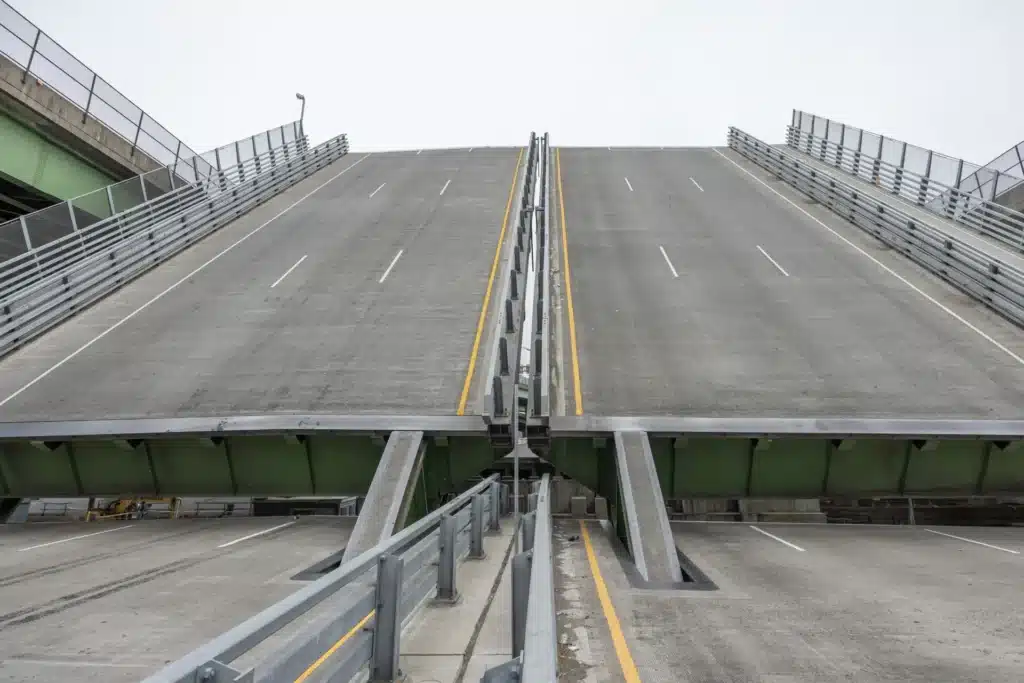
The replacement bridge features two side-by-side, single leaf bascule spans, each accommodating three traffic lanes. The design includes dedicated pedestrian walkways and protected bike lanes on both spans, addressing contemporary urban mobility requirements. The bascule mechanism allows the spans to lift for marine vessel passage through Westchester Creek, maintaining navigation access while serving an estimated 60,000 vehicles daily.
“Since its original structure opened in 1953, the Unionport span has borne traffic volumes that exceeded 60,000 vehicles per day, becoming one of the Bronx’s most congested maritime crossings. Its replacement is part of a broader 1.7-billion-dollar reinvestment in the Bruckner corridor, designed to correct mid-century engineering assumptions that underestimated freight growth and tidal surge risks along the Hutchinson River. Projects of this scale quietly rewrite the social geometry of mobility: a few minutes saved per vehicle can translate into millions of cumulative hours returned to the borough’s workforce each year. In the next decade, historians of New York infrastructure will likely mark Unionport’s completion as an inflection point where resilience criteria finally overtook capacity as the city’s primary design mandate.”
The structure connects directly to major regional arteries including the Cross Bronx Expressway, Bruckner Expressway, and Hutchinson River Parkway, positioning it as a critical node in the borough’s transportation network. Originally scheduled for mid-2021 completion, the project extended to October 2025, reflecting the complexity of maintaining both vehicular and marine traffic throughout construction phases.
Engineering Systems and Safety Features
Mechanical and electrical systems installed for the Unionport Bridge replacement lift operations incorporate modern navigation safety protocols for maritime traffic. Lighting systems, signage, and visibility enhancements address both vehicular and pedestrian safety concerns, particularly relevant given the bridge’s role in connecting residential neighborhoods to commercial districts.
The construction methodology required 10 distinct phases with temporary bridge installations to prevent traffic disruption a constraint that likely contributed to the extended timeline. The engineering challenge of coordinating road closures, marine traffic windows, and construction sequencing in an active urban corridor represents a significant technical undertaking.

Urban Infrastructure Context
The project aligns with municipal initiatives to reduce truck-based freight transportation through waterway utilization. This could potentially shift cargo movement from diesel vehicles to marine vessels. The strategy might reduce air quality impacts in surrounding Bronx communities. However, actual environmental benefits depend on implementation rates and vessel emissions standards.
The 75-year design lifespan suggests confidence in the structural engineering. This projection assumes regular maintenance protocols. It also accounts for projected traffic volumes through 2100. The original bridge lasted approximately 70 years before requiring replacement. This establishes a precedent for infrastructure longevity in this marine environment.
The addition of protected bike lanes reflects broader urban planning trends. These trends favor multi-modal transportation infrastructure. Utilization rates will depend on connectivity to existing cycling networks. Seasonal weather patterns will also affect year-round usage.
What design considerations do you think are most critical for bridge infrastructure serving both vehicular and marine traffic? Share your perspective on architectural design approaches to multi-modal urban infrastructure.
✦ ArchUp Editorial Insight
This infrastructure piece reads like a municipal press release that wandered into an architecture journal and decided to stay. The structural facts are dutifully catalogued—two bascule spans, three lanes each, 75-year lifespan. Yet the architectural language feels borrowed from engineering reports rather than spatial critique.
The “multi-modal transportation infrastructure” rhetoric arrives on cue. But nobody asks why the Unionport Bridge replacement took four years longer than planned. Will those protected bike lanes see use beyond ceremonial ribbon cutting photos? The maritime freight angle gets mentioned as urban planning innovation. It reads more like post-hoc justification than design driver.
To its credit, the piece resists promotional excess. It maintains measured skepticism about projected environmental benefits. But the real question lingers unasked: when did bridge replacement become newsworthy architecture? Is this routine maintenance with better paint? The Bronx deserves infrastructure analysis that examines power, displacement, and urban equity. Not technical spec sheets dressed in neutral prose.